Agree on the sound, not just the symbol
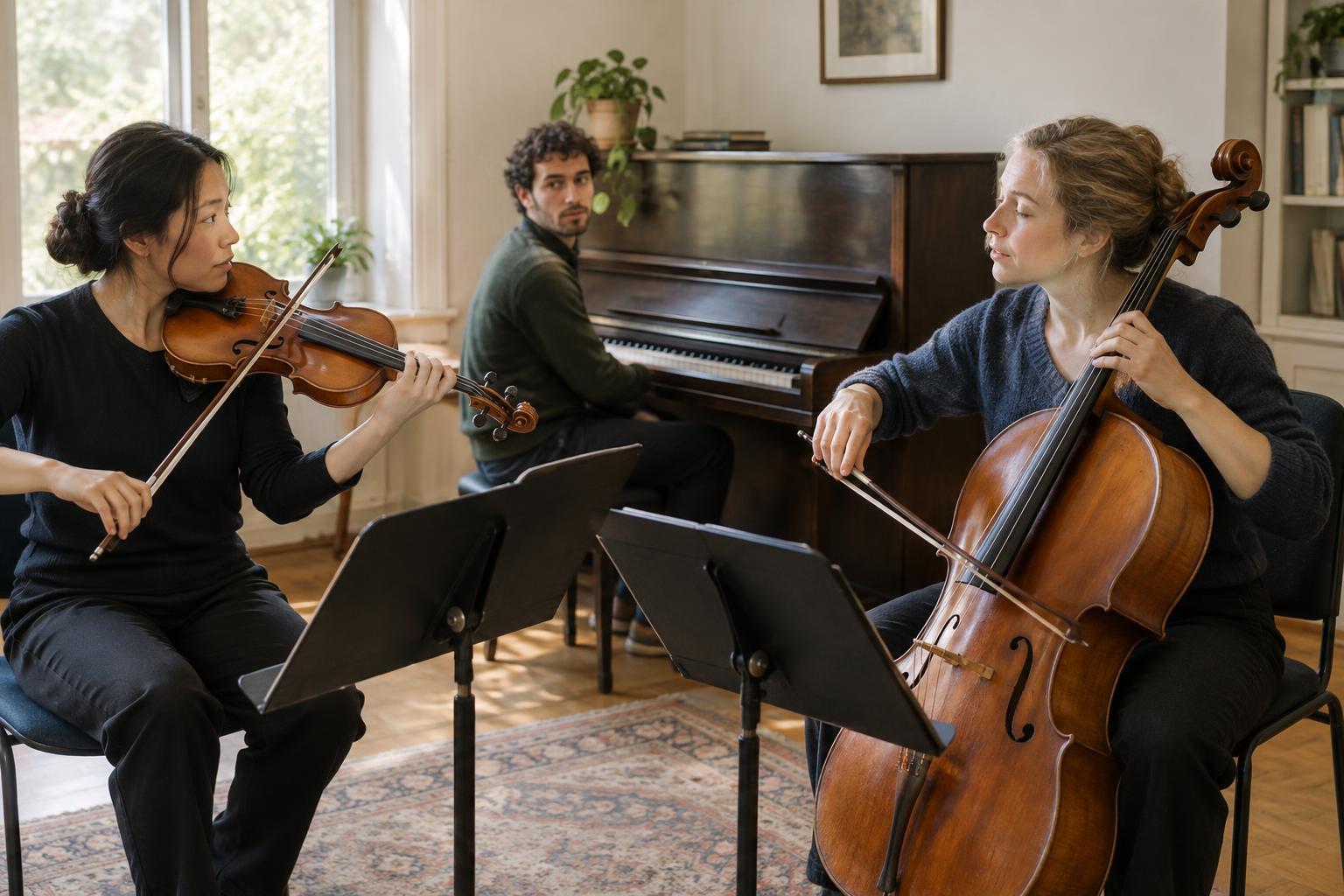
In chamber music, matching articulation rarely means using identical physical gestures. A string player shapes a note with the bow, a wind player with breath and tongue, and a pianist with the key, touch and sometimes pedal. Even when everyone sees the same staccato dot, the resulting sounds may differ. The useful question is not “Are we all doing staccato?” but “What should a listener hear at this moment?”
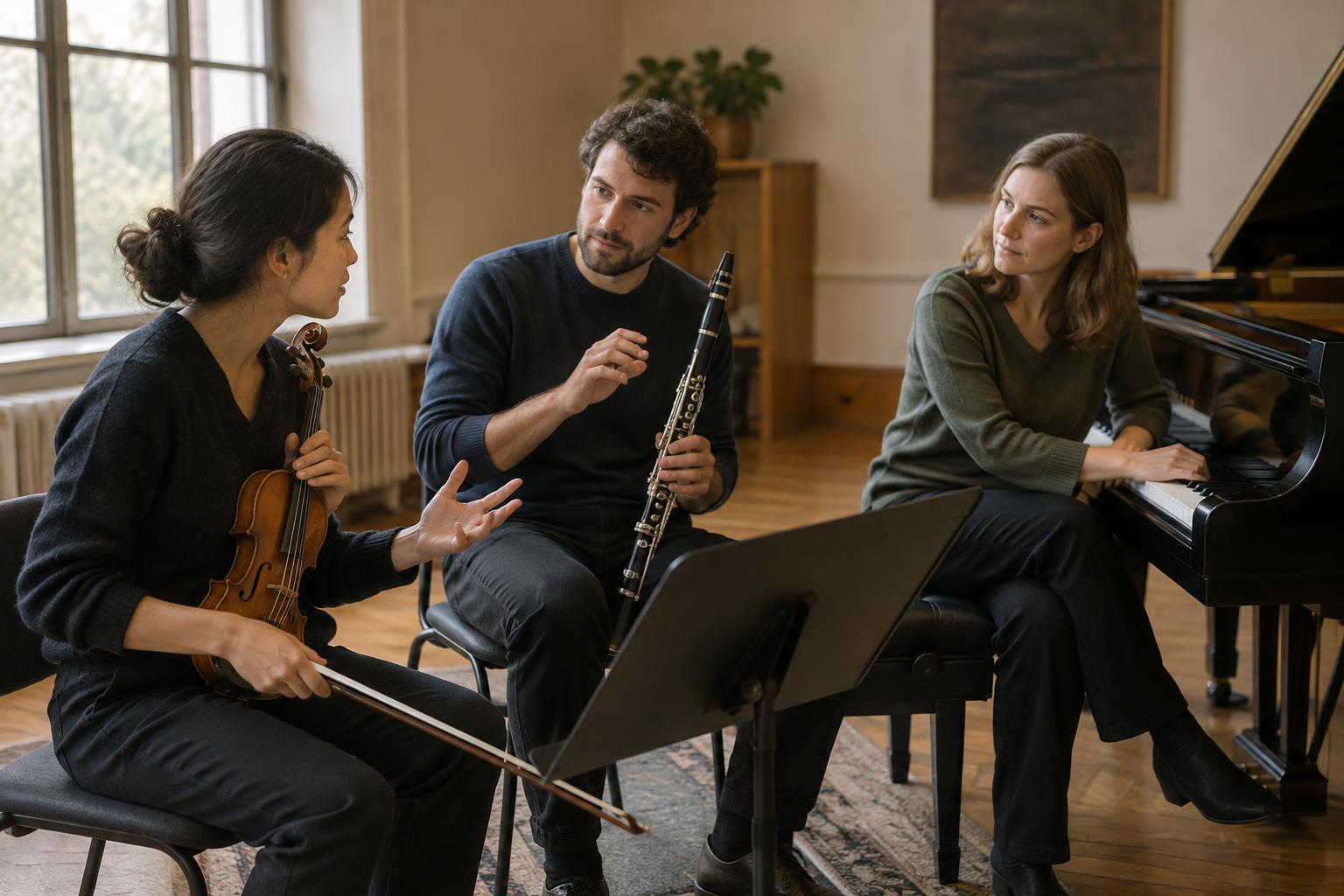
Begin by describing the musical effect in ordinary language. Should the phrase sound buoyant, clipped, gentle, pointed or connected? Is the accent a sharp arrival or a slight emphasis within a flowing line? These descriptions give players room to choose techniques suited to their instruments while working toward a shared result. If parts have different markings, first consider whether they serve different roles rather than assuming they are inconsistent.
Listen to the whole shape of each note
An articulation has more than an attack. Listen for how quickly a note begins, how long it remains audible and how it ends. A crisp piano attack followed by a long decay can overlap a violin note that starts softly but stops abruptly. Both players may think they are playing “short,” yet the ensemble can sound uneven because their releases do not line up.
Try rehearsing a passage slowly and listening to one feature at a time. First ask whether the beginnings of notes feel coordinated. Then listen to their endings and the space before the next note. Finally, return to the intended tempo: a separation that is clear slowly may disappear at speed, while a forceful attack that helps at speed may sound exaggerated in a quieter passage. Aim for a convincing shared rhythm, not a mechanically identical note length.
Use the musical roles in the score
Before settling a detail, identify who carries the melody, who supplies a pulse and who fills in harmony. Players with the same rhythm may not need the same emphasis. A supporting figure can be light and distinct while a melody remains more sustained. If one instrument repeats a phrase that another has just played, however, matching its character may help listeners recognize the exchange.
Look beyond a single marking to the phrase around it. A slur may suggest grouping as well as connection; an accent may point toward a destination rather than call for a hard attack. Dynamics, rests and changes of register also affect what an articulation can communicate. Where the score leaves room for interpretation, choose a consistent approach that clarifies the phrase instead of treating every mark as an isolated instruction.
Test choices together in rehearsal
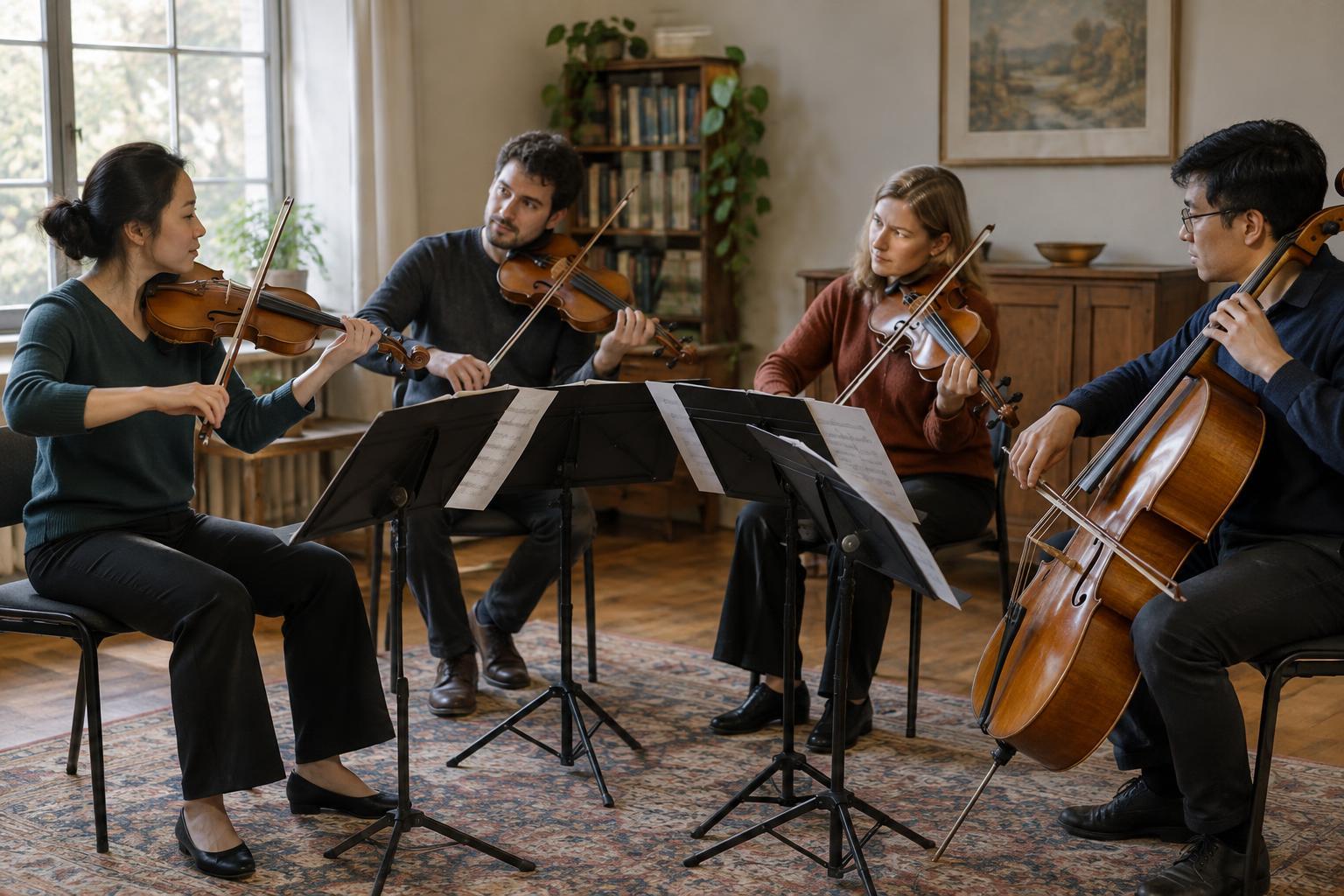
Select a short passage and try two clearly different versions. For example, play a repeated figure with a small gap between notes, then with more connection. Have someone who is not playing that figure listen from a short distance and describe what comes through. A brief recording can help, too, provided the group listens for specific details rather than judging the entire performance at once.
Give feedback in terms of the ensemble sound: “The ends of our notes separate at different times” is more useful than “Your notes are too long.” Then let each player propose a practical adjustment. A string player might change bow length, a wind player might alter the release, and a pianist might reduce pedal or lift sooner. Change one thing at a time so the group can hear which choice helps.
Keep the agreement flexible
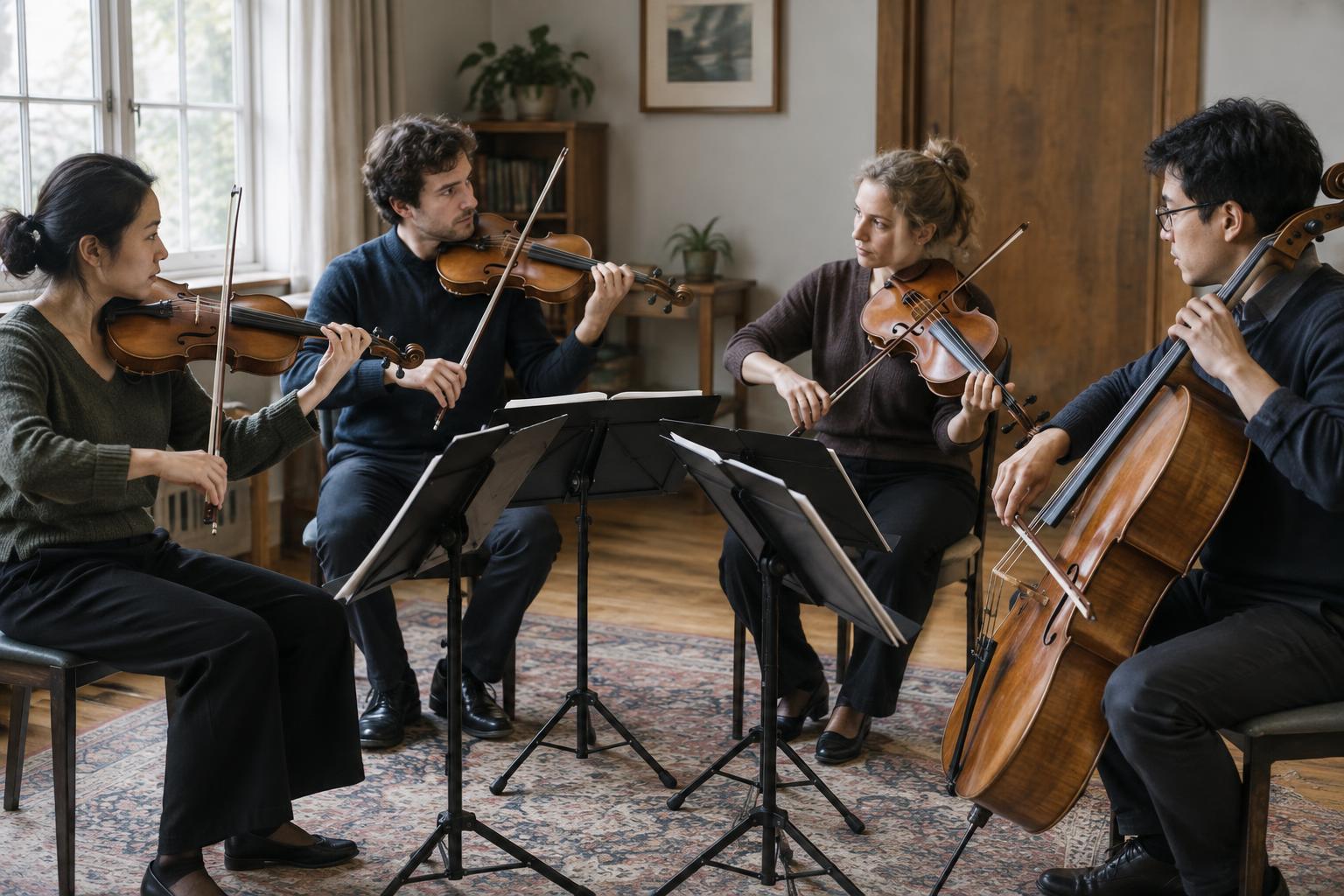
An articulation that works in a small practice room may need adjustment in a more resonant space. Tempo and balance matter as well: a quiet supporting part may need a clearer beginning to remain audible, while a prominent line may need less attack to blend. Recheck important passages after the group changes tempo, dynamics or seating.
Once a choice works, note it in the parts using a few shared words, such as “light, with space” or “connected through the beat.” This preserves the musical intention without prescribing one instrument’s technique to everyone else. The goal is an agreement the players can hear, remember and adapt together.