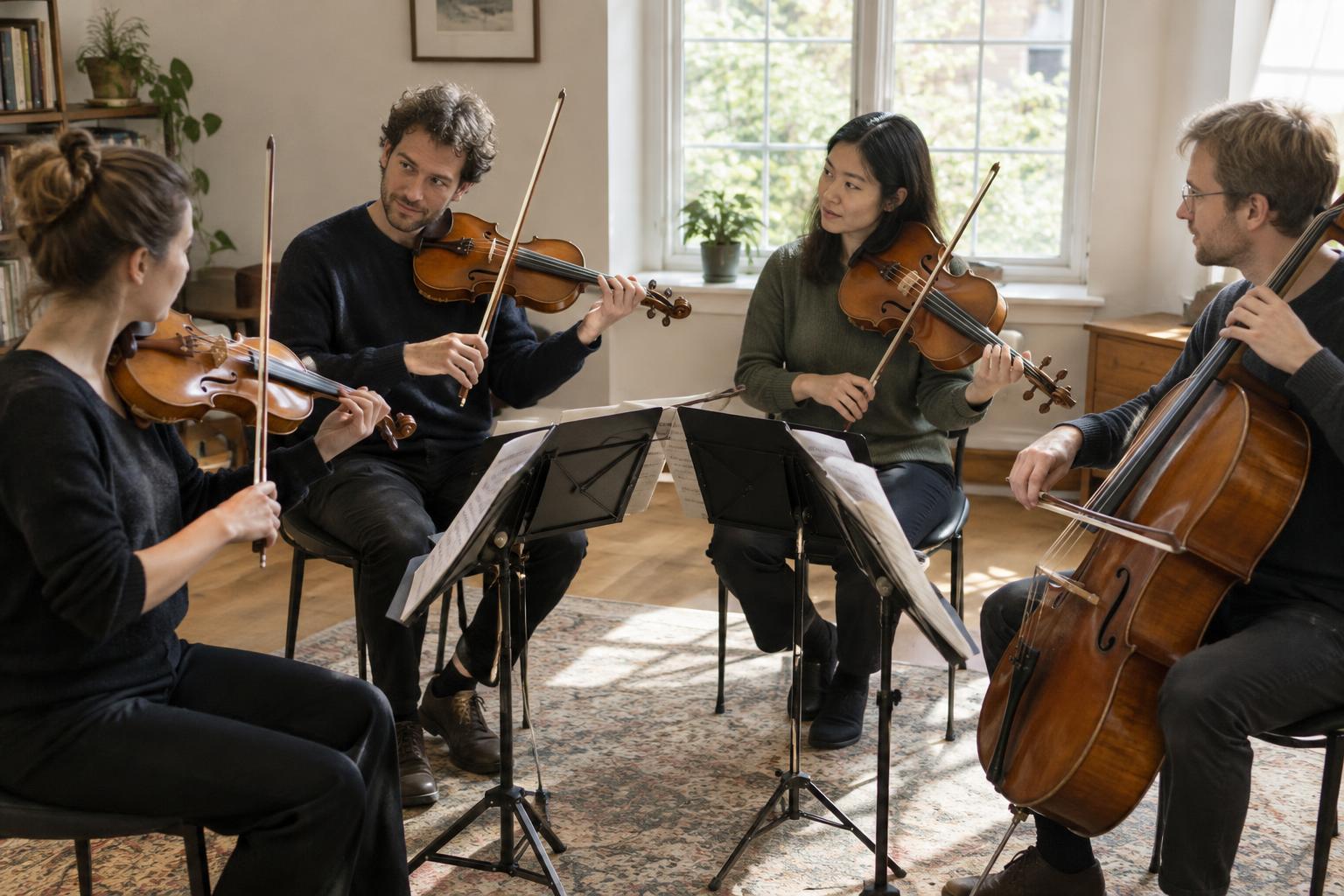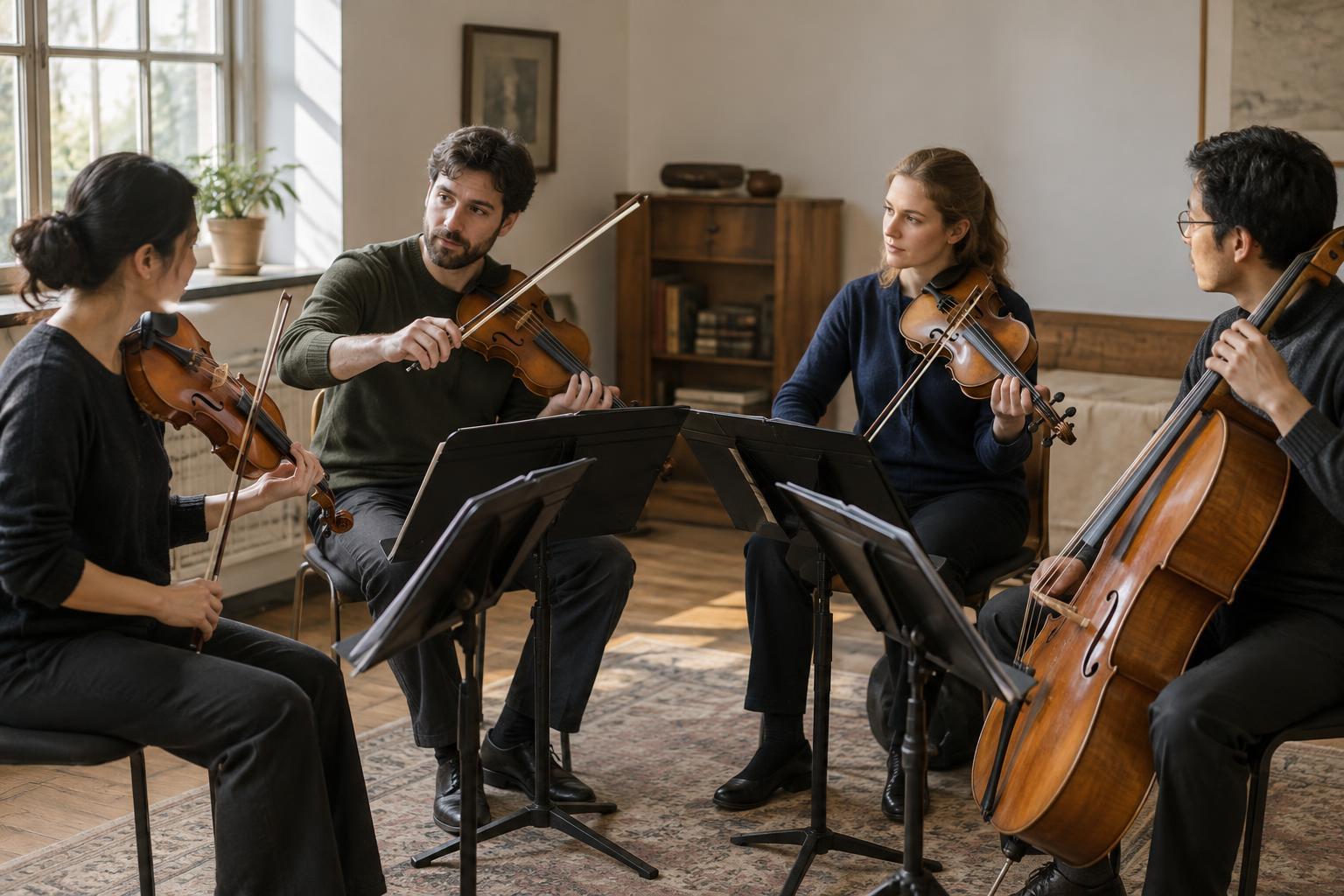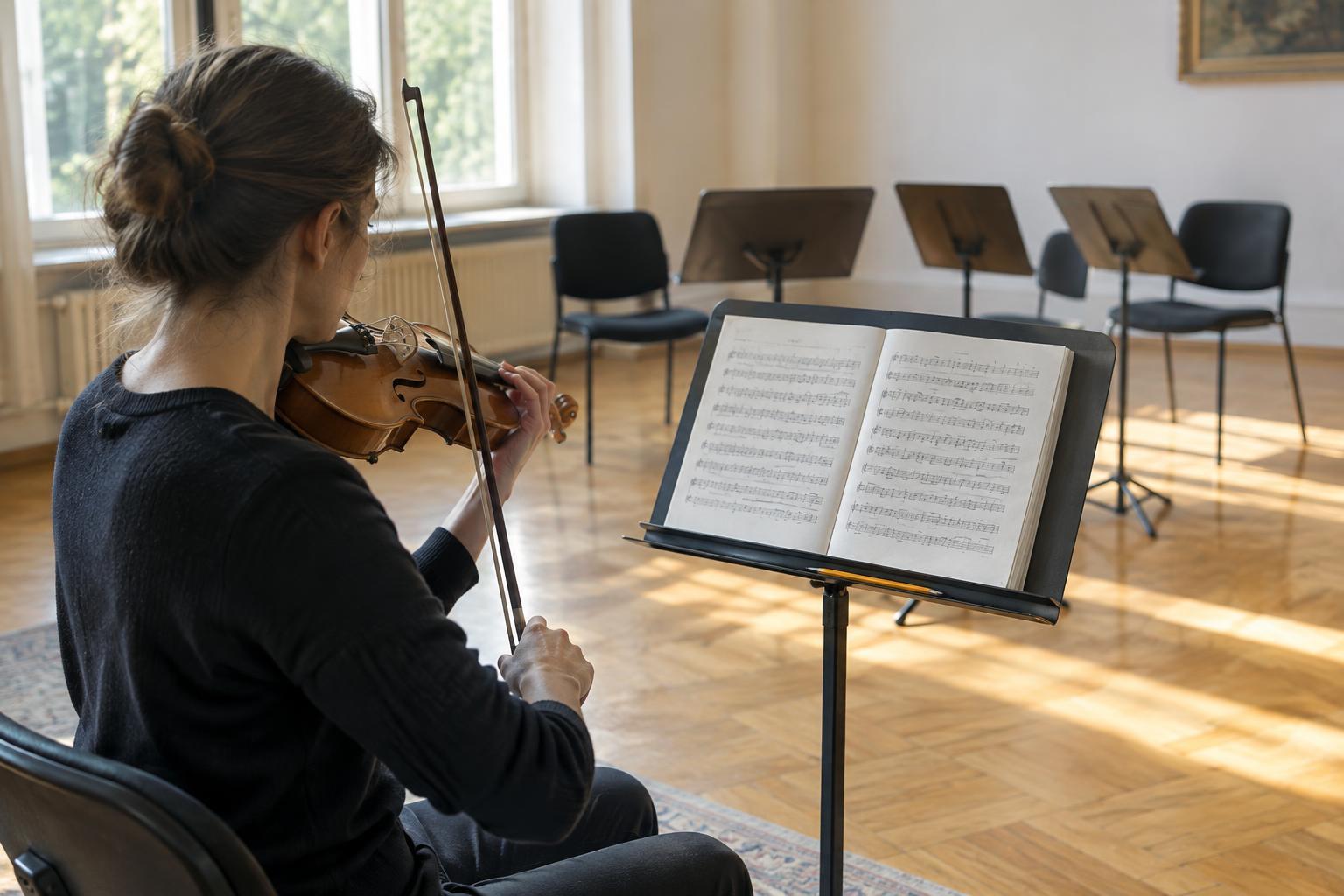
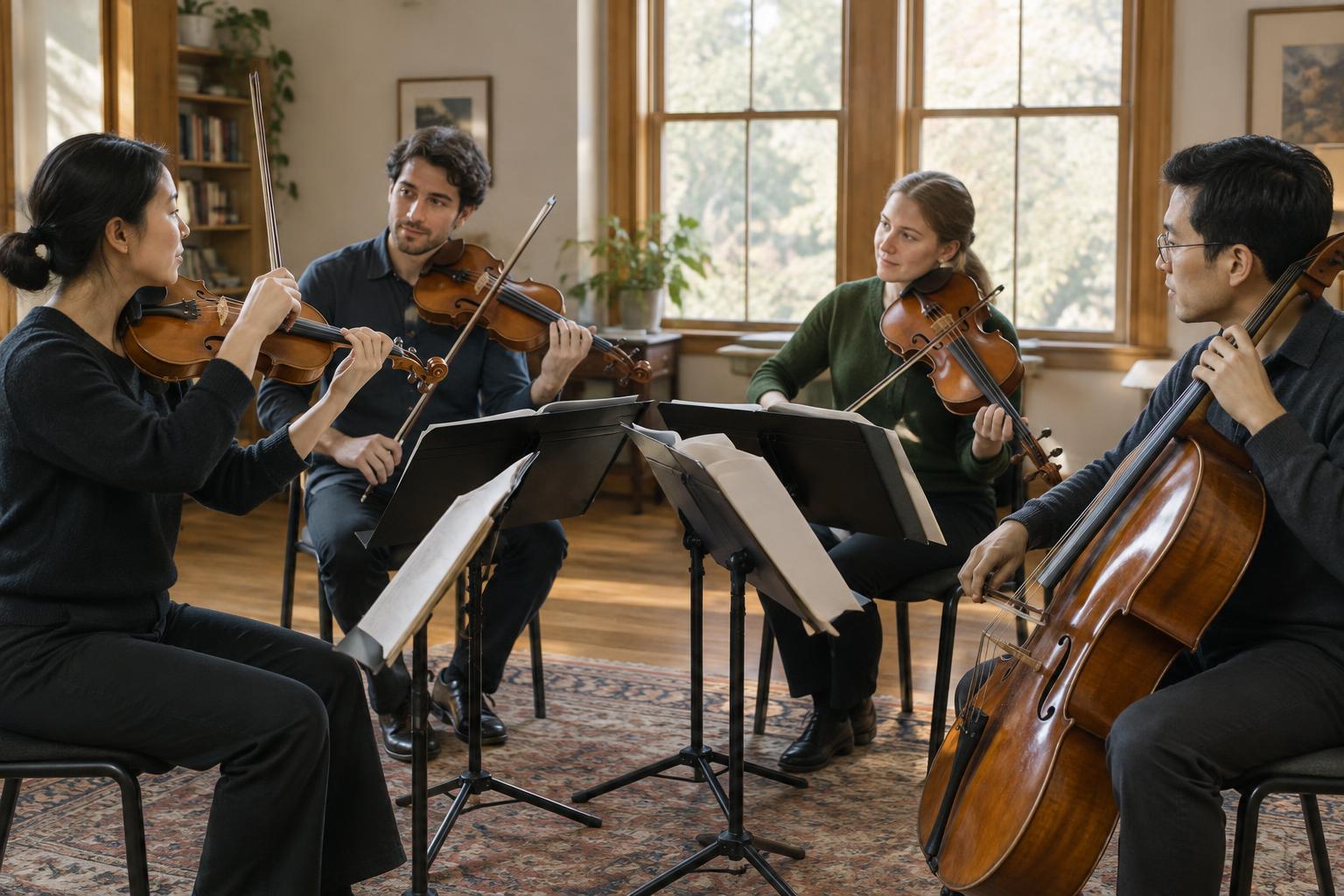
Practice and PerformanceA first chamber rehearsal works best when everyone arrives ready to listen as well as play. Learn how to map the piece, solve the most demanding passages, prepare entrances and questions, and leave room for decisions the group will make together.
Read article · 4 min↗
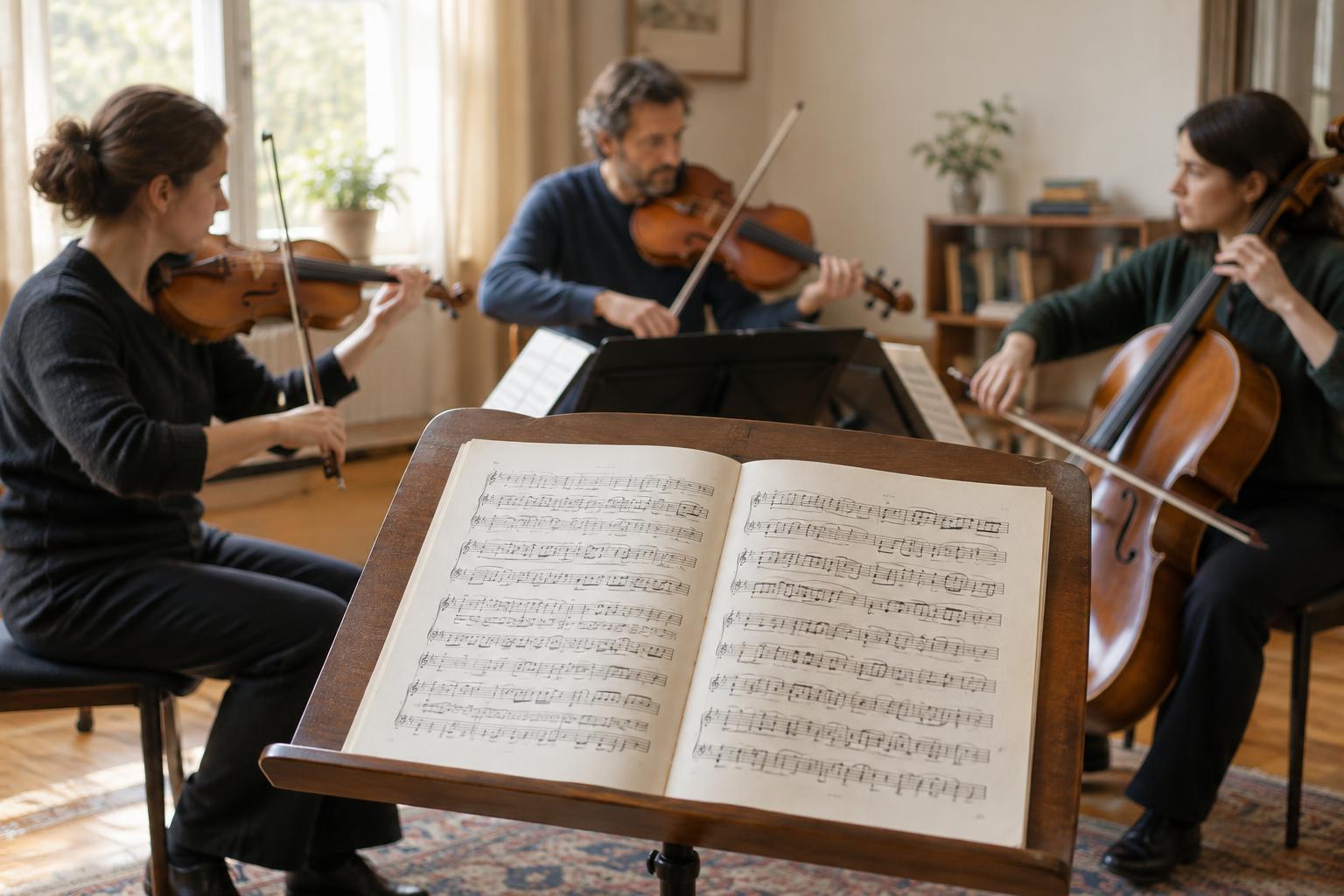
Listening GuidesA chamber music score can help you notice how instruments share a melody, answer one another, and create a sense of movement. You do not need to read every note. Start with a clear score, track a few visual landmarks, and let the sound remain your guide.
Read article · 4 min↗
Listening GuidesTwo performances of the same chamber work can feel surprisingly different. A focused comparison of tempo, phrasing and instrumental balance helps you hear the choices behind each interpretation without turning listening into a contest.
Read article · 4 min↗
Listening GuidesYou do not need to identify every theme or understand the score to enjoy a new chamber work. Try three listens with different purposes: take in the whole, follow the conversation between instruments, then notice what has changed.
Read article · 4 min↗
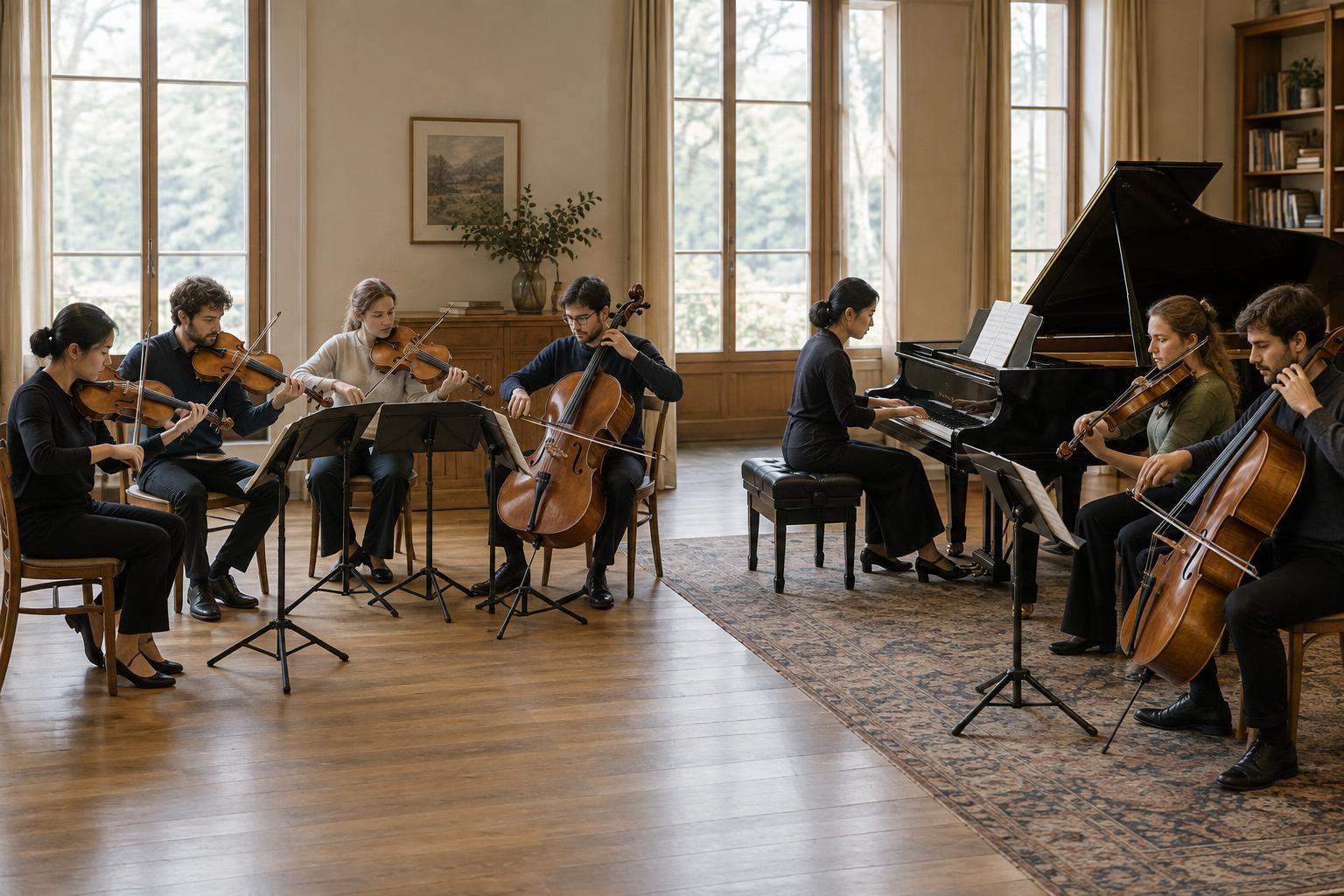
Listening GuidesA string quartet and a piano trio can cover similar musical ground, but their instruments shape the conversation differently. Learn to hear the contrast in sustain, texture, rhythm and the way melodies move between players.
Read article · 4 min↗
Listening GuidesThe bass can reveal a chamber piece’s pulse, direction and changes of harmony. Learn a simple way to notice it while keeping the main melody in view.
Read article · 4 min↗
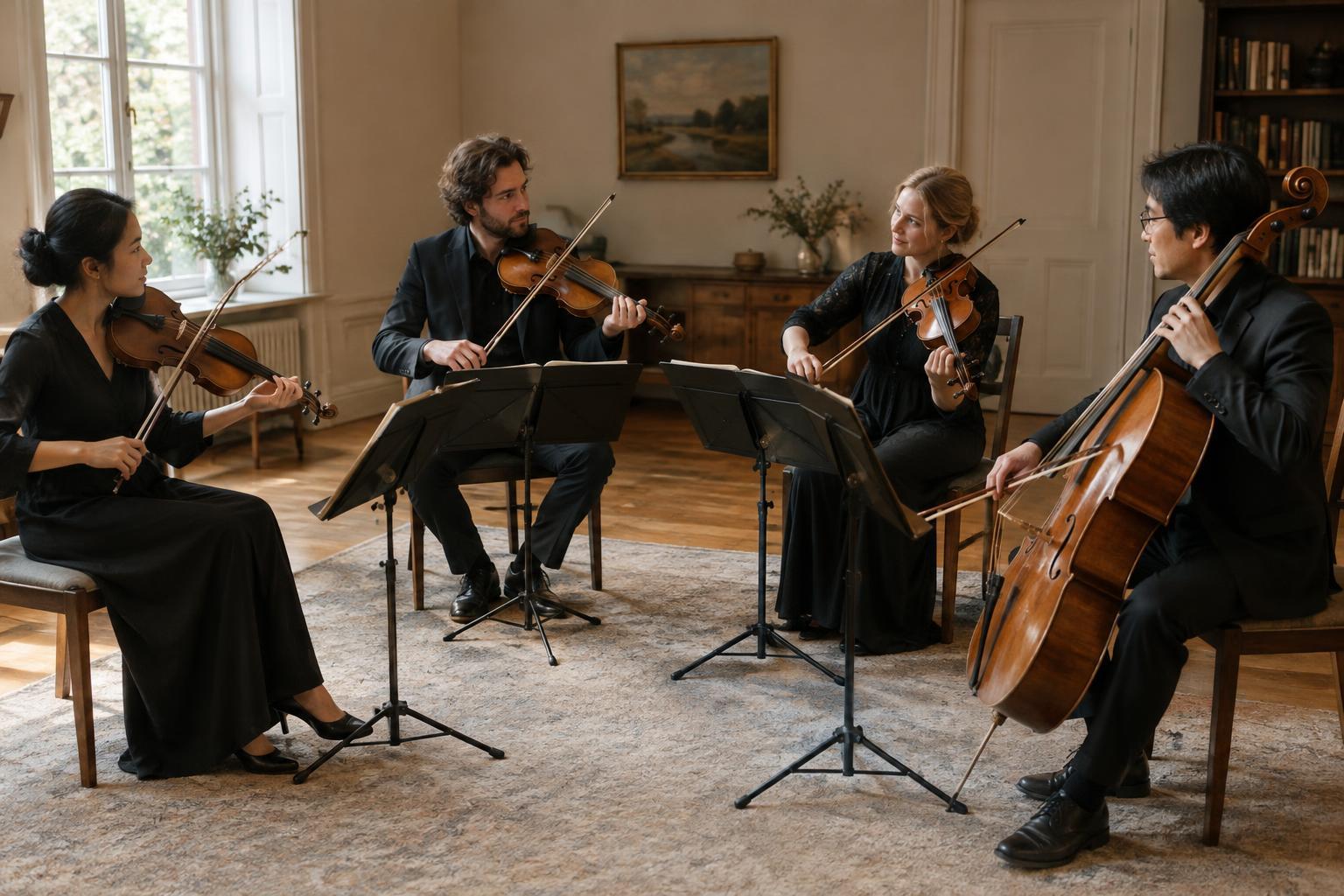
Listening GuidesRests are more than pauses in a chamber music performance. They shape phrases, let instruments answer one another, and make an ensemble’s shared sense of time audible. This guide offers simple ways to listen to silence without losing the musical thread.
Read article · 4 min↗
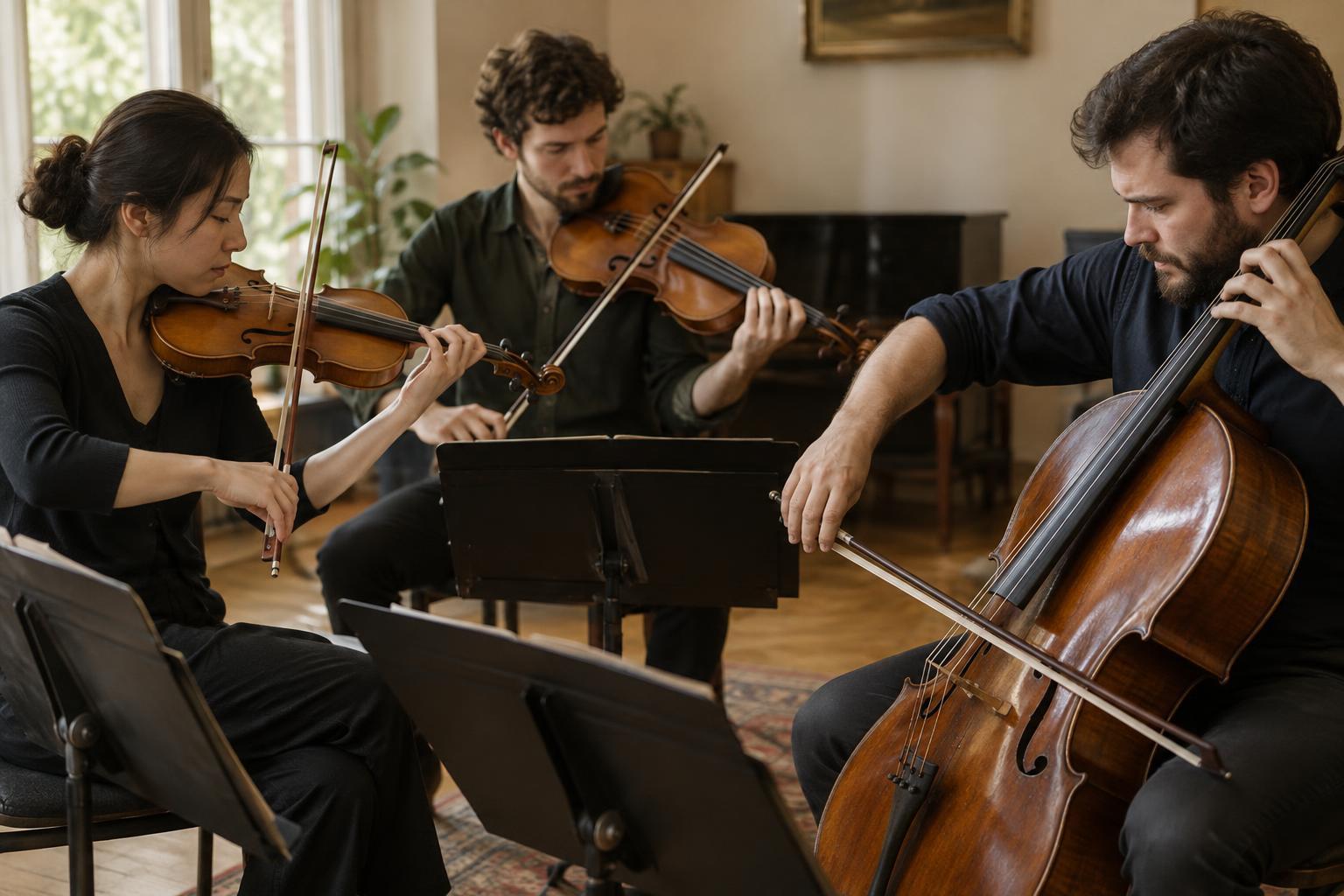
Listening GuidesA quiet phrase can feel bright, and a loud passage can sound dark. Learn to hear dynamics and register as separate sources of contrast, then notice how chamber players use them together.
Read article · 4 min↗
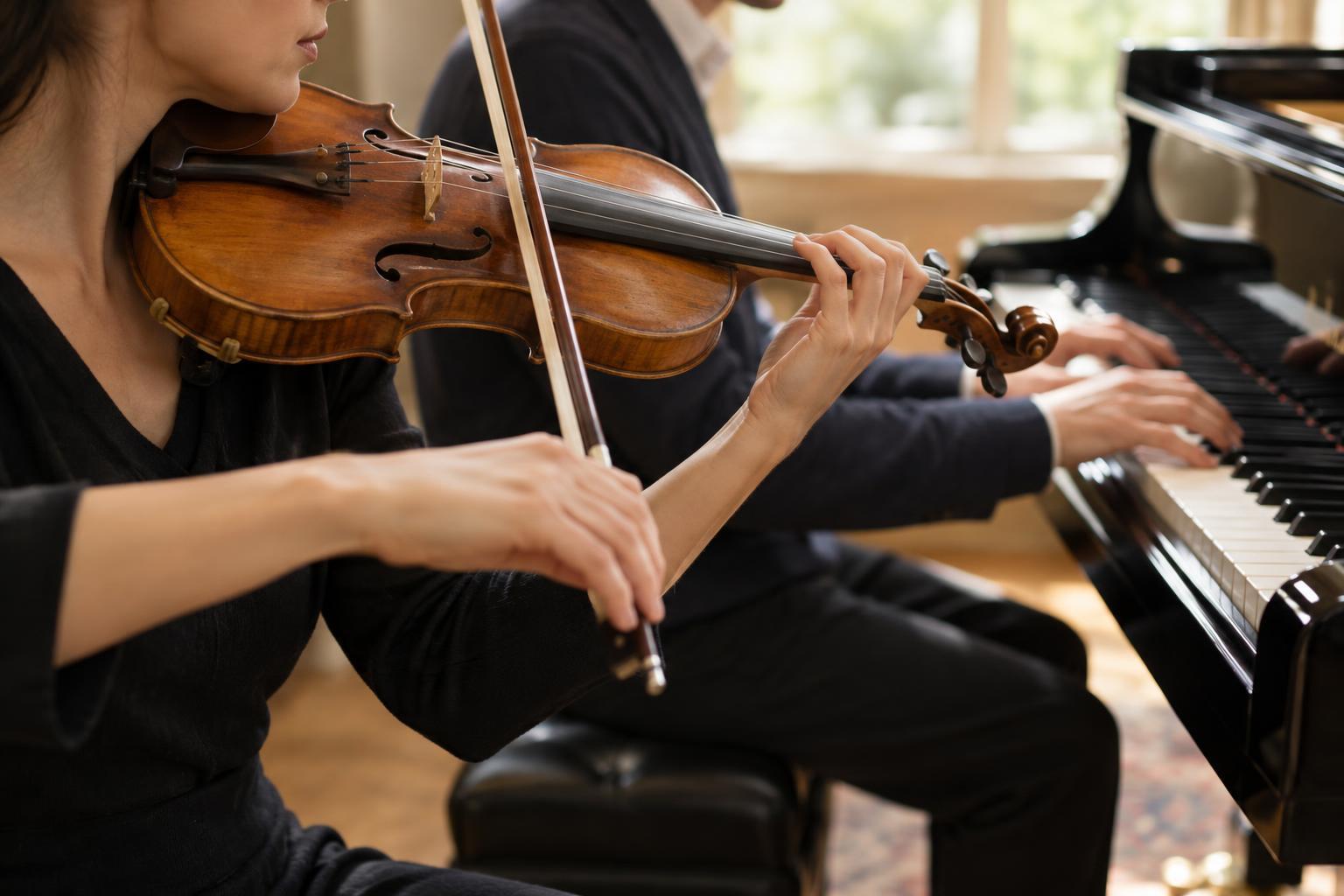
Listening GuidesLegato connects notes into a flowing line; staccato gives them distinct, shortened shapes. Learn what to listen for in melody, accompaniment and chamber-music conversation, then try a few simple exercises with any familiar piece.
Read article · 5 min↗
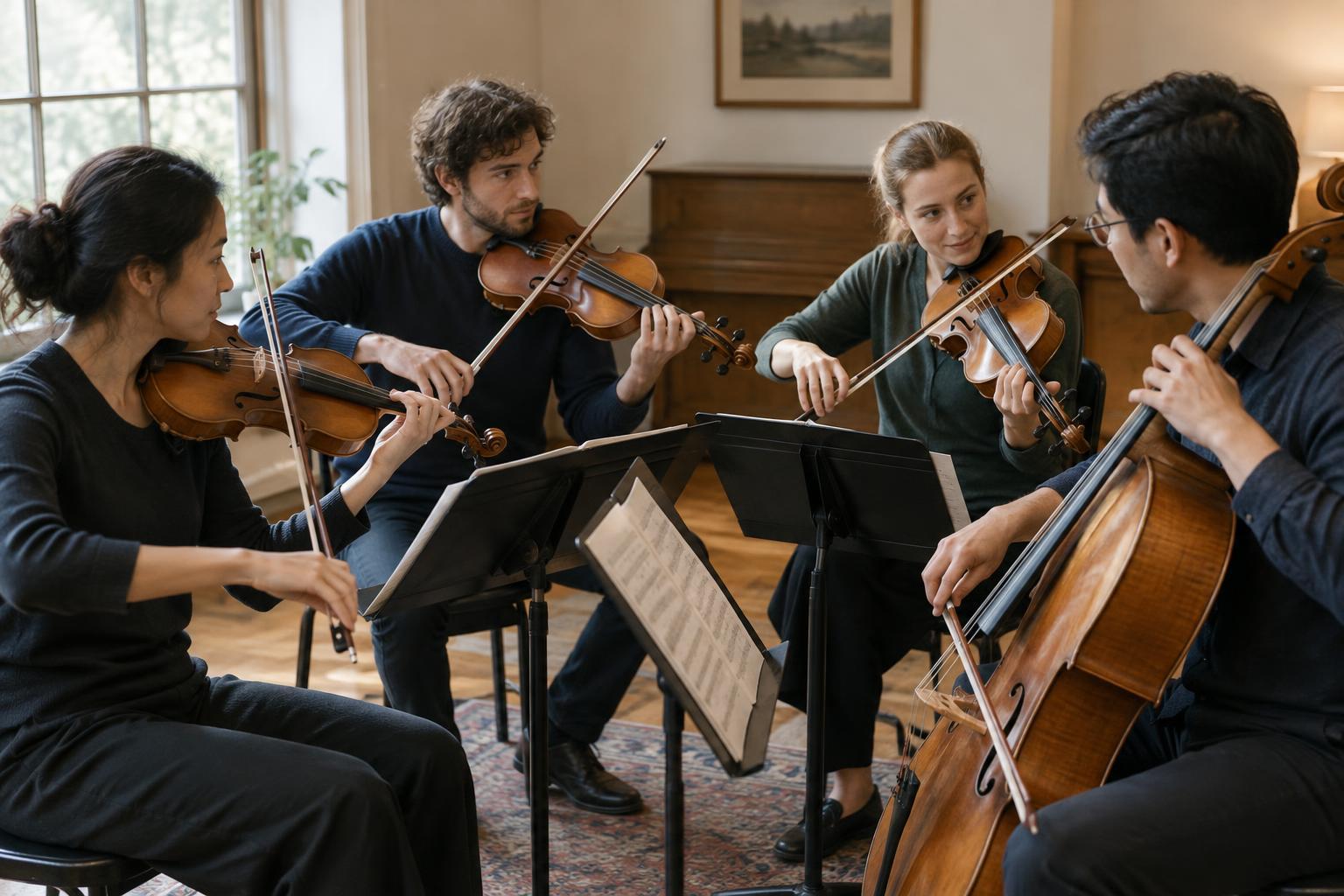
Listening GuidesIn chamber music, players may move together to shape a harmony or follow distinct melodic paths. Learn how to hear the difference, why the two textures often overlap, and what to listen for when a passage changes.
Read article · 4 min↗
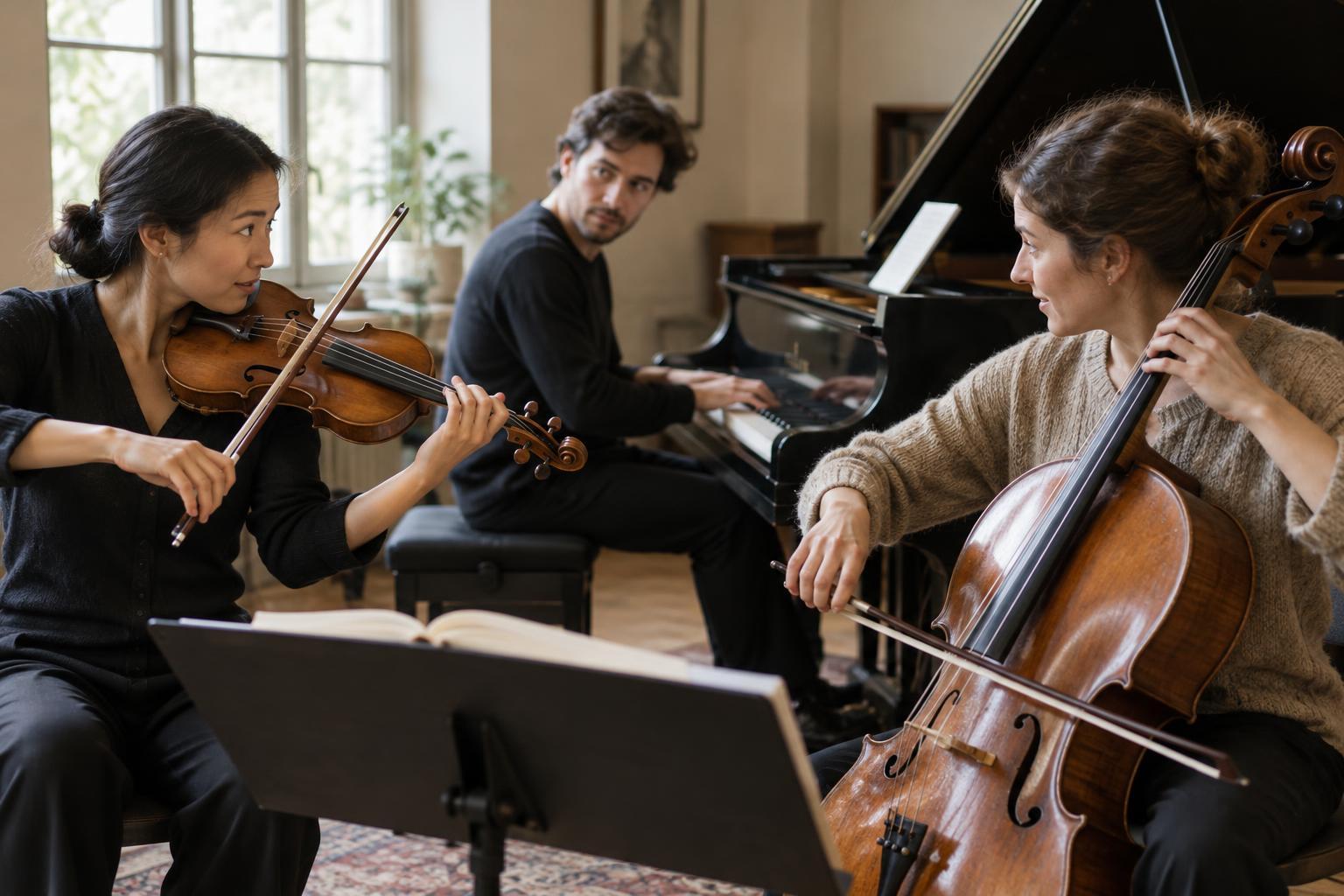
Listening GuidesA motif may last only a few notes, yet it can help a chamber work feel connected from beginning to end. Learn how to recognize one and follow its changes in rhythm, shape, harmony, and instrumental color.
Read article · 3 min↗
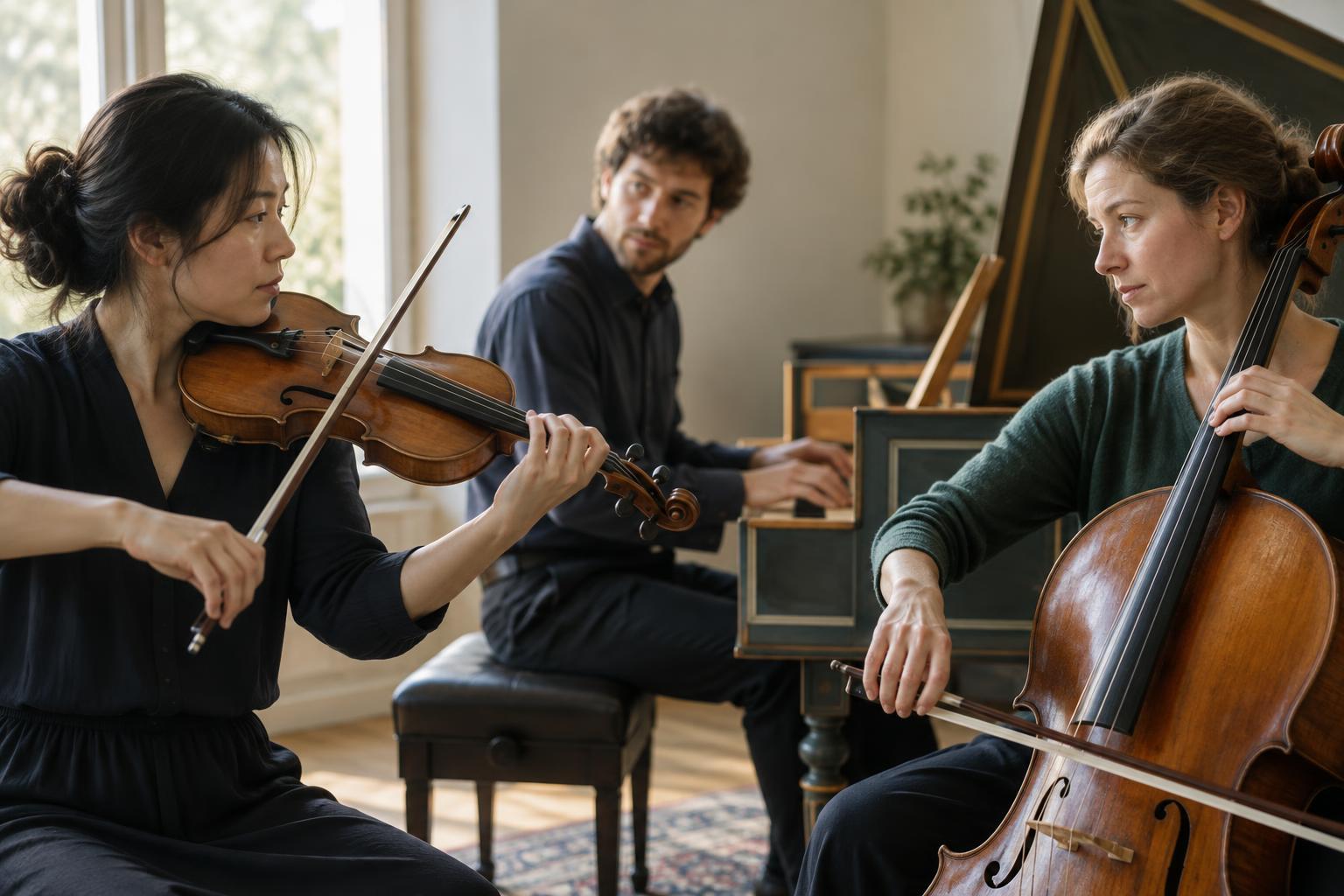
Listening GuidesA fugue can sound like several conversations happening at once. Learn to recognize the returning subject, follow its entries from one voice to another, and hear what changes when those entries begin to overlap.
Read article · 4 min↗
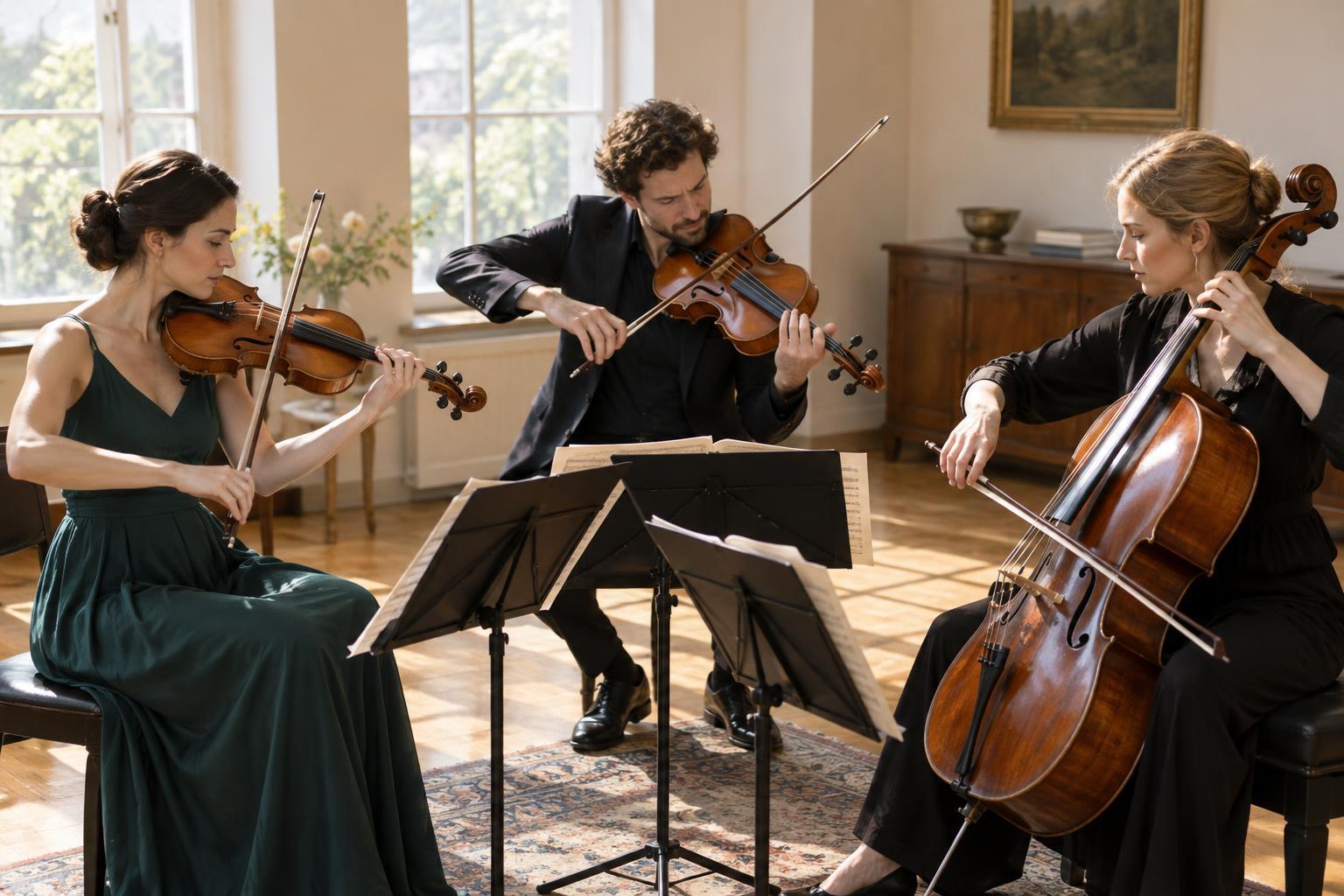
Listening GuidesMinuets and scherzos often occupy a similar place in a chamber work, and both may use a contrasting trio section. Their rhythms tell different stories, though: one may suggest a measured dance, while the other plays with speed, accents and surprise. This guide offers practical ways to follow both forms as you listen.
Read article · 4 min↗
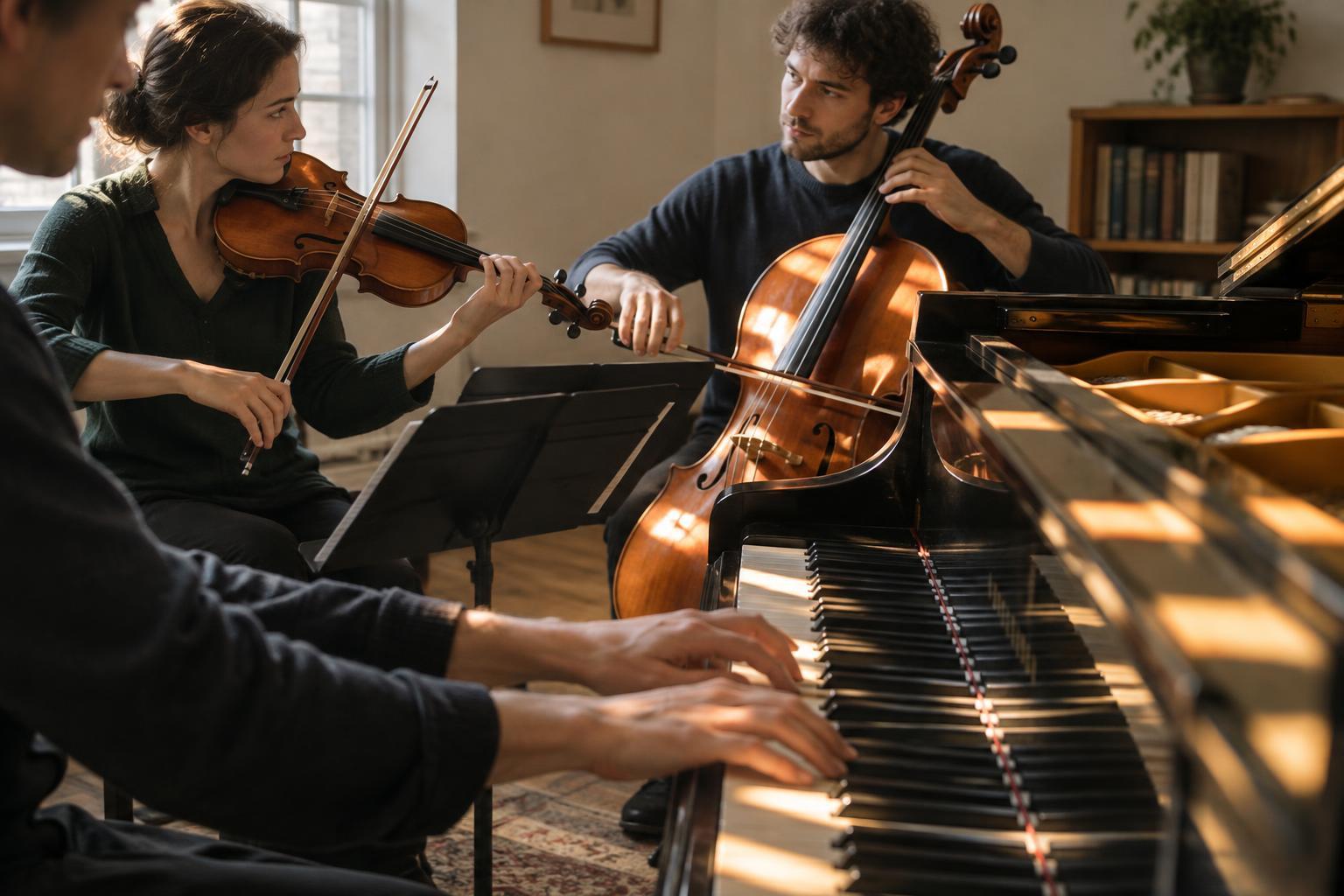
Listening GuidesA theme can return in a new rhythm, register or instrumental color and still feel familiar. This guide offers a practical way to listen for the thread that connects a set of variations.
Read article · 4 min↗
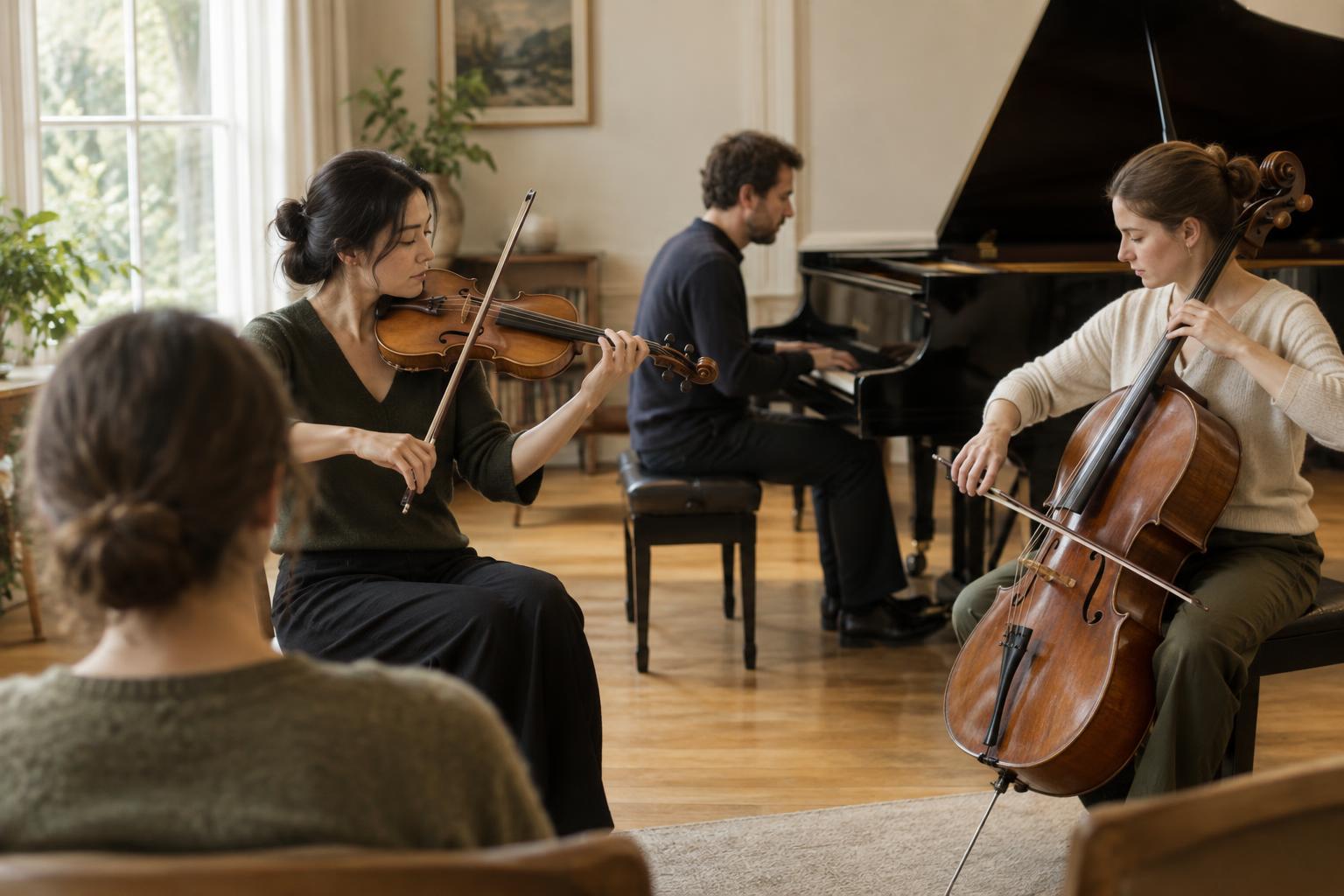
Listening GuidesA rondo brings back a recognizable musical idea between contrasting passages. Learn what to listen for in the refrain, how to notice episodes, and why a return may sound different without losing its identity.
Read article · 4 min↗
Listening GuidesSonata form is easier to follow when you listen for change and recognition rather than count themes. Learn how an opening establishes musical ideas, a middle section unsettles them, and a return brings them home.
Read article · 4 min↗
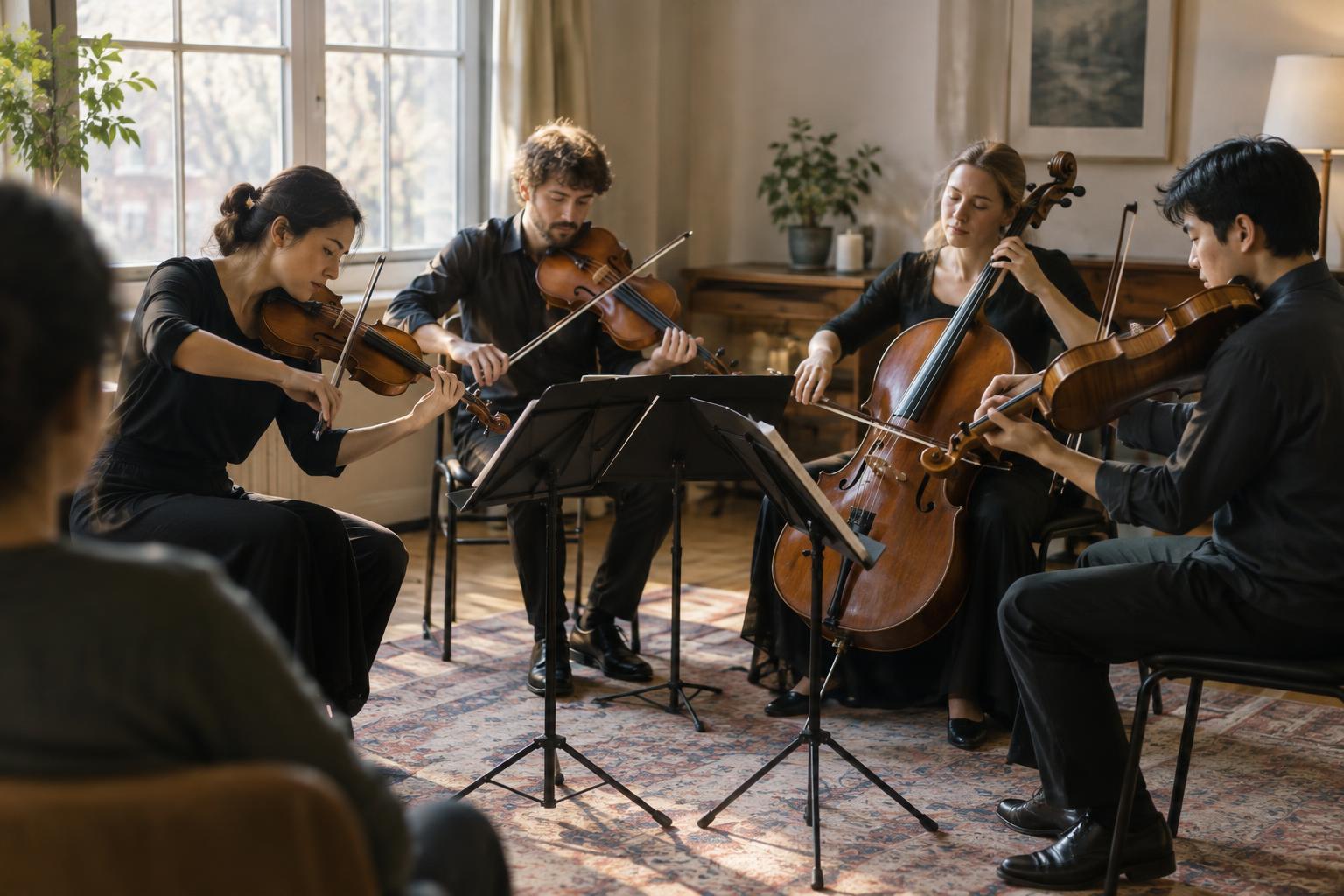
Listening GuidesYou do not need to name chords to notice when music seems to lean forward, hover, or settle. This listening guide offers practical ways to follow harmonic tension and release in chamber music, one short passage at a time.
Read article · 4 min↗
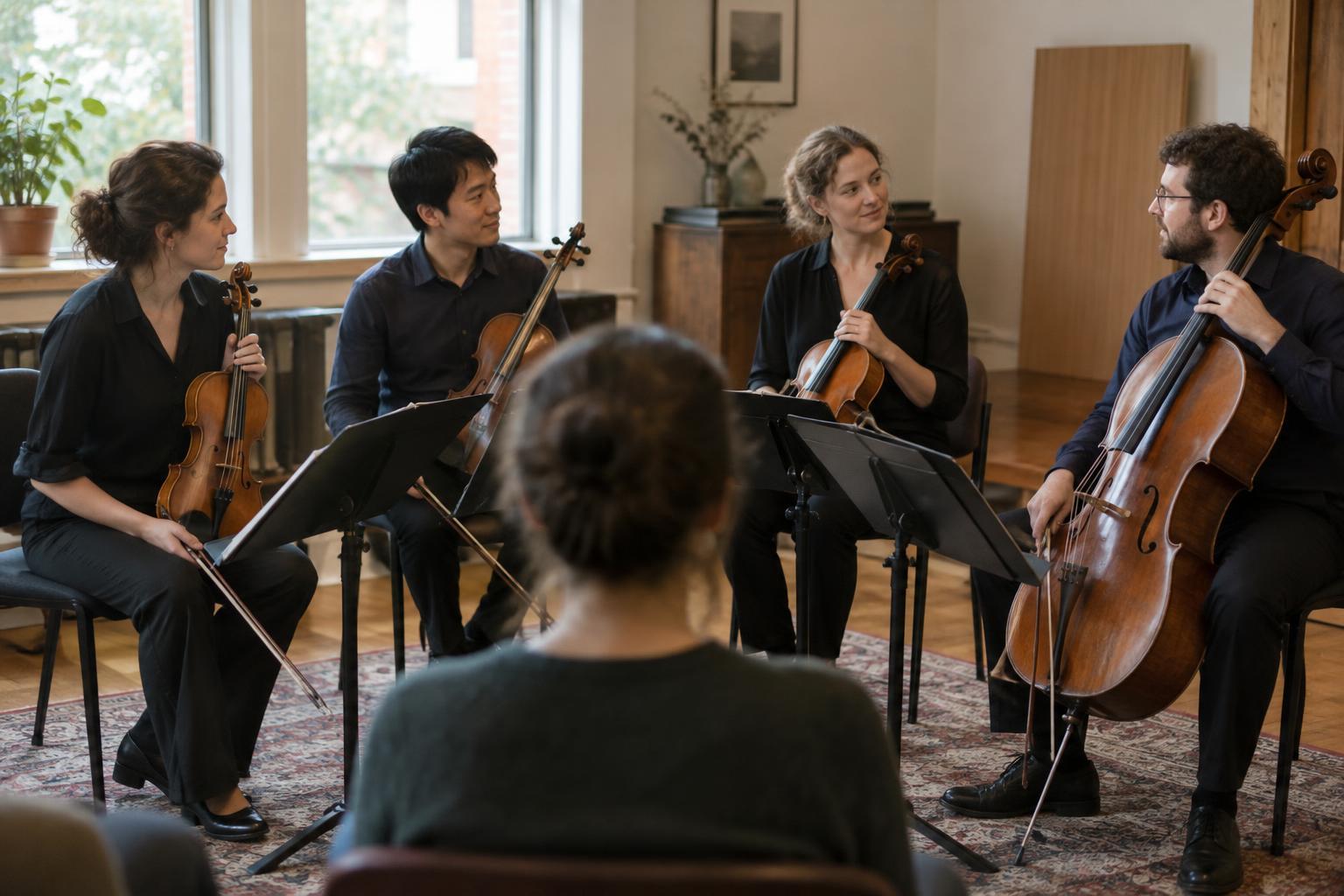
Listening GuidesAn unfamiliar chamber work can feel like a continuous stream of sound. Listening for phrase endings gives you small landmarks: moments of arrival, pause, interruption or handoff that make the music easier to follow.
Read article · 4 min↗
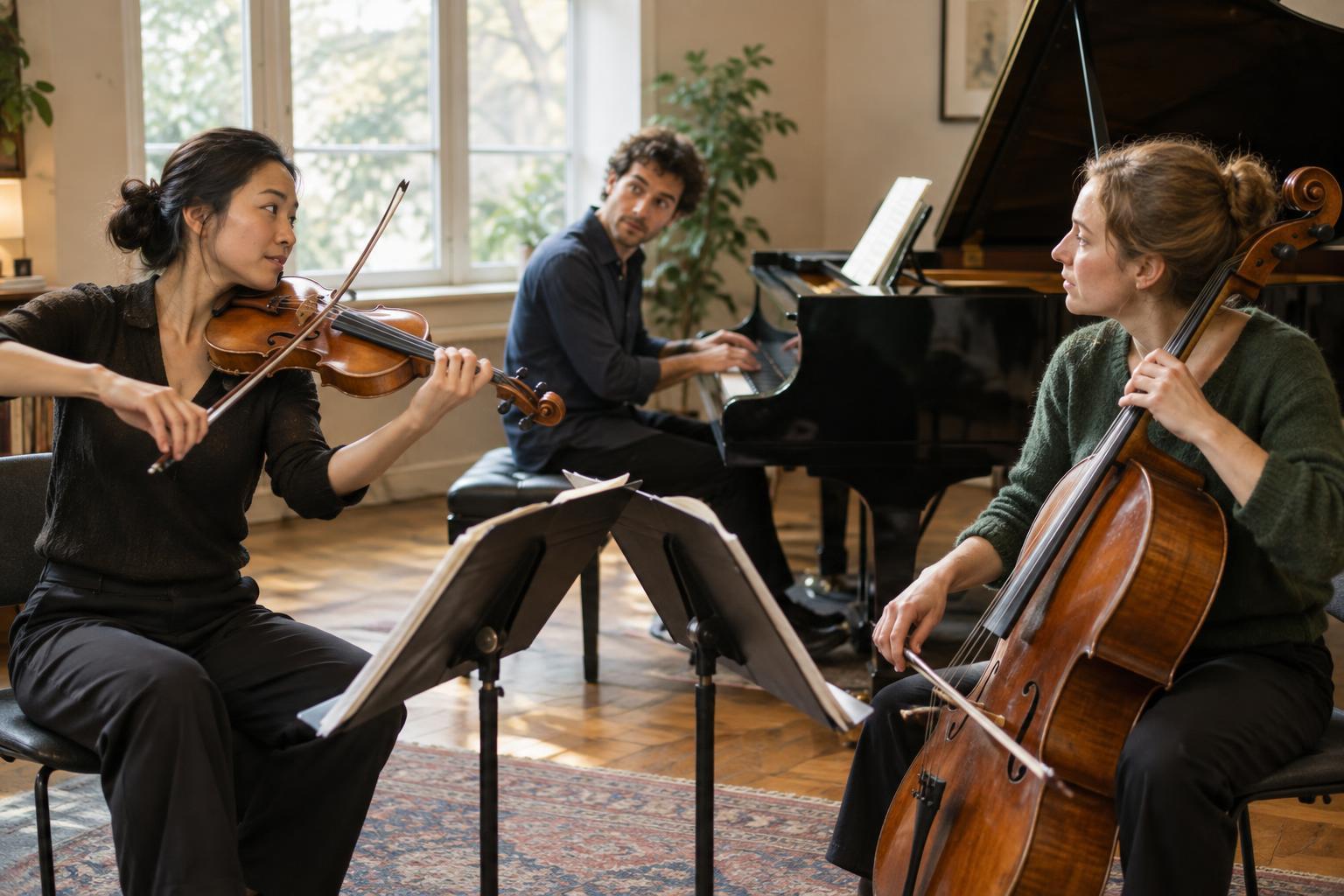
Listening GuidesSyncopation can make a passage feel as though it leans forward, hesitates or answers unexpectedly. Learn to hear how chamber musicians create that effect with accents, rests and notes that cross the beat.
Read article · 4 min↗
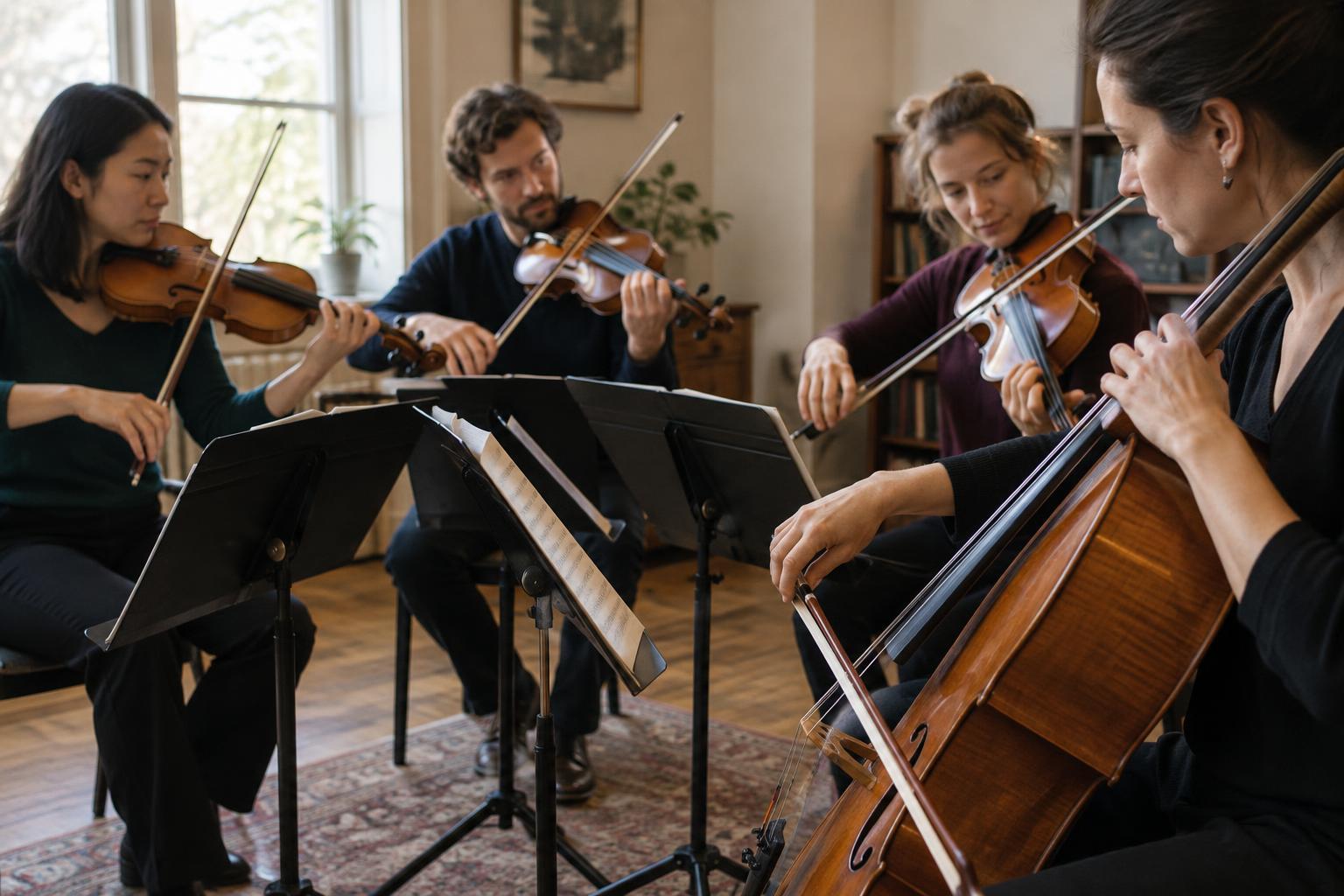
Listening GuidesA chamber ensemble may have no drummer, yet its players still share a sense of musical time. Learn to find the underlying pulse, notice how beats group into meter, and keep your bearings when the rhythm becomes less obvious.
Read article · 4 min↗
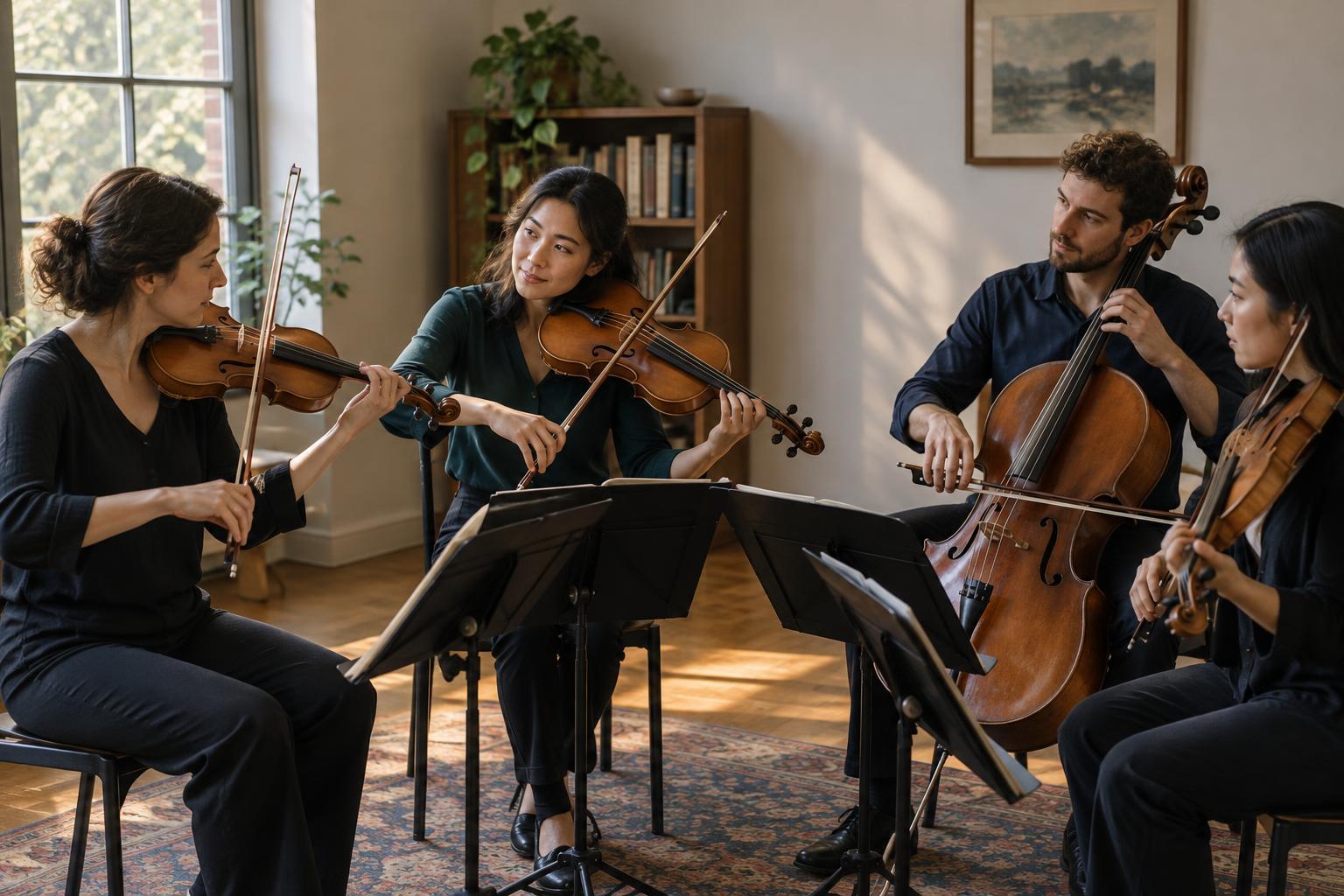
Listening GuidesIn chamber music, a melody may move from one player to another without stopping. Learn to recognize these handoffs by listening for a phrase’s shape, rhythm and direction rather than following one instrument alone.
Read article · 4 min↗
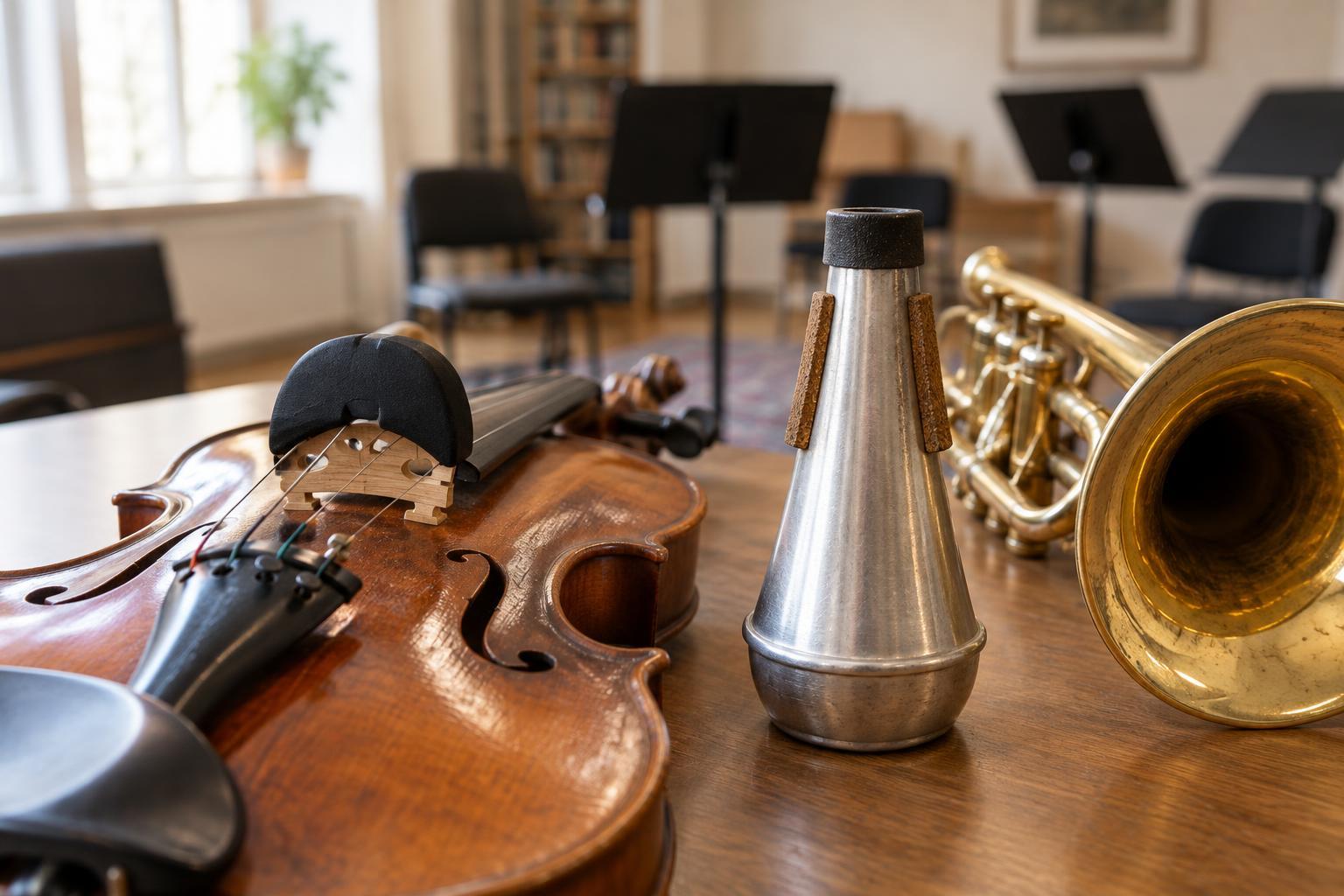
InstrumentsA mute can make a string quartet sound veiled or give a trumpet a bright, concentrated edge. Learn how string and brass mutes work, why their effects differ, and what to listen for in chamber music.
Read article · 4 min↗
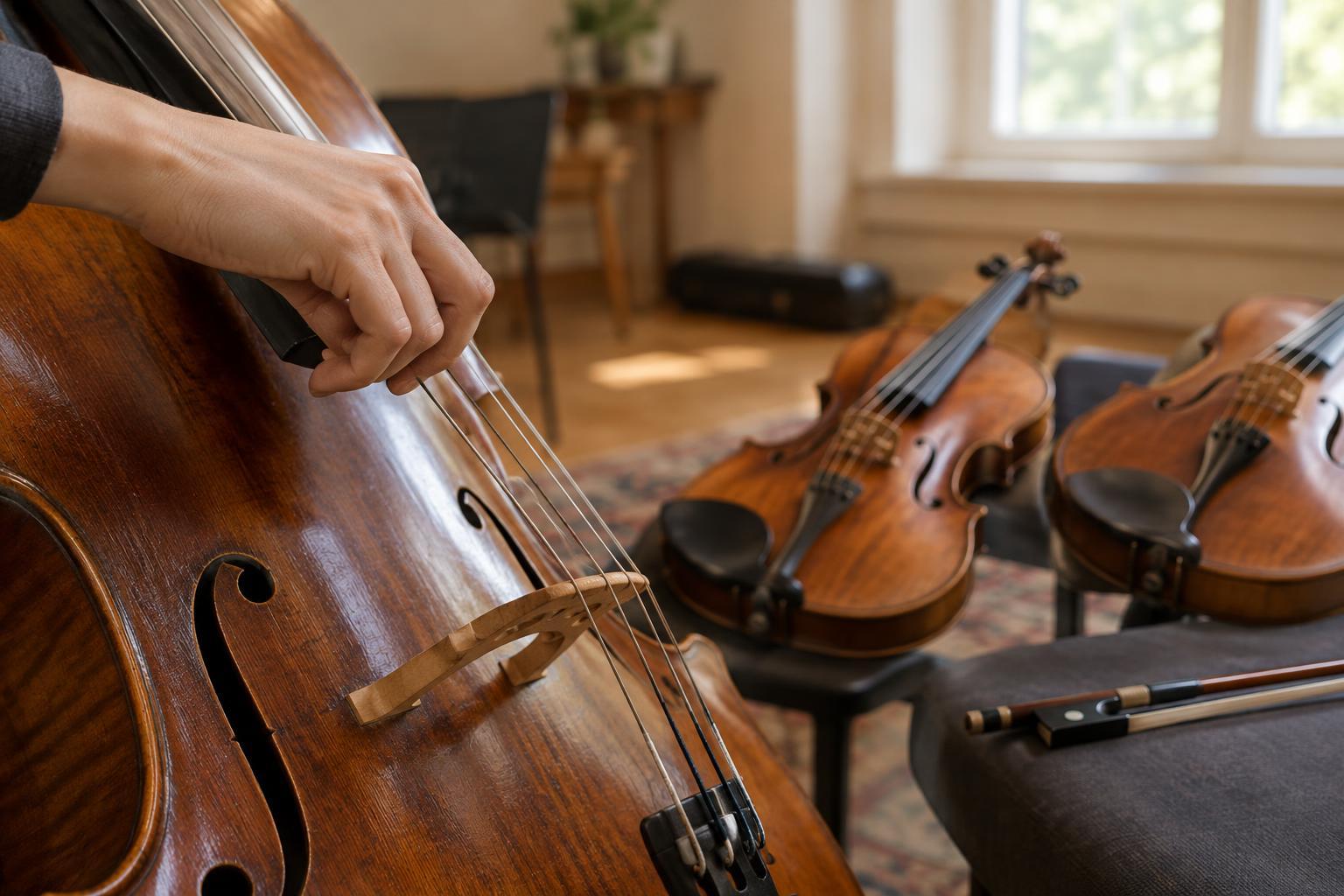
InstrumentsA plucked note from a violin, viola, cello or double bass behaves differently from a bowed one. This guide explains how pizzicato changes a note’s attack, length and role in a chamber ensemble, with practical cues for listening.
Read article · 4 min↗
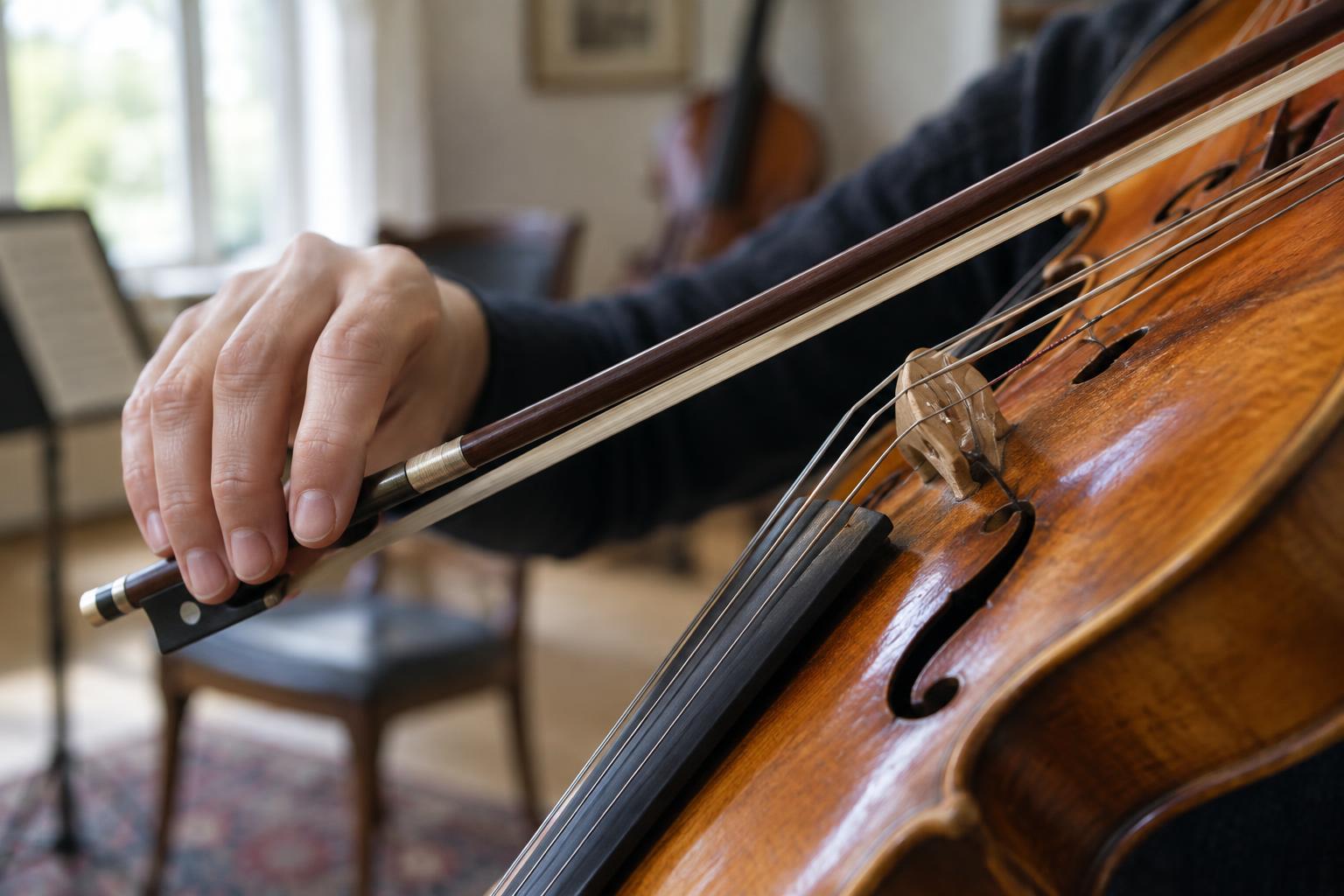
InstrumentsA bowed string can sustain a note for far longer than a plucked one. The secret lies in the interaction between rosin-coated bow hair and the string. Learn how that motion reaches the instrument’s body, and why bow speed, weight and placement change what you hear.
Read article · 4 min↗
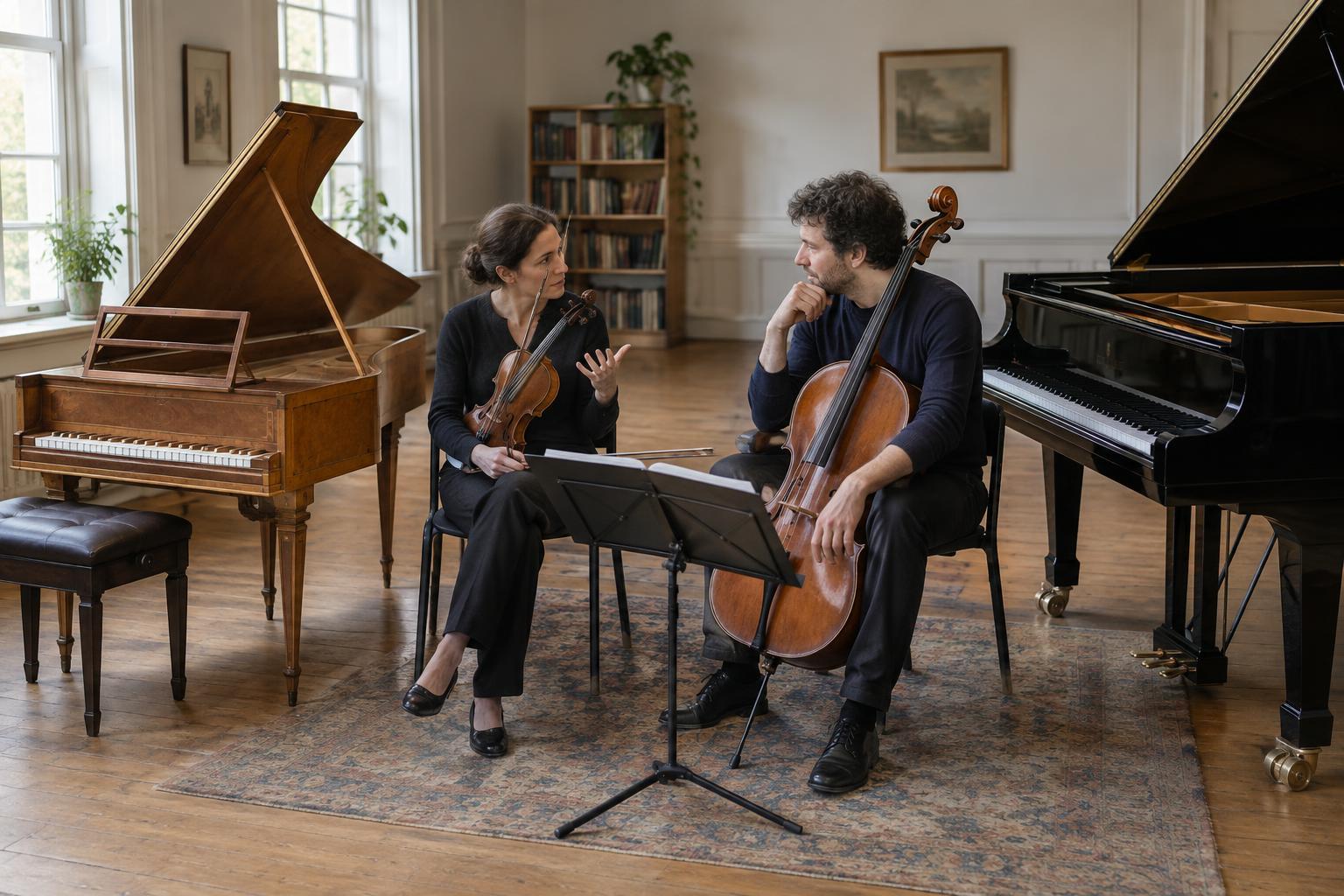
InstrumentsA fortepiano and a modern grand can make the same chamber work feel surprisingly different. Their touch, sustain, volume and tonal range affect how players balance a phrase, choose articulation and listen to one another.
Read article · 4 min↗
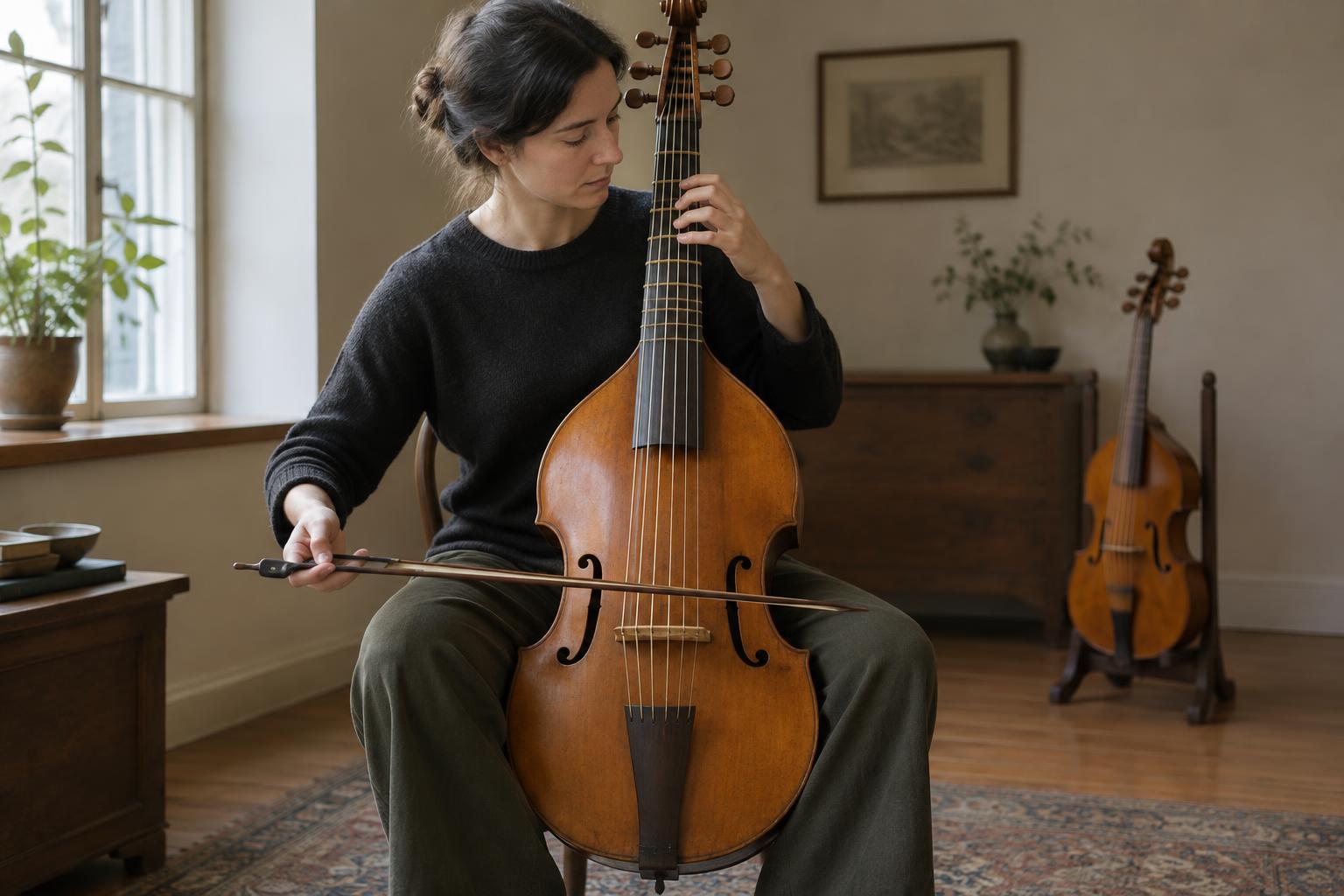
InstrumentsWith frets, a distinctive bow hold and a wide range of sizes, the viola da gamba family has its own place in chamber music. Learn how viols work, where they appear in the repertoire and what to listen for.
Read article · 4 min↗
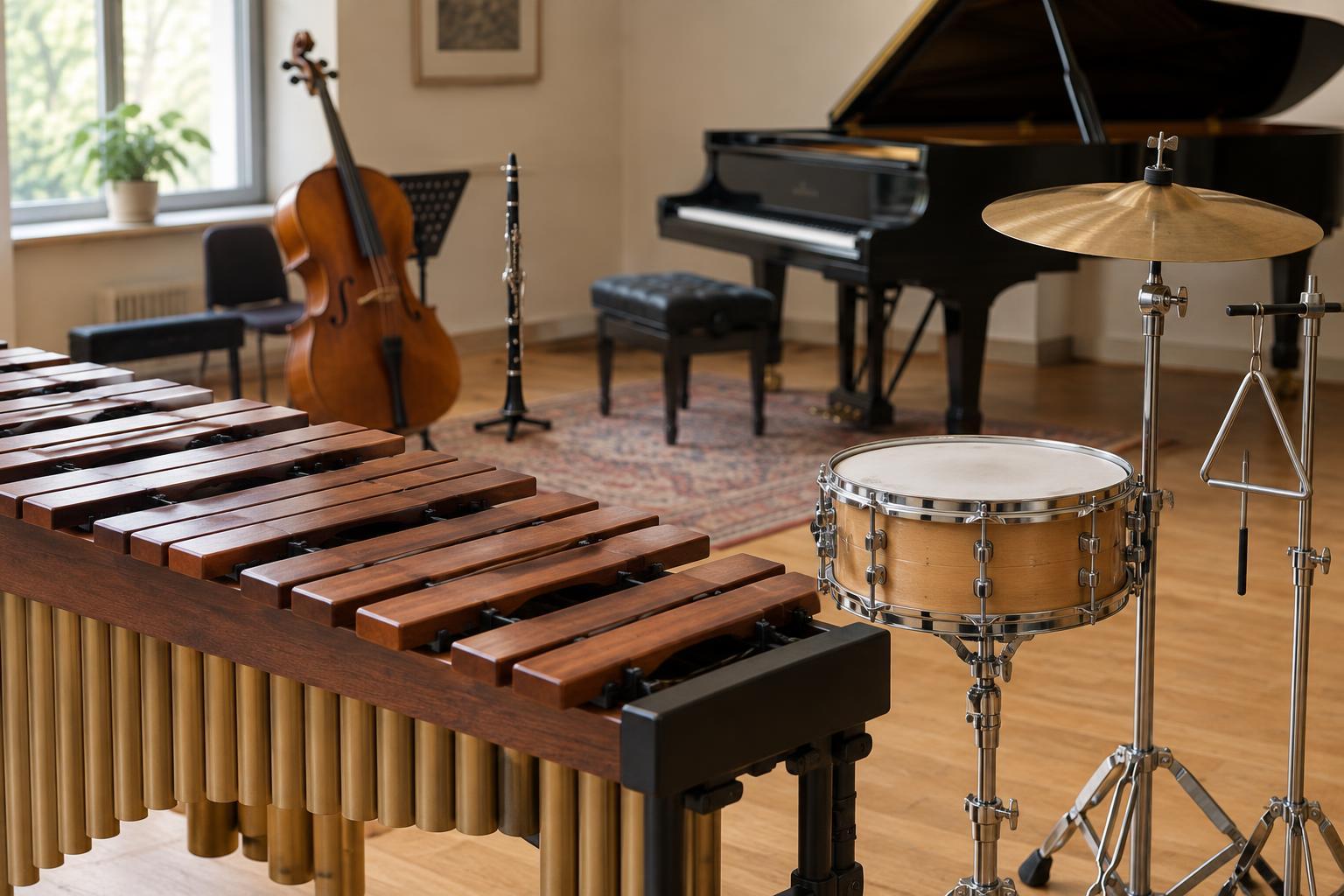
InstrumentsPercussion can supply melody, color, pulse, or silence between sounds. Learn how pitched and unpitched instruments work in small ensembles, and what to listen for when they join strings, winds, and piano.
Read article · 4 min↗
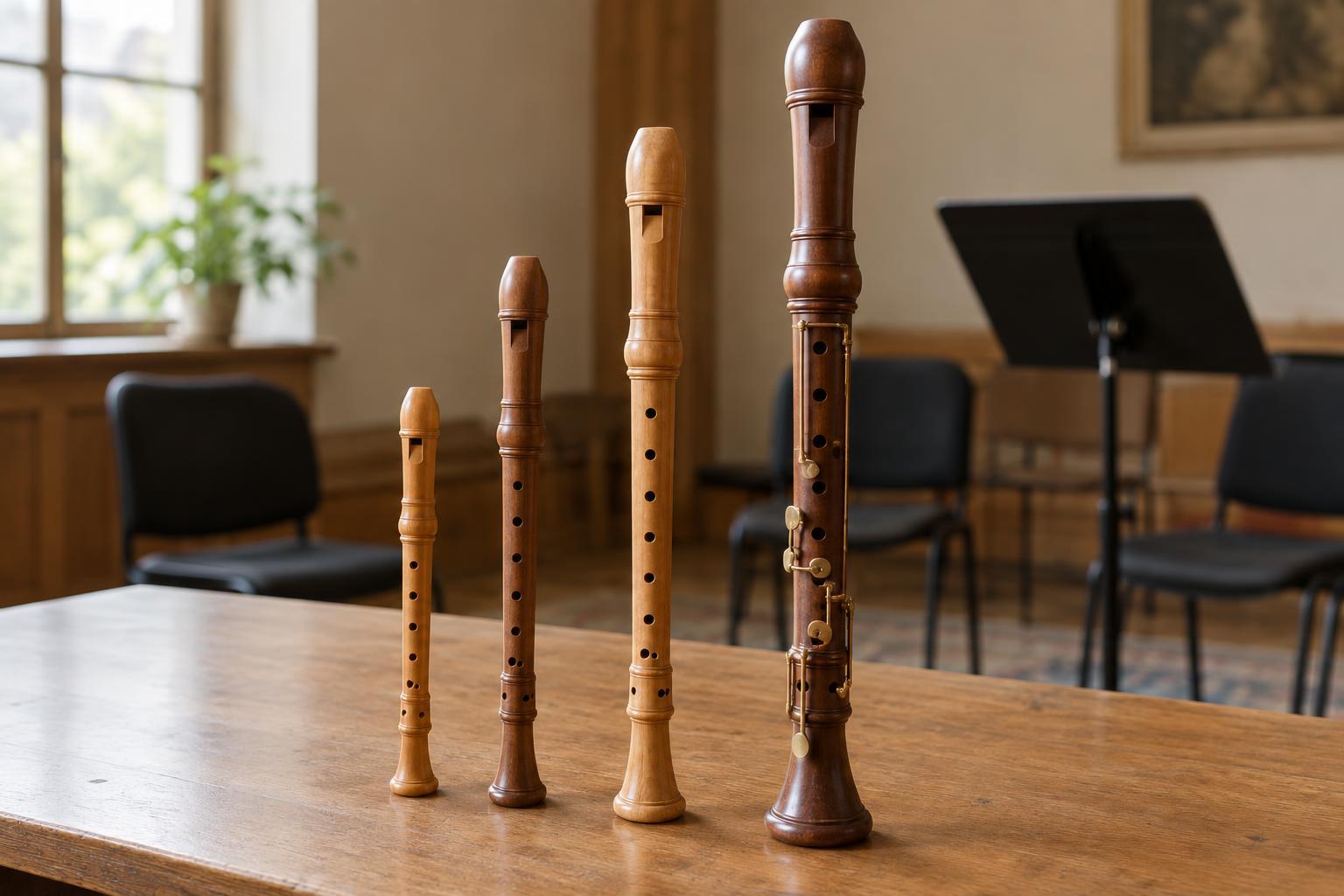
InstrumentsFrom bright soprano to mellow bass, the recorder family offers more variety than its familiar schoolroom member suggests. Learn how the main sizes relate to one another, what their ranges mean in practice and how recorders work in small ensembles.
Read article · 4 min↗
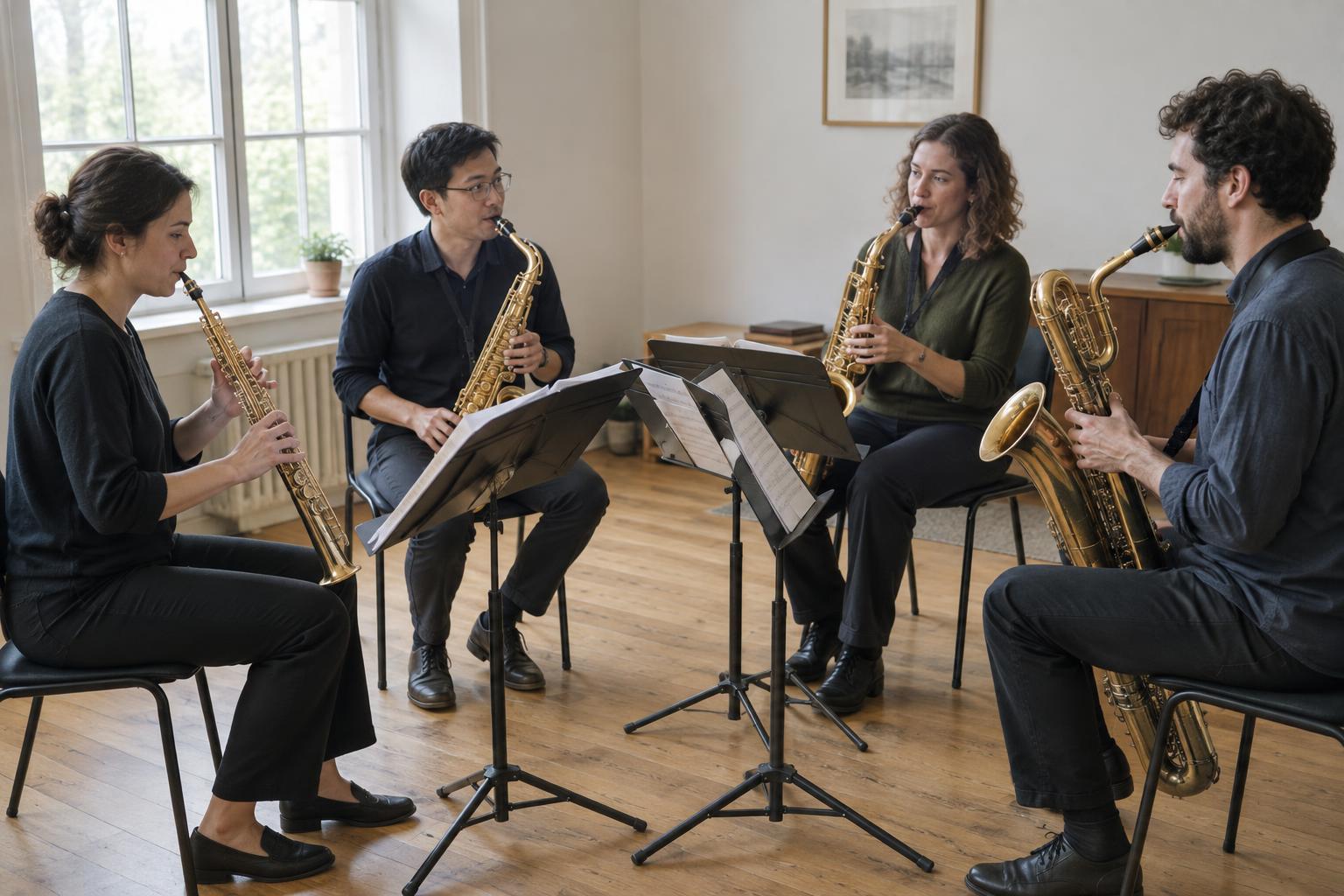
InstrumentsThe saxophone is at home in far more than jazz. Learn how it works in quartets and mixed ensembles, what to listen for, and why its flexible sound makes it a distinctive chamber-music partner.
Read article · 4 min↗
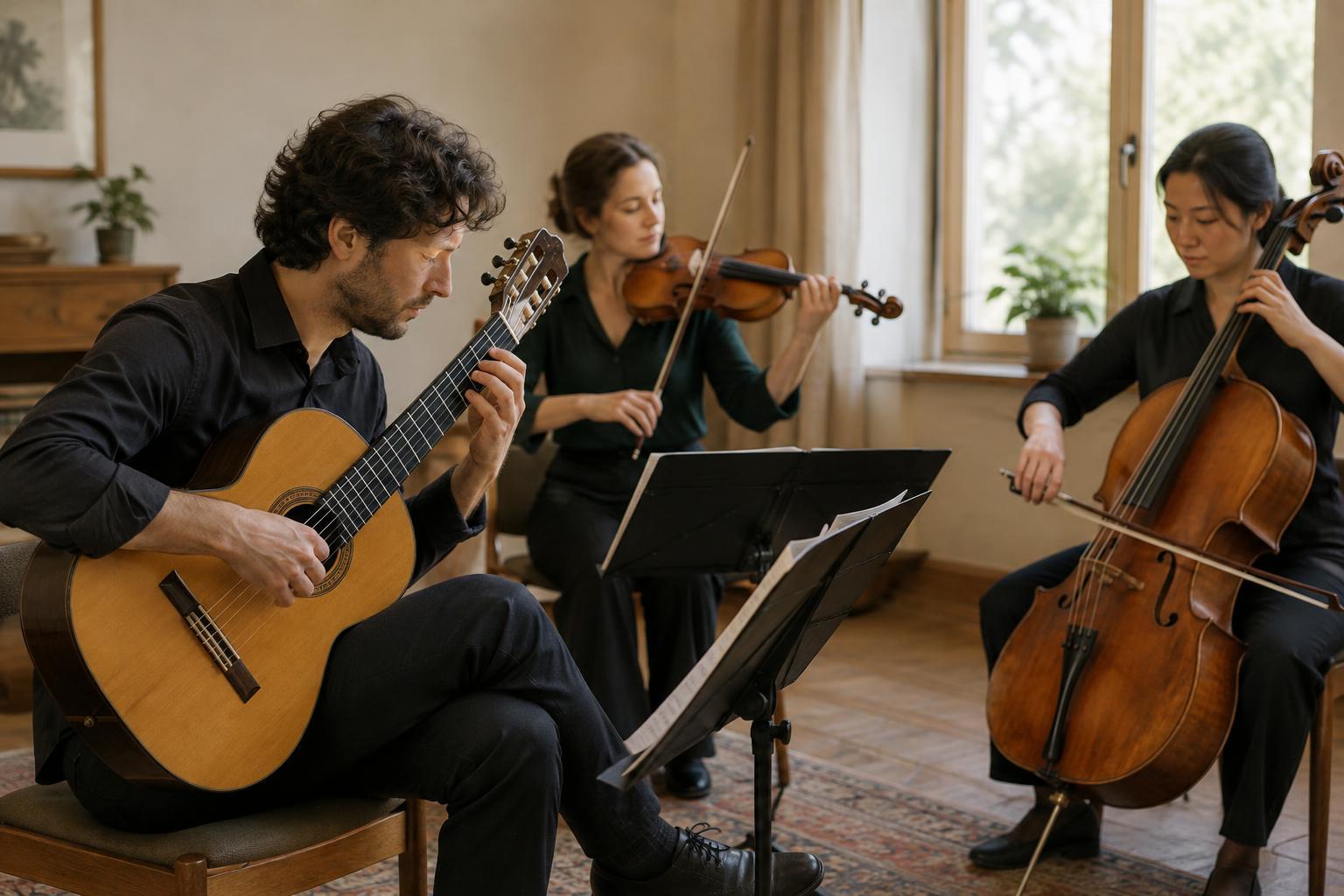
InstrumentsThe classical guitar can sound intimate beside louder chamber instruments, but its range of attacks and colors gives it a distinctive voice. Learn how guitarists shape a phrase, make their sound carry, and work with an ensemble to keep every part audible.
Read article · 4 min↗
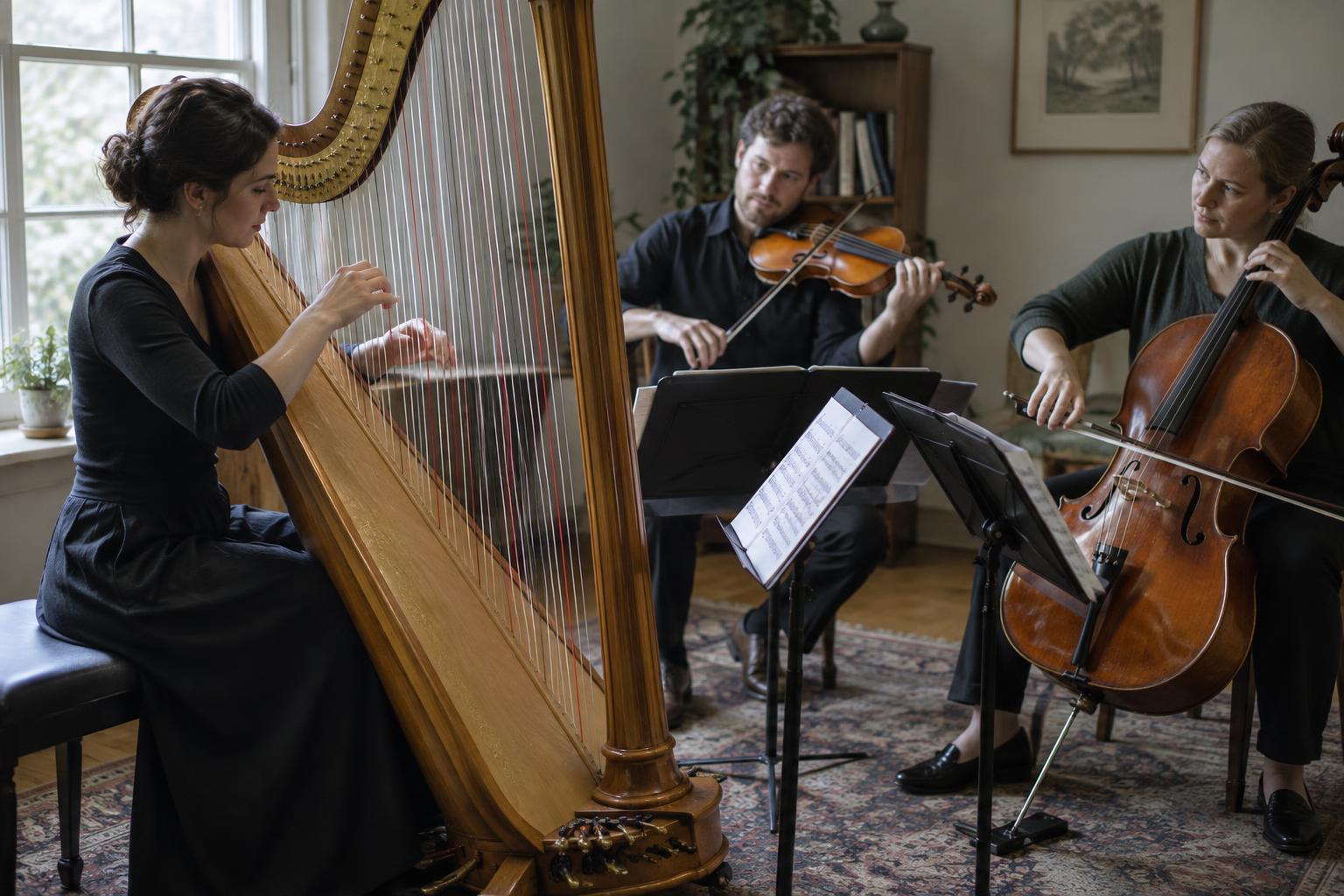
InstrumentsThe harp brings a distinctive attack and lingering resonance to chamber music, but its sound can be easy to cover. Learn what harp pedals do, why players sometimes stop strings from ringing, and how to listen for the instrument within an ensemble.
Read article · 4 min↗
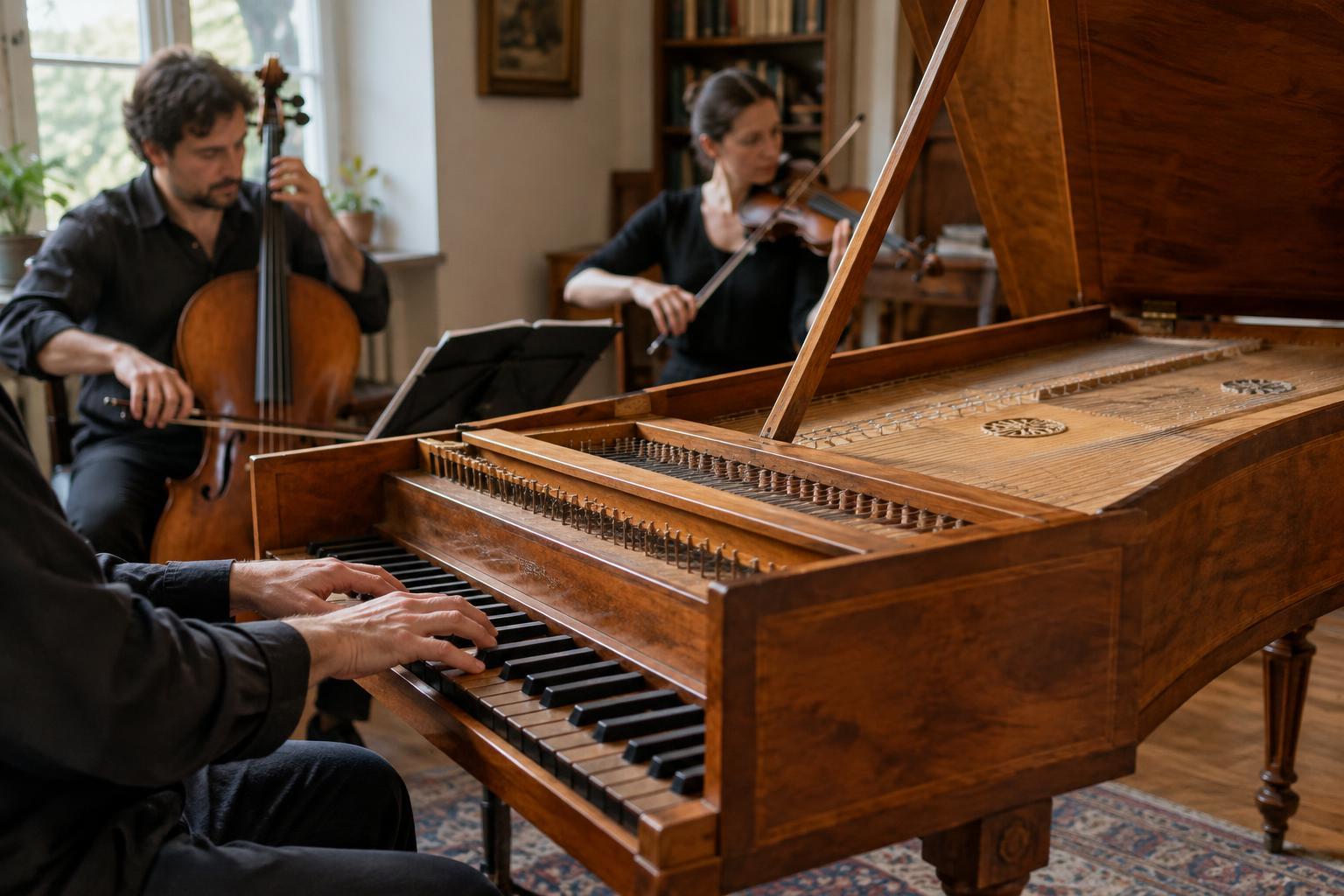
InstrumentsThe harpsichord may look like a small piano, but its plucked strings give it a distinctive sound and role. Learn how it works, what continuo players do, and how to hear the instrument within a chamber ensemble.
Read article · 4 min↗
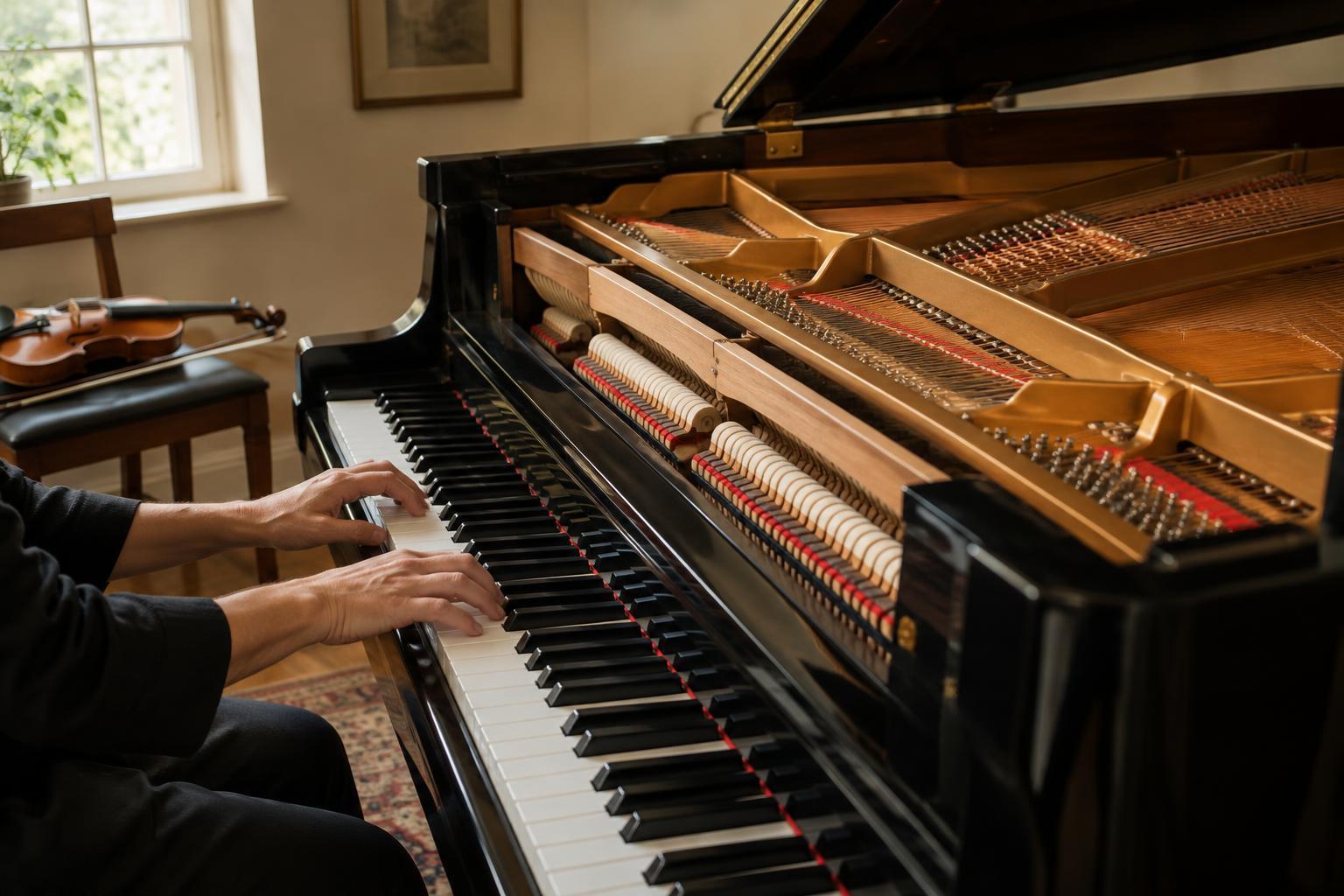
InstrumentsIn a chamber ensemble, the piano can anchor the harmony, carry a melody or add a fleeting color. Understanding its hammers, strings, soundboard and pedals makes it easier to hear how pianists shape their part—and how they share the sound with other players.
Read article · 4 min↗
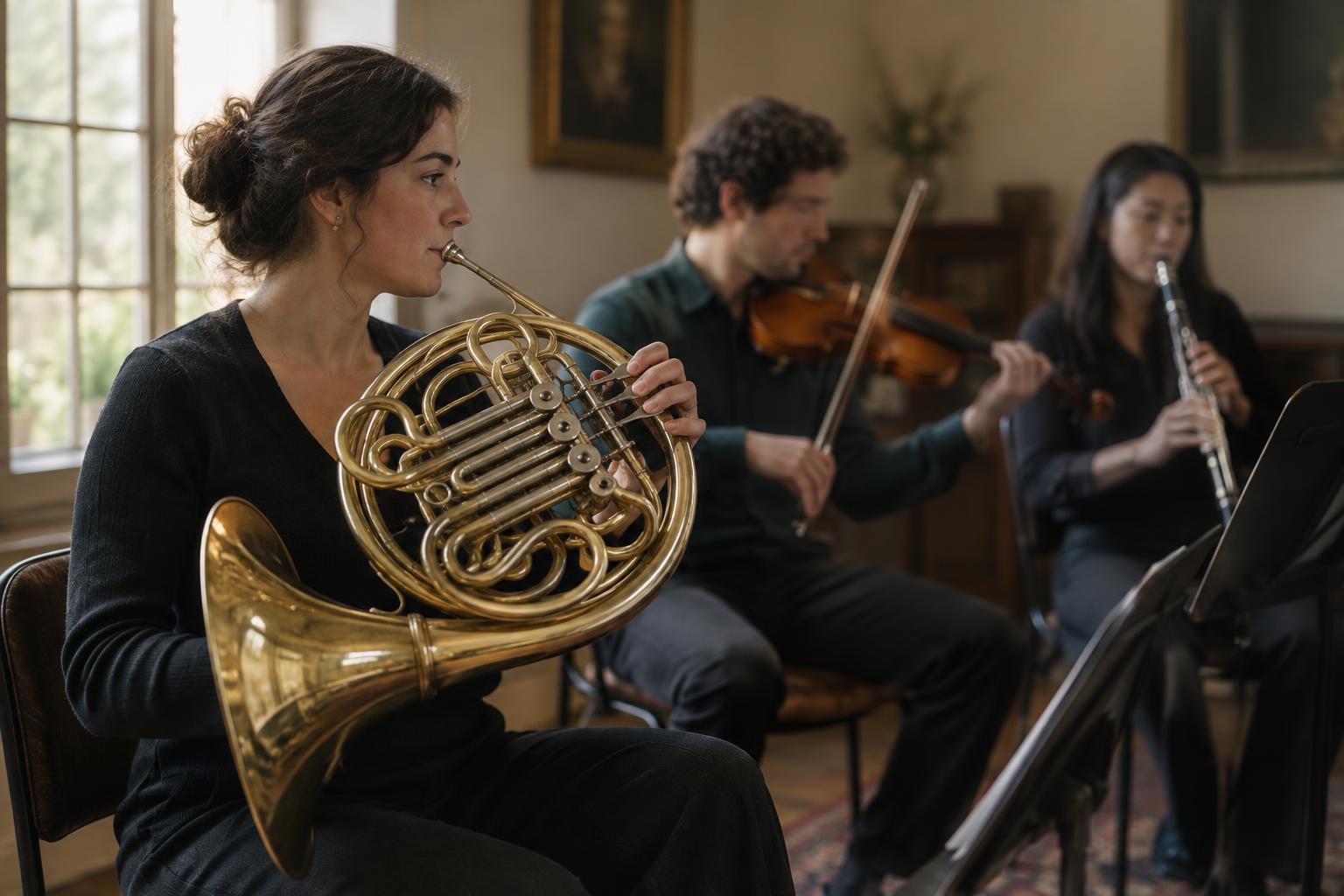
InstrumentsThe French horn can blend with winds, lend warmth to strings and bring striking color to a small ensemble. Learn how its sound, range and playing techniques shape chamber music—and what to listen for.
Read article · 3 min↗
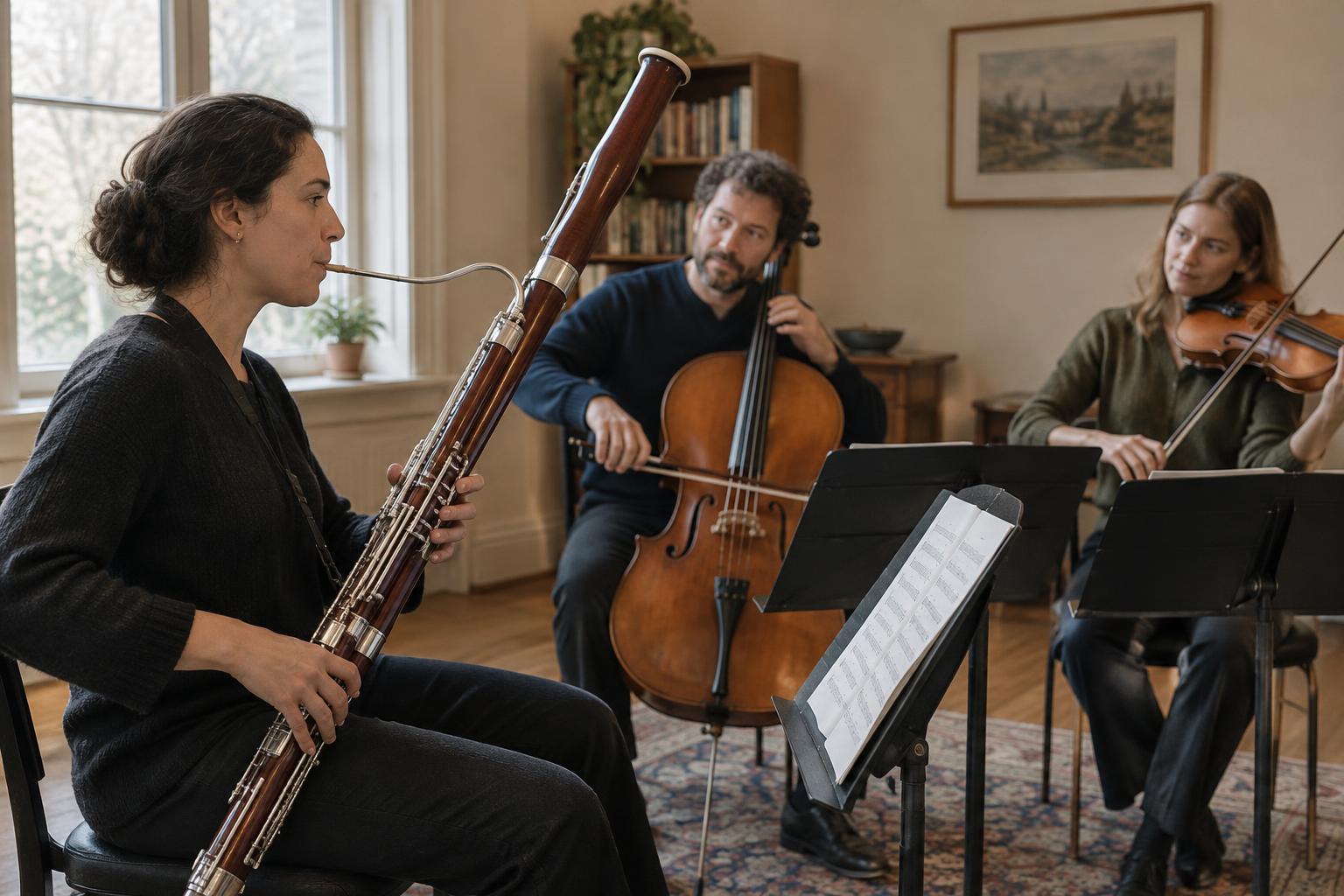
InstrumentsThe bassoon can anchor a chamber ensemble, fill in its inner harmonies, or step forward with a melody of its own. Learn how to hear its changing roles and the musical choices that help it stand out or blend in.
Read article · 4 min↗
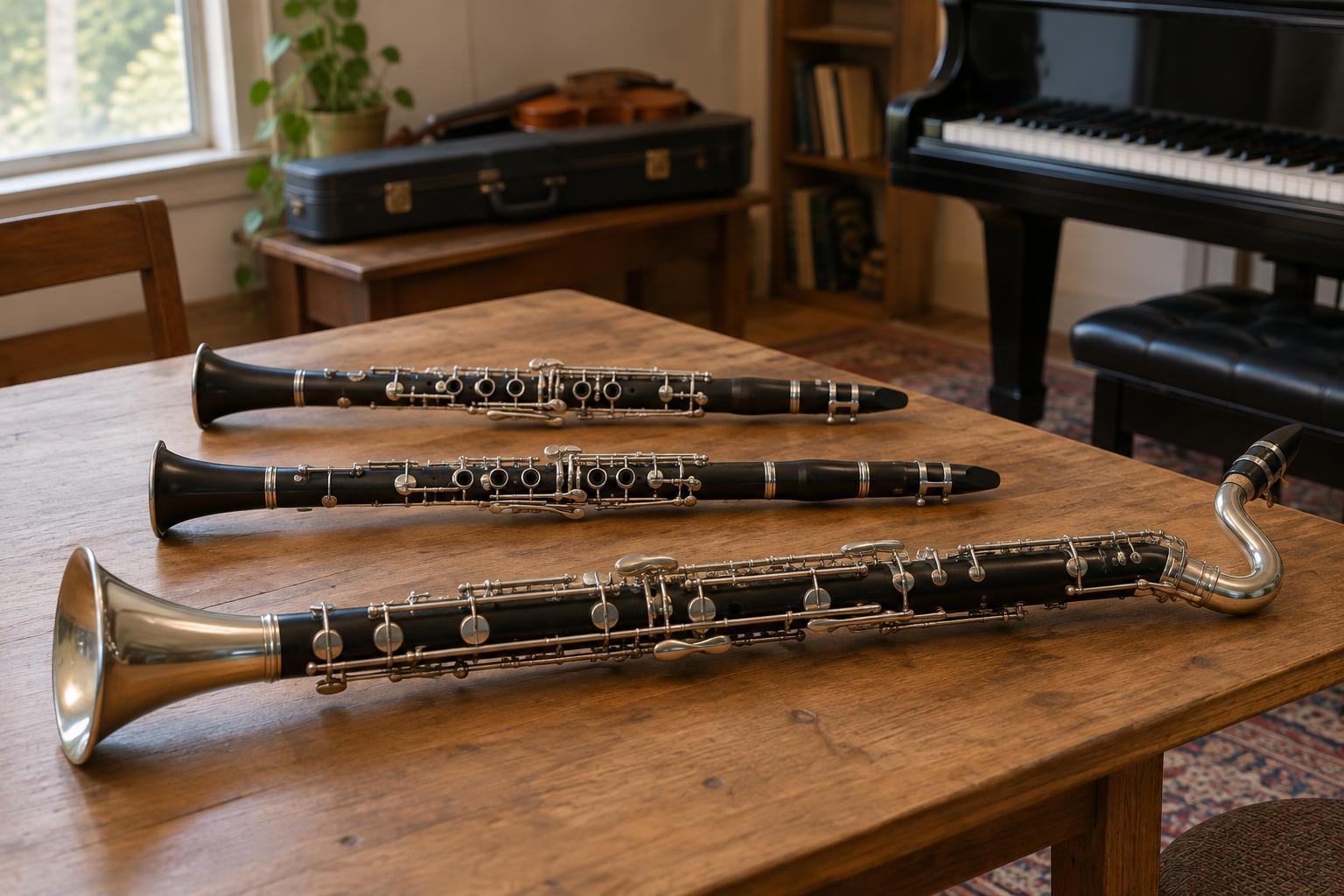
InstrumentsThe B-flat, A and bass clarinets share a family sound, but each brings a different range and character to a chamber ensemble. Learn how to recognize their roles and listen for the ways they blend with strings, piano and winds.
Read article · 4 min↗
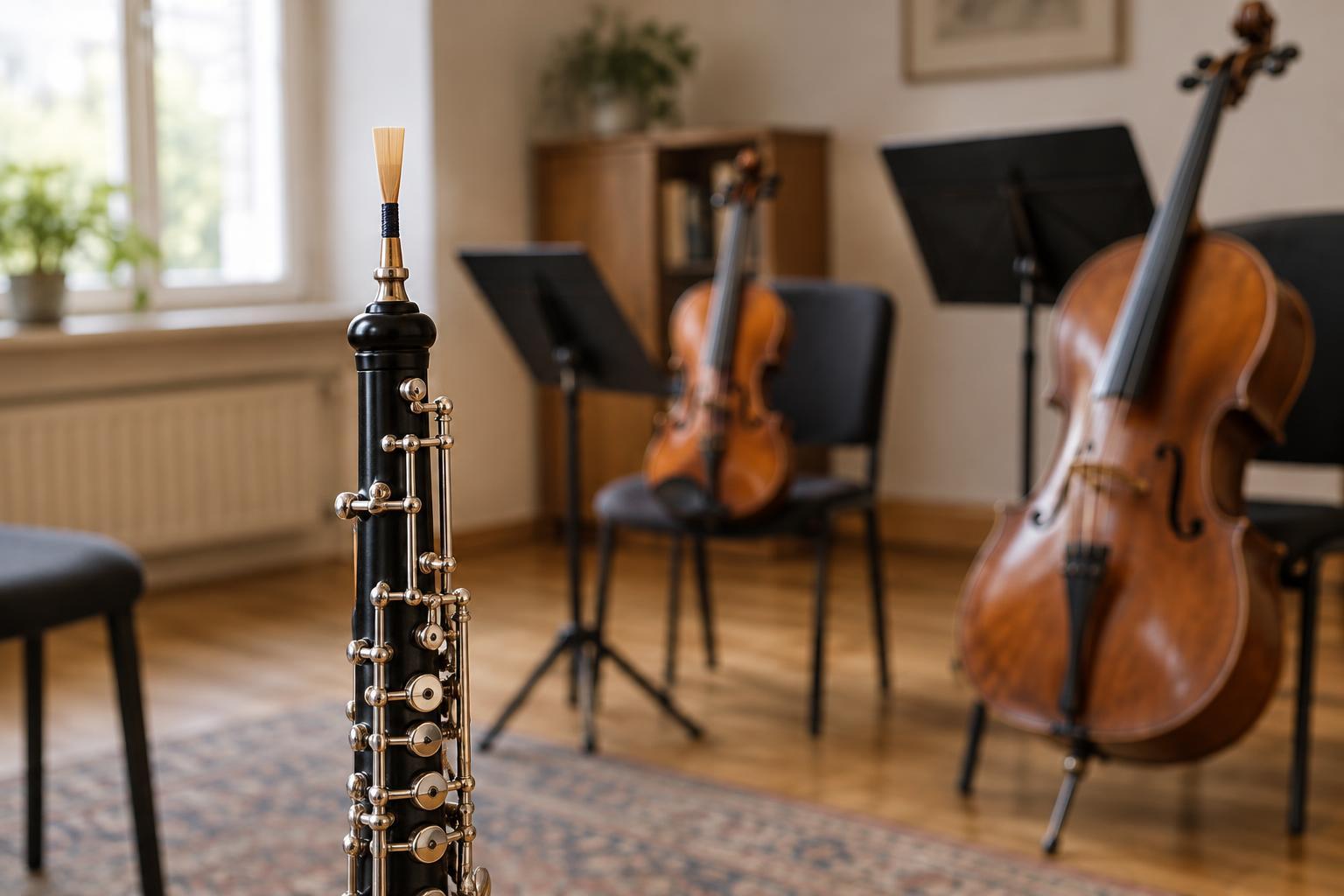
InstrumentsThe oboe’s double reed does more than start a note. It helps shape the instrument’s clear tone, expressive phrasing and distinctive place in a small ensemble. This guide explains what listeners can hear when an oboe leads a melody, blends with other instruments or changes the character of a single phrase.
Read article · 4 min↗

InstrumentsThe flute can be bright, airy, agile or unexpectedly mellow. Learn how its register shapes what you hear, why balance matters in a small ensemble, and how the instrument works with piano, strings and other winds.
Read article · 4 min↗
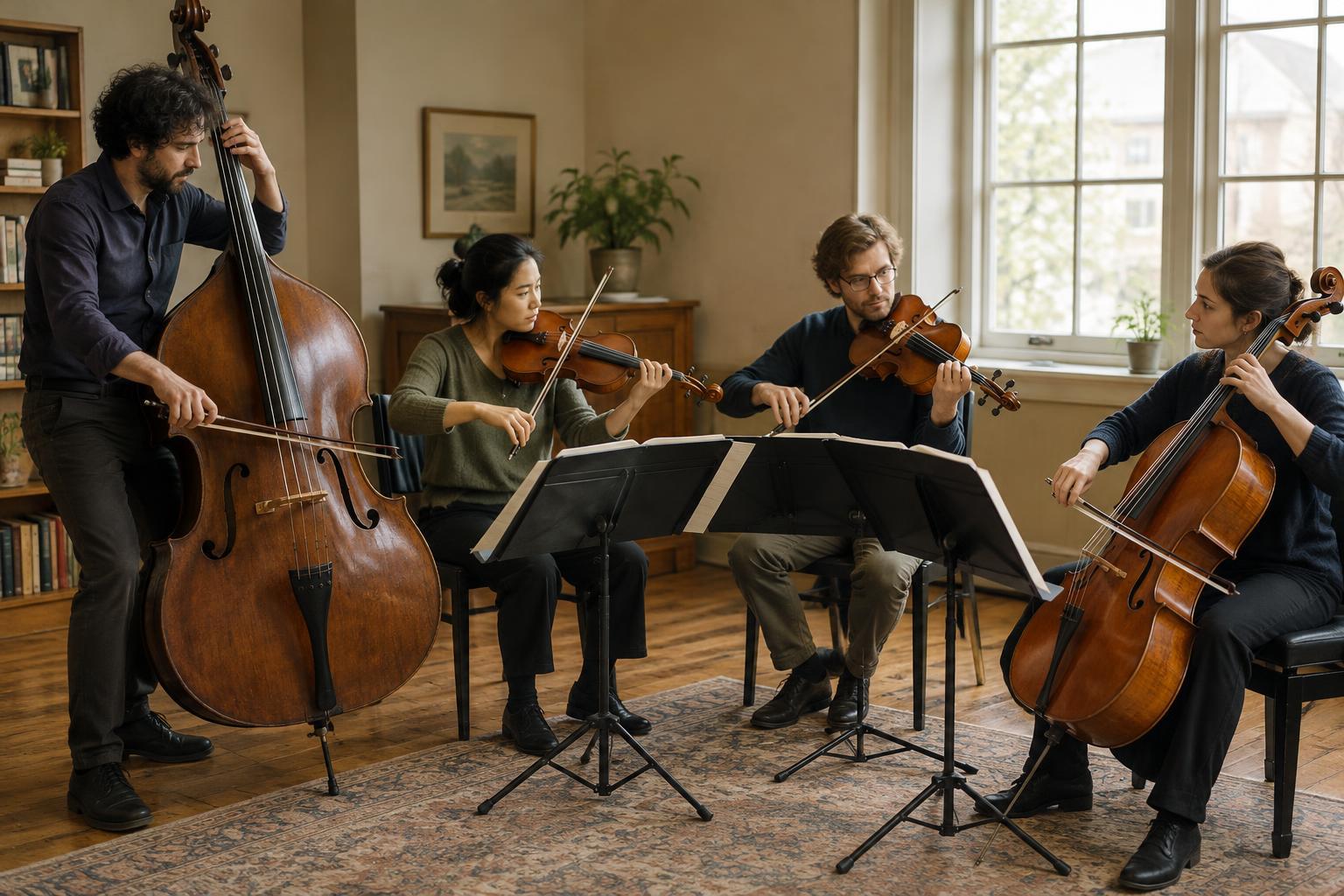
InstrumentsThe double bass can anchor a chamber group, add color, or take an active melodic role. Whether it belongs in an ensemble depends less on its size than on the music’s scoring and the sound the players want to create.
Read article · 3 min↗
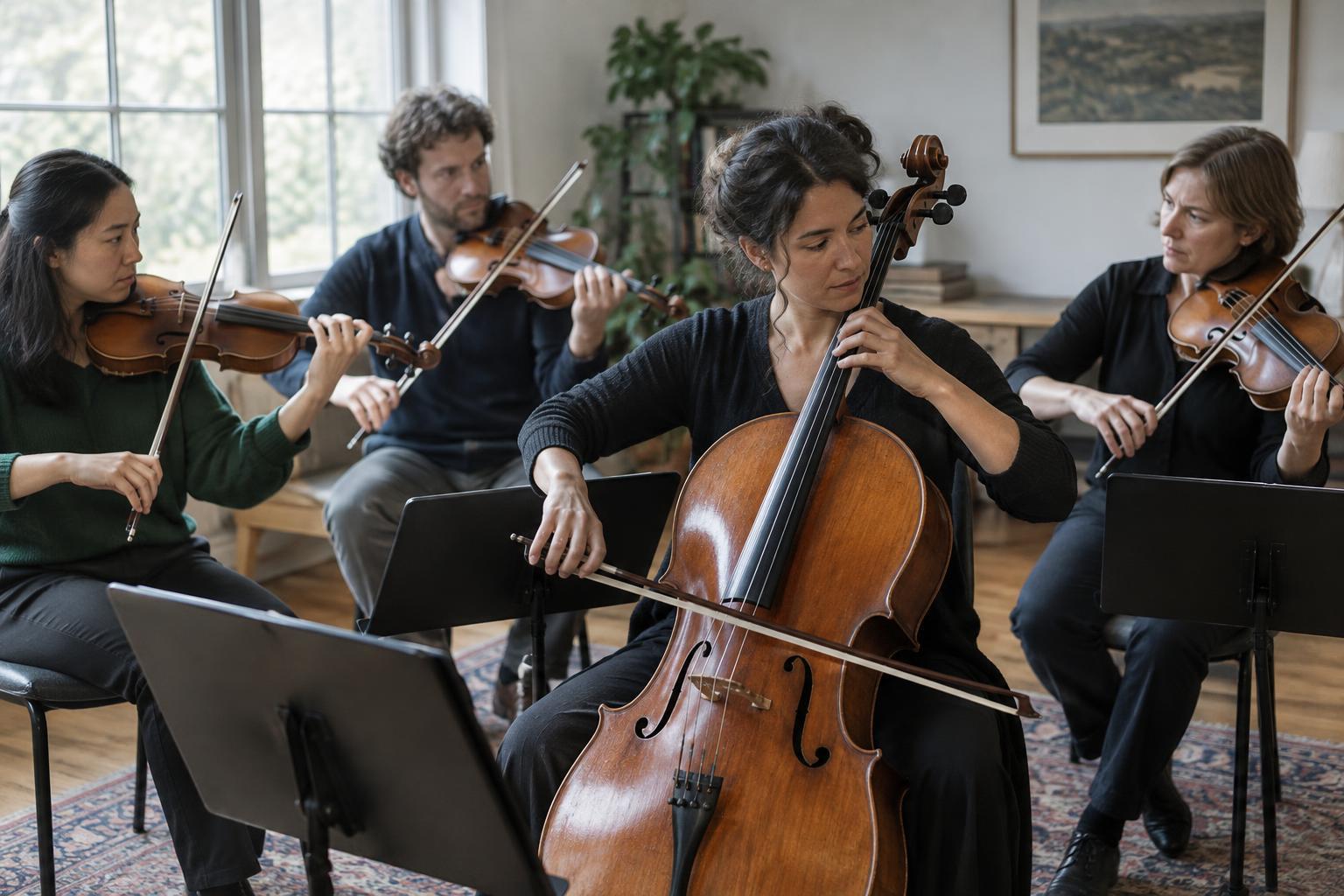
InstrumentsThe cello can anchor a group, carry a singing melody or connect the musical lines around it. Learn how to recognize its changing roles in a string quartet, piano trio and other small ensembles.
Read article · 4 min↗
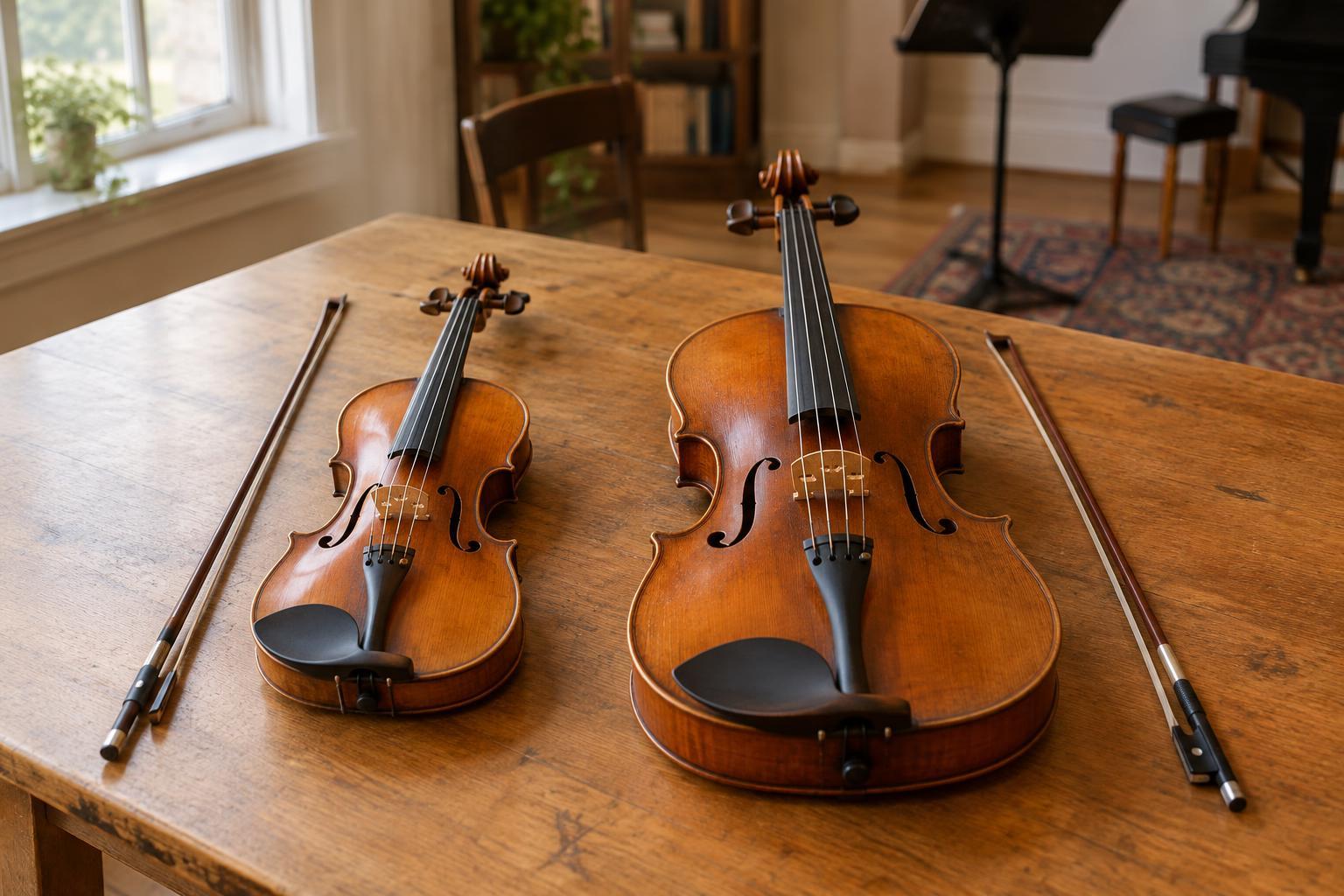
InstrumentsThe violin and viola look alike and share many notes, but their open strings give each instrument a different center of gravity. Learn what to listen for in chamber music, from the viola’s low C string to the violin’s bright E string.
Read article · 4 min↗
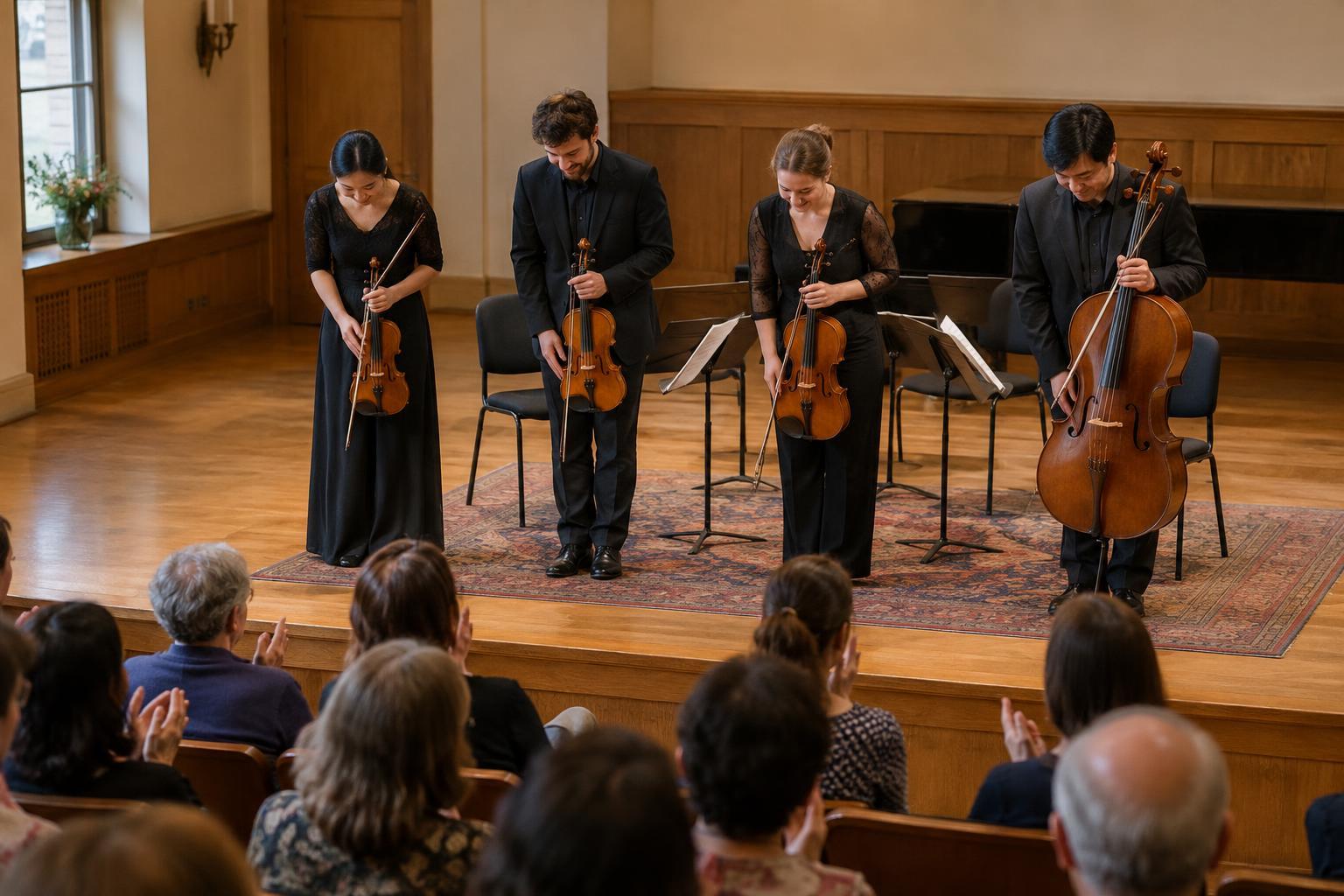
Concert CultureWhat happens after the final note of a chamber concert? Learn why performers bow, when applause may lead to an encore, and how to take part without worrying about unwritten rules.
Read article · 4 min↗
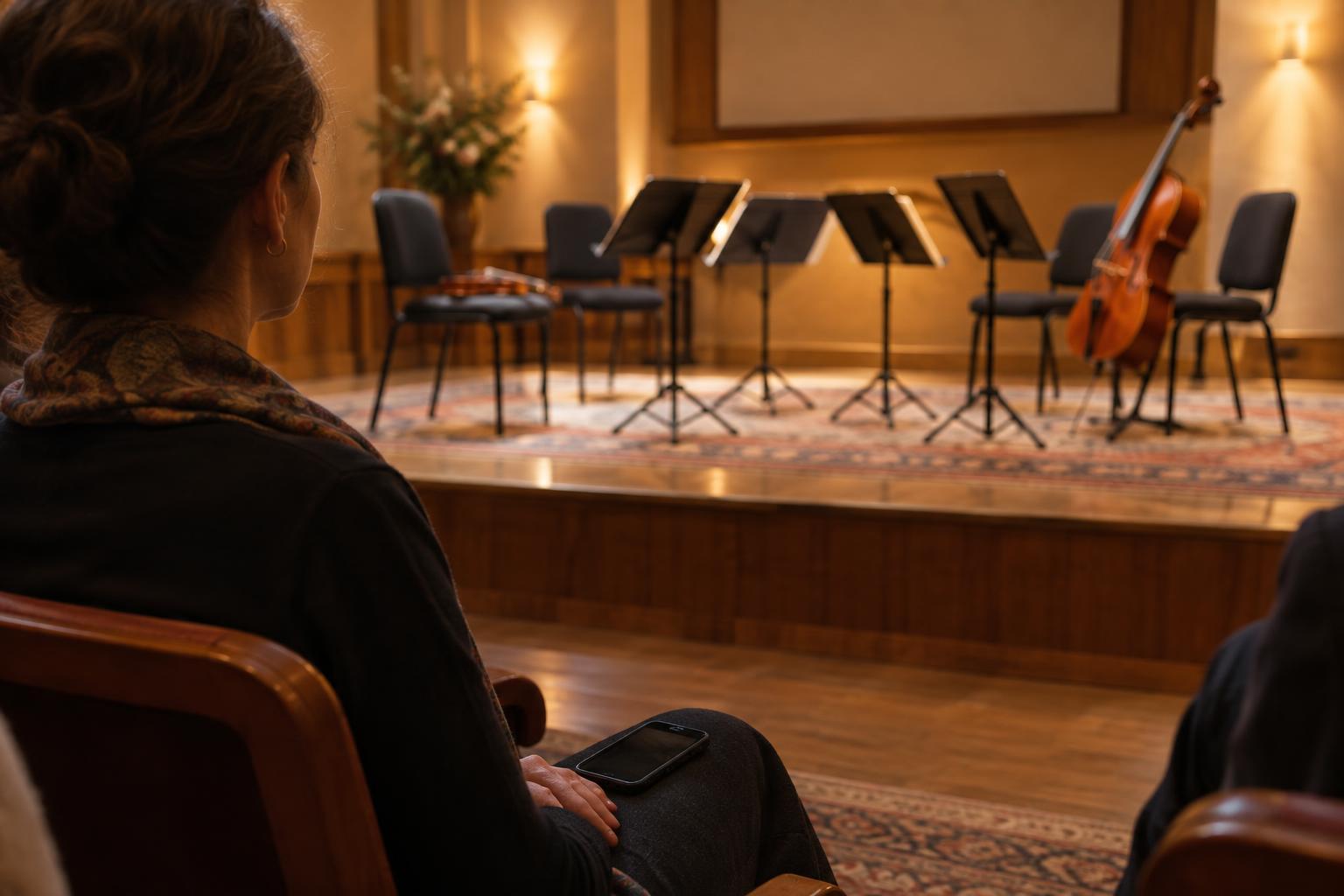
Concert CultureConcert policies on photos and recordings can differ from venue to venue, and even from one event to the next. Here is a practical way to check what is permitted, ask when the answer is unclear, and keep your phone from interrupting the music.
Read article · 4 min↗
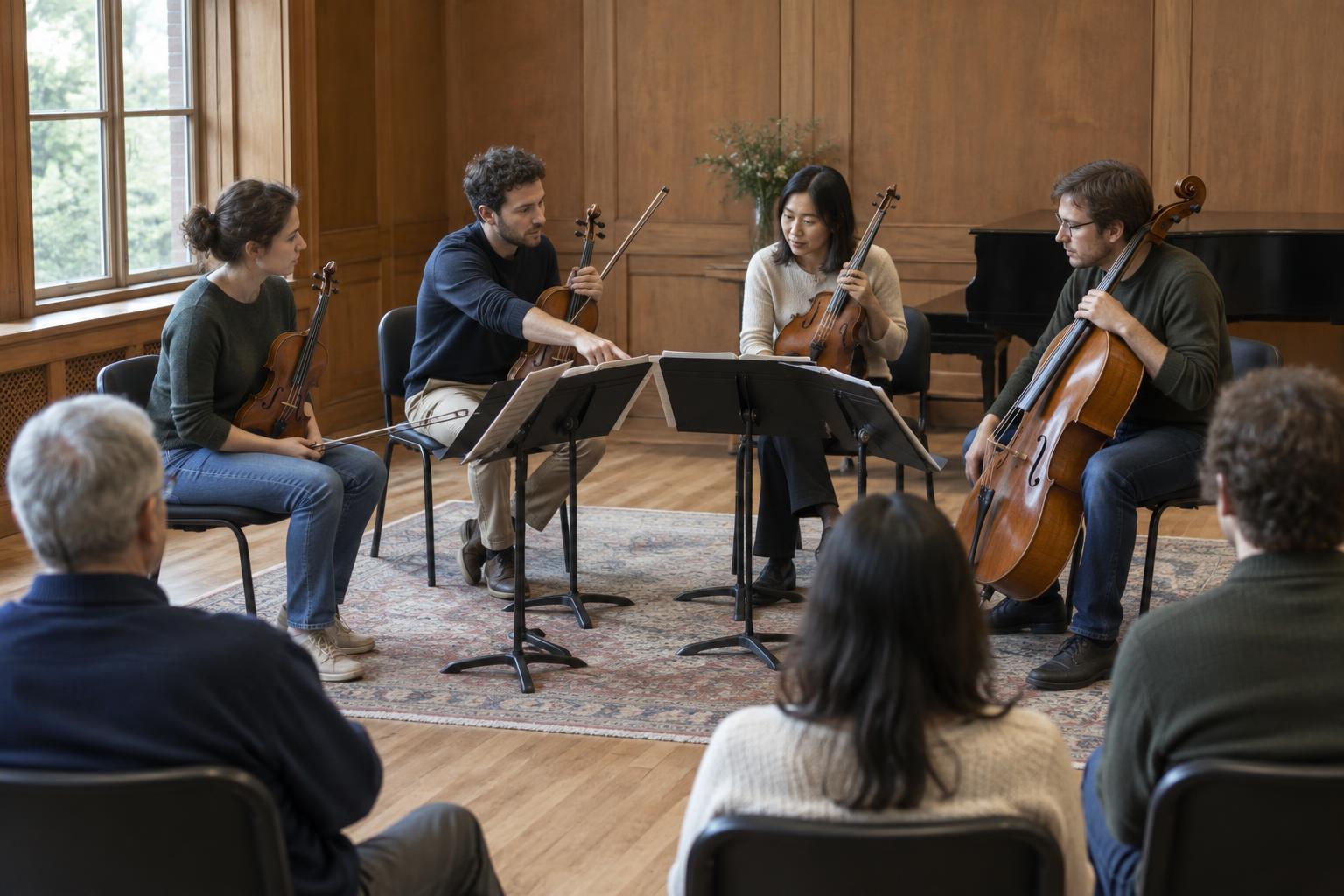
Concert CultureAn open rehearsal lets listeners hear musicians shape a performance rather than simply present it. Learn why the music may stop, what to listen for, and how to be a considerate guest.
Read article · 3 min↗
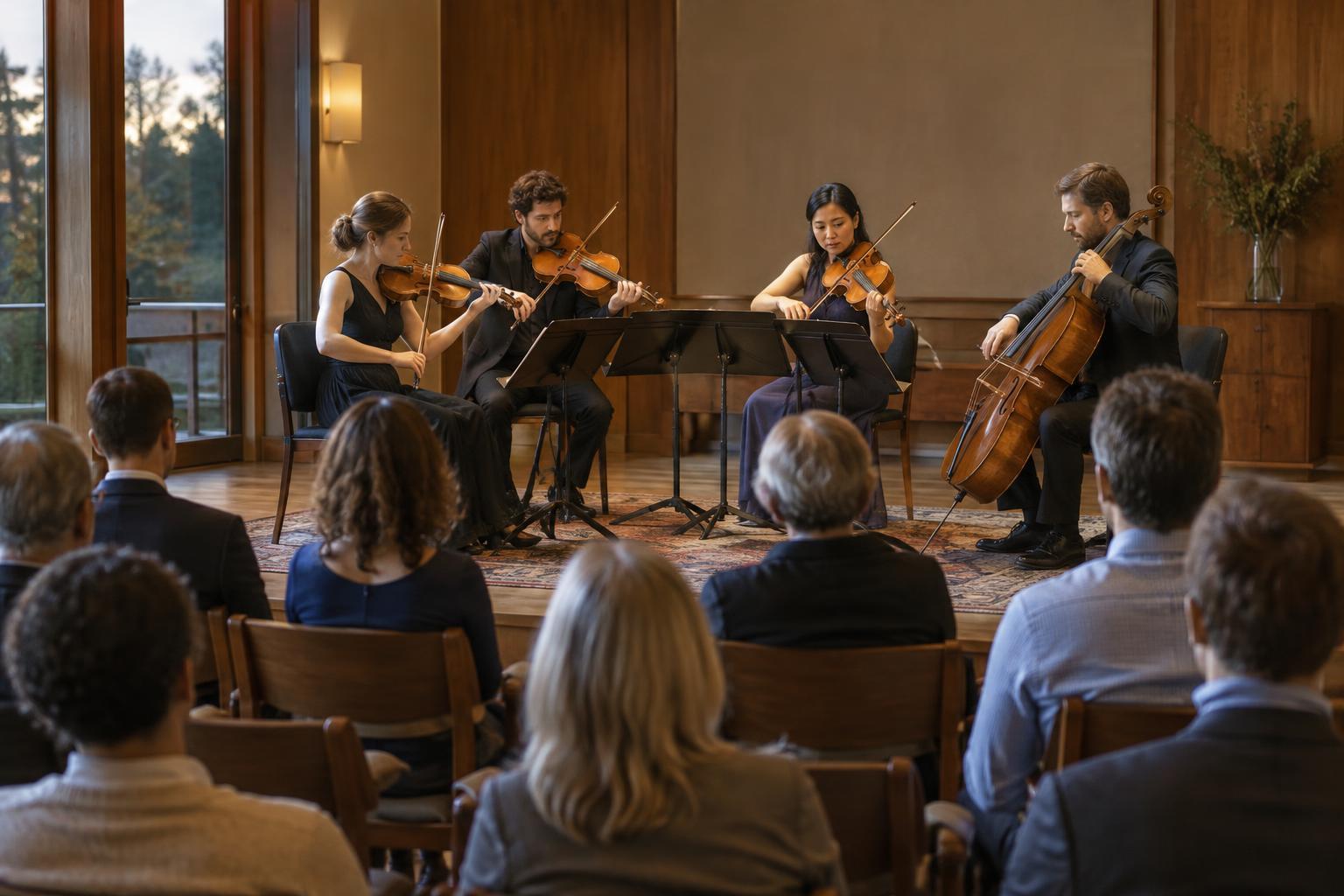
Concert CultureA formal recital and an informal chamber concert may feature similar music, but the audience experience can feel quite different. Learn what to expect from seating, applause, conversation and dress, and how to follow the room without worrying about perfect etiquette.
Read article · 4 min↗
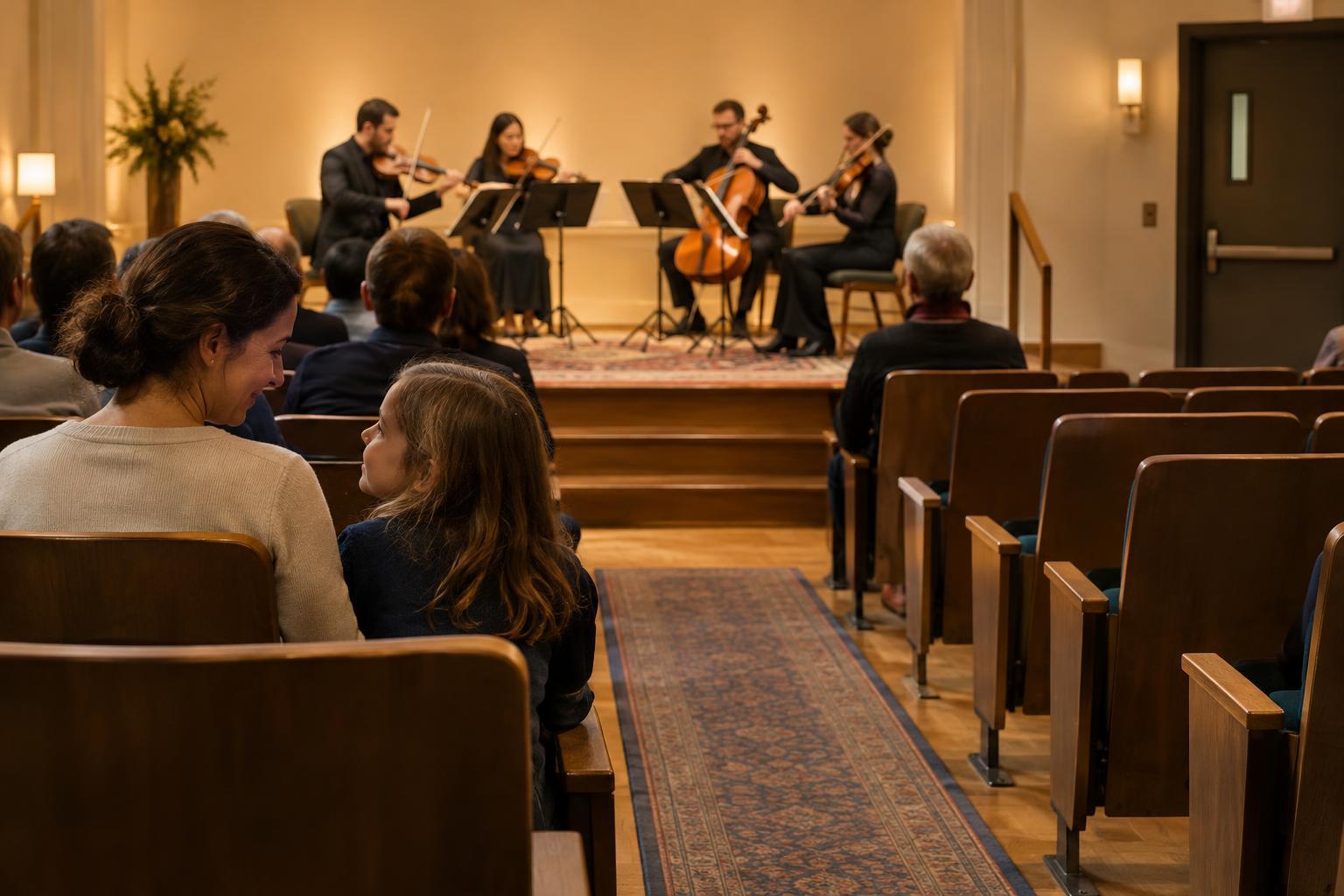
Concert CultureA chamber concert can be a welcoming first encounter with live music when the event suits the child and the adults have a flexible plan. Learn what to check before booking, how to choose seats, and how to make a quiet exit if a break is needed.
Read article · 4 min↗

Concert CultureA chamber concert can be easier to enjoy when the practical details are settled before the first note. This guide covers questions to ask about seats, step-free routes, arrival and hearing support, while recognizing that every venue works differently.
Read article · 4 min↗
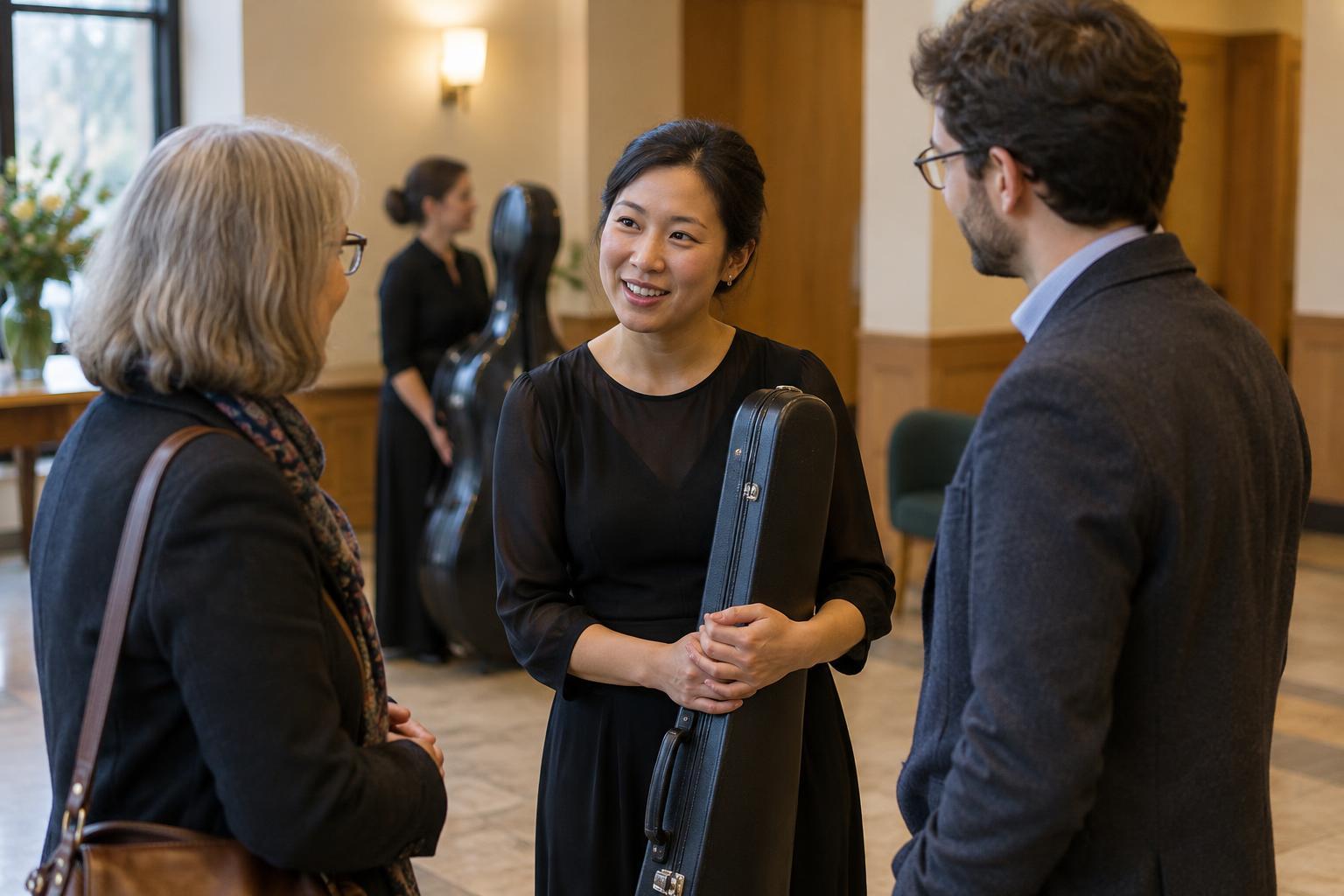
Concert CultureA post-concert conversation can deepen your experience of chamber music without requiring specialist knowledge. Learn how to ask thoughtful questions, share a response, and respect musicians’ time in a reception or public Q&A.
Read article · 4 min↗
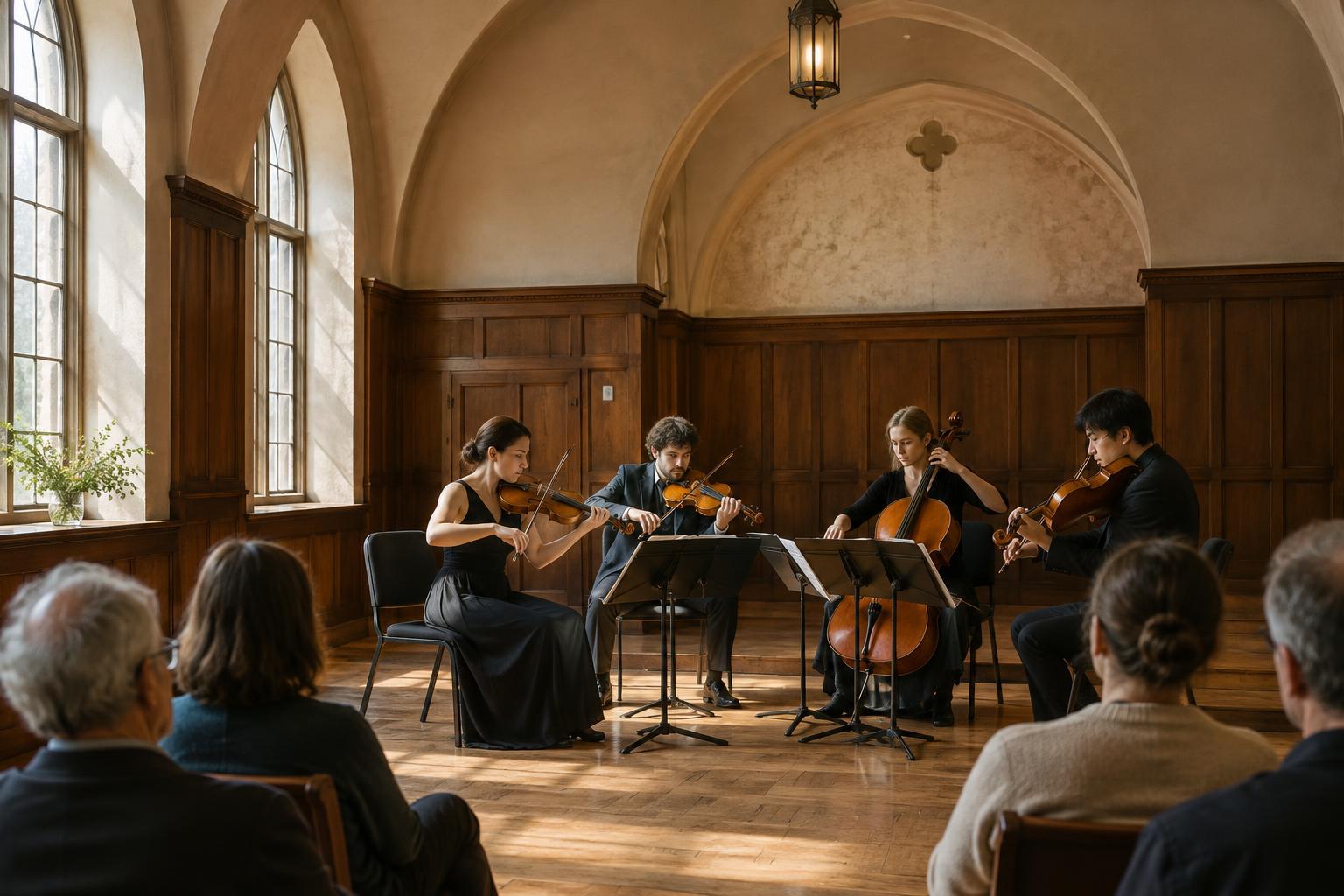
Concert CultureThe room is part of every chamber music performance. Learn how recital halls, churches and house concerts can change what you hear, how close you feel to the players and what to expect as an audience member.
Read article · 4 min↗

Concert CultureIntermission is a chance to stretch, talk, and prepare for the second half of a concert. Here is what to expect in the lobby, how to tell when the music is about to resume, and what to do if you reach the hall after the doors close.
Read article · 4 min↗
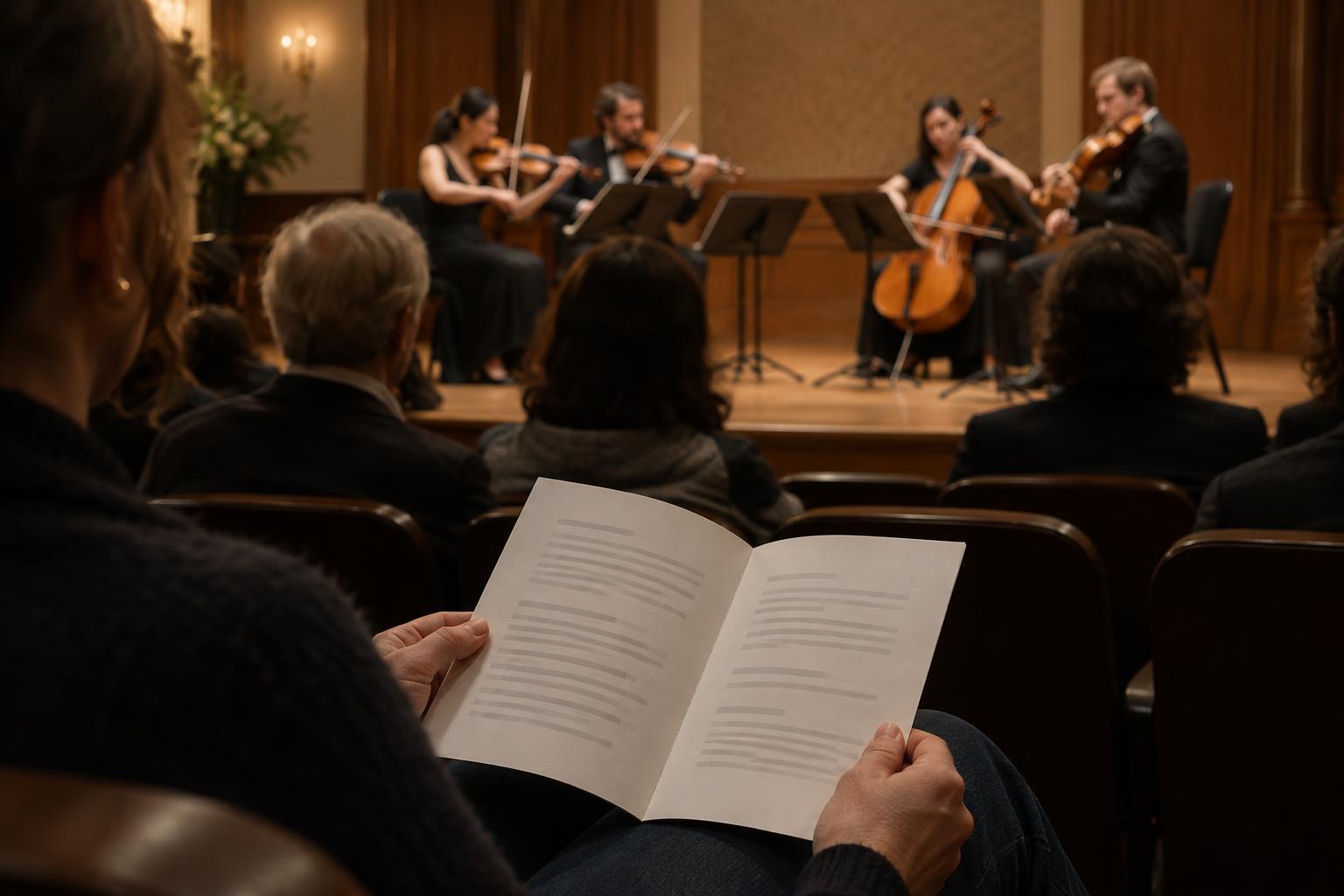
Concert CultureA concert program can help you follow the music without turning listening into homework. Learn what to read before the first note, how to find your place in a multi-movement work, and when to set the booklet aside.
Read article · 4 min↗
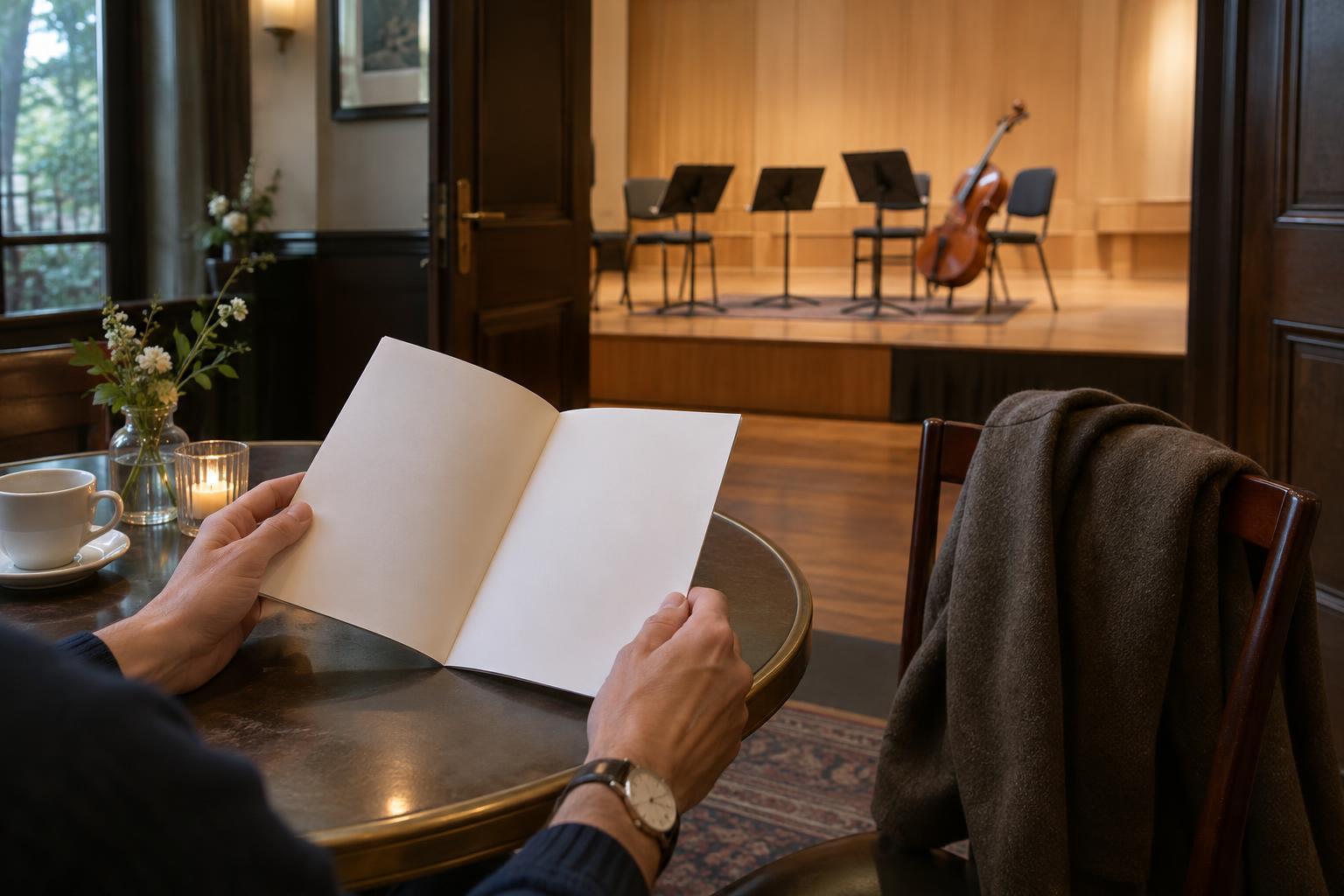
Concert CultureA chamber concert’s listed start time rarely tells you when you will be heading home. Learn how to read a program, allow for pauses and intermissions, and make an evening plan with enough flexibility to enjoy the music.
Read article · 4 min↗
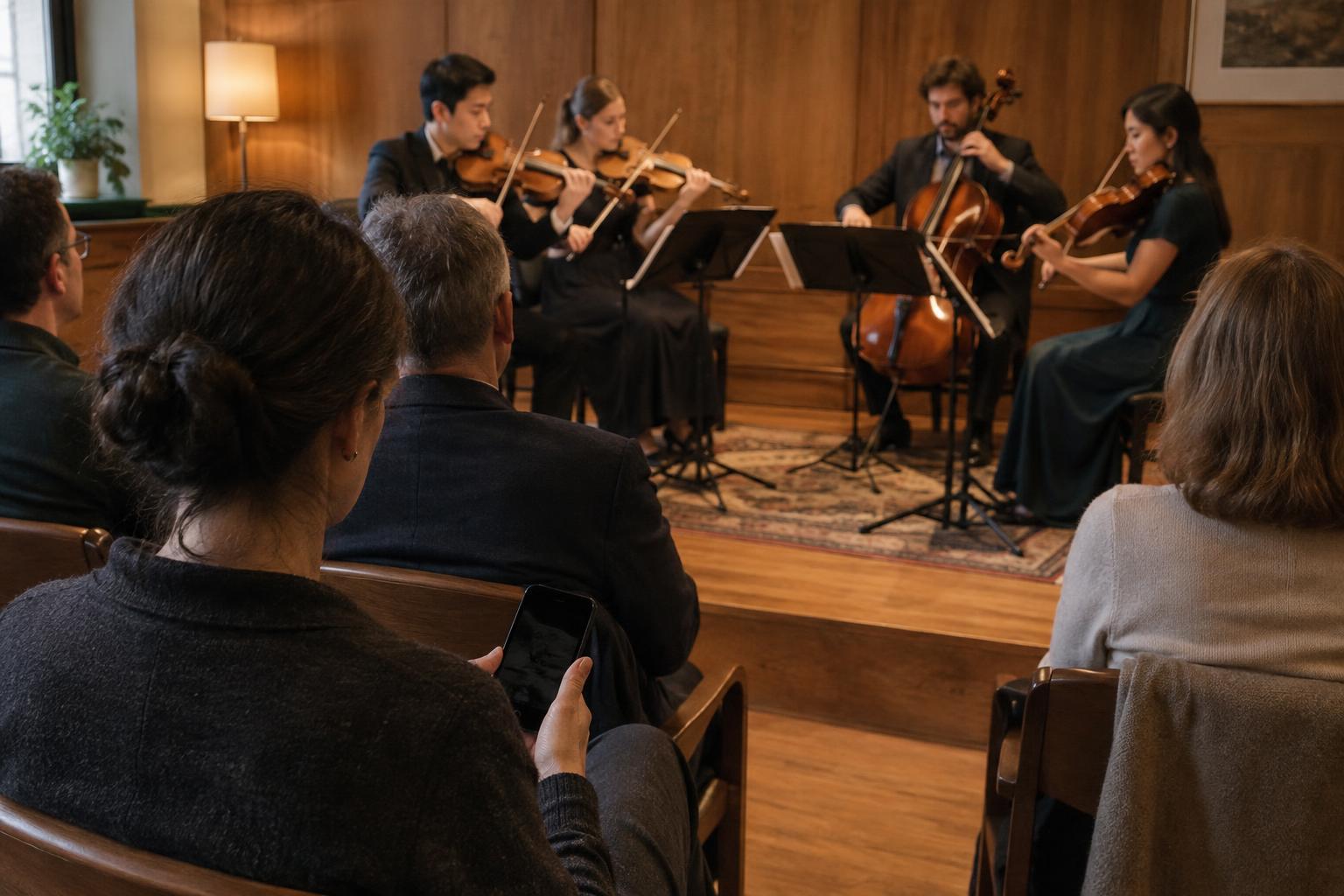
Concert CultureA chamber concert does not demand perfect silence, but small sounds can carry in an intimate room. This guide offers practical ways to handle phones, conversations and coughs while keeping the experience welcoming for everyone.
Read article · 3 min↗
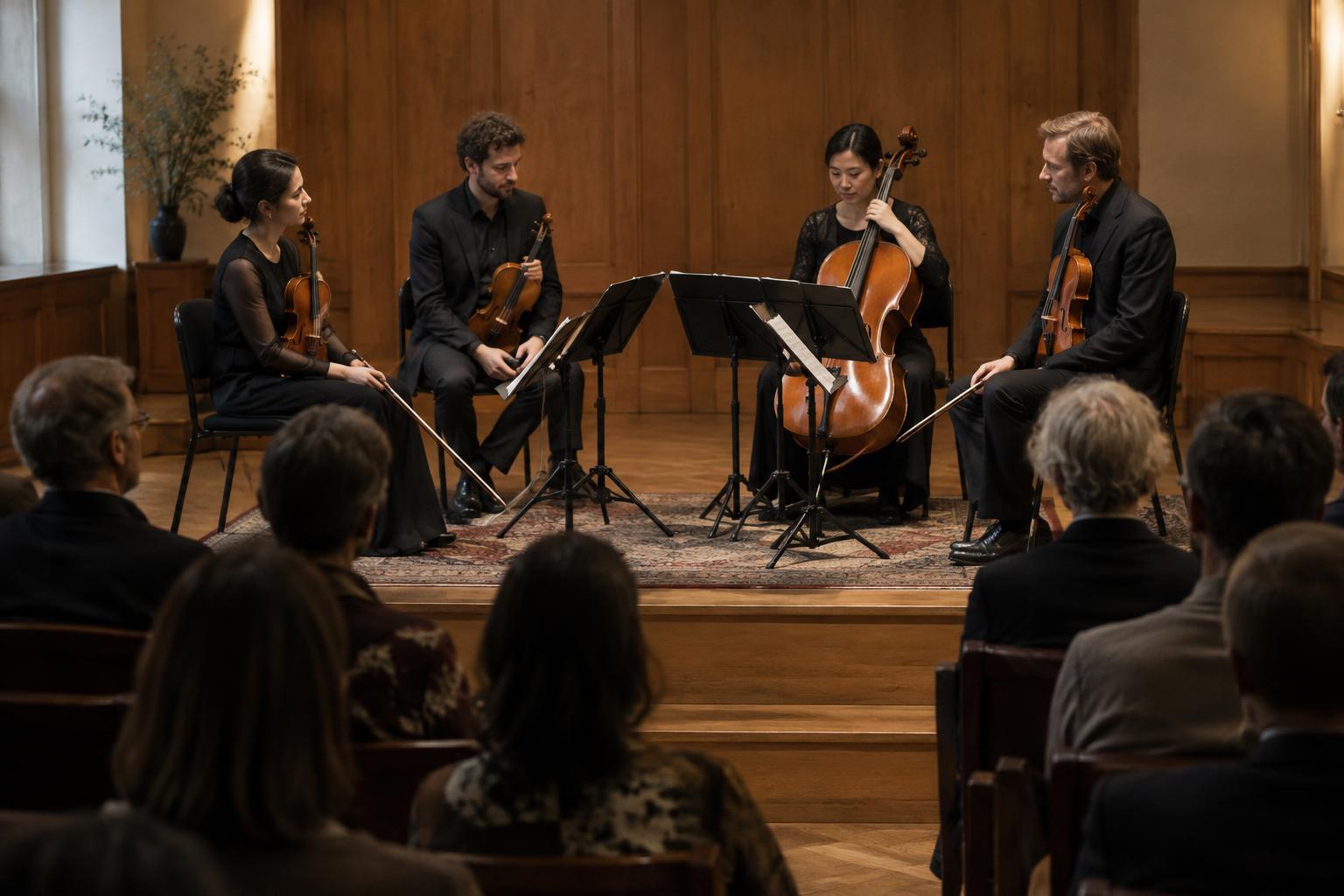
Concert CultureWondering whether to clap when the music stops? Chamber concerts often include pauses between movements, and the customs can feel unclear. Here is a practical guide to reading the room, recognizing the end of a piece, and enjoying the concert without worrying about a mistake.
Read article · 3 min↗
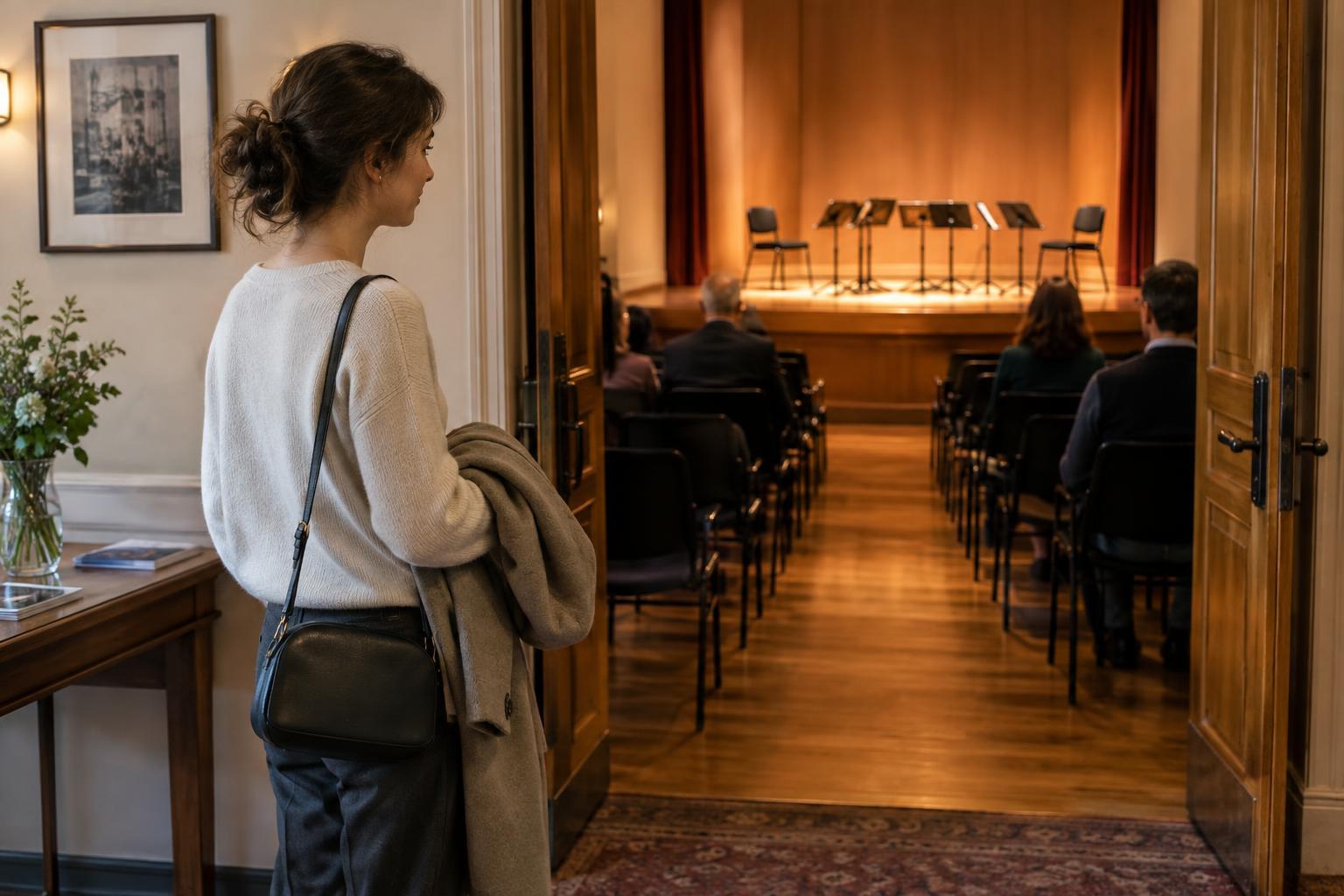
Concert CultureA chamber music concert rarely calls for a special wardrobe or a packed bag. Choose comfortable clothes, check any venue guidance, and bring only what helps you settle in and listen. Here is a practical guide for first-time and returning concertgoers.
Read article · 3 min↗
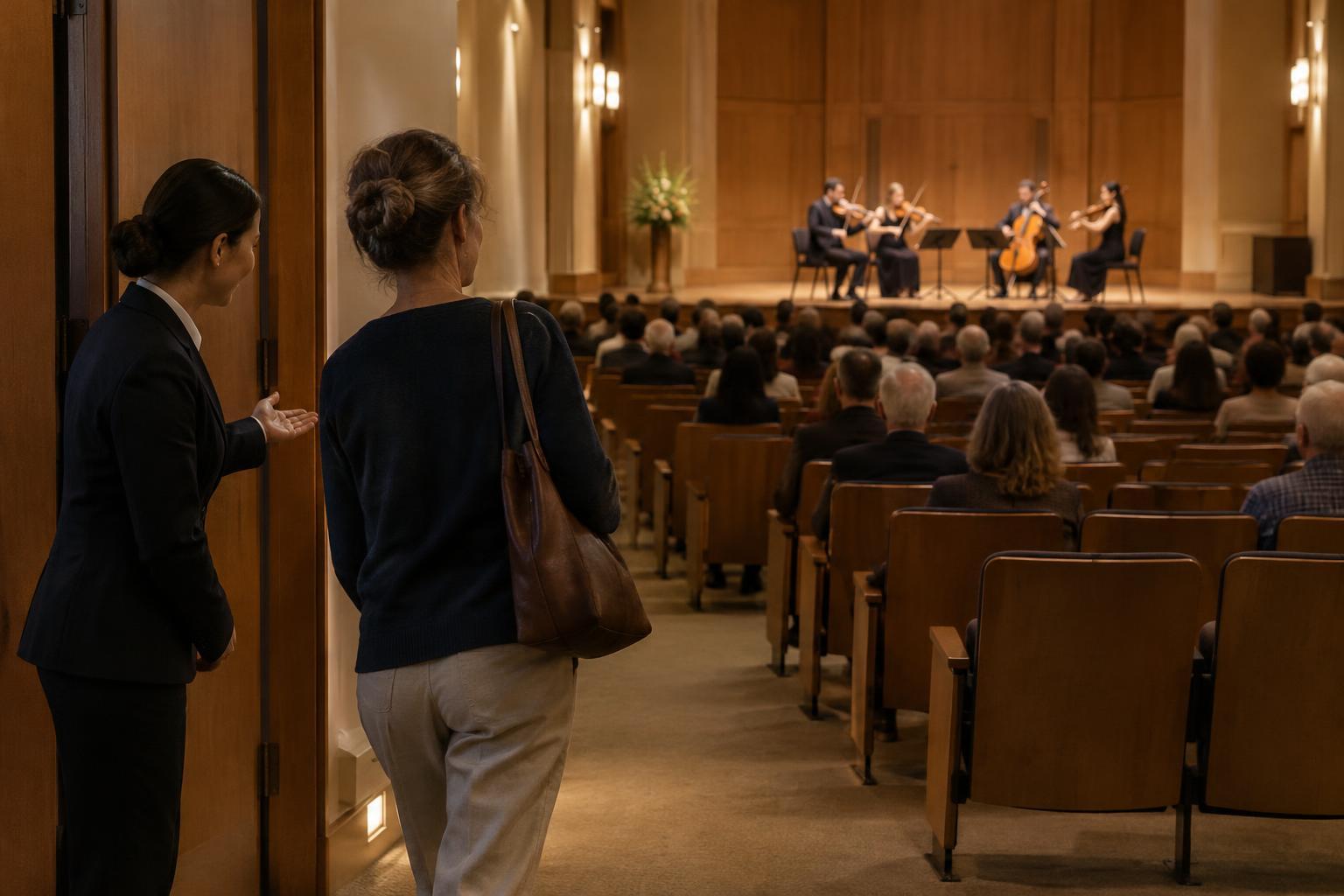
Concert CultureA late arrival need not disrupt a chamber concert. Learn why entry rules vary, how to work with an usher, and what to do if you cannot reach your assigned seat right away.
Read article · 3 min↗
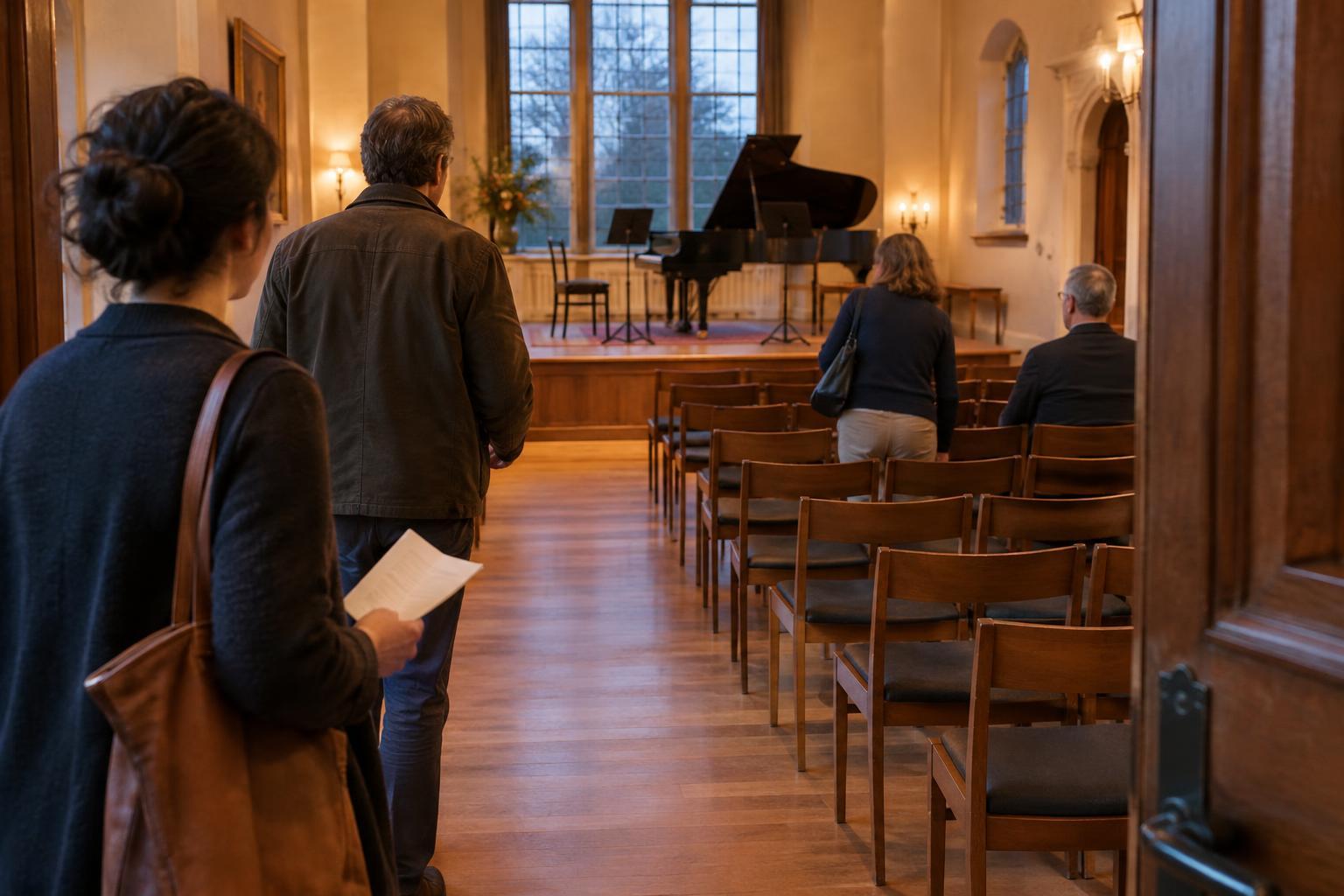
Concert CultureA chamber music concert often begins before the first note: finding the entrance, collecting a program, choosing a seat and settling into a shared listening space. This guide walks through those first moments so you can feel comfortable, even at an unfamiliar venue.
Read article · 4 min↗
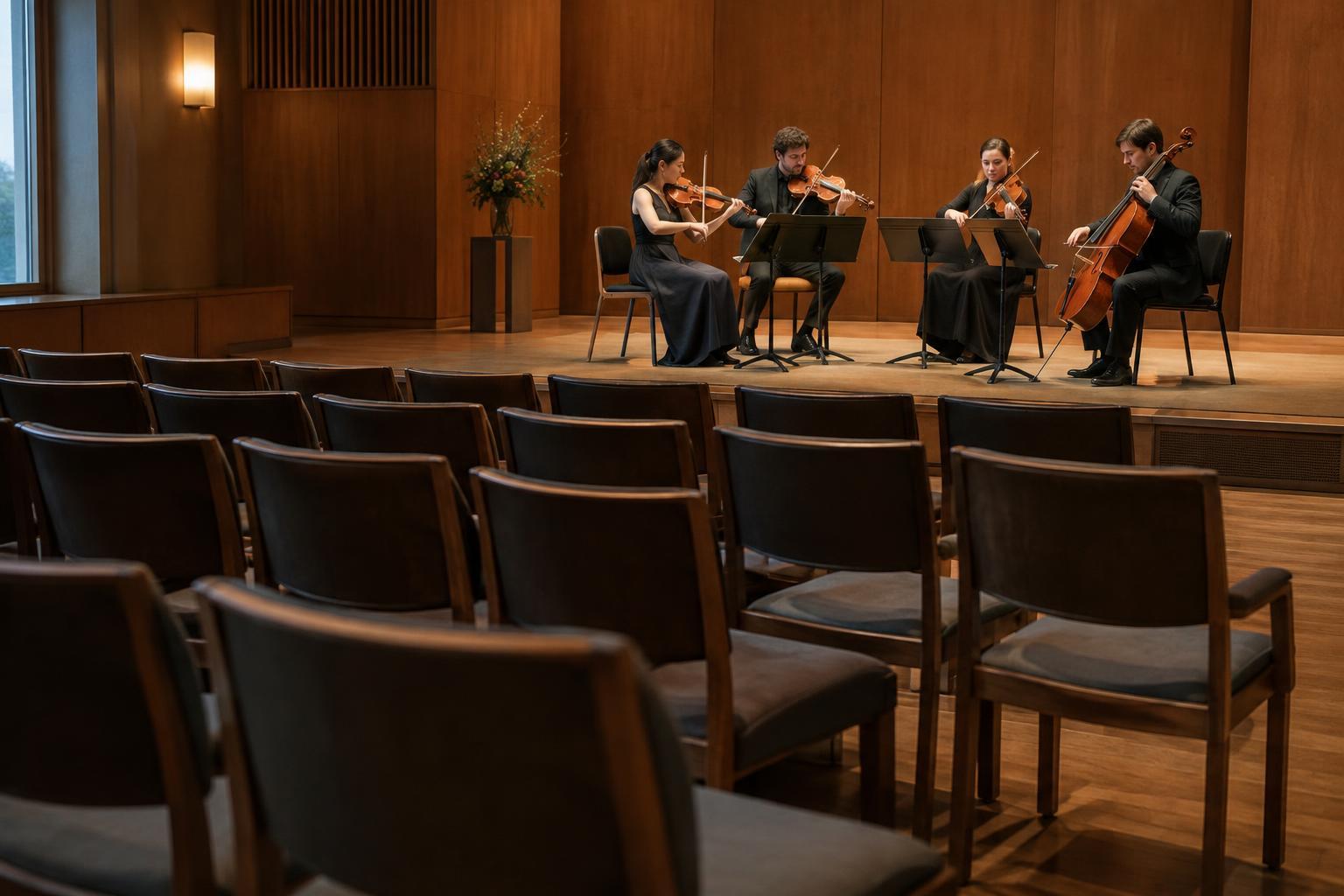
Concert CultureThe best seat at a chamber concert depends on what you want to hear and see. This guide explains how distance, angle, room acoustics, and the ensemble’s layout can shape your experience.
Read article · 4 min↗
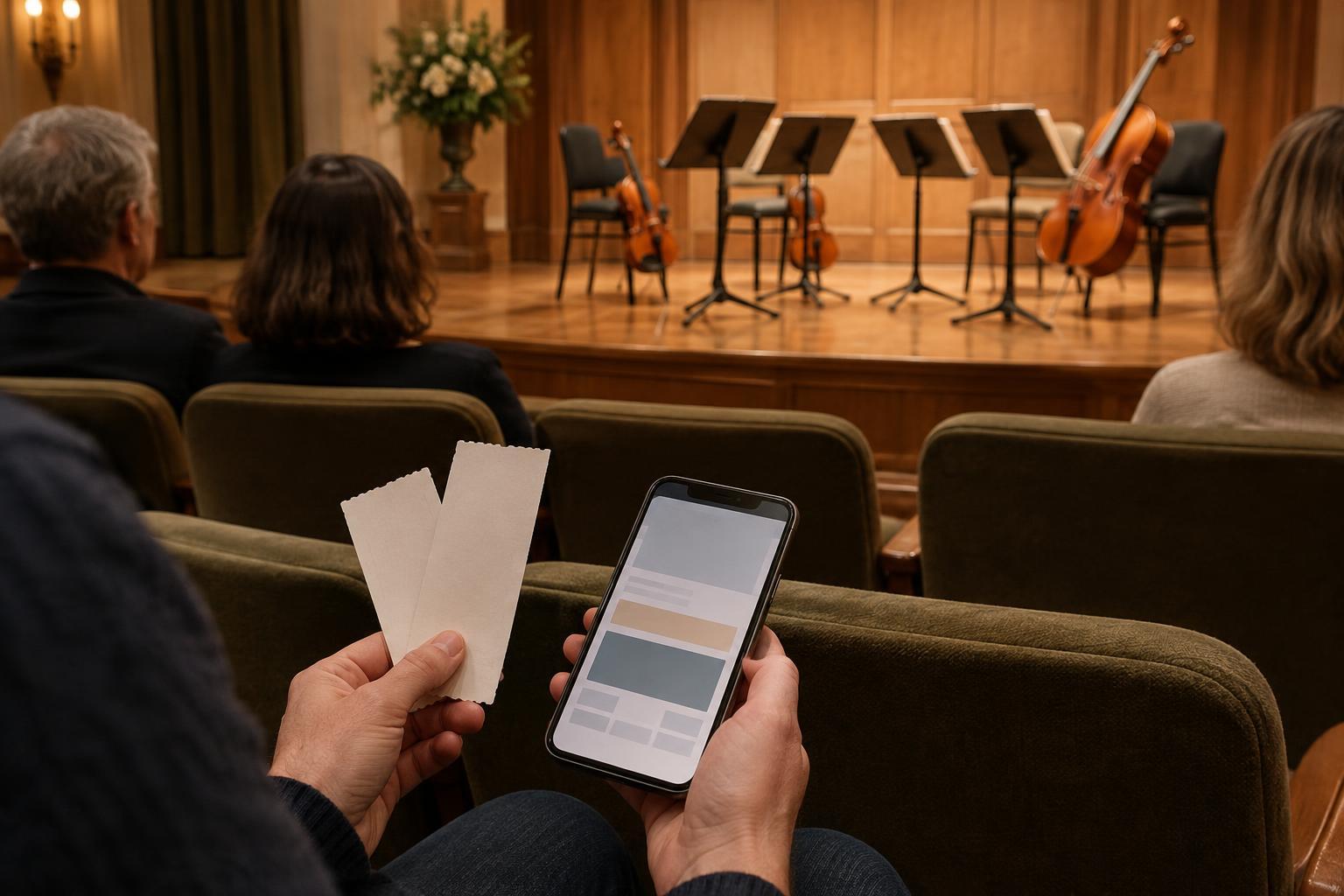
Concert CultureA chamber concert ticket may have a face value, a service fee and a choice of seating categories. This guide explains how to compare the full cost, look for suitable discounts and check booking terms before you buy.
Read article · 4 min↗
Concert CultureA chamber concert listing is more than a list of pieces. Learn how to check the performers, repertoire, running time, venue details and ticket terms so you can choose a concert that suits you.
Read article · 4 min↗
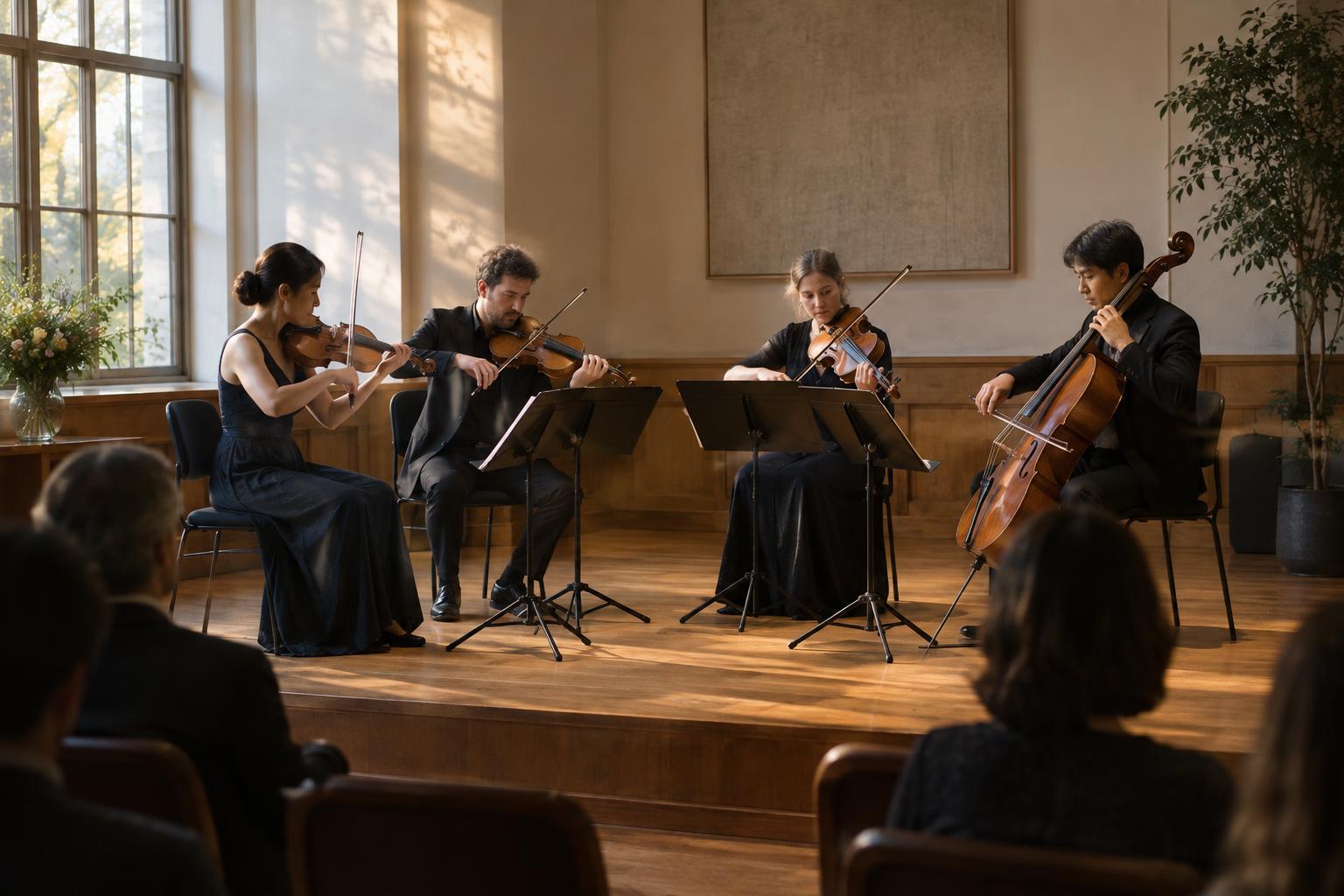
Concert CultureYour first chamber music concert does not have to feature music you already know. A few clues in the event listing—the instruments onstage, the number of pieces, the intermission and the expected running time—can help you choose an inviting place to start.
Read article · 4 min↗
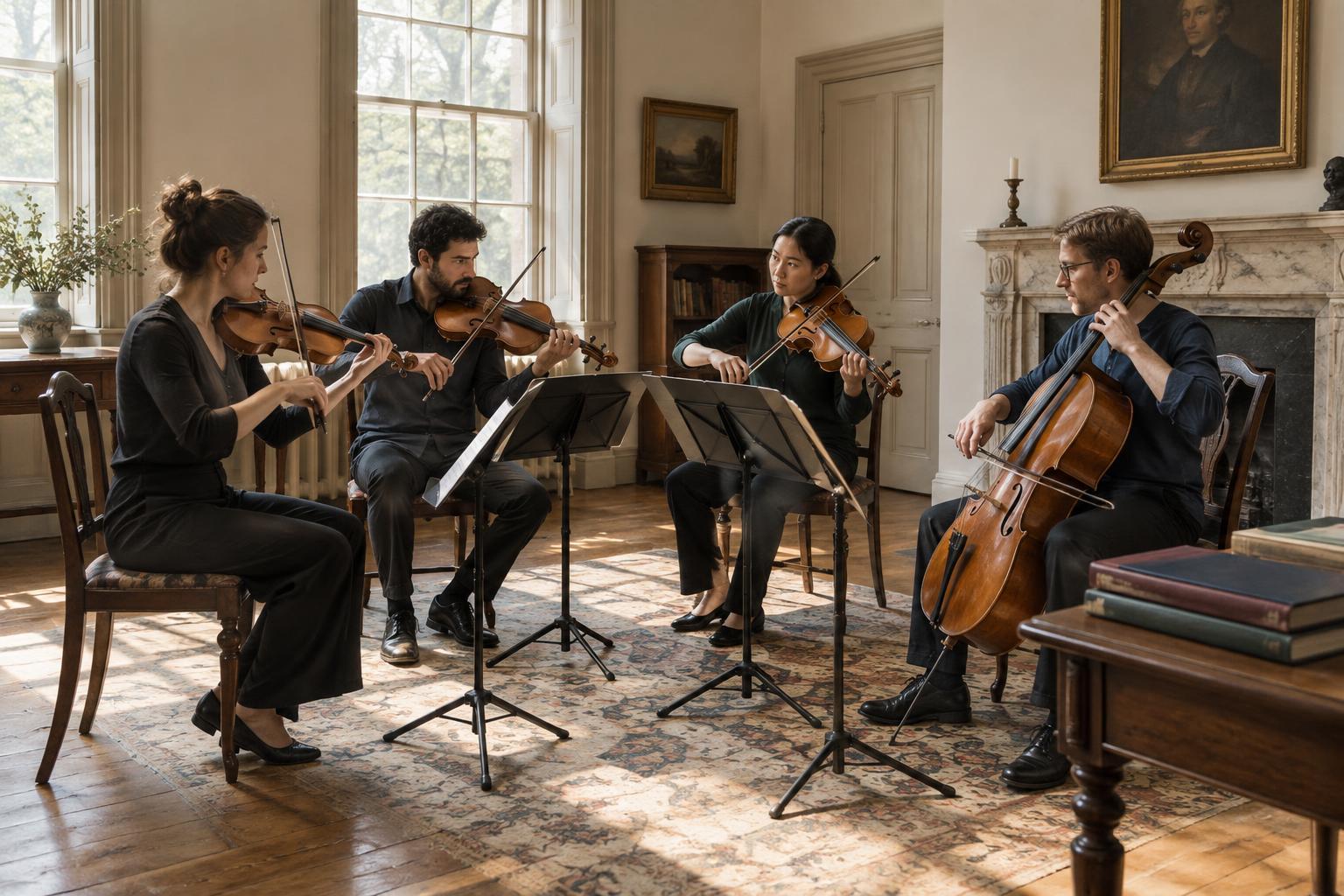
Composers and RepertoireIf you know a composer through a symphony or concerto, their chamber music offers a new way to listen. Learn how to choose a starting work, recognize common ensemble names, and search for the version you mean to hear.
Read article · 4 min↗
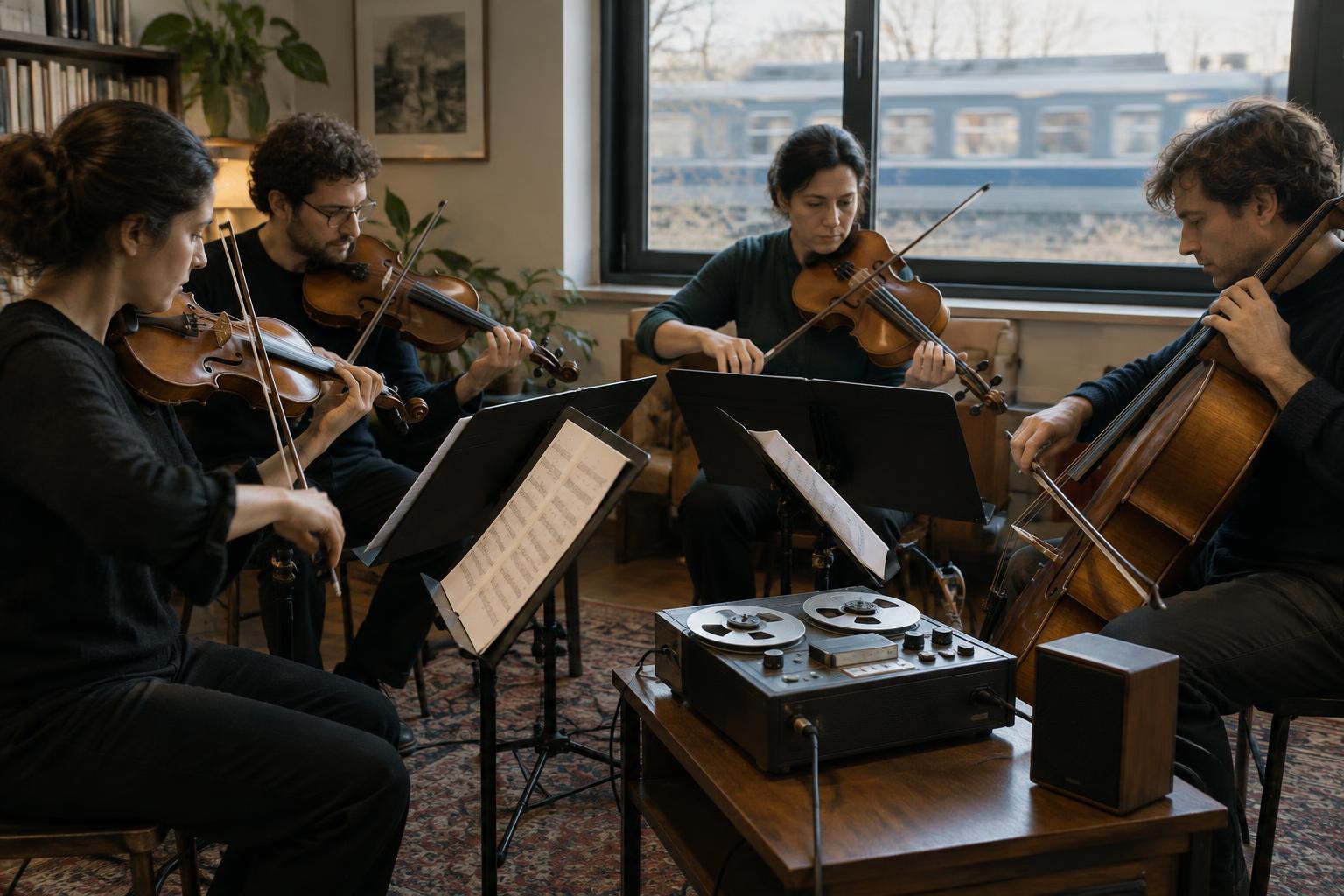
Composers and RepertoireSteve Reich’s Different Trains brings a live string quartet together with recorded voices, train sounds, and additional recorded strings. This guide explains how its three movements connect personal memory with the history of wartime rail travel, and offers a way to listen closely to its speech-shaped melodies.
Read article · 4 min↗
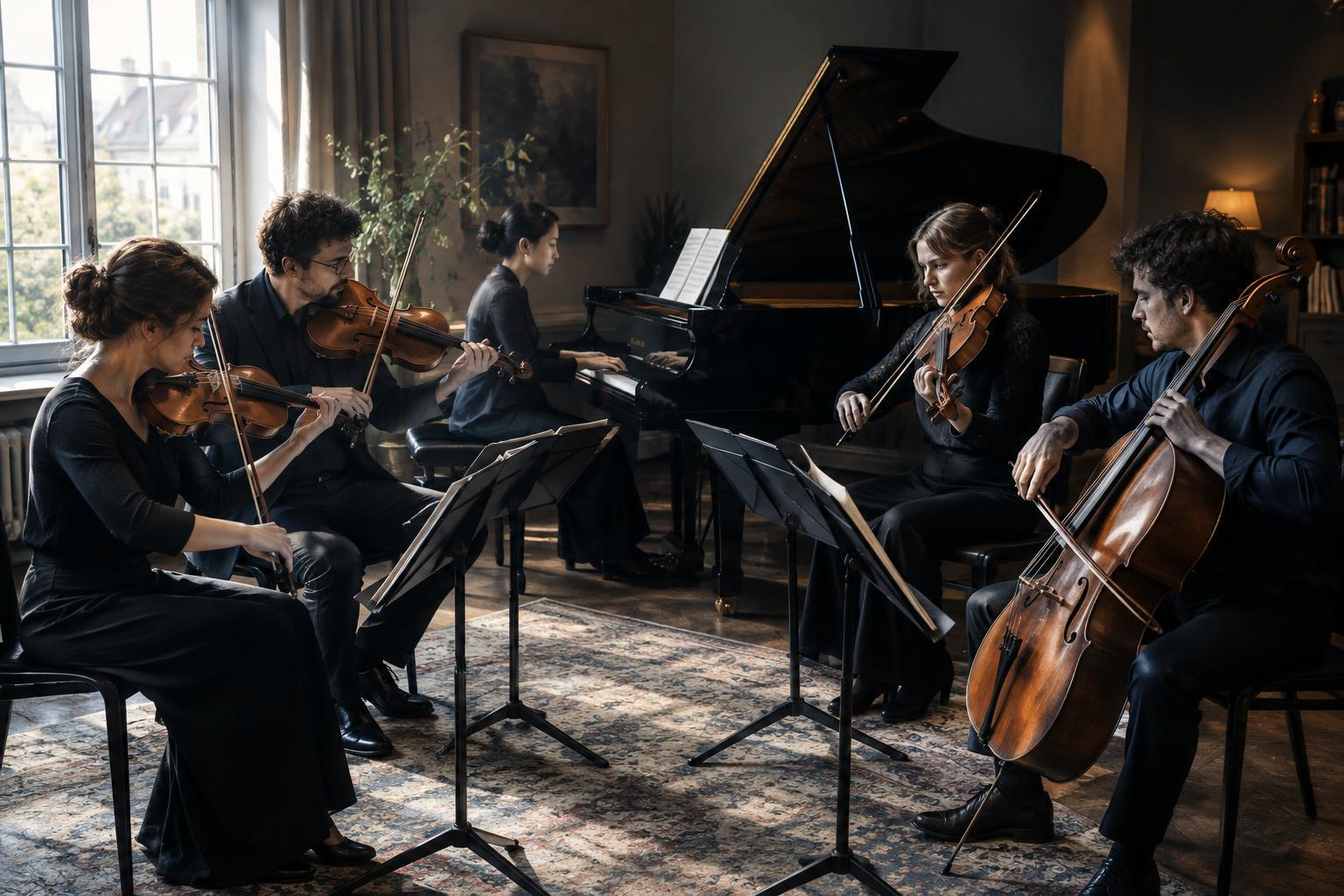
Composers and RepertoireShostakovich’s Piano Quintet moves from a commanding prelude through a quiet fugue, a sharp-edged scherzo, a reflective intermezzo and a finale that seems to offer an easier way forward. This movement-by-movement guide suggests what to listen for without requiring a score.
Read article · 3 min↗
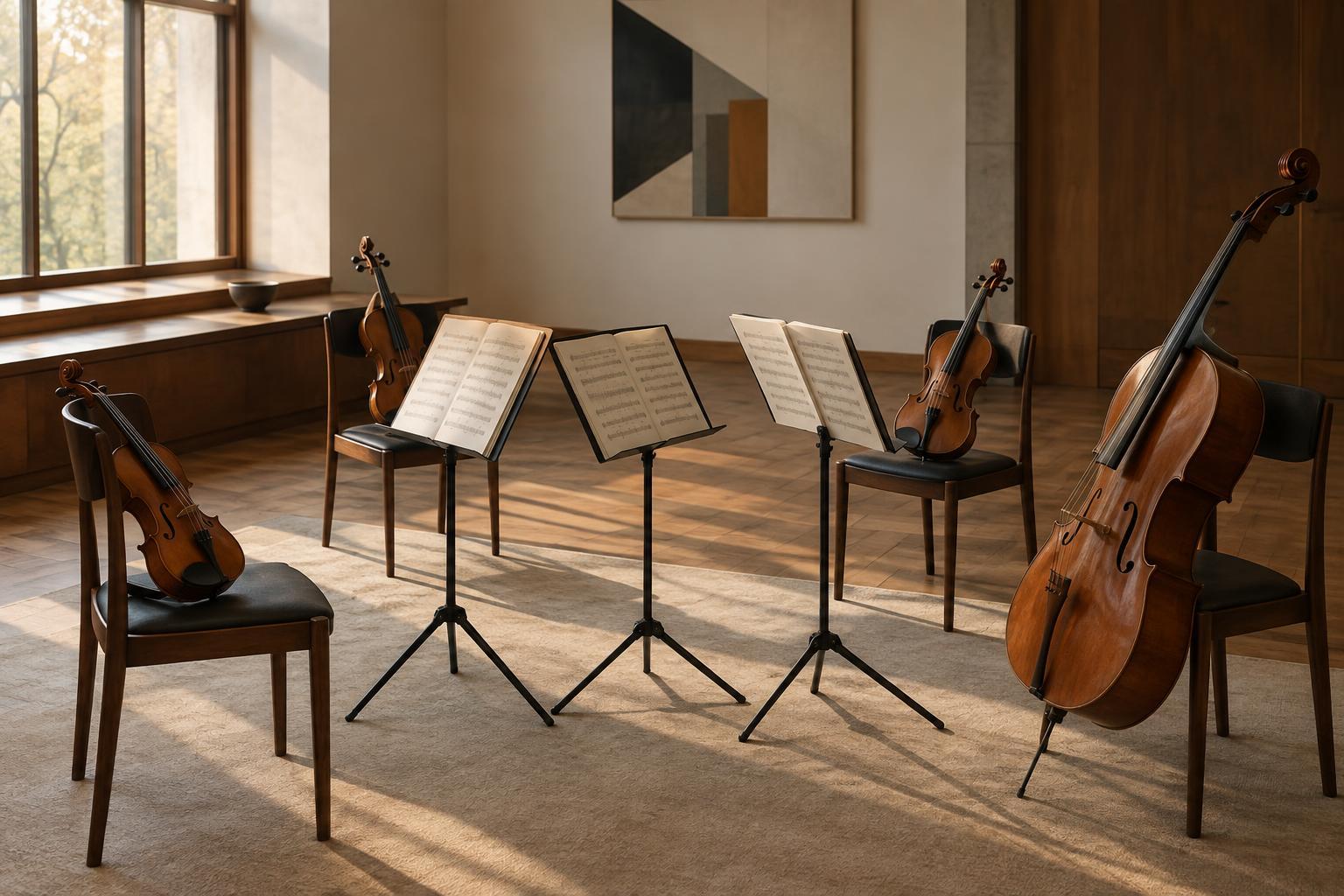
Composers and RepertoireBéla Bartók’s six string quartets trace a striking path from an inward-looking early work to a spare, mournful final quartet. This guide follows the changes in form, rhythm and string sound that make the cycle rewarding to hear as a whole.
Read article · 4 min↗
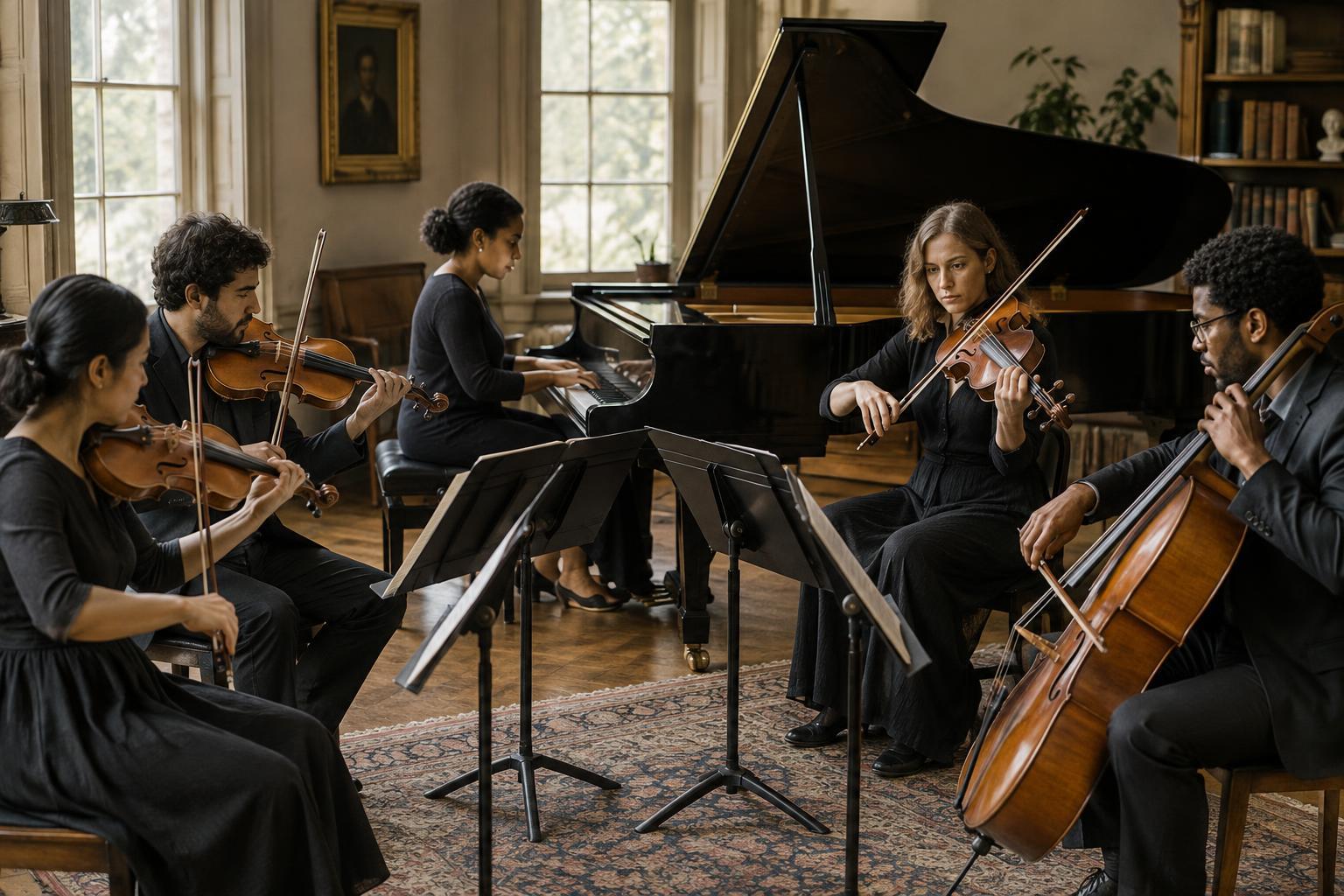
Composers and RepertoireFlorence Price’s Piano Quintet in A minor offers a way into her chamber music. Learn what to listen for in the exchange between piano and strings, the contrast between lyrical and dance-like passages, and the details that can make a return listen more rewarding.
Read article · 3 min↗
Composers and RepertoireClara Schumann’s Piano Trio in G minor brings the lyricism and pianistic imagination of her smaller works into a four-movement conversation among piano, violin and cello. Here is how to place the trio within her output—and what to listen for.
Read article · 4 min↗
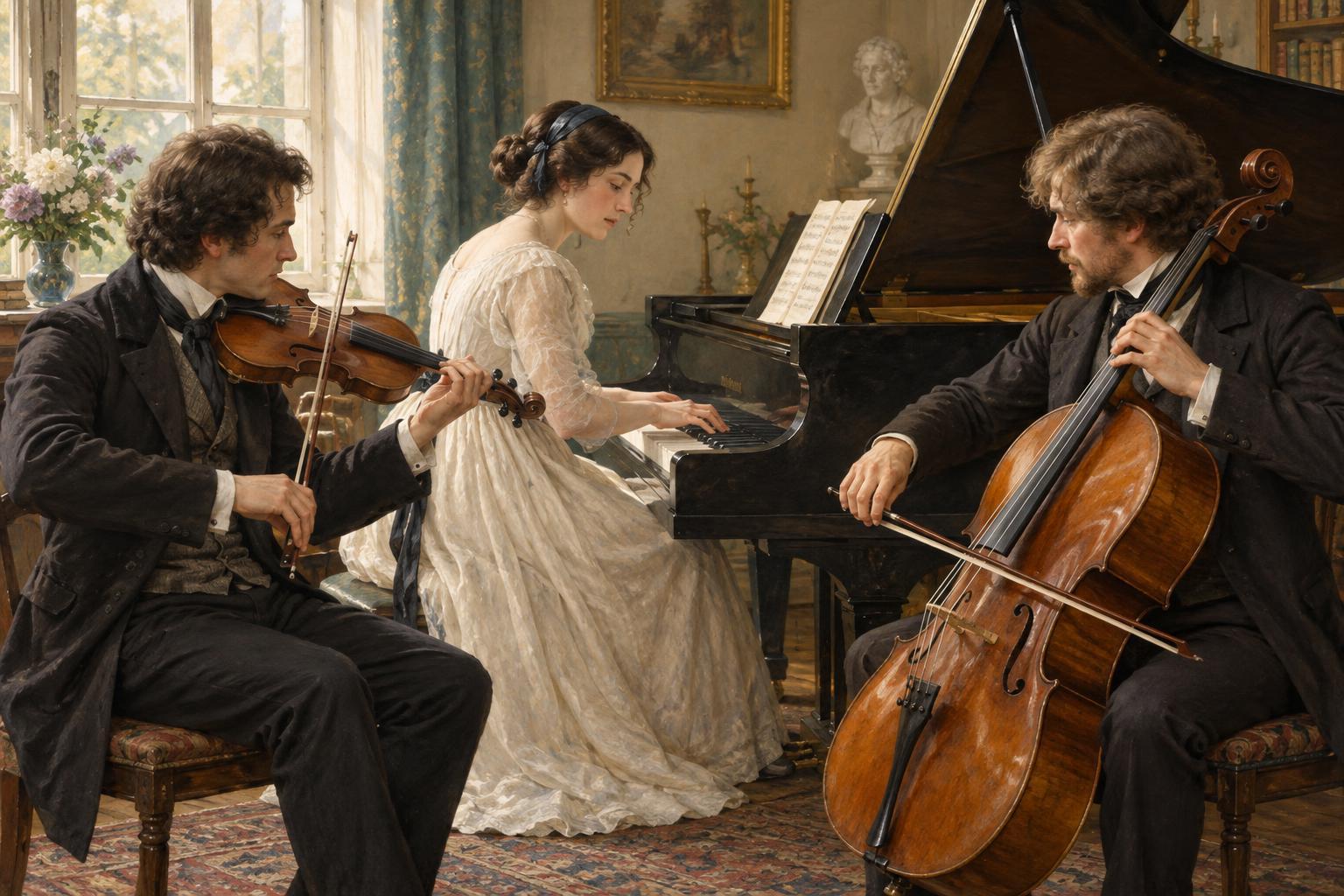
Composers and RepertoireFanny Mendelssohn’s Piano Trio in D minor brings piano, violin and cello into a vivid four-movement conversation. This listening guide offers an approachable way to hear its contrasts, its songlike third movement and the changing roles of its three instruments.
Read article · 3 min↗
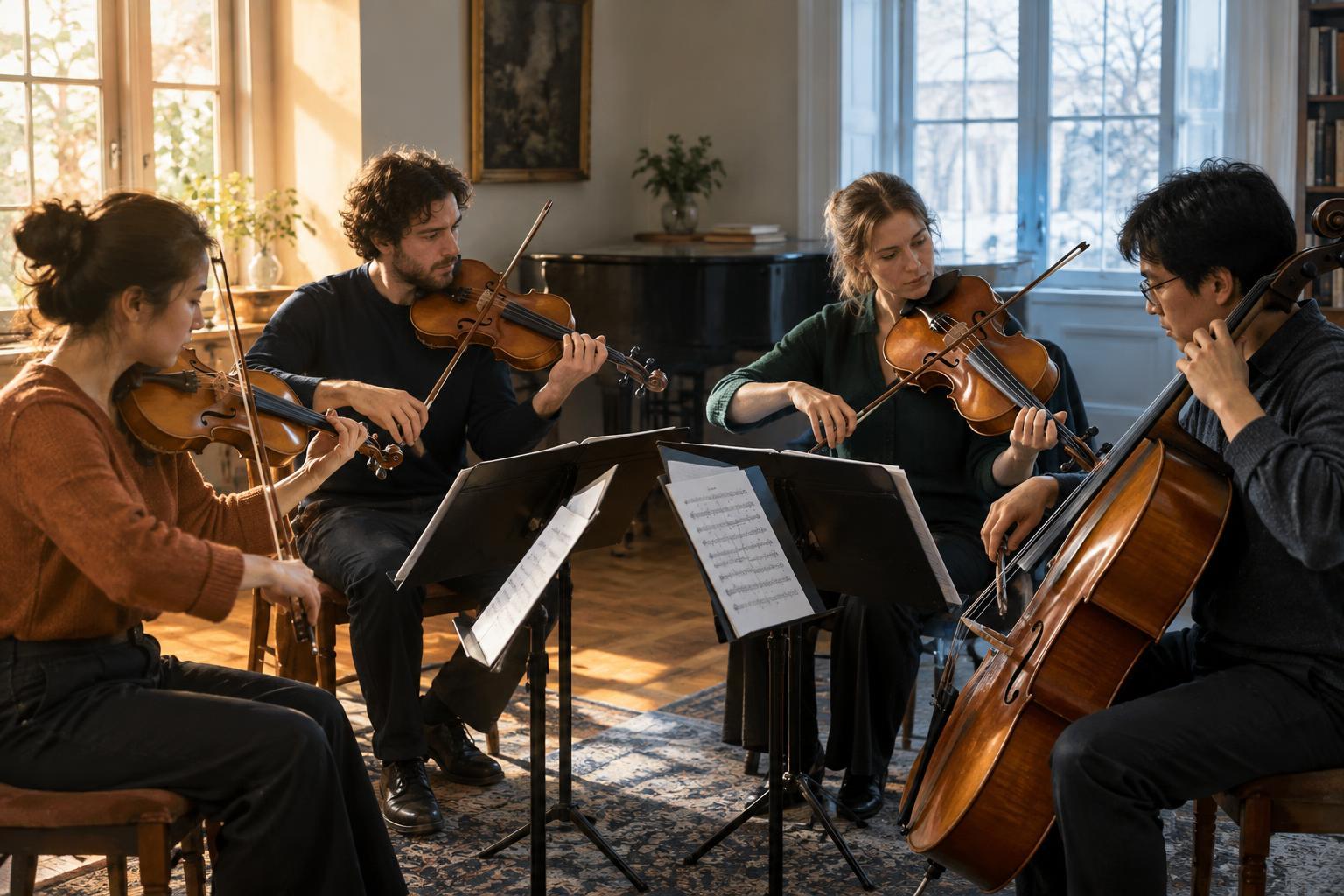
Composers and RepertoireDebussy and Ravel each wrote a string quartet that rewards close listening. Their works share a four-movement shape and a taste for returning ideas, yet they create strikingly different experiences of rhythm, color and musical continuity.
Read article · 3 min↗
Composers and RepertoireTchaikovsky’s Piano Trio in A minor turns remembrance into a large-scale musical journey. This guide introduces its dedication, two-part design and contrasting variations, with listening cues for hearing how its final return to grief changes everything that came before.
Read article · 4 min↗
Composers and RepertoireBedřich Smetana’s First String Quartet turns memories of youth, love, music and hearing loss into a work for four players. This guide follows its four movements and offers ways to hear the story without treating every phrase as a literal event.
Read article · 4 min↗
Composers and RepertoireWritten during Dvořák’s stay in the United States, the “American” Quartet is admired for its memorable melodies and lively exchanges among four players. This guide explores what the nickname suggests, how the music unfolds, and what to listen for.
Read article · 4 min↗
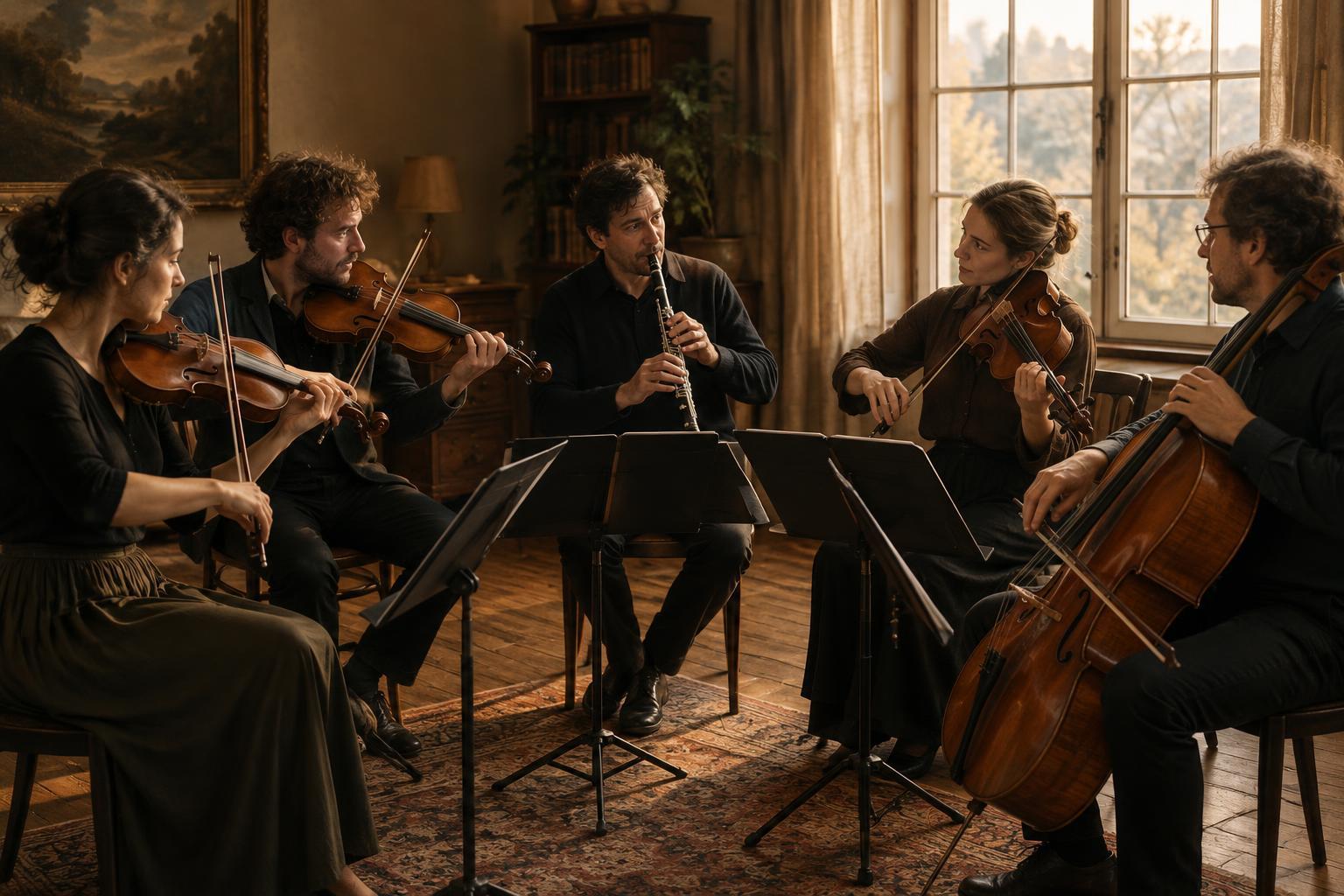
Composers and RepertoireBrahms’s Clarinet Quintet pairs a clarinet with a string quartet, but its appeal goes beyond the unusual lineup. Its blended sound, shifting moods and quietly connected ending reward listeners who follow how the five instruments respond to one another.
Read article · 3 min↗
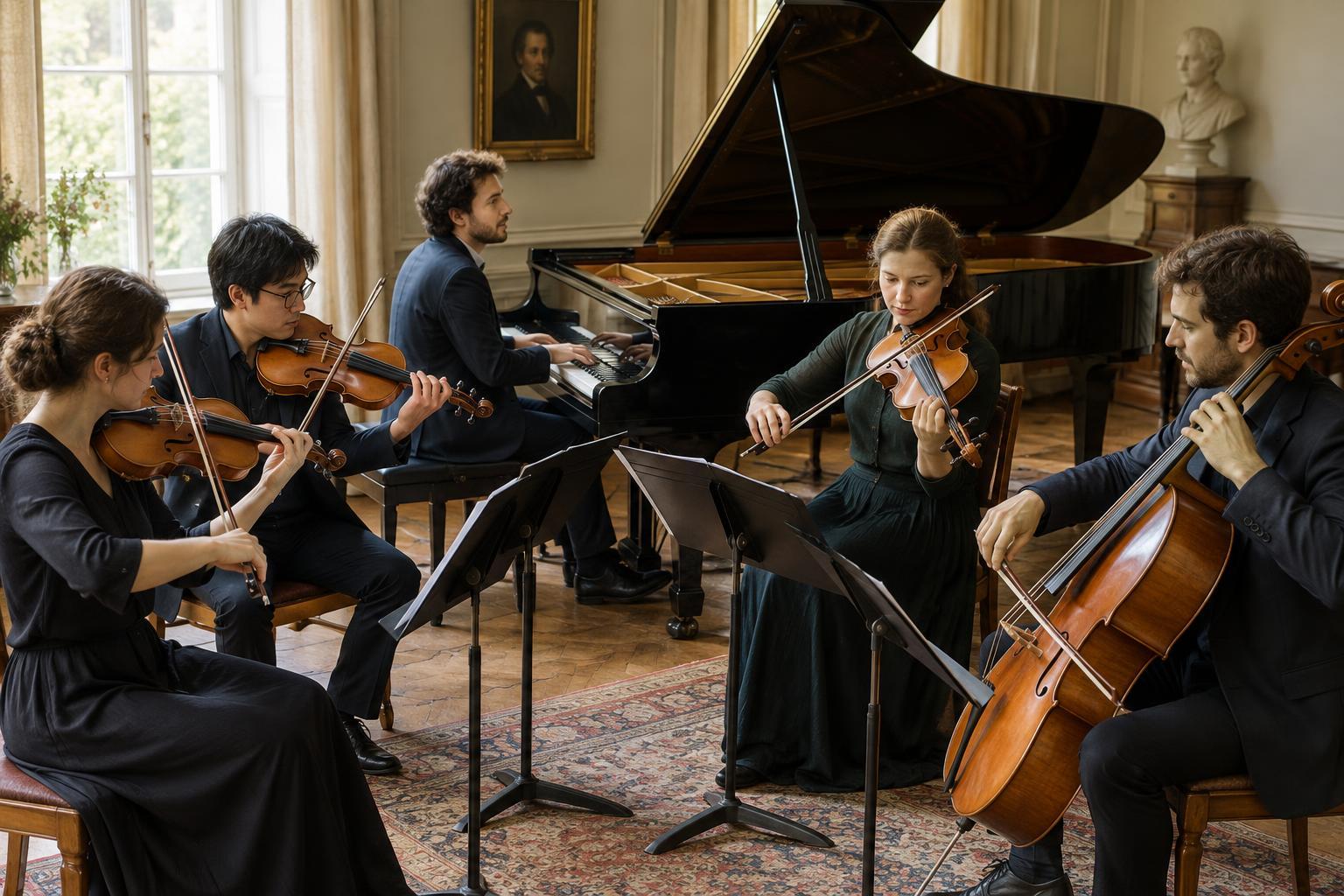
Composers and RepertoireRobert Schumann’s Piano Quintet in E-flat major brings the power of the piano together with the intimacy of a string quartet. This listening guide follows its four movements and suggests what to notice on a first hearing.
Read article · 3 min↗
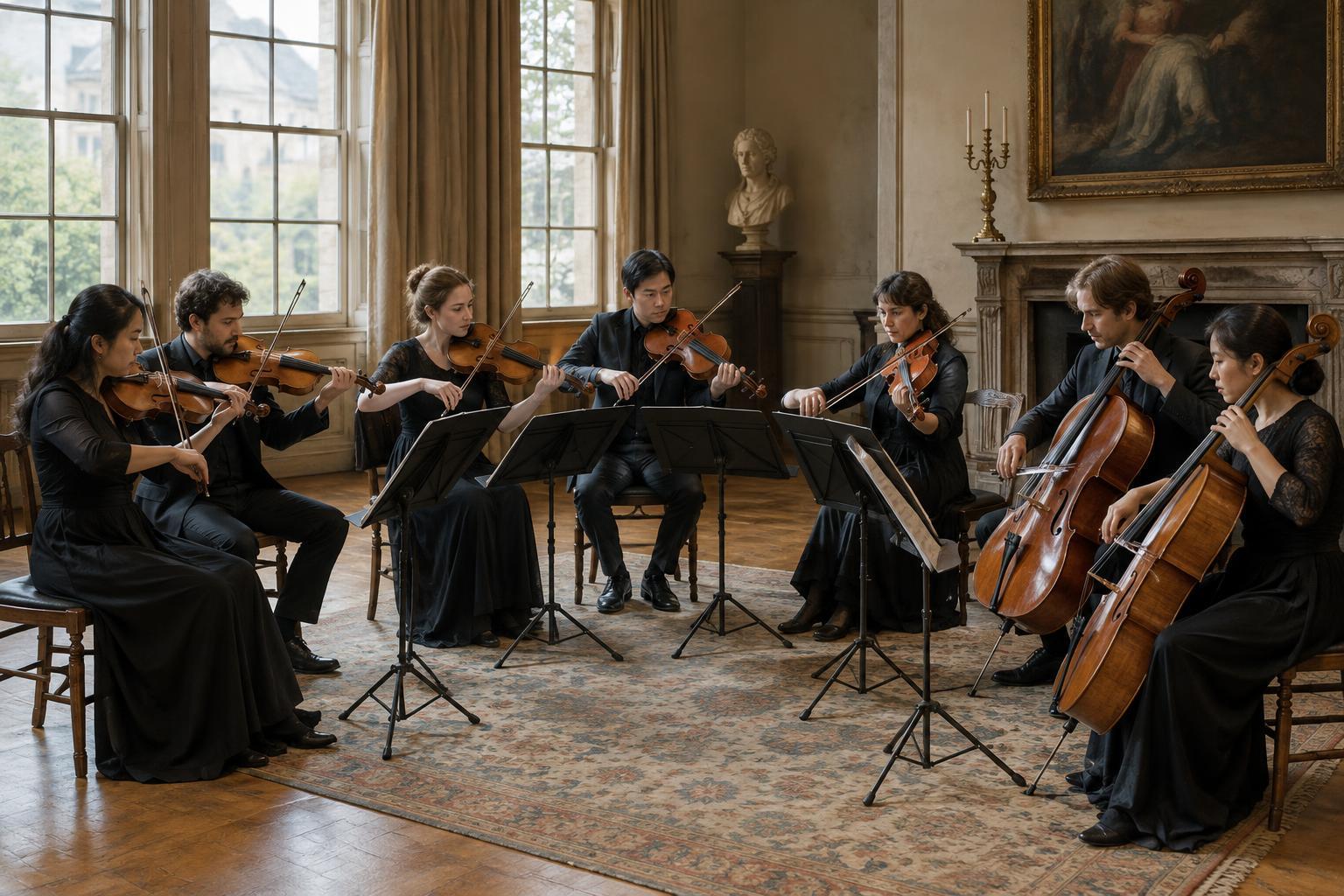
Composers and RepertoireA listening guide to Mendelssohn’s String Octet in E-flat major: how its eight instruments work together, what to hear in each movement, and why the piece remains a landmark of chamber repertoire.
Read article · 4 min↗
Composers and RepertoireSchubert’s String Quartet in D minor takes its familiar nickname from an earlier song. Hearing the song first reveals what the quartet borrows—and how far Schubert carries that material beyond its original scene.
Read article · 4 min↗
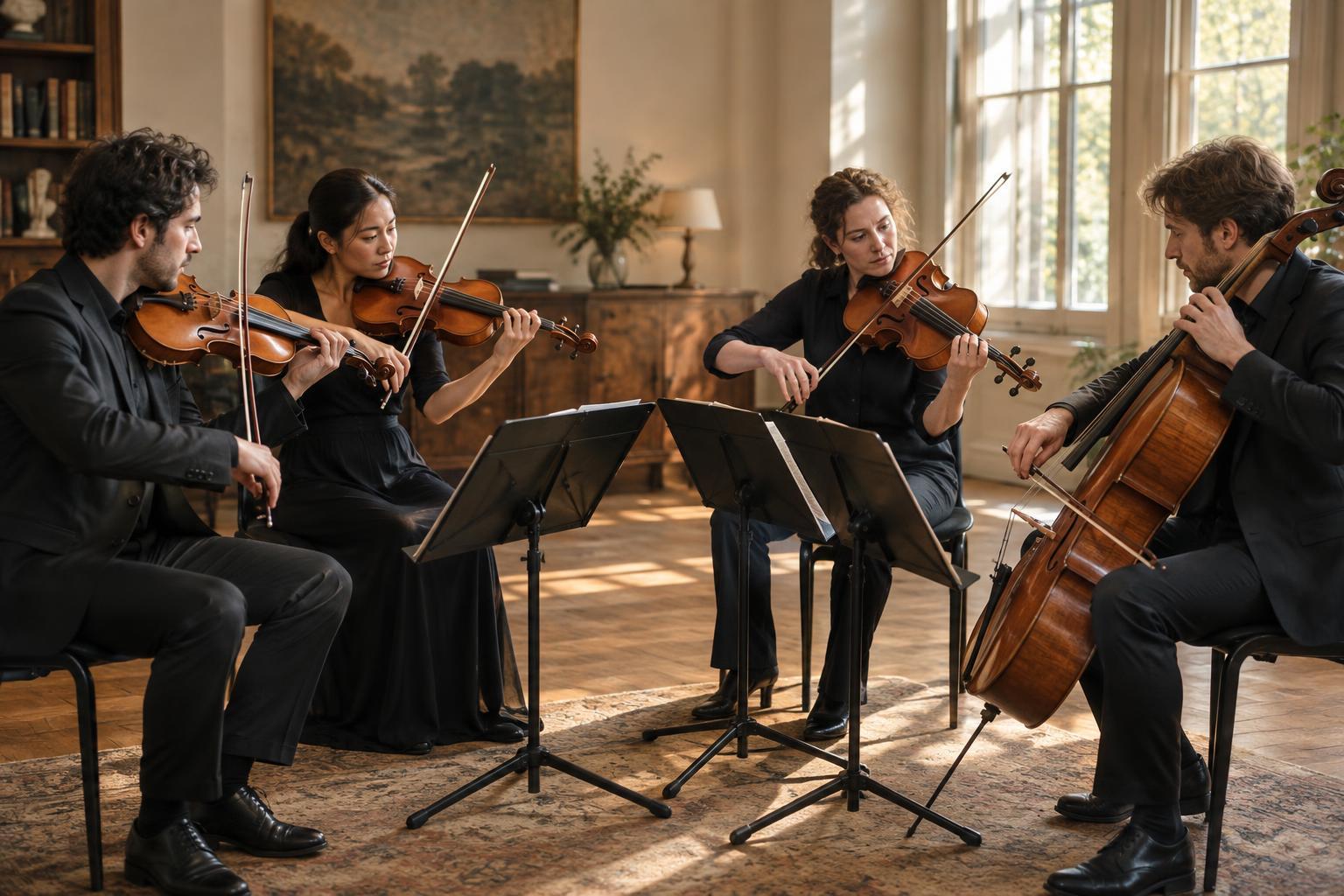
Composers and RepertoireBeethoven’s quartets can seem like a formidable body of music. This listening roadmap groups the sixteen quartets into early, middle and late works, suggests approachable starting points, and explains what changes as his writing grows more expansive and experimental.
Read article · 4 min↗
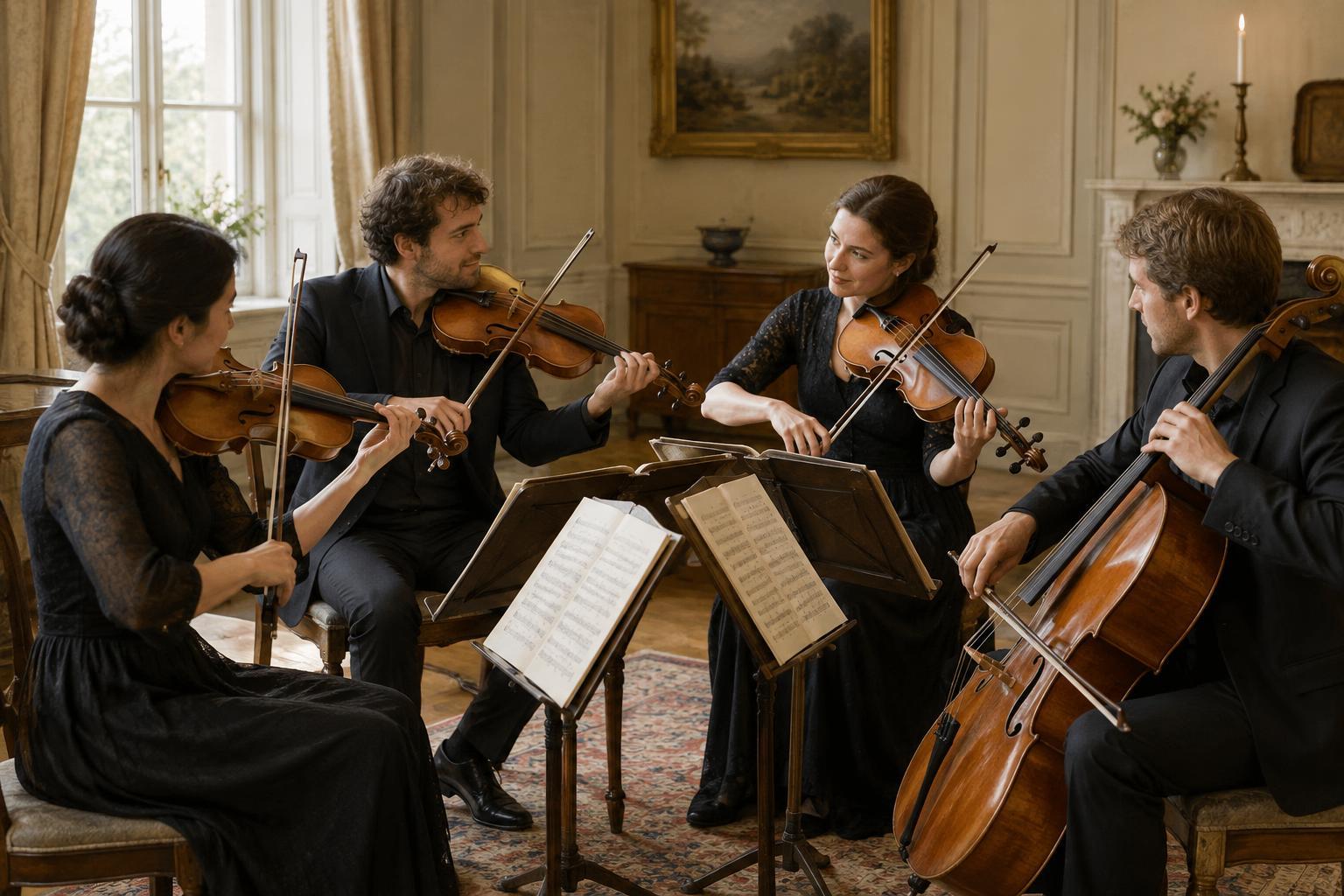
Composers and RepertoireMozart’s six quartets dedicated to Haydn reward listeners with more than polished melodies. Their four instruments trade ideas, challenge one another and turn small musical details into drama. Here is a guide to the character of the set and a few useful places to start listening.
Read article · 4 min↗
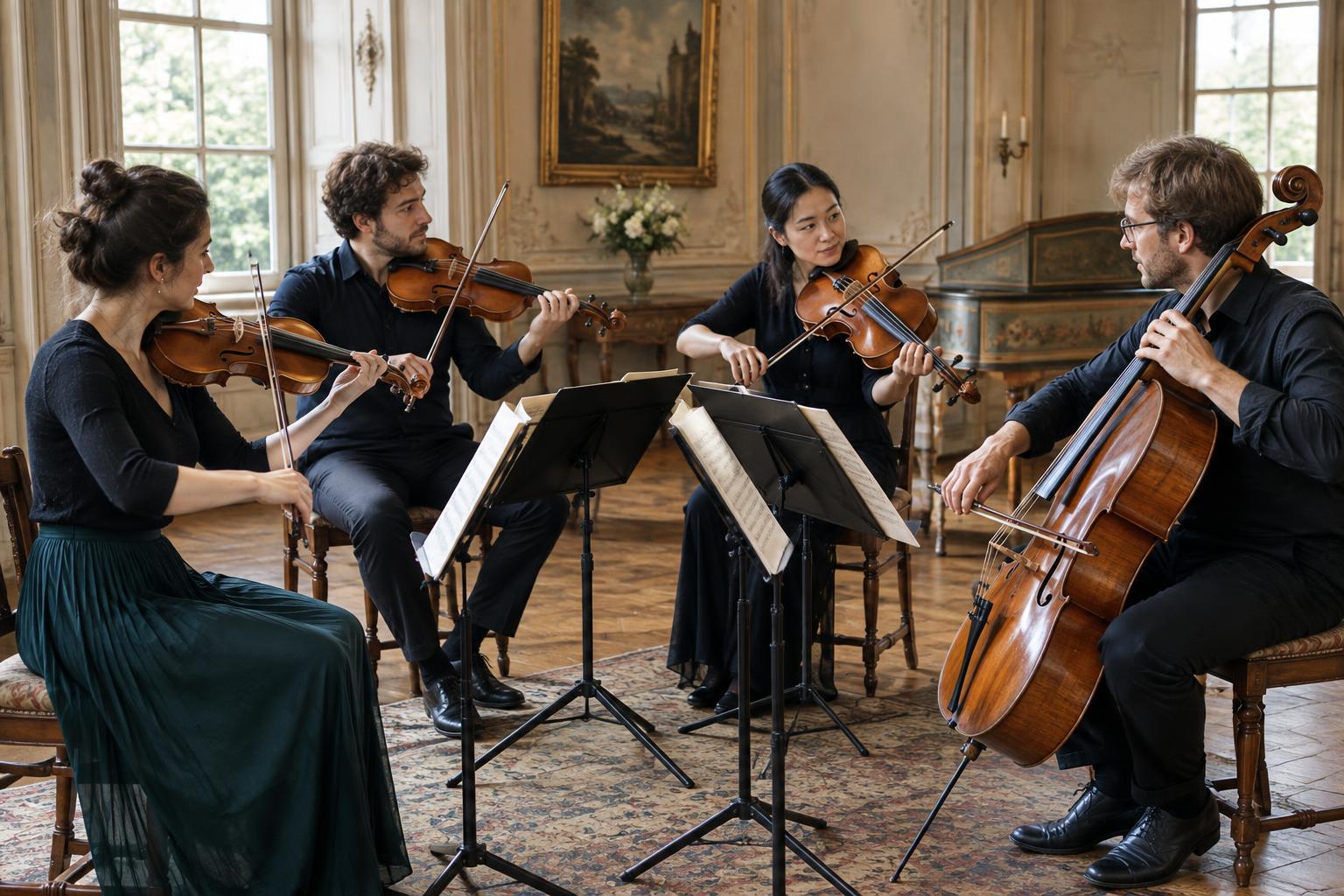
Composers and RepertoireHaydn’s six Op. 33 quartets make an inviting introduction to music for two violins, viola and cello. Their clear conversations, playful surprises and varied movements reward both first-time listening and closer attention.
Read article · 4 min↗
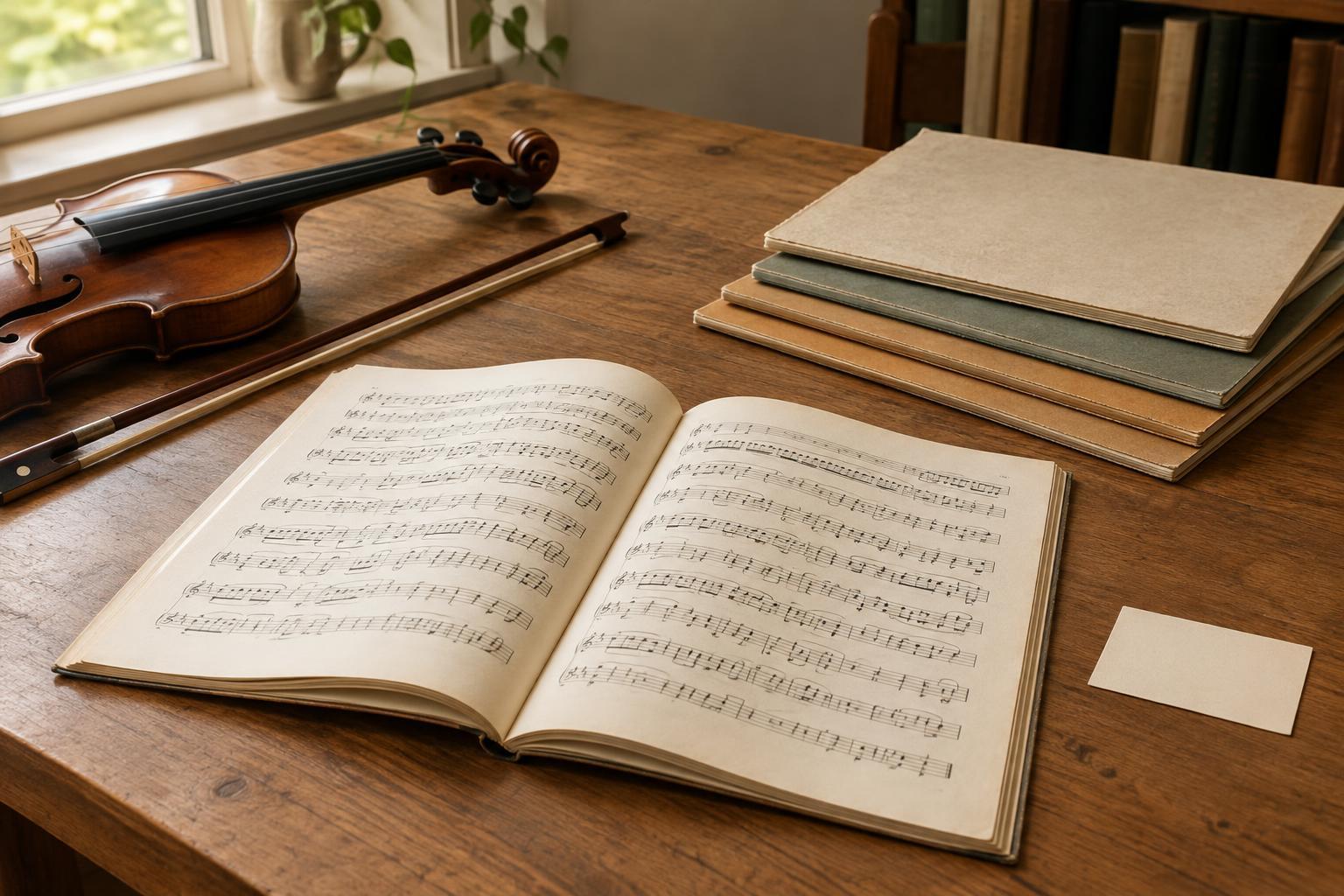
Composers and RepertoireA title such as “String Quartet in C-sharp minor, Op. 131” carries more information than it first appears to. Learn what opus and catalog numbers mean, why they do not always follow composition order, and how to use them alongside instrumentation and key to find the chamber work you want.
Read article · 4 min↗
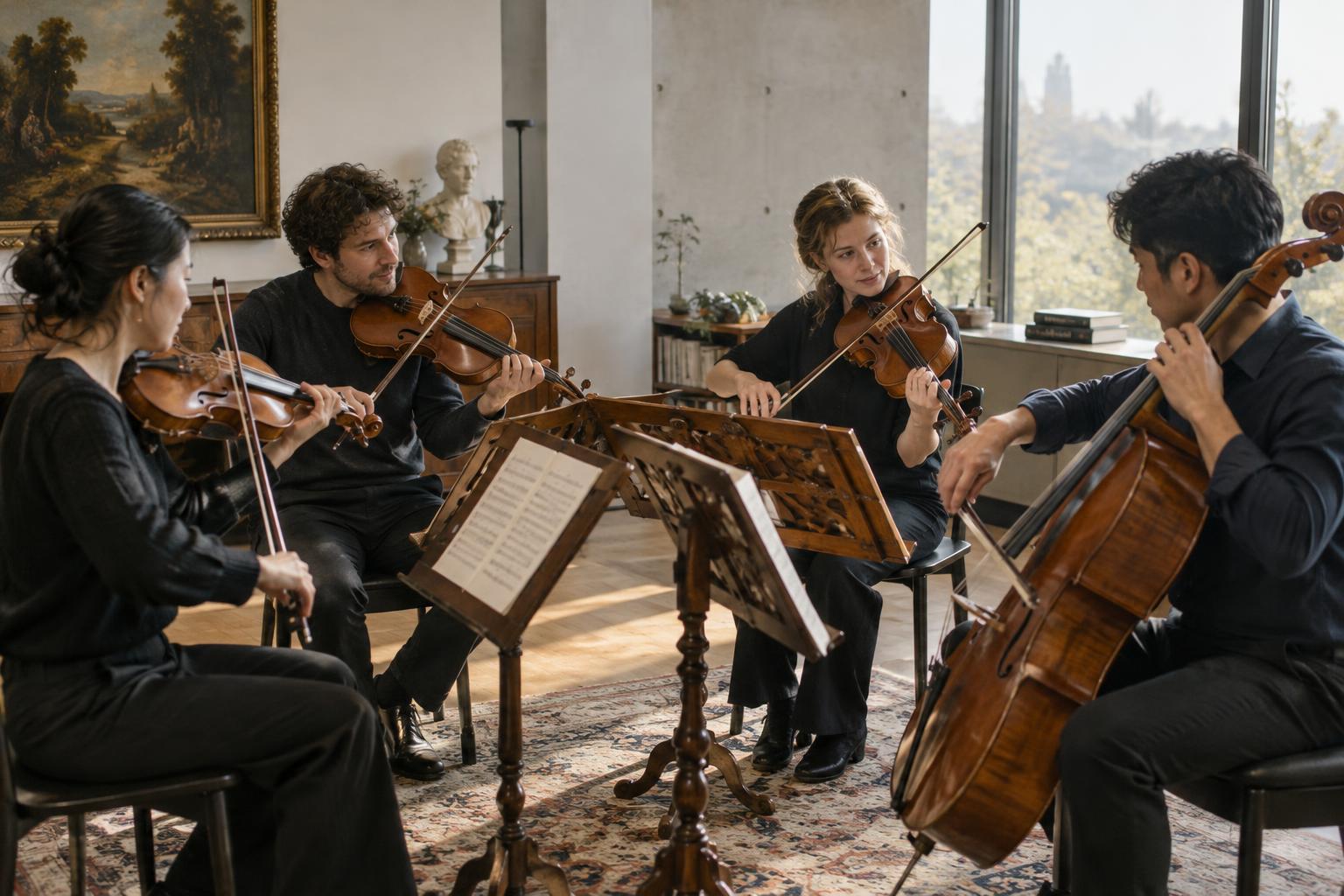
Composers and RepertoireFollow chamber music from the conversational string quartets of Haydn through Romantic lyricism, twentieth-century experiments and the wide-ranging work of living composers. This listening guide offers landmarks without treating music history as a straight line.
Read article · 4 min↗
 Practice and Performance