What a mute does—and does not do
In chamber music, a mute is a device that changes an instrument’s sound. Its name suggests silence, but a mute rarely makes an instrument quiet enough to disappear. It alters the balance of tones that give a note its character and may change how clearly that note carries through a room. The result depends on the instrument, the kind of mute, the player and the musical setting.
This is why a muted passage can be expressive rather than merely soft. A composer might want a hazy background beneath a melody, a distant-sounding response or a sharply colored accent. Listening for those roles is often more useful than asking whether the music has become quieter.
String mutes: a softer edge at the bridge
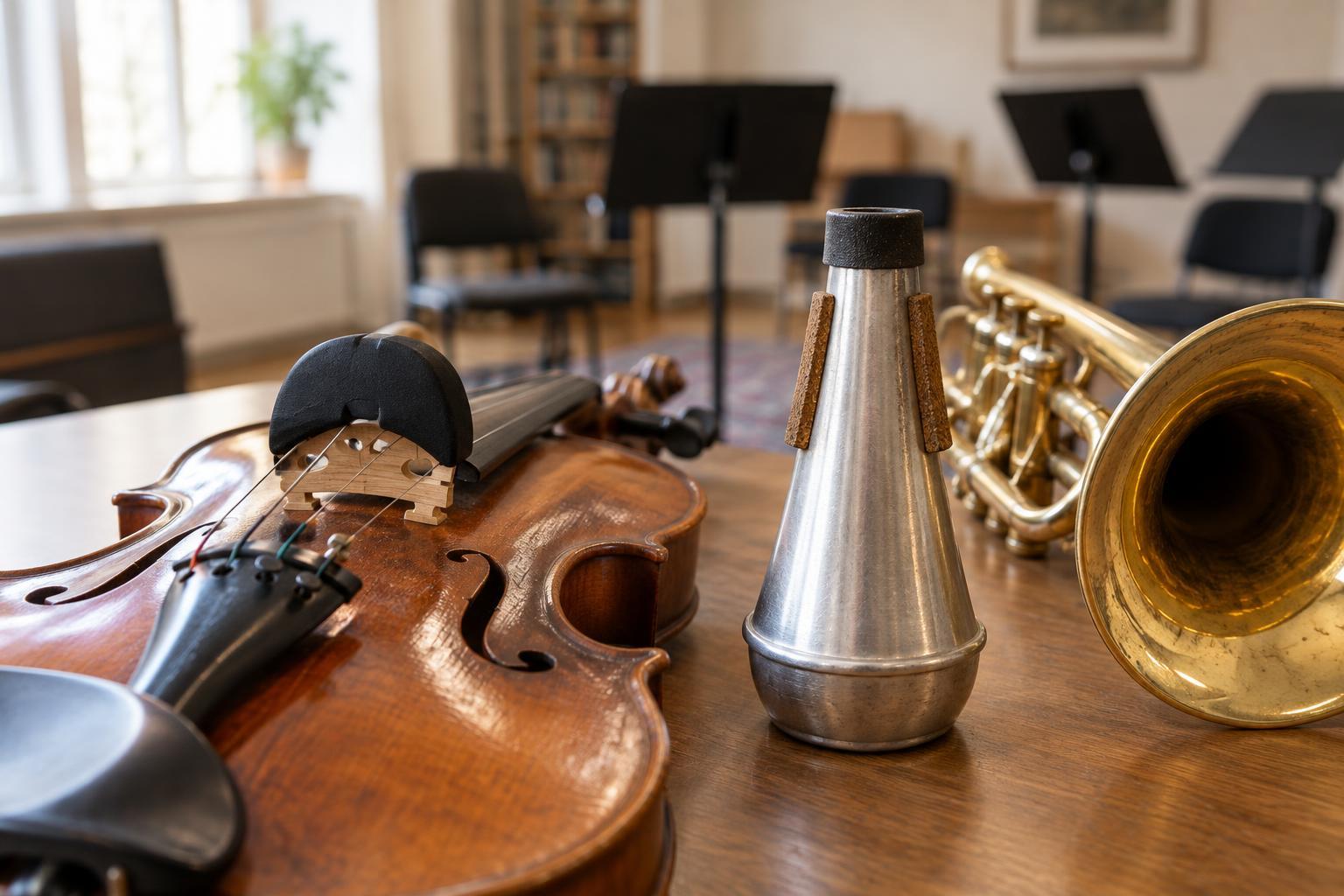
On a violin, viola, cello or double bass, a performance mute usually sits on or near the bridge, the small piece that supports the strings and transfers their vibrations to the instrument’s body. By limiting some of that vibration, the mute tends to reduce the brighter overtones that help a string sound ring and project. Players often describe the resulting tone as veiled, subdued or less brilliant.
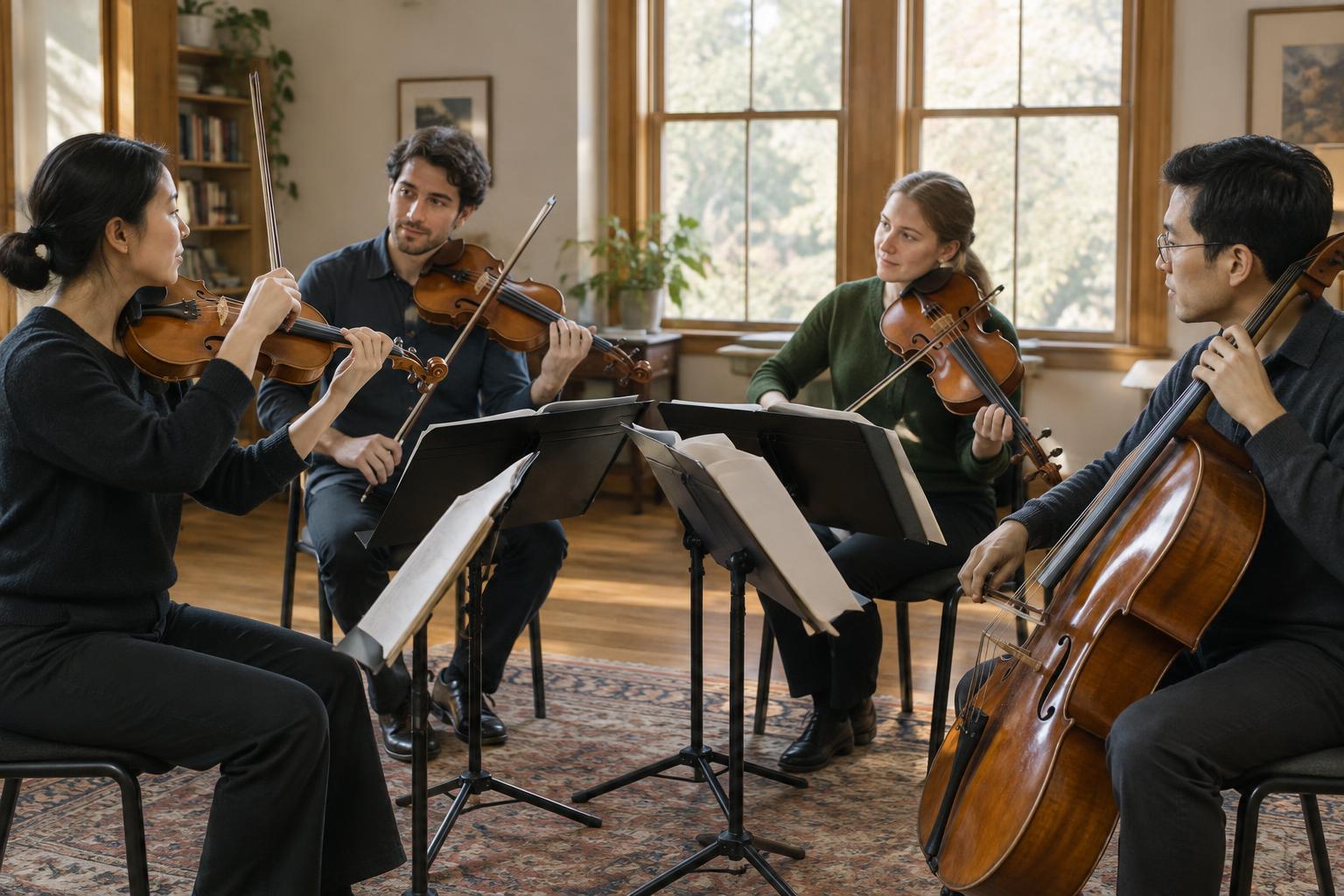
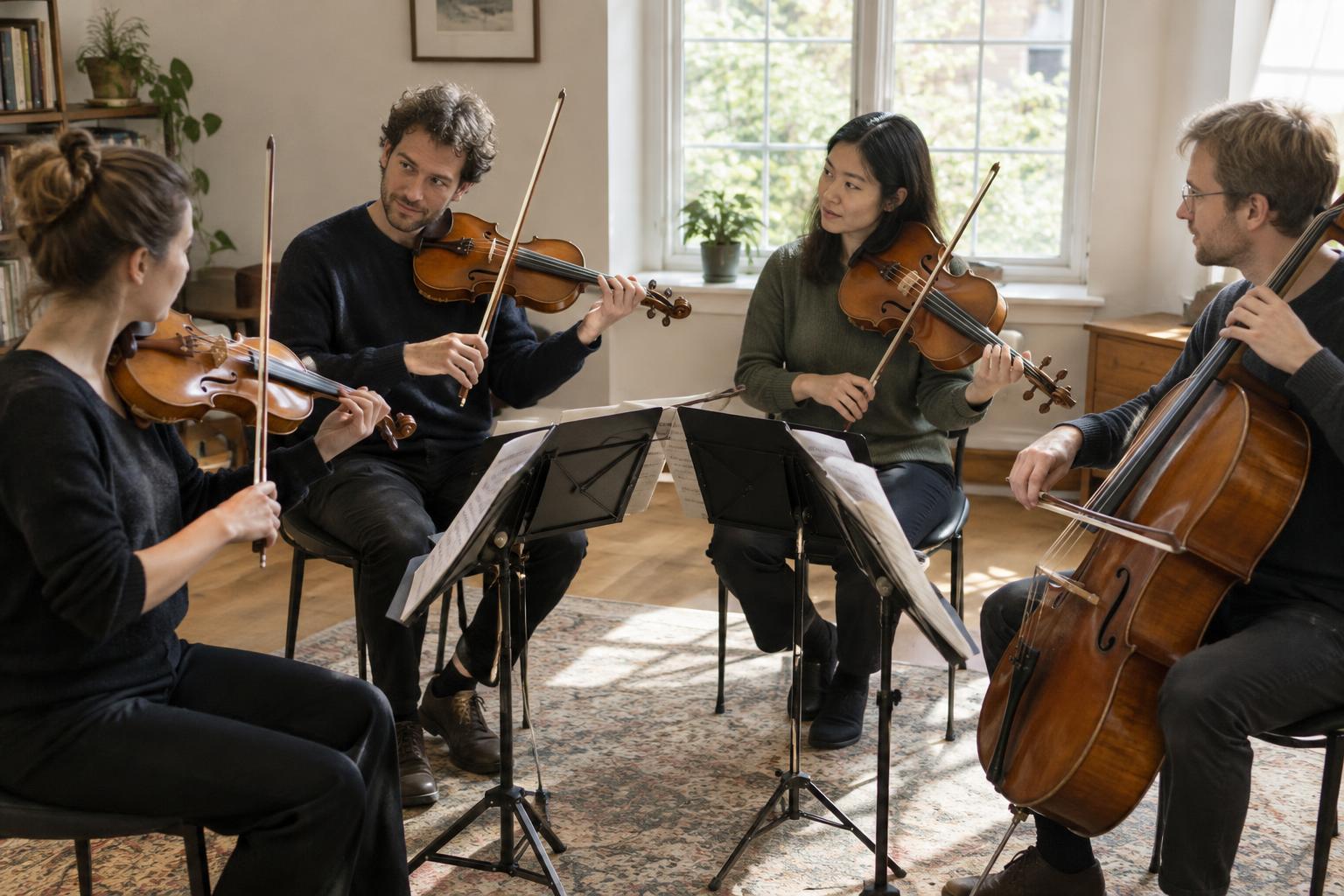
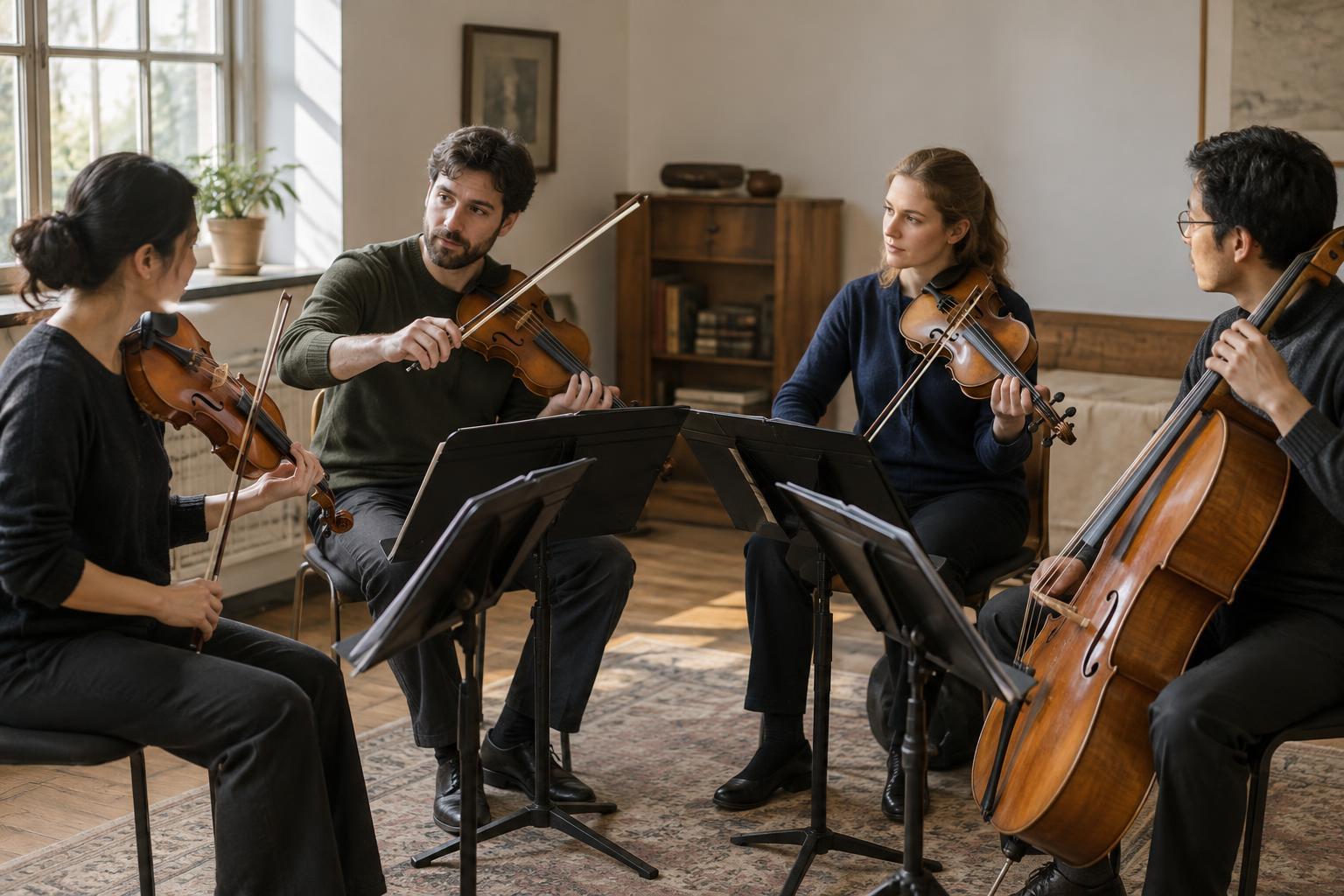
In a string quartet, this change can transform the group’s texture. A muted accompaniment may leave more space around an unmuted melody. If all four players use mutes, even energetic bowing can take on a restrained, inward quality. The effect is not identical across instruments or registers: a muted high violin line may sound delicate, while muted lower strings can lend warmth and shadow.
A small performance mute is different from a heavy practice mute, which is designed to reduce sound substantially during private playing. The two serve different purposes, so the sound of a heavily muted practice instrument is not a reliable preview of a muted concert passage.
Brass mutes: changing color at the bell
Brass mutes work differently. A trumpet or trombone player places a mute in or over the bell, where it changes how sound leaves the instrument. A straight mute can give notes a focused, sometimes piercing edge; a cup mute commonly produces a rounder, more covered sound. Other designs create further colors. These are broad descriptions, not fixed rules: material, shape and playing style all matter.
A brass mute does not necessarily make a part seem softer. A narrow, bright tone can stand out against other instruments even when the player uses less force. Mutes may also affect resistance and intonation, so a player adjusts while playing. In a small ensemble, where every line is exposed, those adjustments help the new color blend—or deliberately refuse to blend—with its neighbors.
Horn players can also change tone by closing the bell with the hand, an effect often called stopped horn. It can sound strikingly different from the open instrument, but it is a playing technique rather than simply the addition of a removable mute.
Reading and hearing the change
Scores often use con sordino to mean “with mute” and senza sordino to mean “without mute.” A marking may apply to one player or to a whole group, and performers need a moment to put a mute on or take it off. In a performance, that small movement can be a useful visual clue that a change of sound is coming.
Try following a single instrument before and after the change. Does its tone become less brilliant, more nasal or more concentrated? Does it seem to move behind another voice, or does its new color draw attention? Then listen to the ensemble as a whole. A mute’s most important effect may be on the relationship between parts rather than on the muted instrument alone.
Color as part of the conversation
Chamber music often feels like a conversation among instruments. Mutes give players another way to shape that conversation: a string line can become a quiet reply, while a muted brass phrase can sound pointed without relying on sheer volume. When a mute comes off, the return of an open tone may feel like a change in light, even if the notes and rhythm remain similar.
You do not need to identify every mute by sight to enjoy its effect. Notice the moment a familiar instrument seems to change character, then ask what that new character contributes. It might support another player, create distance or make a later return to the open sound more vivid.