A shared pulse is not a rigid beat
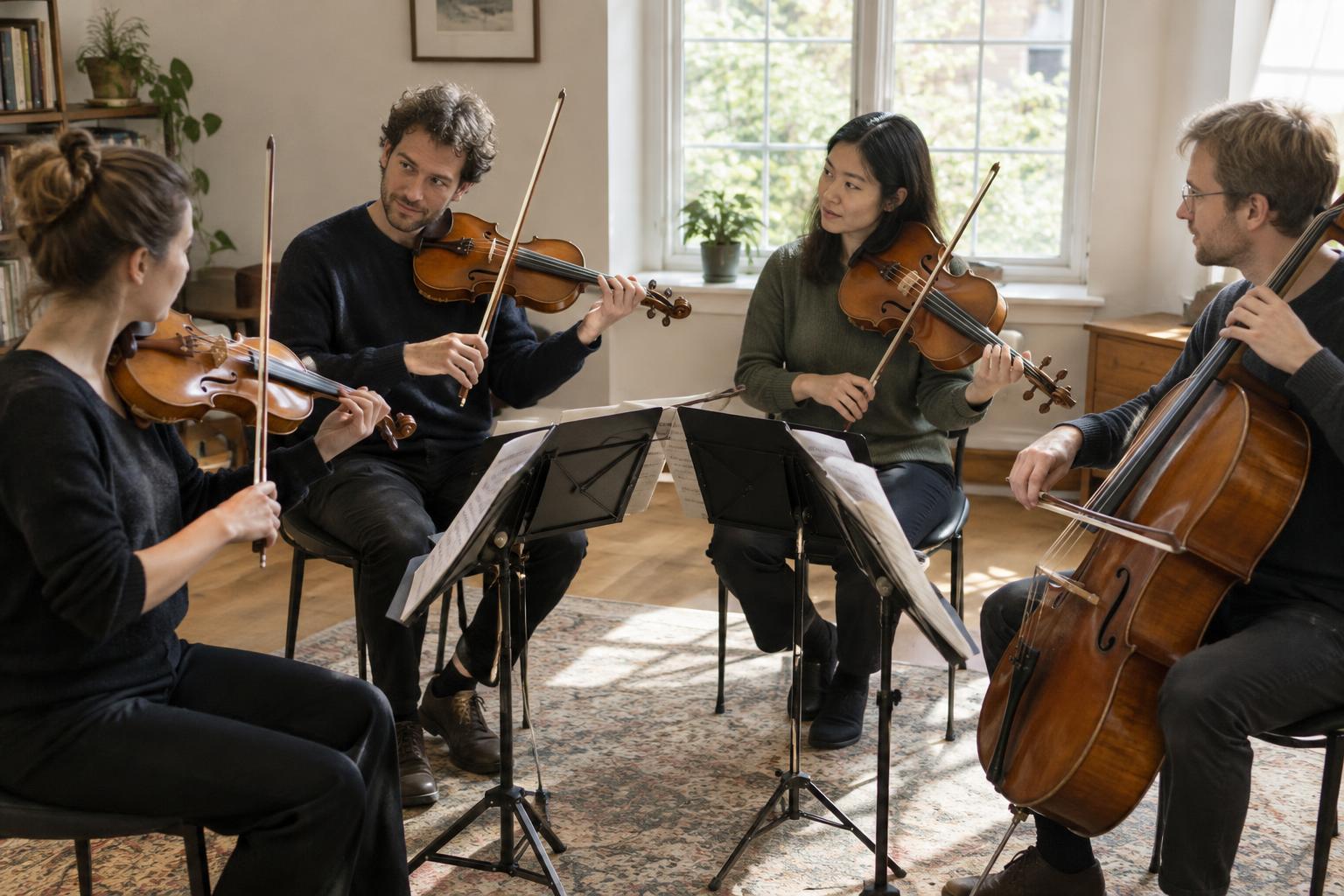
In chamber music, there is usually no conductor marking every beat. The players must agree on how time moves, then keep renewing that agreement as the music unfolds. That does not mean playing mechanically. A phrase may lean forward, settle, or leave room for a breath. What matters is that the change feels shared rather than surprising.
Counting your own part is necessary, but it is not always enough. If every player concentrates only on placing notes correctly, an ensemble can sound oddly disconnected even when nobody makes an obvious mistake. Listen for the shape of the whole phrase: where it is heading, which note gives it weight, and when it releases. Those landmarks help everyone feel the same larger span of time.
Make the first beat easy to recognize
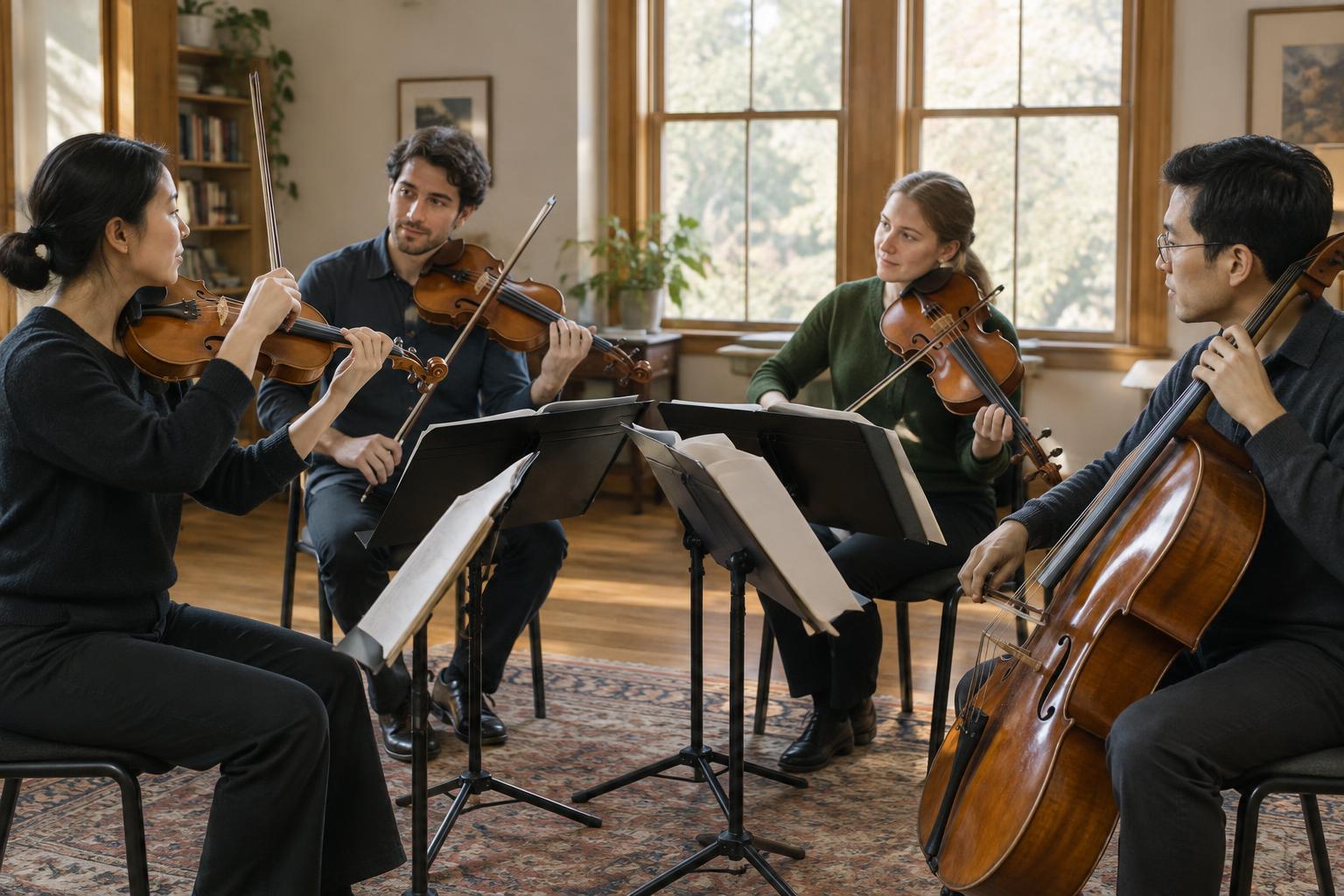
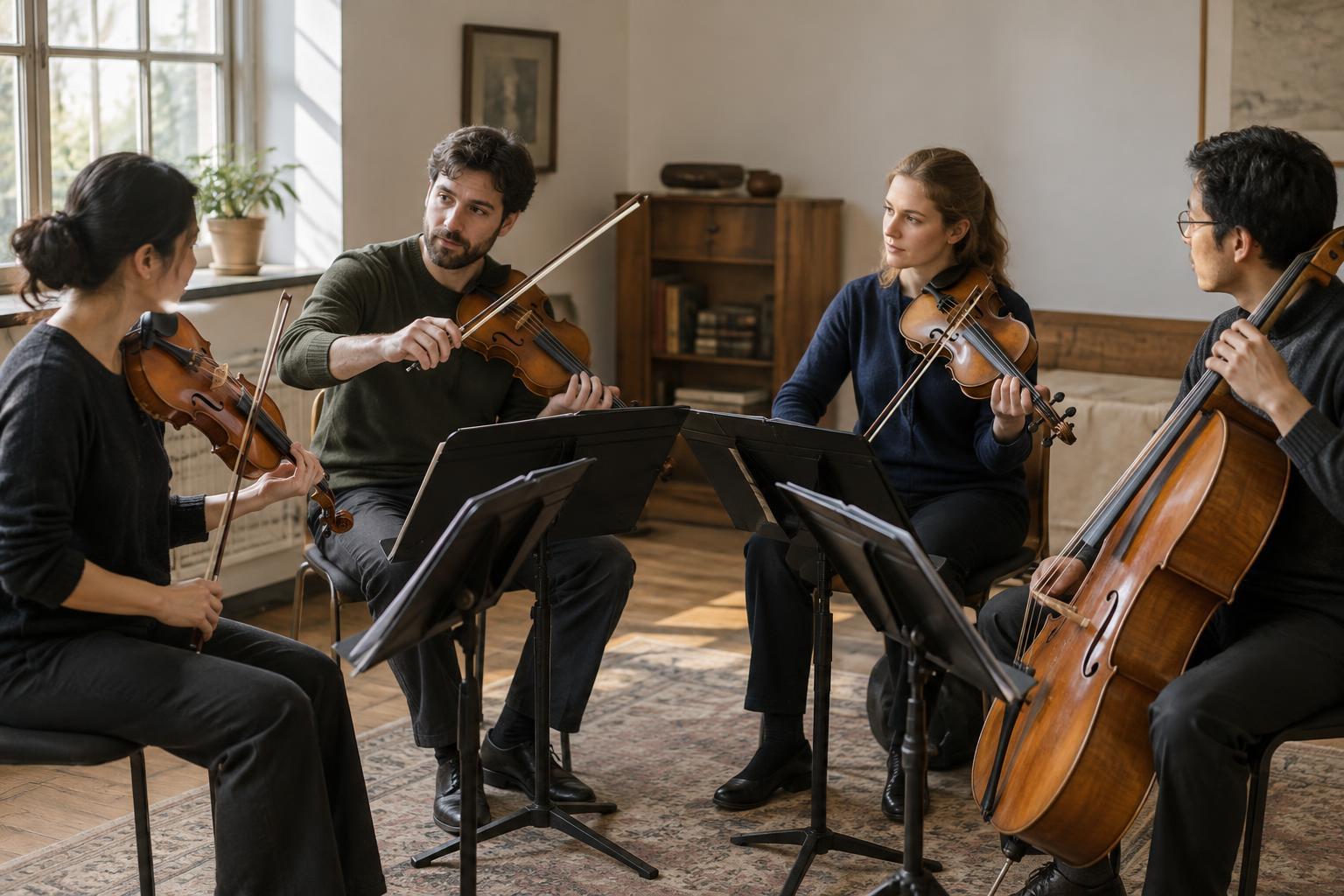
A confident opening starts before the first sound. Players can agree who will give the initial cue, then take a quiet preparatory breath or make a small movement that suggests the tempo. The cue should show not only when to enter, but how: a broad gesture suits a spacious opening, while a compact one can suggest a brisk attack. Everyone needs to be ready to receive it rather than watching a page until the last instant.
The same principle applies after a pause. Look up in time, notice who has the clearest view of the next entrance, and make the preparation visible without turning it into a performance of its own. If an opening repeatedly feels uncertain, try singing or clapping its first few beats together. That simple test can reveal whether the group has agreed on the tempo at all.
Listen for the part that carries time
The most audible melody is not always the best guide to the pulse. A long lyrical note may float over a steady pattern in another instrument. A bass line, repeated accompaniment, or sequence of short notes may give the group a clearer sense of where the next beat falls. Pay attention to that part, especially when your own line has rests or sustained notes.
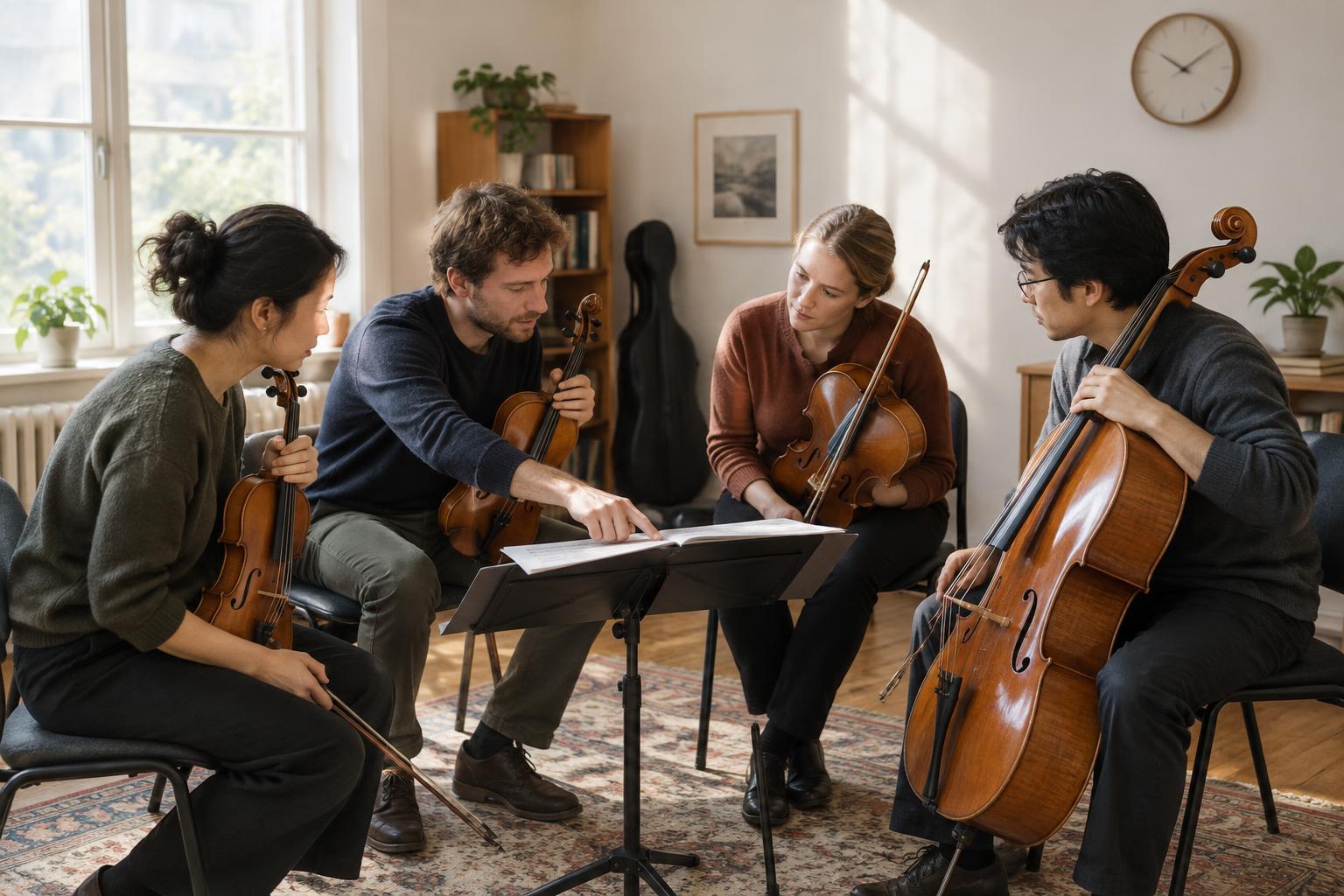
Responsibility for time can move around the ensemble. One player may lead a new phrase; another may make a transition clear through an active accompaniment. Rather than appointing a permanent leader, identify these handoffs in the score. Ask, “Whose part tells us where we are here?” When the answer changes, players can adjust where they listen and whom they glance toward.
Rehearse the moments where pulse becomes unclear
Tempo problems often begin at a specific point: a syncopation, a run of rests, a change in texture, or the measure before a new section. Isolate that spot instead of replaying the entire passage. First try it at a comfortable pace, with everyone feeling or quietly counting the same subdivision. Then remove any spoken counting while keeping that inner sense of the smaller beats.
It can help to play only the parts that establish the timing, adding the others back one at a time. For a difficult entrance, have the resting player follow another instrument’s phrase aloud or by tapping lightly before playing again. These exercises are not meant for performance; they expose what each person is using as a cue. If the group slows or speeds up in the same place every time, agree whether that change is intentional.
Stay flexible when the music moves
Expressive timing works best when players can sense a change coming. A small lift before a phrase ending, a shared breath before a new idea, or a clear arrival on an important harmony gives colleagues something to follow. In rehearsal, describe the desired motion in ordinary terms: “Keep moving through this note,” or “Take a little more space before the entrance.” Then play it and check whether it feels natural to everyone.
If the ensemble briefly separates in performance, chasing the last misplaced note may make matters worse. Keep listening, find an upcoming landmark, and rejoin the common flow there. Good coordination is not the absence of every timing slip. It is the habit of noticing one another, offering readable cues and finding the pulse together again.