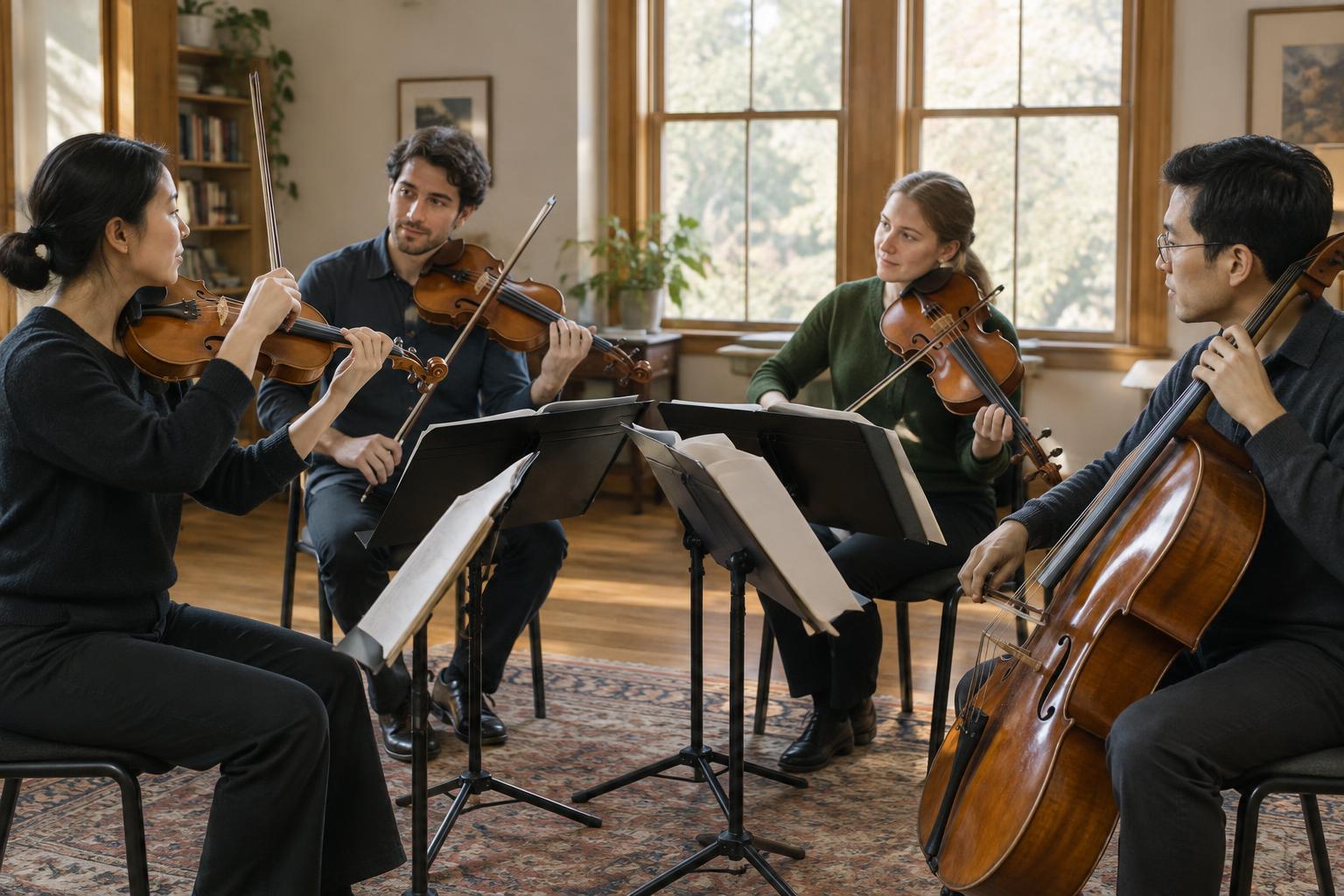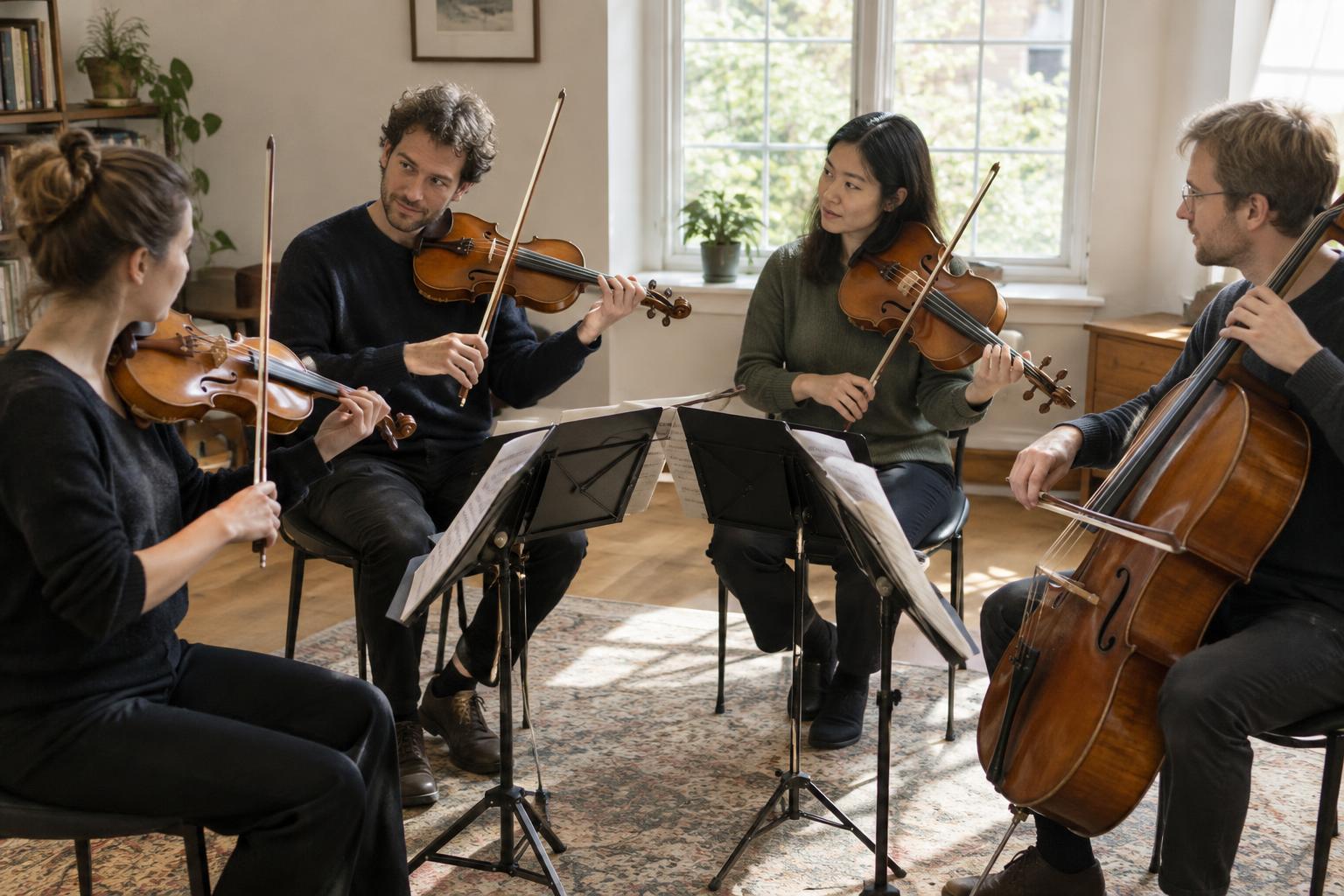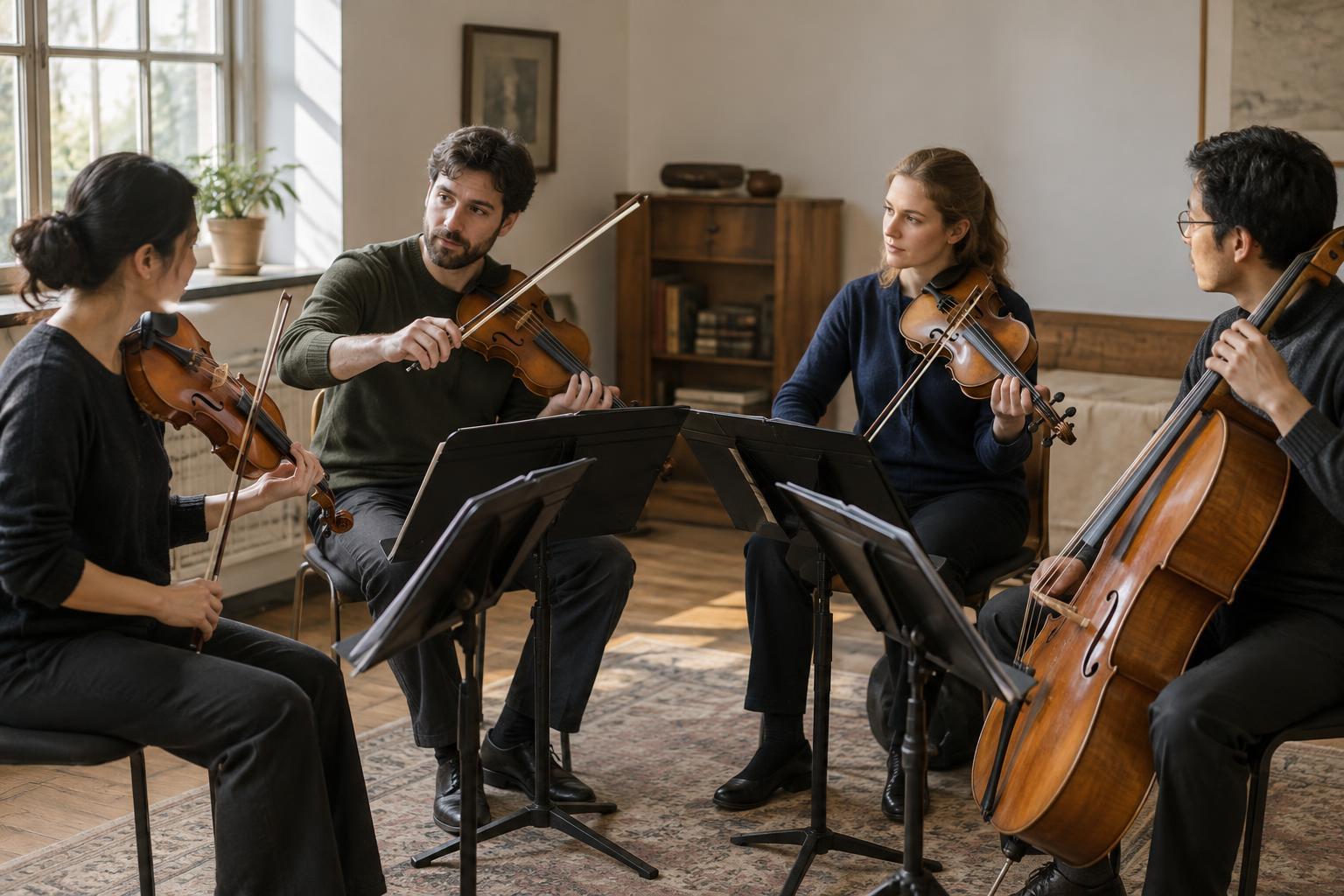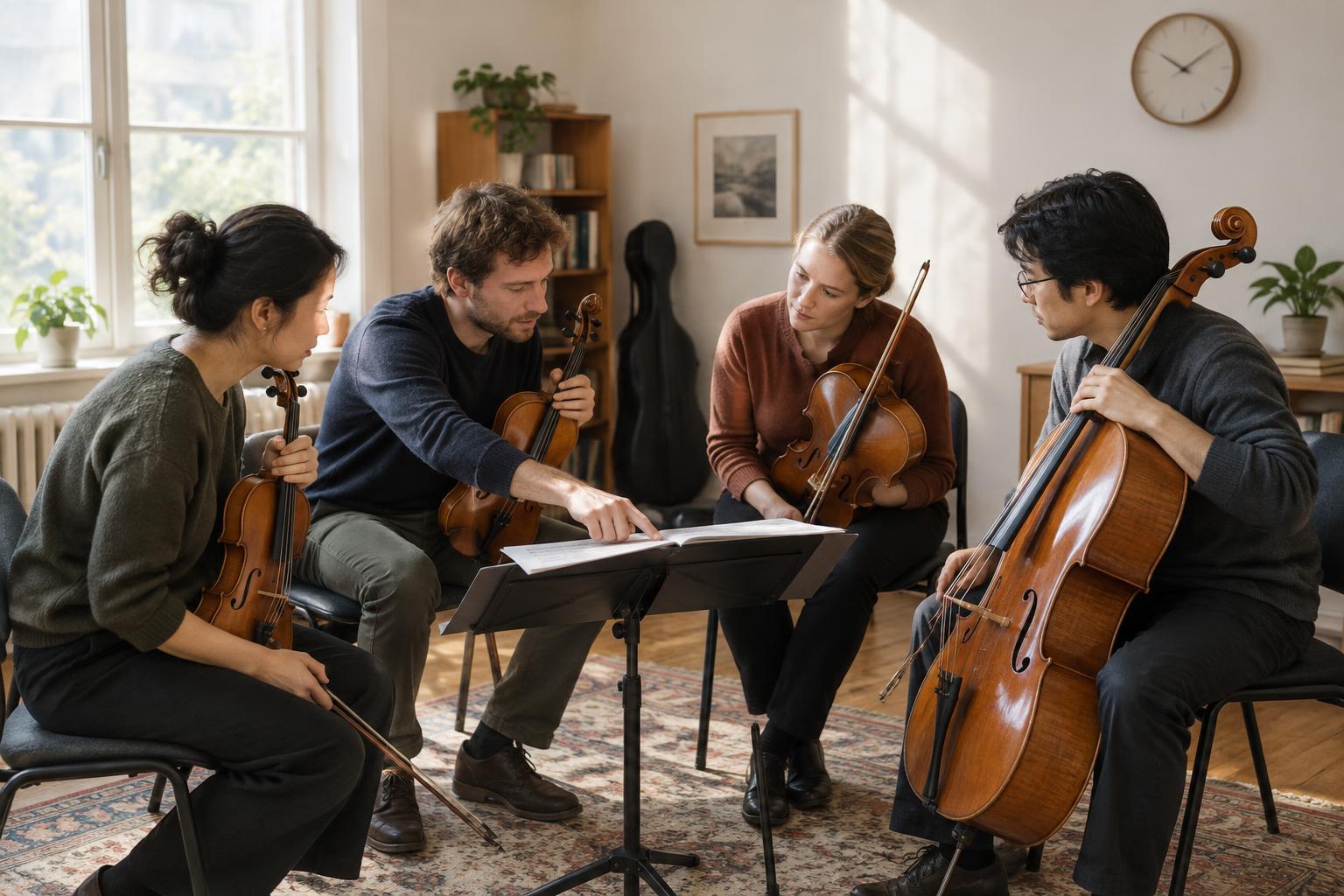
Decide what the rehearsal is for
A chamber rehearsal has a different purpose from individual practice. Alone, a player can learn notes, test fingerings, and build fluency. Together, the group can discover whether entrances align, how a phrase passes between instruments, and what balance lets each musical idea be heard. When time is scarce, plan around the work that genuinely needs other people in the room.
Before meeting, choose two or three outcomes rather than a long list of pieces to cover. For example, the ensemble might agree to settle a tempo change, clarify the handoff of a melody, and make one exposed ending feel secure. A brief message naming the passages and approximate starting points gives everyone a chance to arrive prepared. If the group is new to a work, a run-through may be useful for orientation; just leave time afterward to address what it reveals.
Prepare individually for shared work
Each player can protect rehearsal time by looking beyond their own line. Notice rests that lead into important entrances, rhythms shared with another instrument, and places where you accompany rather than lead. Mark questions you cannot answer alone: Is that figure meant to line up with the cello, or answer it? Who sets the pace after the pause? These are better rehearsal questions than a passage that simply needs more slow practice.
Agree on a common score edition or check any differences in measure numbers and markings before the session. If a full score is available, even a quick look can show where material moves between parts. Players do not need to arrive with every interpretive choice fixed. They do need enough familiarity to try an idea, hear the result, and adjust without repeatedly stopping to find their place.
Give the session a simple shape
Start with a short check-in: confirm the available time, the passages to tackle, and any immediate constraints, such as a player who needs to leave early. Then play enough music to hear the issue in context. A useful pattern is to run a passage without interruption, name one problem, try a specific change, and play it again. Leave a few minutes at the end for a final pass and decisions about next steps.
Allocate time according to difficulty, not the order in which passages appear in the score. An awkward transition may deserve more attention than an entire movement that already holds together. If a discussion begins to consume the session, test the options by playing them. The group can also mark an unresolved choice and move on; not every question needs a final answer that day.
Work on small passages without losing the whole
For an unstable entrance, begin a few measures before it so the player can hear the cue that matters. For a balance problem, ask which voice should be prominent, then try changes in articulation, register awareness, or volume. For rhythmic uncertainty, two players might first play their interlocking lines together before the full group returns. Short experiments make it easier to tell what helped.
Keep comments observable and musical. “I lose the pulse after your held note” gives the group something to test; “That section feels wrong” does not. Invite the quieter players to say what they can and cannot hear. A solution that works from one chair may not work across the ensemble. After several close repetitions, play a longer span so the passage reconnects to its surrounding phrase.
Finish with a plan for the time between meetings
In the last few minutes, identify what improved, what remains unsettled, and who will do what alone. One player might check a tricky rhythm, while another considers an articulation that will support a shared phrase. Record practical decisions in the parts: a breath, a cue, a starting tempo, or the option the group agreed to try next time. Clear notes prevent the next rehearsal from reopening decisions by accident.
A limited rehearsal is successful when the ensemble leaves better able to play and listen together, not when it has touched every page. Keeping the goals small, the experiments audible, and the follow-up specific makes even a brief meeting worthwhile.