What a visual cue can do
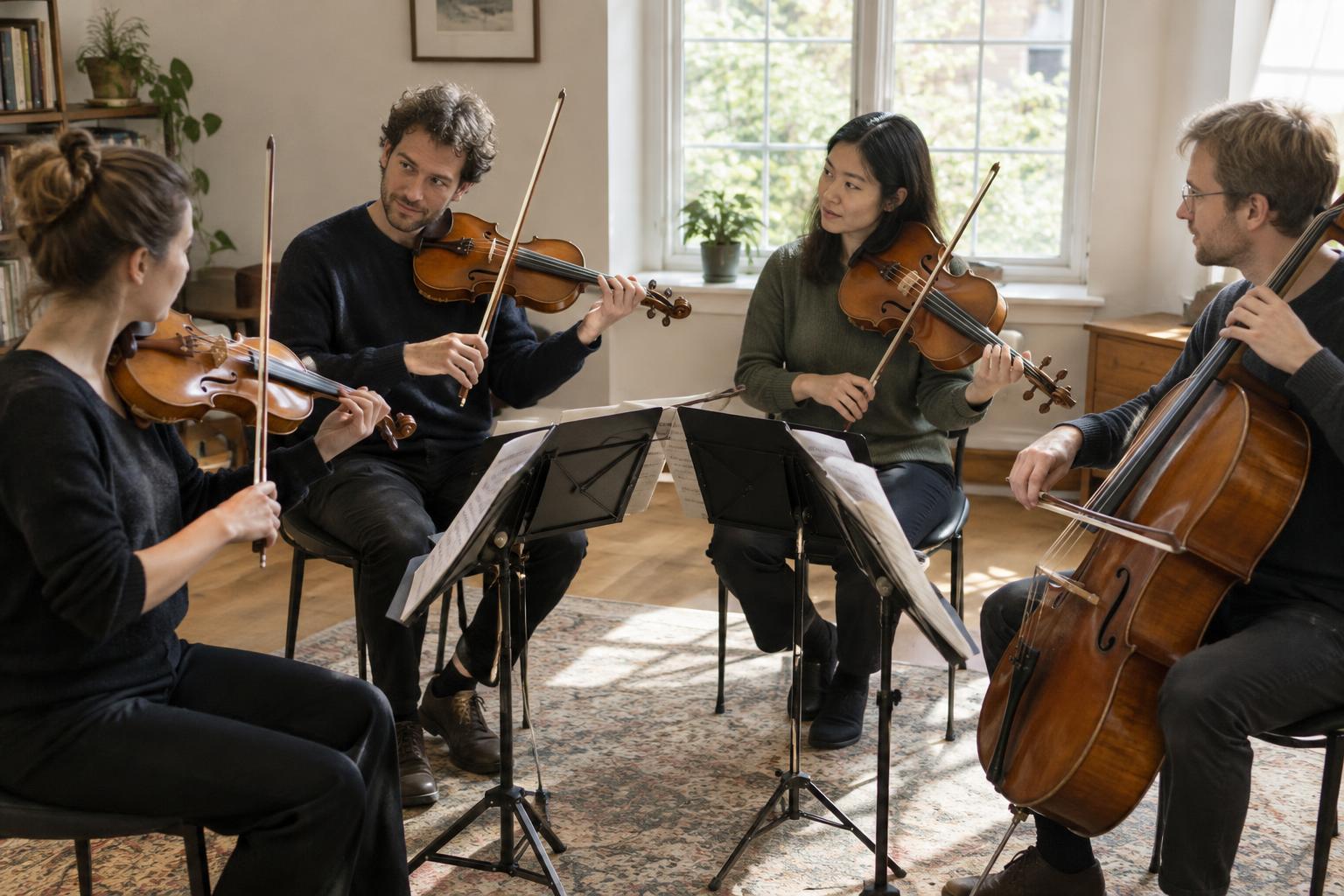
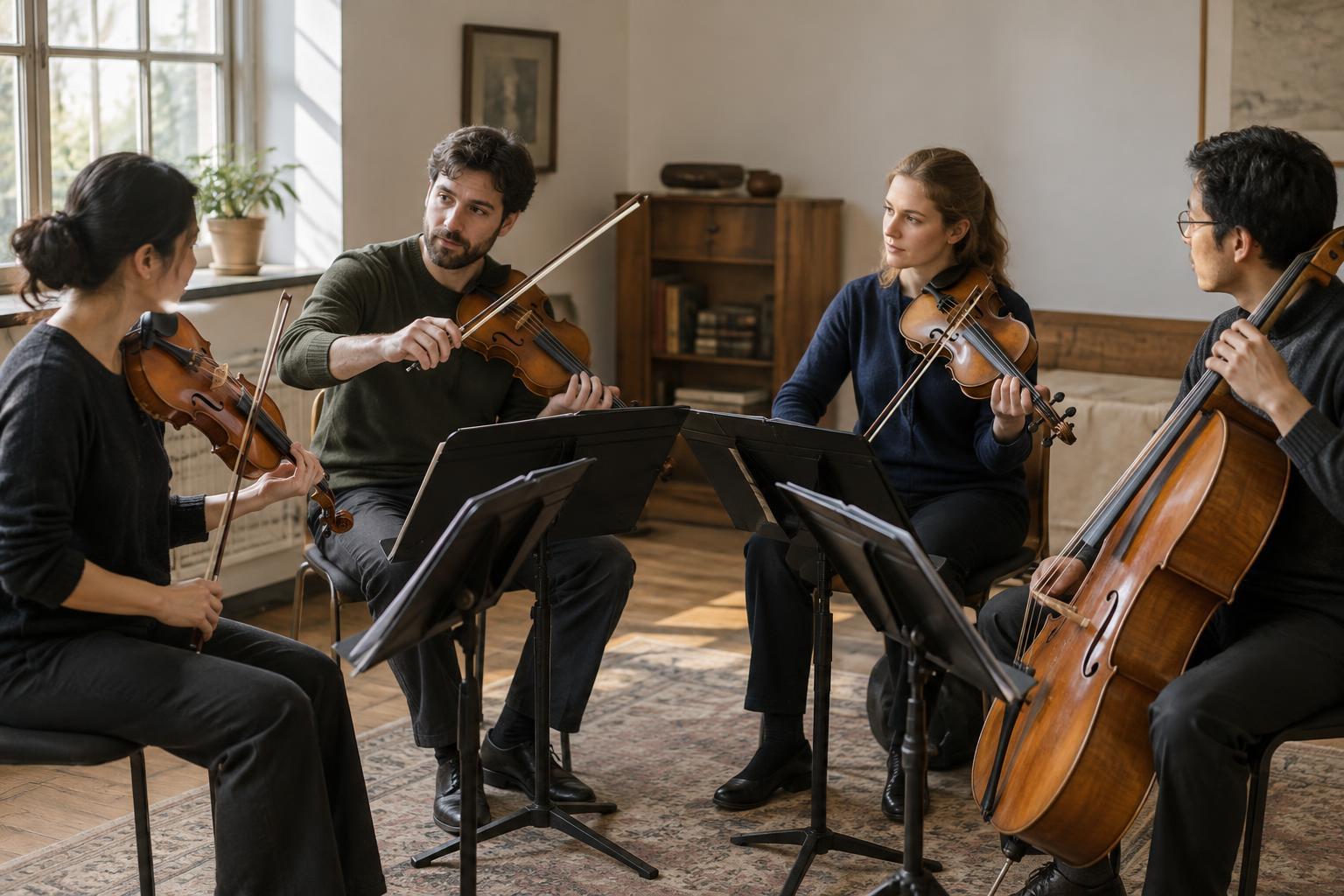
In a small ensemble, no single player has to act as a permanent conductor. Musicians coordinate by listening, watching and learning how their colleagues move. A visual cue is most helpful when the sound alone may not make the next moment obvious: an entrance after a rest, the return from a pause, a change of pace or the release of a final chord.
The clearest cues communicate preparation as well as arrival. A nod exactly on an entrance may be too late for someone who needs to breathe, raise a bow or position their hands. A small motion beforehand can show the intended tempo and character; its natural arrival gives the group a point to play together. Think of it as inviting a shared action, not issuing an order.
Make the preparation match the music
Before an entrance, establish a moment of stillness and attention. Then allow enough time for a preparatory breath or movement in the pulse you want. A lively passage may call for a quick, buoyant preparation; a quiet, sustained opening may need a slower, gentler one. The cue should be easy to see without becoming so large that it disrupts your own playing.
Different instruments make different gestures possible. A string player might use a breath and the motion that sets the bow in place. A wind player’s inhale can be visible and audible to nearby colleagues. A pianist may lift the hands slightly before a first chord. None of these movements has to look identical. What matters is that the players know which part of the motion means “get ready” and where the sound will begin.
For a cutoff, avoid assuming that everyone will follow a sudden glance. Agree on who will shape the release, then use a gesture that carries through the end of the sound. In a resonant room, the end of a note and the end of its reverberation can feel different; the ensemble can decide whether to hold the shared stillness for a moment before moving on.
Learn to read without staring
Reading a cue starts before you look up. Know whose part leads into your entrance, what the preceding phrase sounds like and where the next pulse is likely to fall. That context lets you take in a colleague’s movement through peripheral vision rather than waiting for a dramatic nod. If you lose your place in the score while watching, the cue has stopped helping.
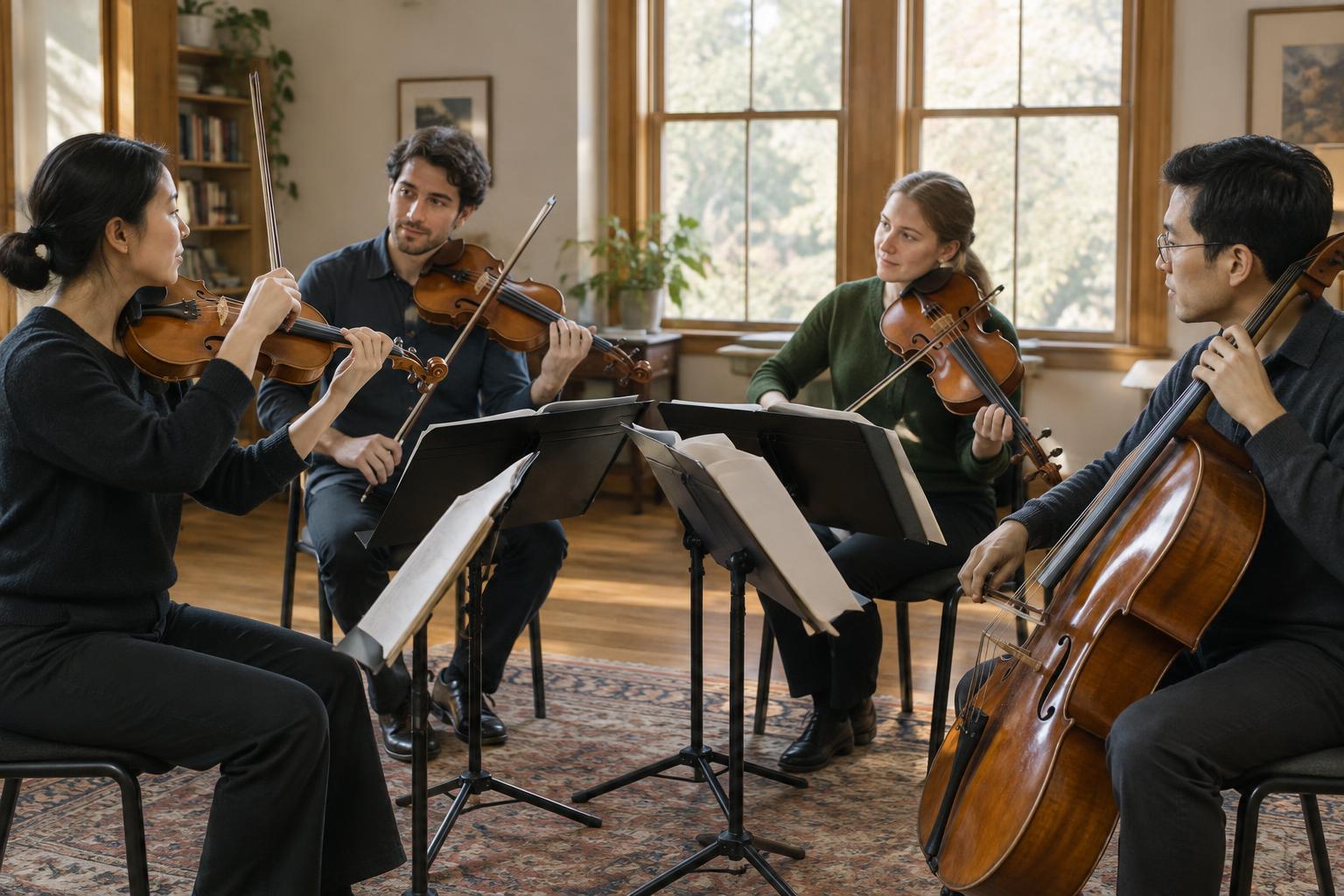
Arrange stands and chairs so players can see one another comfortably. A quick glance toward the person shaping a transition may be enough; constant eye contact is neither necessary nor always practical. Watch for a breath, a change in posture or a bow that gathers energy before it moves. At the same time, keep listening for the musical information the gesture cannot supply, such as a colleague’s actual articulation or how long a phrase needs to settle.
A cue is an offer, not a guarantee that every player will interpret it the same way. If the visual motion and what you hear seem to disagree, respond to the ensemble’s sound rather than chasing the gesture alone. The next rehearsal is the place to clarify what each player expected.
Decide who leads each transition
Leadership can pass from player to player within one piece. The musician with the melody may shape a phrase ending, while someone with a pickup may give the clearest cue into the next passage. If several parts enter together after silence, choose a person everyone can see and agree on how that person will prepare the entrance. Making this decision removes guesswork without making the performance rigid.
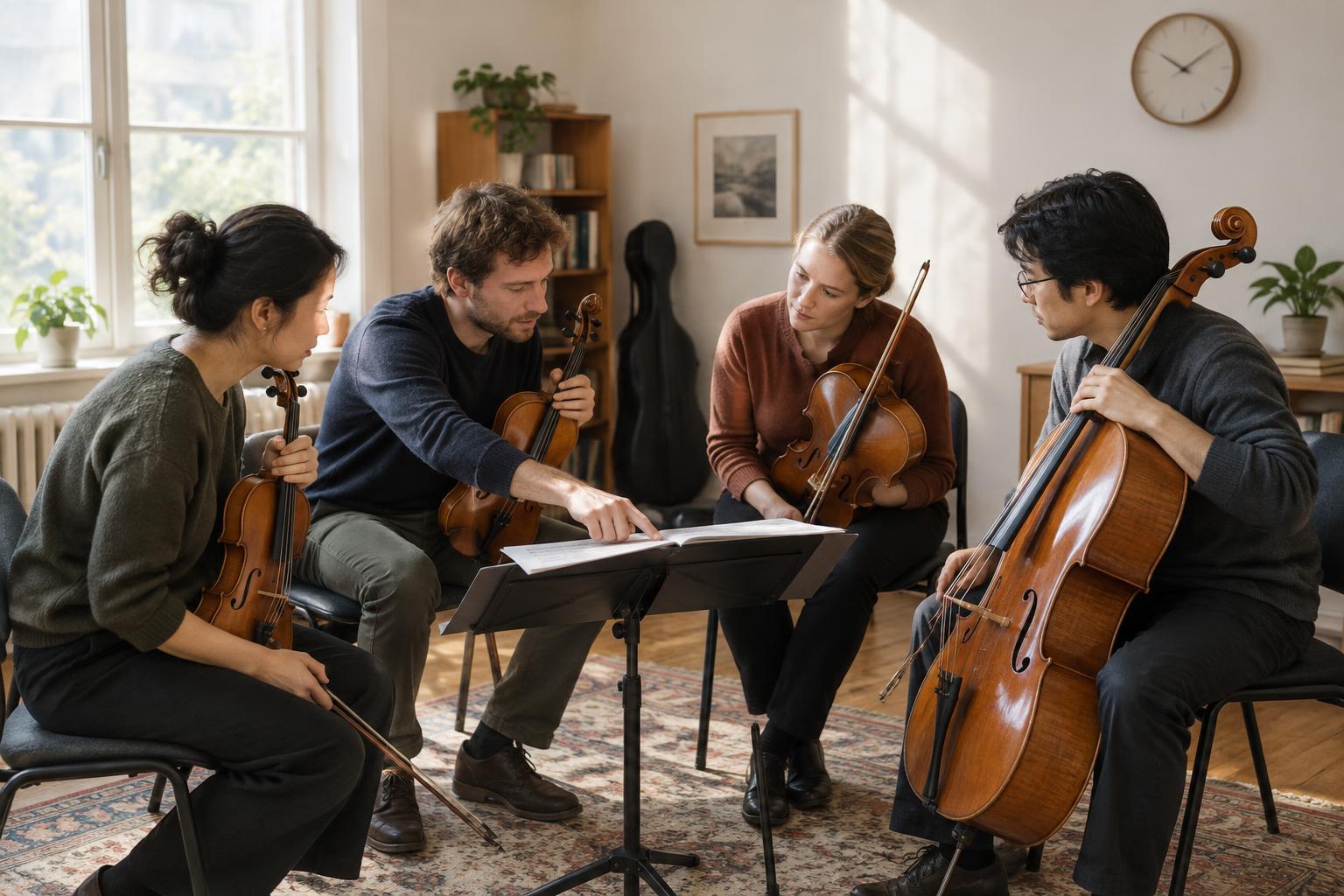
A useful rehearsal exercise is to isolate a tricky transition. Play a few measures before and after it, then pause to ask whether the cue came early enough and whether it conveyed the intended pace. Try it again with a smaller gesture, or with a different player leading. If the entrance improves when everyone listens for a particular note or rhythm, name that sound as part of the plan. Visual coordination works best alongside a reliable aural reference.
Keep the cues flexible
Not every musician can or wants to rely on eye contact in the same way. Seating, lighting, instrument position and individual vision can all affect what is visible. Talk openly about which cues are useful, and pair them with audible landmarks whenever possible. A shared breath, a clearly shaped pickup or an agreed sense of pulse may serve the group better than a gesture only one person can see.
In performance, leave room for a colleague to respond. If a cue is missed, avoid repeating it more forcefully while the music continues; listen, find the common pulse and reconnect at the next clear point. Good visual communication is modest and adaptable. Its purpose is to help the players feel free to make music together, not to make every movement look rehearsed.