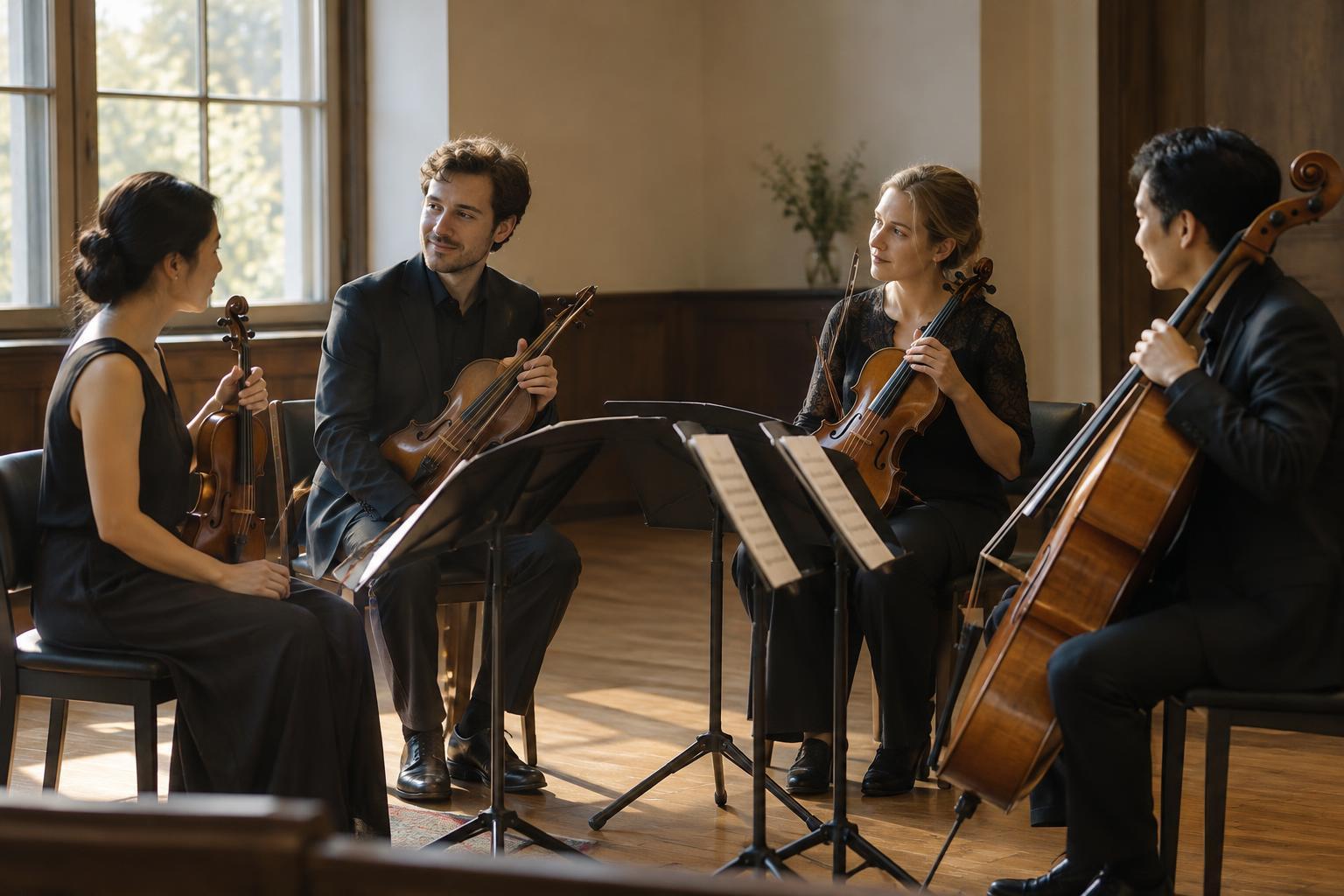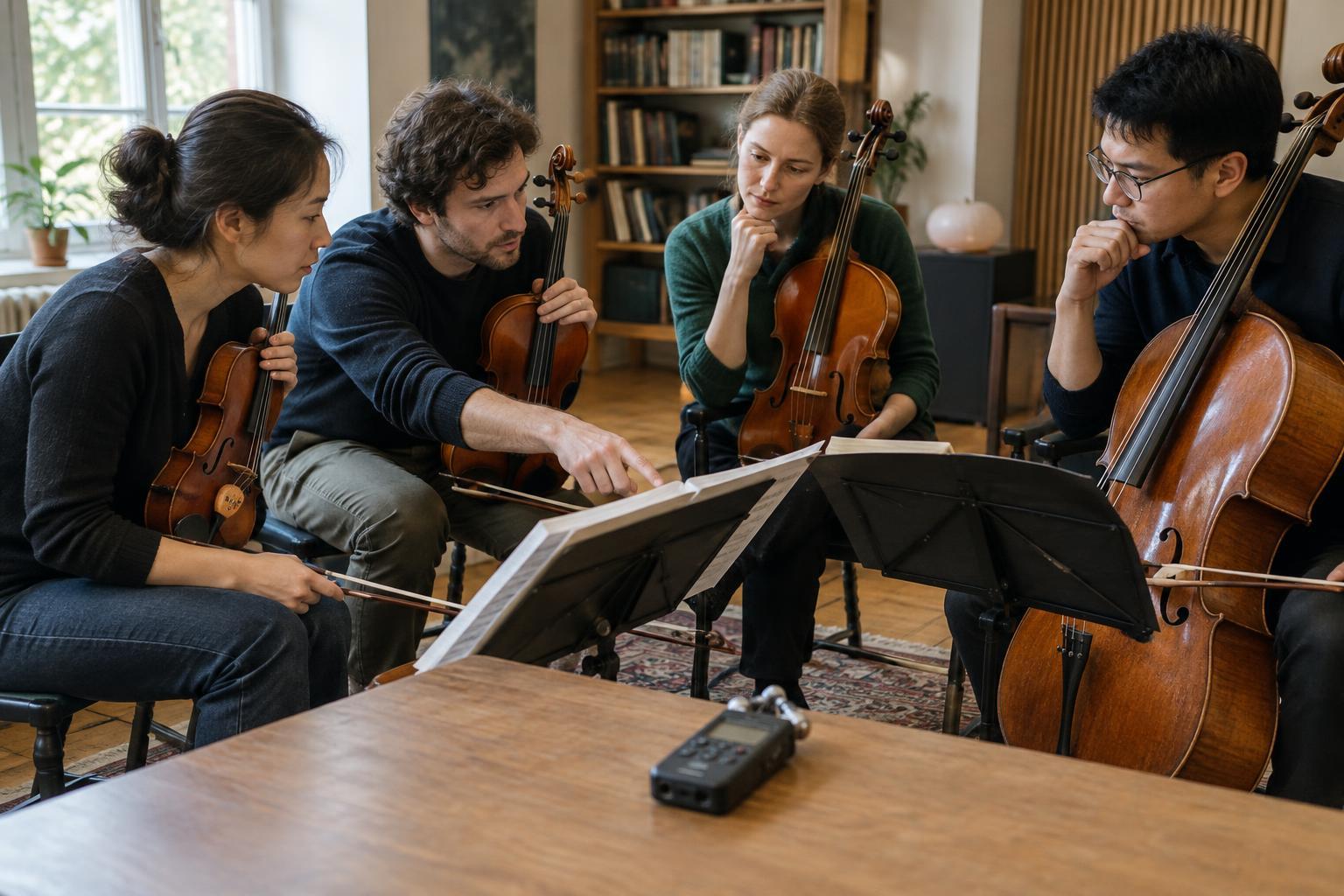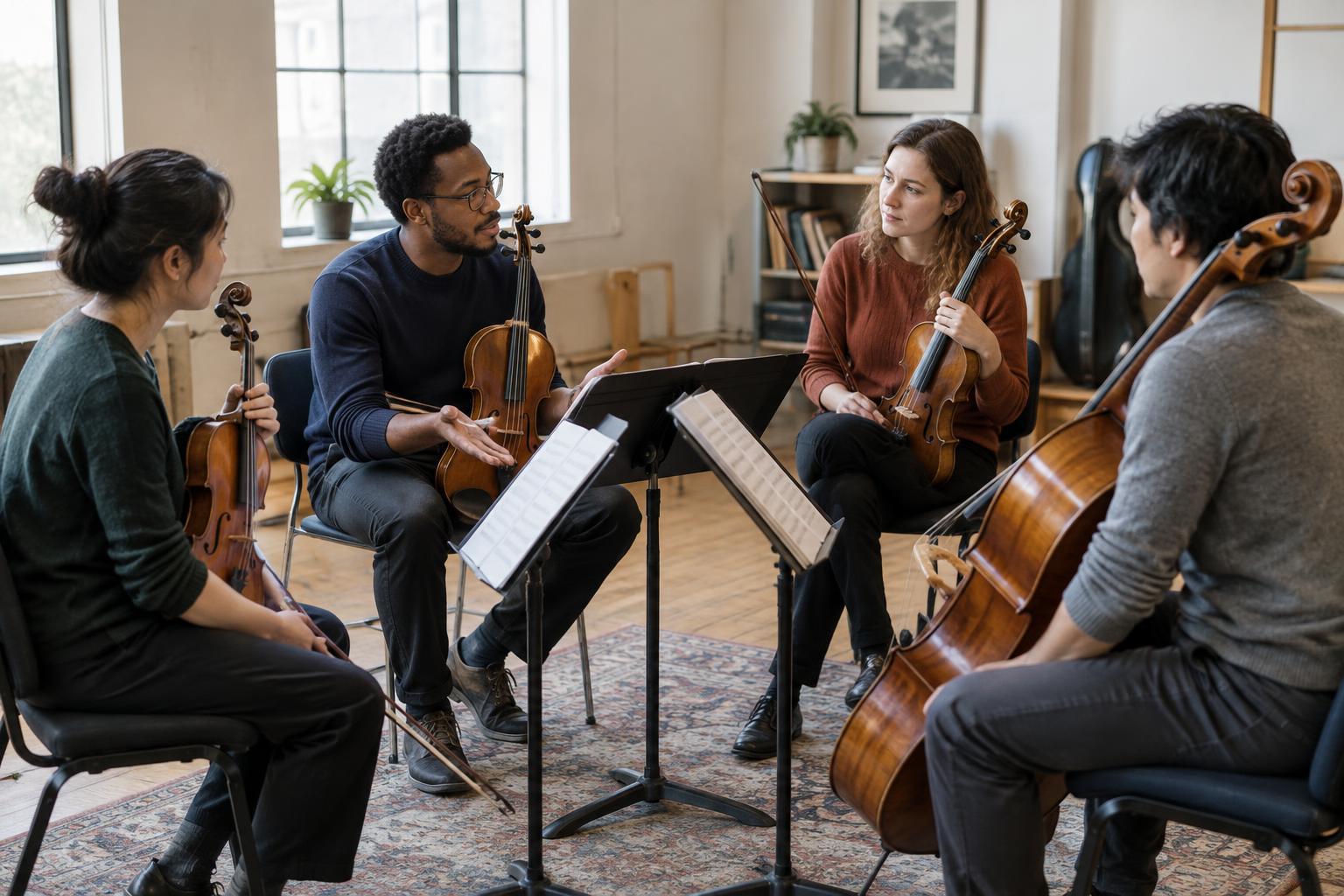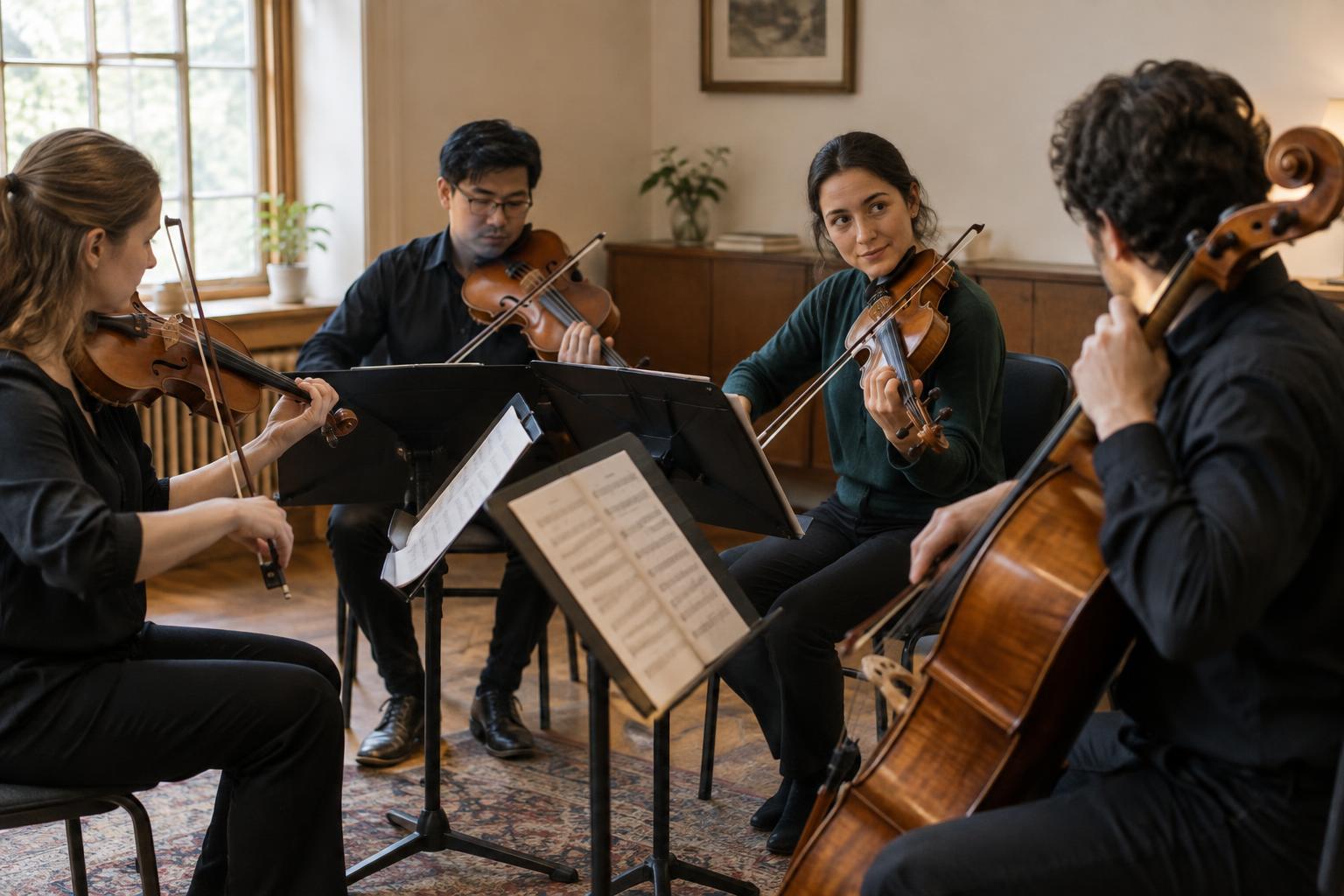
Keep the shared pulse in view
A lost entrance, an unexpected repeat, or a few bars of confusion can feel enormous from the stage. The first task is not to make up every missed note. It is to find out where the ensemble is now. If you are unsure, stop playing briefly rather than filling the gap with guesses that may pull others off course. Keep listening and watch the players who are carrying the pulse.
If you still know your part but someone else seems lost, stay steady. Maintain the agreed tempo and make the next entrance or phrase shape as clear as you can without exaggerating it. In a chamber group, recovery is easier when at least one player offers a dependable musical path. A visible breath, a natural lift of the instrument, or an unmistakable downbeat may be enough; a sudden change of tempo usually is not.
Look for musical landmarks, not just bar numbers
Bar numbers are useful in rehearsal, but they can be difficult to calculate in the middle of a performance. Listen instead for a landmark you already know: a theme returning, a change of texture, a distinctive bass line, a cadence, or the moment one instrument takes over the melody. Glance at the score to confirm that what you hear matches what you see. In a repeated passage, check what happens next before committing to an entrance.
If your music includes long rests, count when you can, but also follow the surrounding parts. Knowing whose phrase ends just before your entrance gives you a second way to orient yourself. When you find the spot, wait for an entry you can place confidently. Rejoining one phrase late is often less disruptive than entering on the wrong beat with conviction.
Make cues useful to everyone
A cue works best when the group already understands it. An inhalation before a shared attack, eye contact at the end of a pause, or a bow movement that shows the beat can communicate more than a hurried gesture. The player with the clearest musical lead at that moment is often the best person to offer it. That role may shift from phrase to phrase rather than belonging permanently to one instrument.
For the player who is lost, the most helpful response is to keep looking and listening. Avoid trying to explain the problem aloud or drawing attention away from the music. If the whole group has stopped, a brief moment of eye contact can establish who will lead the restart. Choose a clear point together, take a shared breath, and begin. There is no need to rush the silence.
Practise getting back in, not just getting it right
Recovery becomes less mysterious when it is part of rehearsal. Mark a small number of reliable restart points in each movement, especially after repeats, long rests, tempo changes, and transitions. Agree on what each player can listen for at those points. A useful question is: “If I lost count here, what would tell me where we are?” The answer might be another player’s rhythm, a harmonic arrival, or a change in articulation.
Try occasional starts from the middle of a phrase rather than always beginning at a section boundary. You can also ask one player to sit out a few bars and rejoin at the next landmark while the others continue. Keep the exercise low-pressure: its purpose is to build listening and trust, not to catch anyone out. Afterward, discuss whether the cue was audible or visible enough and whether the returning player had time to prepare.
Let the music continue, then learn from the moment
Once everyone is together again, resist the urge to compensate by playing faster, louder, or more intensely. Return your attention to balance, phrasing, and the next musical idea. Listeners may notice a hesitation, but a composed return gives them something to follow. An imperfect passage does not have to define the rest of a performance.
After the concert, talk about the moment without assigning blame. Was a repeat unclear? Did a long rest need a better cue? Did everyone expect someone else to lead? Make one practical change to the parts or the rehearsal plan. Chamber music depends on shared attention, and recovery is one of the ways an ensemble puts that attention into practice.