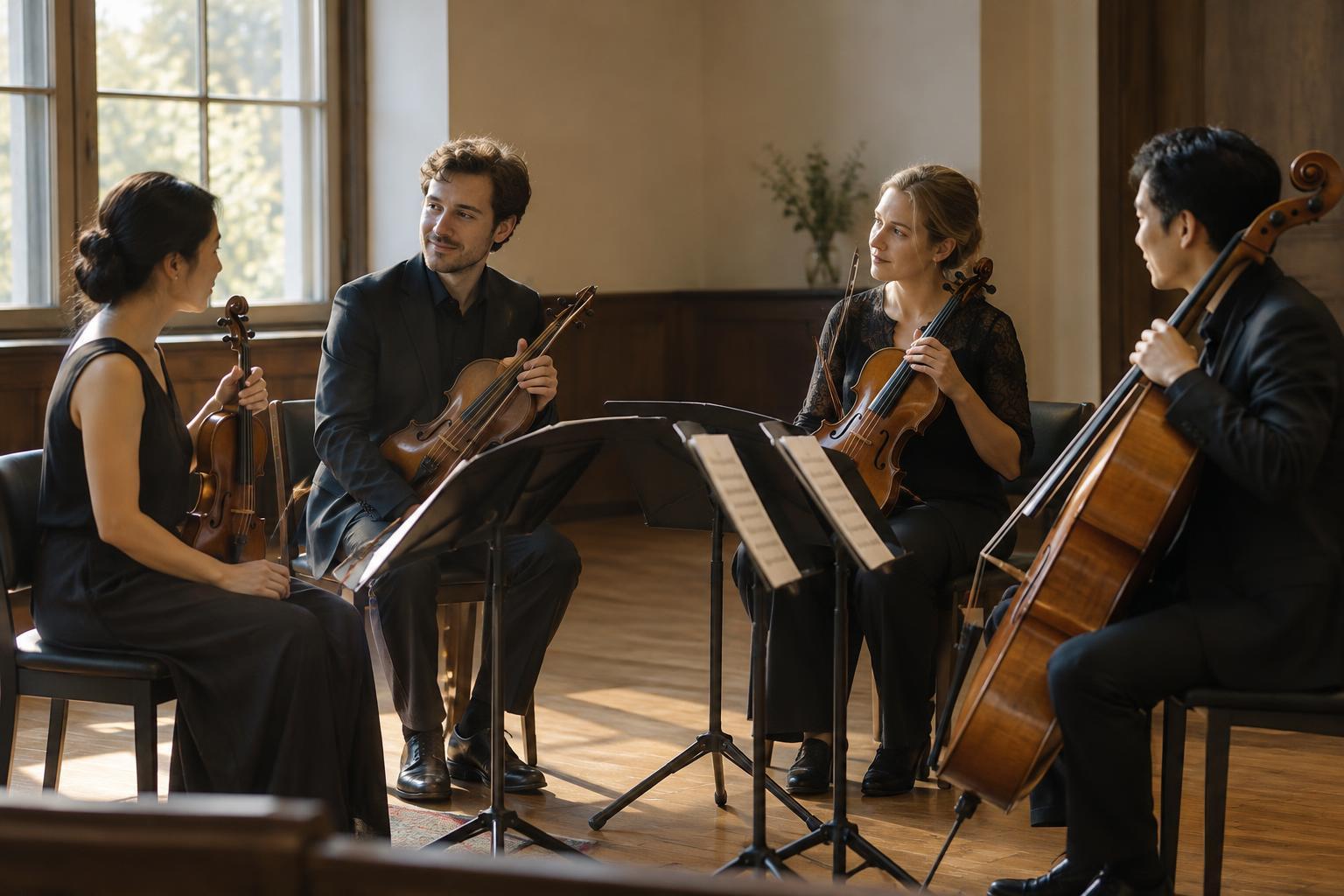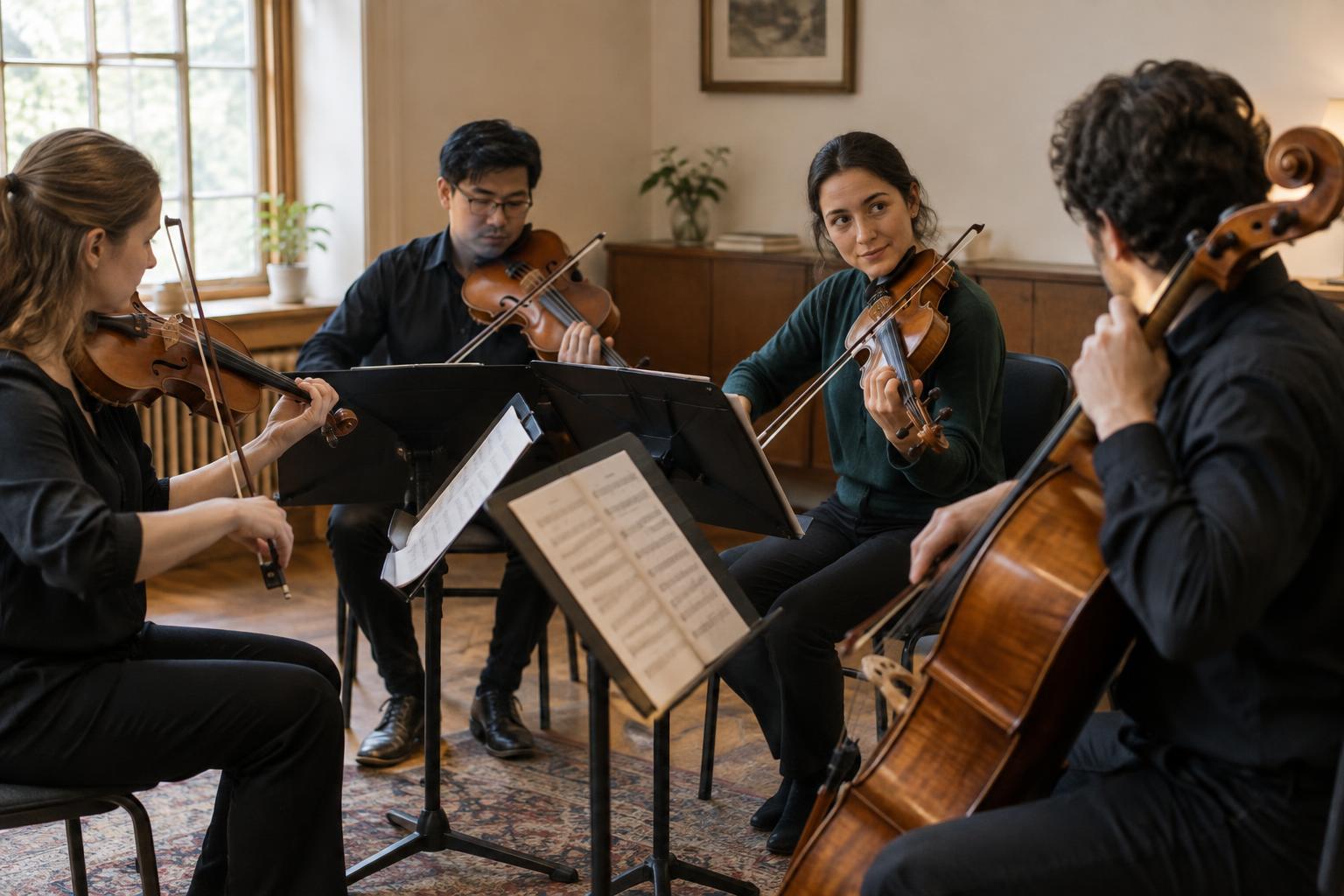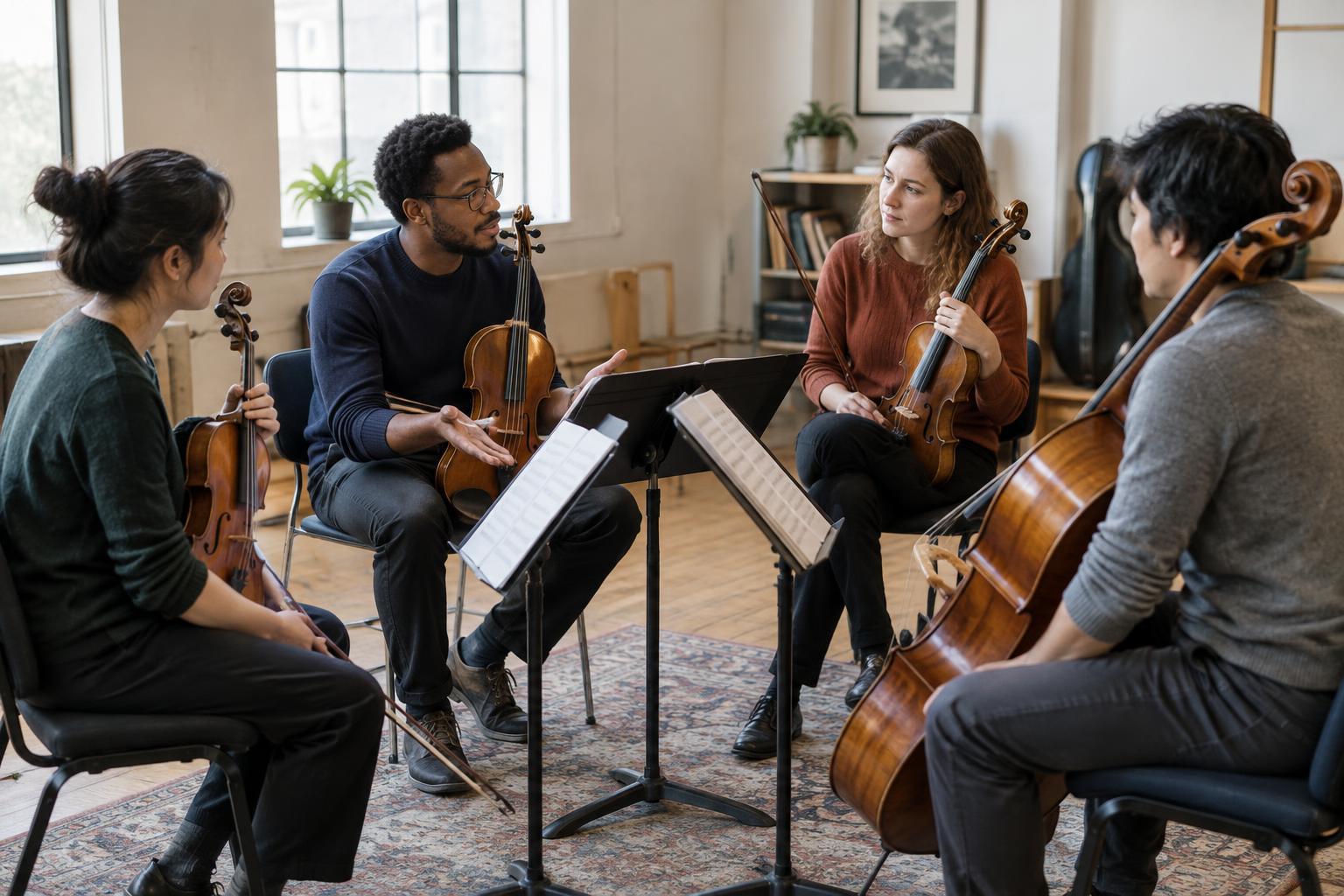
Give the recording a clear purpose
Playing and listening demand different kinds of attention. While rehearsing, you may be focused on your entrance, a difficult fingering or a cue from another player. Playback lets you hear the passage more like a listener would. It can reveal whether a melody carries, whether an accompaniment leaves enough space, or whether a transition feels as convincing as it felt in the room.
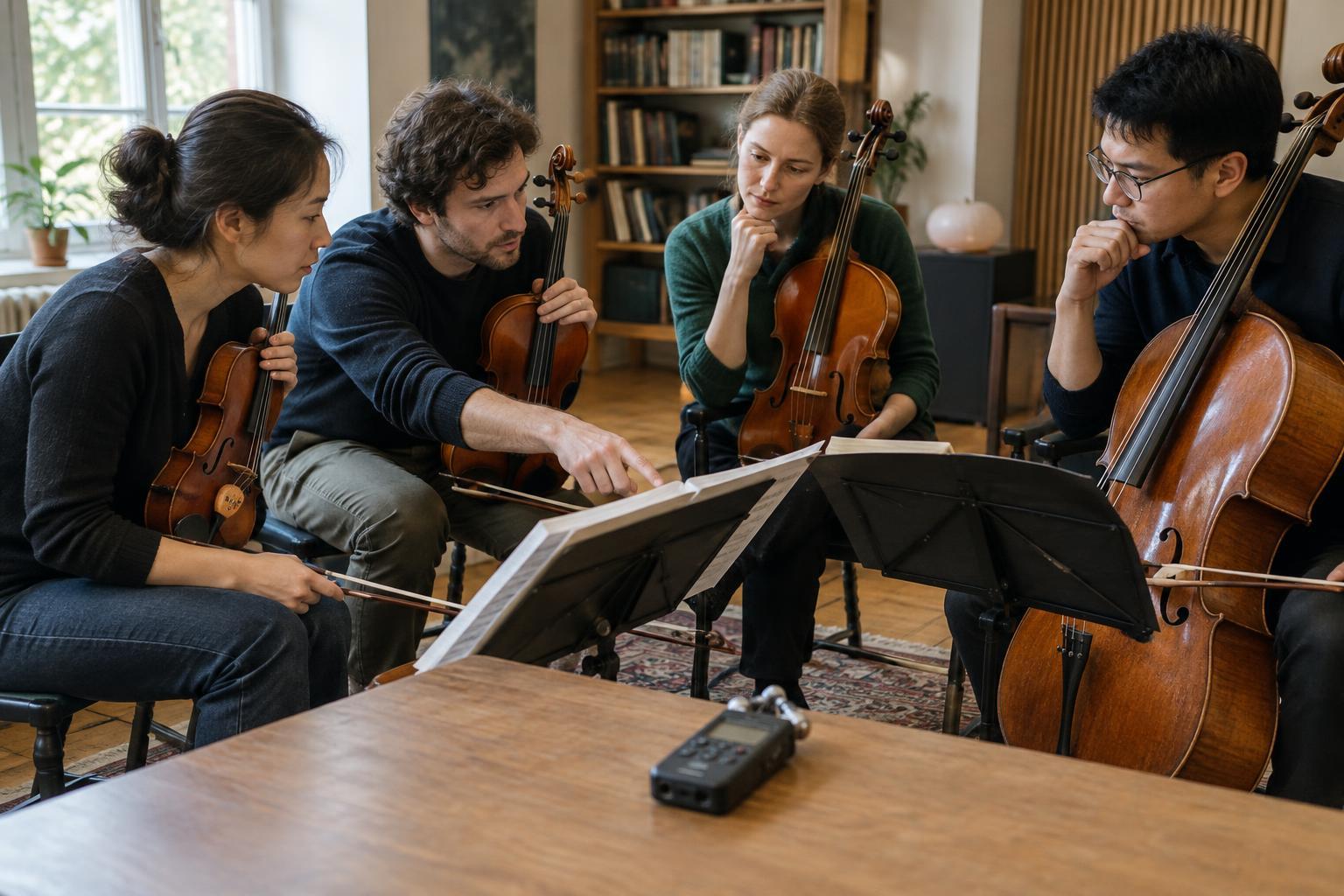
Before pressing record, agree on what the group wants to learn. Perhaps you have changed the tempo of a movement, tried a new seating arrangement or worked on a particular passage. A question such as “Can we hear the clarinet’s line through the strings?” is more useful than a vague plan to check whether the piece sounds good. Make sure everyone is comfortable with the recording, and agree whether it is for private rehearsal use or may be shared.
A phone or simple recorder can be enough for this purpose. Put it where it can capture the whole group without obstructing the rehearsal. Its sound will not be identical to what an audience hears, so treat playback as evidence from one listening position, not as a final verdict on the ensemble.
First, listen to the shape of the music
On the first pass, resist stopping at every wrong note. Listen through a complete section and ask what impression it leaves. Does the phrase seem to travel toward a destination? Can you tell when the music changes character? Does a quiet passage feel intentional, or does its energy disappear? These broad questions help keep the discussion connected to the piece rather than to isolated slips.
Notice where your attention goes naturally. In chamber music, the musical lead often passes between players. If a figure meant to answer the melody goes unnoticed, the issue may be balance, articulation or how clearly the first player makes room for the reply. If an important arrival feels small, consider whether the build-up begins early enough. Playback is especially helpful here because performers know what is coming; a listener only hears what the group makes audible.
Check balance, timing and texture
On a second pass, choose a narrower focus. For balance, ask whether the main line is audible and whether supporting parts add color without covering it. Avoid assuming that the quietest player must simply play louder. A denser accompaniment might need a lighter articulation, a lower dynamic or a different sense of release. Also remember that recorder placement can exaggerate whichever instrument is closest to it; compare what you hear with the group’s experience in the room.
For timing, listen at entrances, handoffs and the ends of phrases. Does the next player join the same pulse, or does the music hesitate? Are short notes released together? A passage can feel unsteady even when everyone is counting carefully if players disagree about where a gesture begins or ends. Try singing or speaking the phrase together before deciding that a metronome is the only answer.
Texture matters as much as individual accuracy. In a busy passage, can you distinguish the layers, or do they blur into one sound? In a sparse passage, do exposed notes feel connected? These questions point toward changes the ensemble can test, such as separating articulations more clearly or listening across the group to a shared bass line.
Separate useful patterns from one-off mistakes
Recordings can make a missed note feel larger than it was. Before spending rehearsal time on it, ask whether the problem repeats and whether it affects the musical idea. One uneven entrance may be a lapse of concentration. Several uneven entrances at the same handoff suggest that the cue, breath or shared understanding needs work.
It helps to describe what you hear before proposing a fix. “The tempo seems to slow when the melody moves to the viola” invites the group to investigate. “The viola is slowing us down” may miss a more complicated cause, such as other players waiting to hear the new line. Specific, neutral observations make playback a tool for collaboration rather than a way to assign blame.
Turn listening into the next rehearsal plan
Keep notes short. Mark a few time points or measure numbers, describe what you heard, and write one experiment for each. For example: “The answer is hard to hear; try a softer accompaniment,” or “The final release is uneven; agree on who gives the cue.” Limit the list to the changes most likely to improve the listener’s experience. A long inventory of imperfections can make it difficult to act on anything.
At the next rehearsal, play the passage once, try the proposed change and record it again if the comparison would be useful. The aim is not to make the group conform to a recording device. It is to test whether the ensemble’s choices produce the musical effect everyone intends. When playback leads to a clearer shared idea, it has done its job—even if a few imperfect notes remain.