Start with the listening experience you want
Chamber music usually places a small group of players in conversation with one another. Rather than choosing a concert because you recognize a composer’s name, begin by asking what kind of listening sounds appealing. Would you like to follow just two musical voices, or hear several instruments pass ideas around? Would a short event feel welcoming, or would you enjoy settling in for a full evening?
An event listing may give you enough to decide without any prior knowledge of the music. Look for the ensemble, the works to be played, an approximate running time and whether there is an intermission. If the listing omits the duration, the venue may be able to tell you what to expect. Programs can change, so treat any estimate as a guide rather than a promise.
Choose an ensemble you are curious to hear
A duo offers a clear starting point: there are only two players to watch and listen to. A violin-and-piano or cello-and-piano recital, for example, lets you notice when one instrument leads, supports or answers the other. Duos are not necessarily simple music, but their give-and-take can be easy to observe.
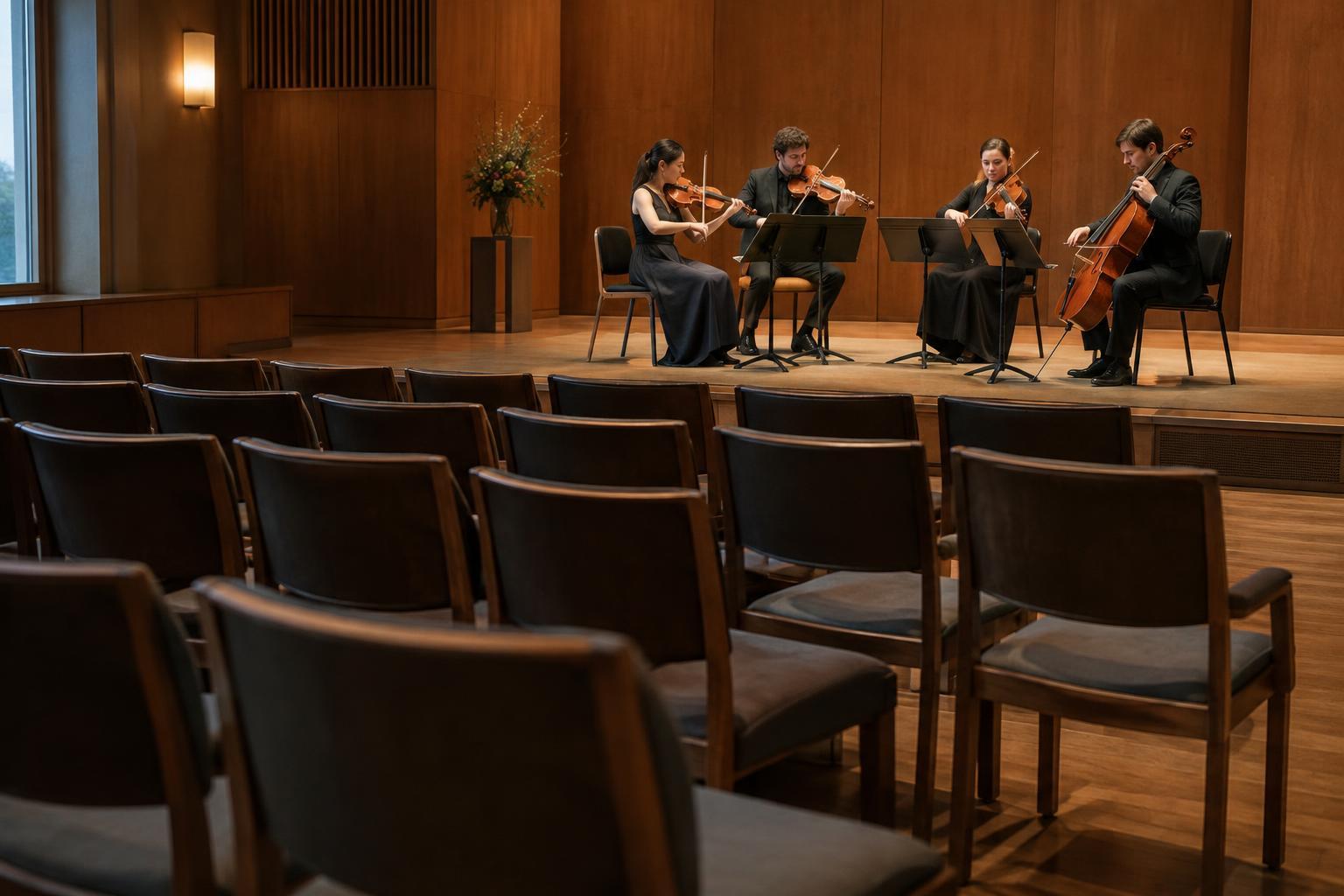
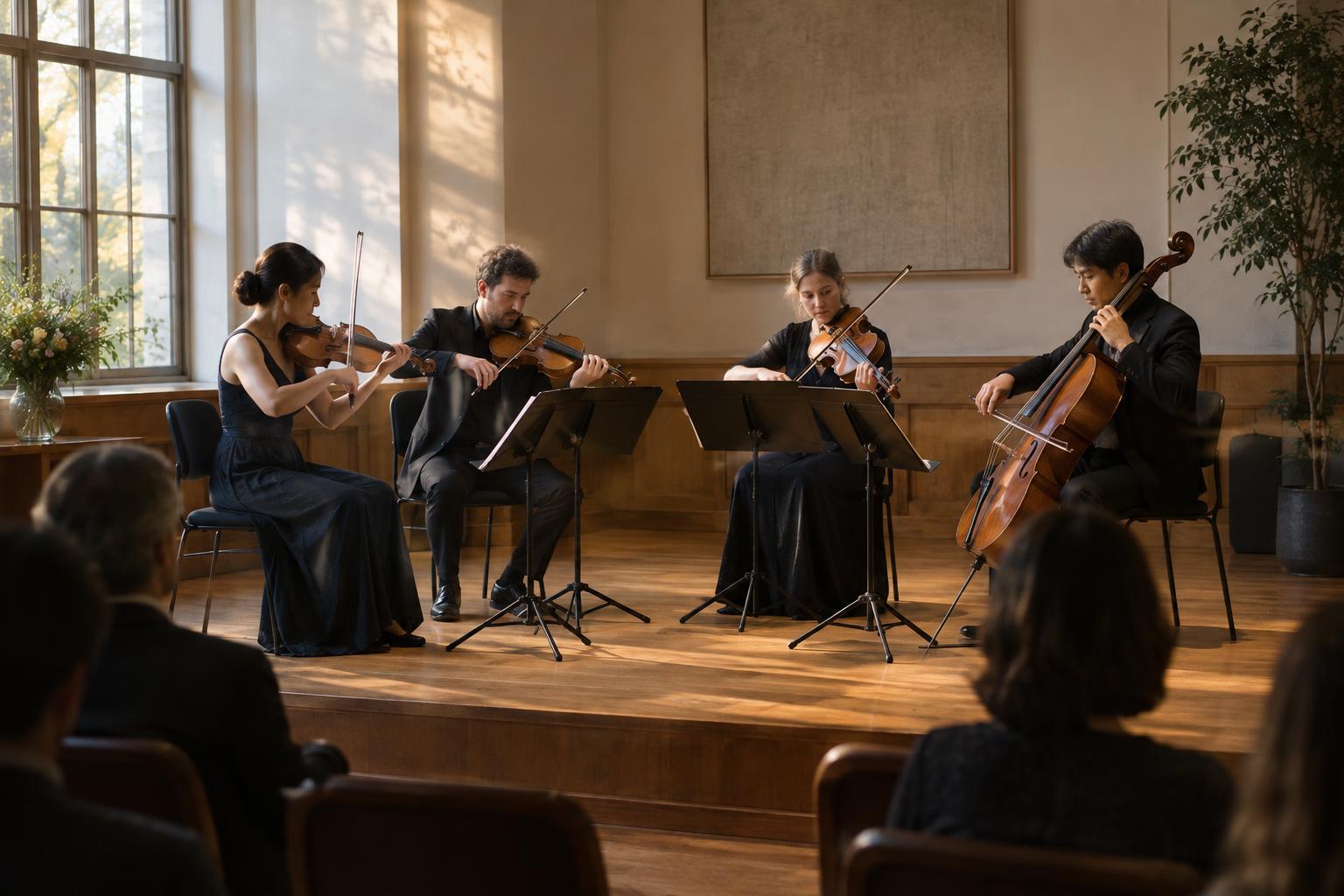
A string quartet—two violins, viola and cello—offers a different kind of conversation. The players may share a musical idea so smoothly that it feels like one voice, then separate into contrasting parts. If you like the sound of strings and want to hear how a small group works together without a conductor, a quartet is a strong first choice.
Piano trios and mixed ensembles bring more distinct colors into the room. A piano trio typically combines piano, violin and cello; a group that includes winds may sound especially varied as different instruments take the foreground. Do not worry about finding the most beginner-friendly ensemble. Pick instruments whose sounds make you curious, then give yourself permission to listen without identifying every part.
Read the program as a map of the evening
The number of works tells you something about the shape of a concert, but not its total length. A program of several short pieces may offer frequent changes of mood, while one substantial work may invite you to spend longer with a single musical idea. Many chamber works also contain multiple movements: shorter sections with their own pace and character. The applause you hear between pieces, rather than every pause in the music, will usually make the structure clear.
For a first visit, a varied program can provide several fresh entry points. If one piece does not immediately hold your attention, the next may sound quite different. A program built around one ensemble and a small number of longer works can be equally rewarding if you want time to become familiar with a particular sound. Neither format requires homework, though listening to a brief sample beforehand is fine if it adds to your anticipation.
Match the running time to your attention and plans
If you are unsure how long you want to sit and listen, look for a concert described as a lunchtime, early-evening or short-format performance, and confirm its listed duration. A full-length concert may include an intermission, giving you a natural pause to stretch and talk. Timing varies by venue and program, so the event’s own information is more useful than assumptions based on its start time or the number of performers.
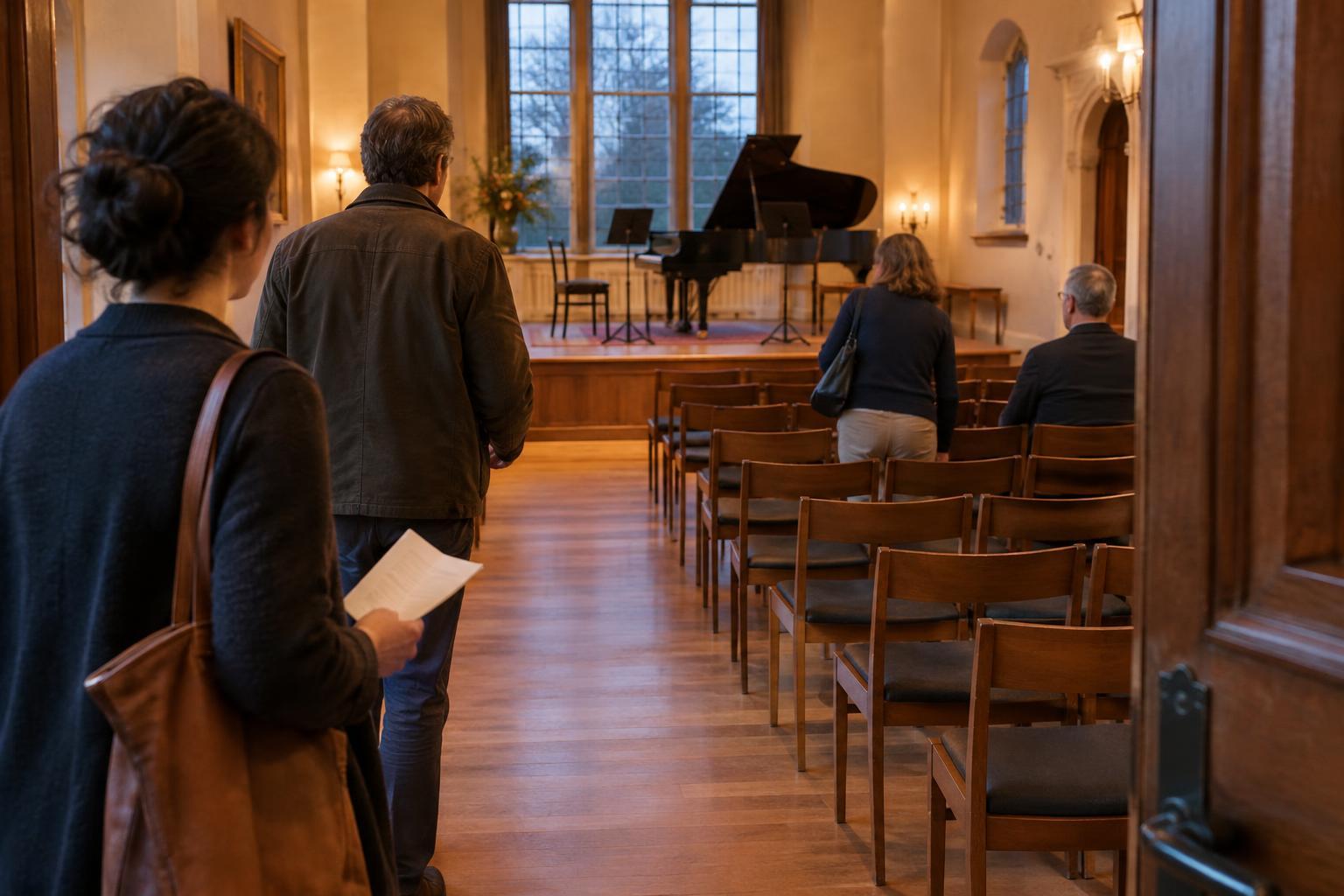
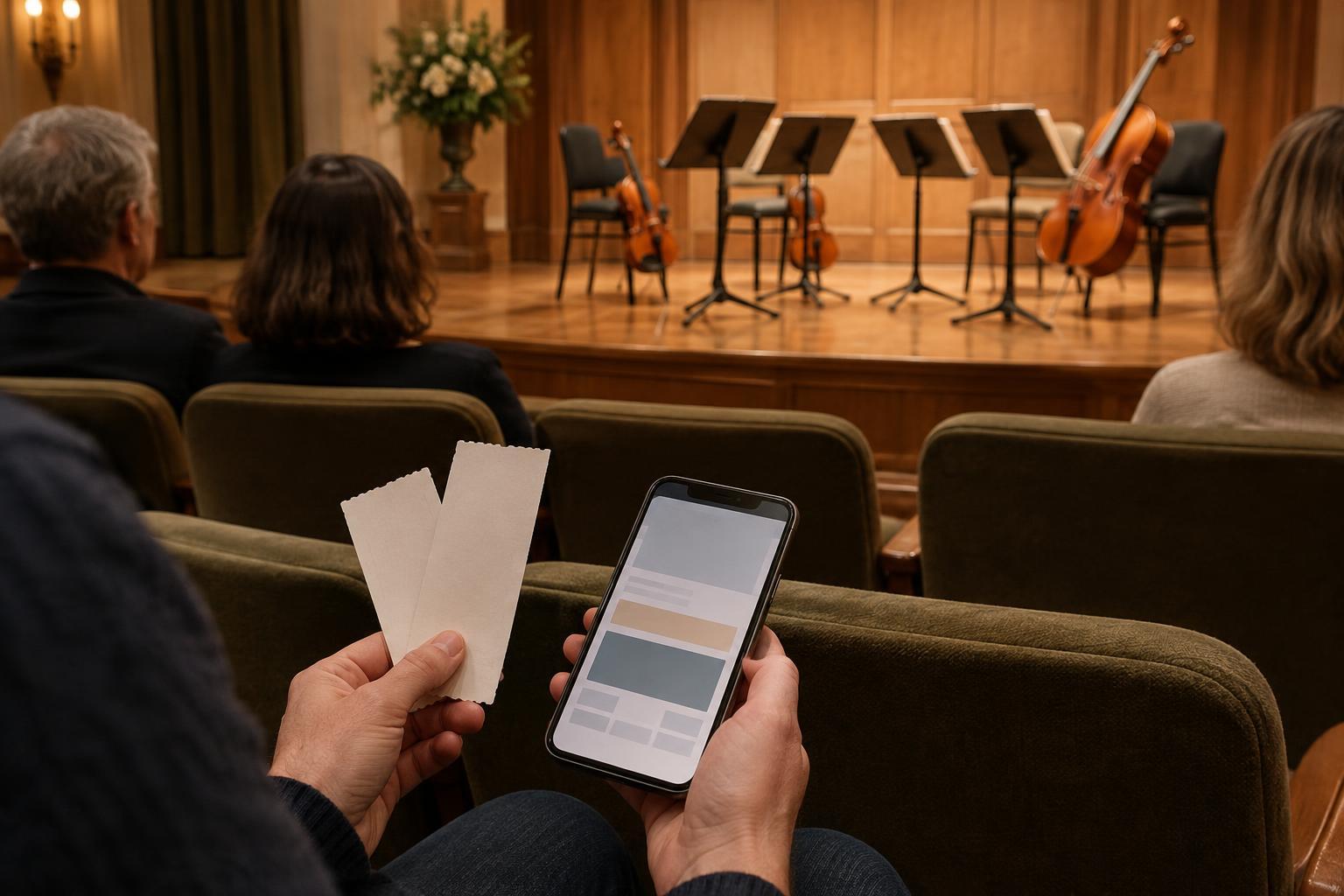
Consider the whole outing, not just the music. Allow time to find the venue, collect a ticket if needed and take your seat before the performance begins. If an uninterrupted program sounds tiring, choose one with an intermission. If you prefer to stay immersed once the music starts, a shorter concert without a break may suit you better.
Make a simple choice and listen your own way
A practical first choice is an ensemble you would like to hear, playing a program whose stated length fits comfortably into your day. If two events meet those tests, choose the more convenient venue or the piece descriptions that spark your interest. You do not need to rank composers, recognize musical forms or predict which concert will be important.
Once you are there, try following one instrument for a while, then notice what changes when another joins in. You might listen for a recurring tune, a shift in energy or a moment when the players seem to respond to one another. It is also fine simply to enjoy the sound. Your first chamber music concert is not a test; it is a chance to discover what makes you want to hear more.