Start with what you want from the concert
Chamber music rewards close attention. In a small ensemble, the players pass musical ideas between one another, and a quiet inner part may matter as much as the melody. Your seat can change which details stand out. There is no universally best row: a seat that offers an intimate view of the performers may give you a different impression of the sound than one farther back.
If you want to follow gestures and watch how the players communicate, favor a clear view at a moderate distance. If you prefer to hear the instruments blend into a single sound, try a seat farther from the stage. Neither choice is more serious or informed. The useful question is whether you want to notice individual contributions, take in the ensemble as a whole, or find a comfortable balance between the two.
How distance affects the sound
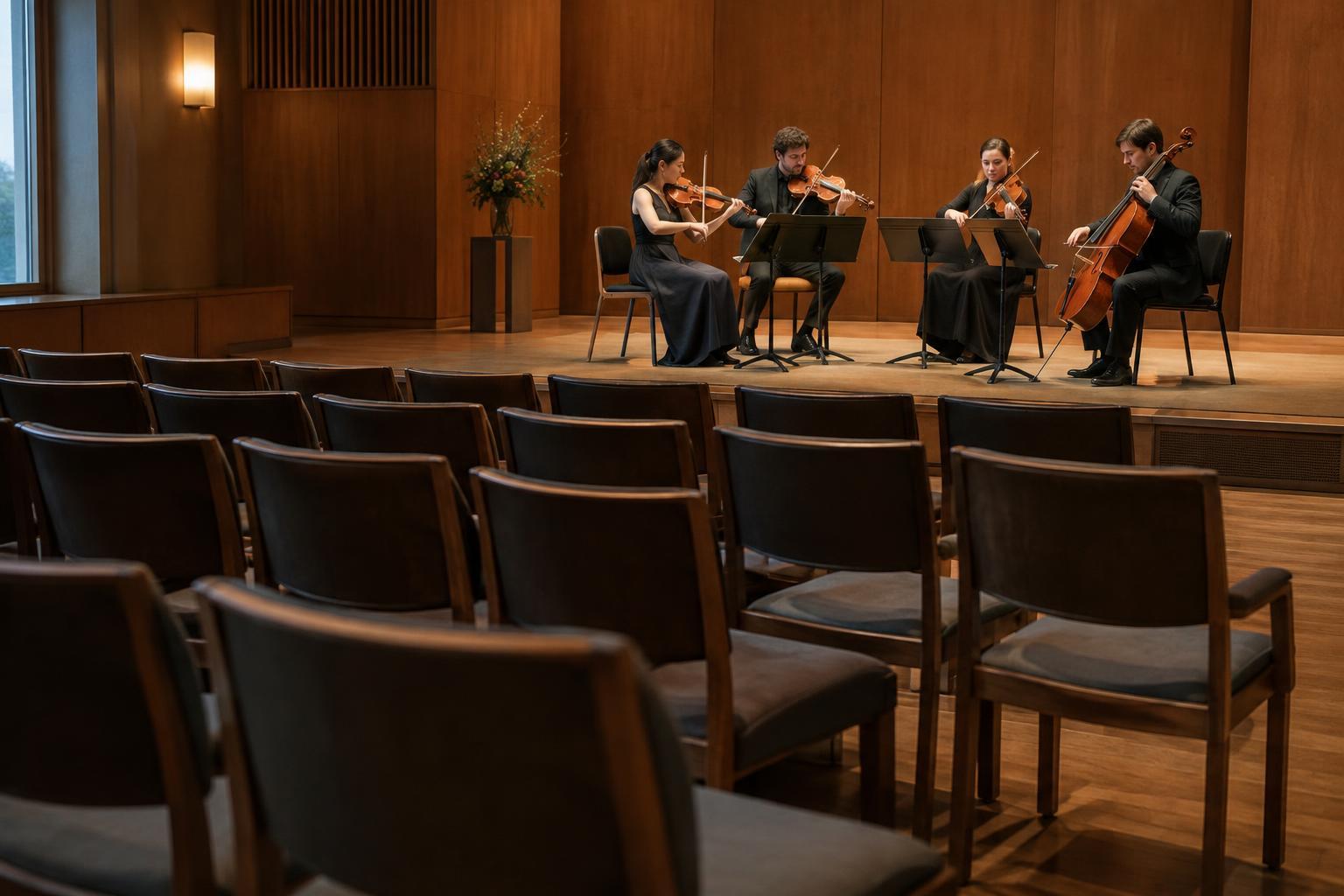
Seats near the front can make attacks, breaths, bow changes, and page turns easier to notice. You may hear a strong sense of presence from the nearest instrument. That can be exciting, particularly when you are learning to identify different parts. It can also make the balance feel uneven if one player sits much closer to you than the others.
A little farther back, the instruments often have more opportunity to blend before their sound reaches you. This can help you follow the shape of a phrase rather than focusing on every small sound that produces it. The effect depends on the room: a dry space and a resonant hall may make the same seating distance feel quite different. When choosing without prior knowledge of the venue, a central seat several rows back is a reasonable starting point, not a guarantee.
Think about angle as well as row
A central seat generally gives you a more even view of the group. From the far side of a wide room, one player may block another, and the nearest instrument may seem especially prominent. That does not make side seats bad. A side angle can be rewarding if you want to watch a particular performer’s hands or see the exchanges across the ensemble.
Consider the likely layout when you know what is being performed. A string quartet typically sits in a compact group, while a piano trio may place a large piano to one side of the string players. From some angles, the piano or its raised lid can interrupt your view. Wind players may also be partly hidden behind music stands. Seating plans rarely show every stand and instrument, so leave room for uncertainty when choosing a seat for sightlines.
Check the room and your comfort
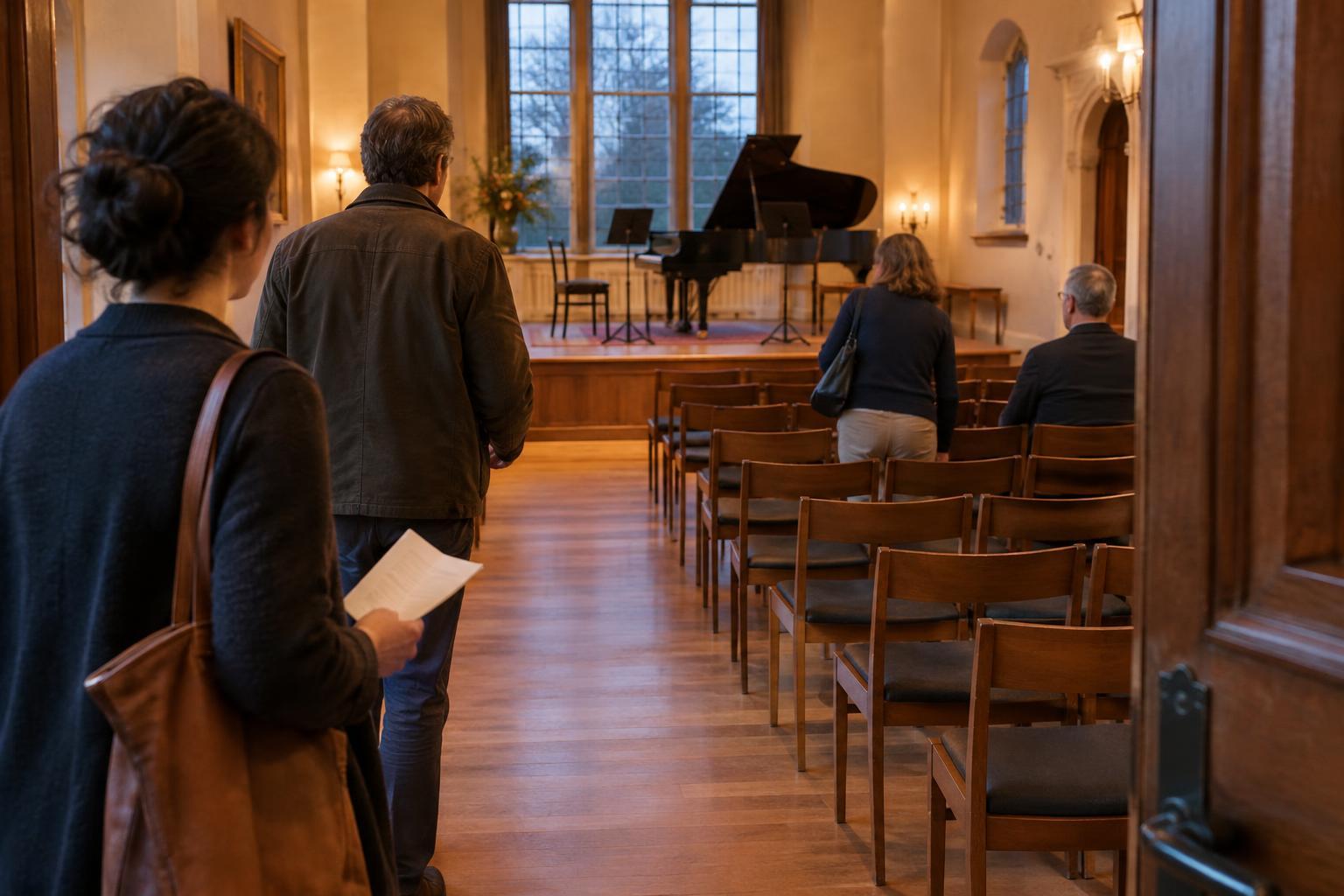
Chamber concerts take place in halls, churches, recital rooms, and other spaces with different stage heights and seating arrangements. A gently rising floor can preserve a good view from farther back; on a flat floor, a tall person or a music stand may have a greater effect. Balconies sometimes provide an excellent overview of the group, though you may feel less close to the players. If the venue provides seating photos or a seat map, use them to check the stage angle rather than judging by row number alone.
Comfort is part of listening. Choose an aisle if you value easy access, and consider how much legroom or head-turning a particular seat may require. If you need step-free access, accessible seating, or another accommodation, check the venue’s information or contact its staff before booking. A seat that lets you settle in without distraction may serve you better than a theoretically ideal acoustic position that is uncomfortable for you.
Use each concert to refine your preference
If you are new to chamber concerts, begin near the center at a moderate distance when that option is available. At the next concert, move a few rows forward, back, or to one side and notice what changes. Can you follow a quiet supporting line? Do the instruments sound distinct or blended? Can you see enough of the players to enjoy their interaction? These simple observations will tell you more about your preferences than any fixed rule.
Even familiar venues can surprise you when the ensemble or stage layout changes. Treat seat selection as part of the listening experience, not a test you must pass. A good chamber concert can draw you in from many parts of the room; choosing thoughtfully simply helps you decide which aspects of the performance you are most eager to meet.