Start with the performers and the format
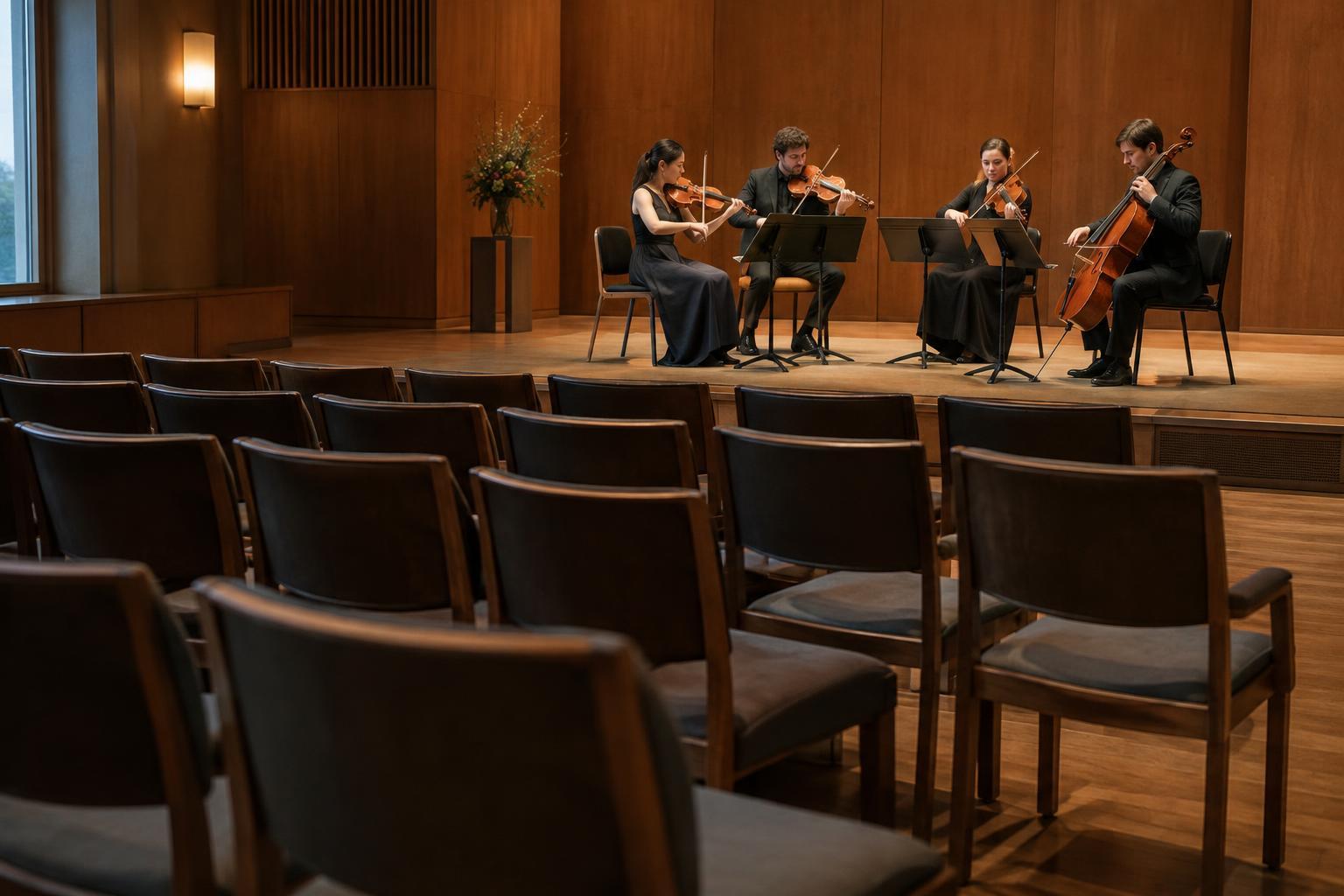
Before focusing on a familiar composer’s name, look at who is performing. A listing might name a permanent ensemble, a group assembled for one concert, or individual musicians who will appear in different combinations. The instruments offer the quickest clue to the sound you can expect: a string quartet has two violins, a viola and a cello, while a piano trio usually brings together piano, violin and cello. A programme with several combinations may have a different character from one played by the same group throughout.
Check whether the event is a standalone concert, a lunchtime performance, a recital with spoken introductions, or part of a larger series. These descriptions can affect the experience as much as the music itself. A short informal concert may be an inviting first visit; a longer evening programme may leave more room to hear contrasting works. If a listing says musicians will discuss the pieces, expect some talking, but do not assume every work will receive an introduction.
Decode the repertoire without knowing every work
Concert listings often give a composer, work title, instrumentation and sometimes a catalogue number or key. You do not need to decipher every detail to make a choice. First, count the works and notice their scale. A programme of several short pieces may move quickly between moods, while a concert built around two substantial works may invite more sustained listening. Titles such as “String Quartet” or “Sonata for Clarinet and Piano” tell you more about the performing forces than about the piece’s mood.
Look for words such as “selection,” “excerpts,” “arrangement” or “world premiere.” They clarify what you will hear. Excerpts are not necessarily a complete work, and an arrangement uses forces other than those of the original version. A premiere indicates a first performance in some stated sense, but the listing should make clear what kind. If a composer or piece is new to you, the instruments and the balance between familiar and unfamiliar titles can be enough to decide whether the programme appeals.
Check the timing, including the interval
The advertised start time does not always tell you when you will leave. Look for an estimated running time and whether it includes an interval. If the listing gives neither, ask the organiser before making travel or childcare plans. A concert with a break can feel different from one continuous performance, even when the total duration is similar.
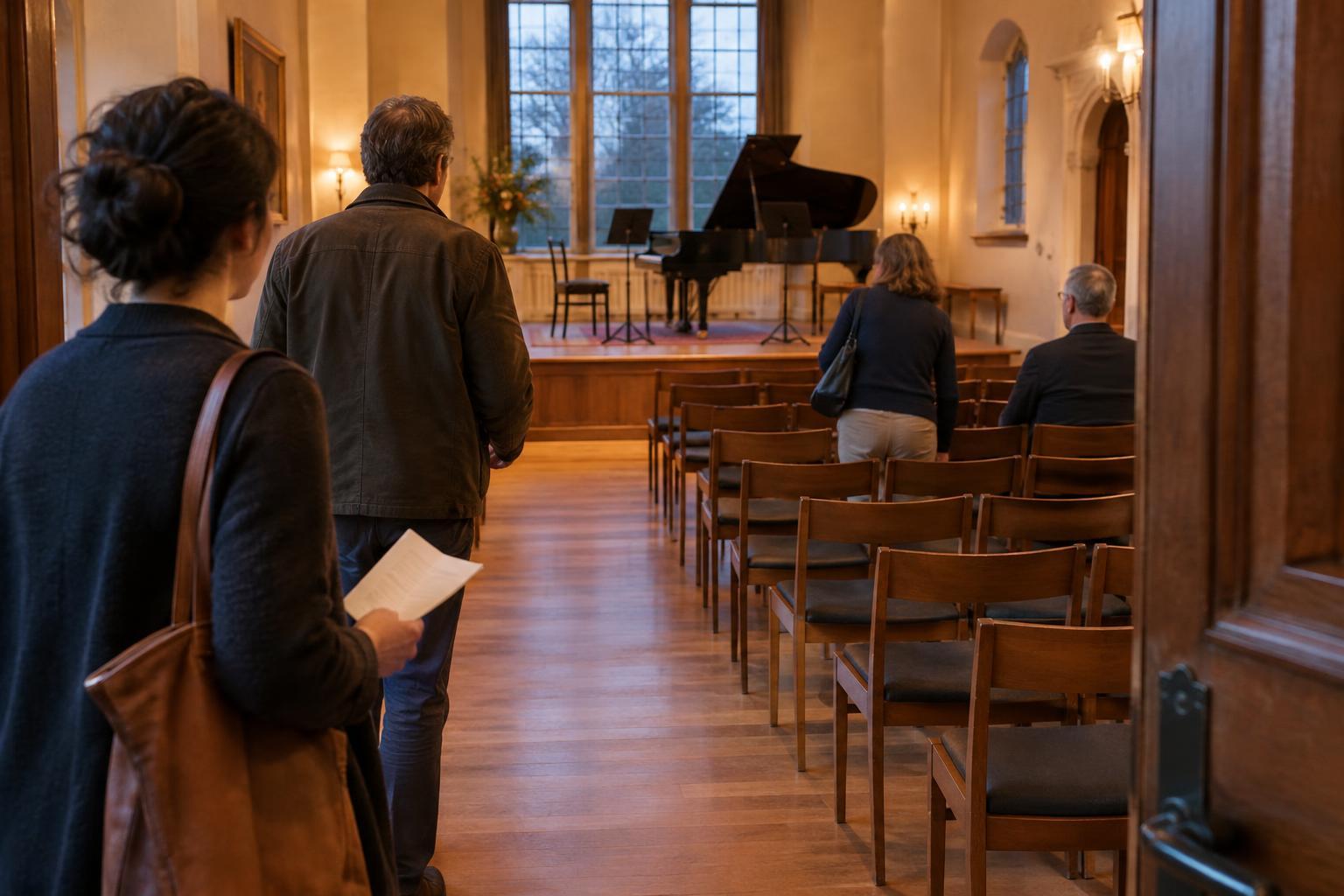
Also distinguish doors-open time from performance time. Arriving early can give you time to find your seat, read a programme and settle in, especially in an unfamiliar venue. If you expect to arrive late, check the venue’s late-admission policy rather than assuming you can enter during a piece. Chamber music is often performed in quiet rooms where an arrival may be noticeable, and some venues wait for a suitable pause before seating latecomers.
Read the venue and seating details closely
The venue name alone may not be enough: concerts can take place in a hall, studio, church or smaller room within the same building. Confirm the entrance and address shown on the event page, then check seating. Are places assigned, unreserved, or divided into price areas? If seats are unreserved, arriving earlier may give you more choice. In a small room, different seats can offer different views of the players, although there is rarely one perfect place to listen.
Look for practical information that matters to your visit, including step-free access, accessible seating, facilities and any guidance about bringing children. If a detail is missing, contact the venue or organiser rather than guessing. The same applies to programme notes, printed materials and other amenities: they may be helpful, but they are not guaranteed unless the listing says so.
Confirm the ticket terms before paying
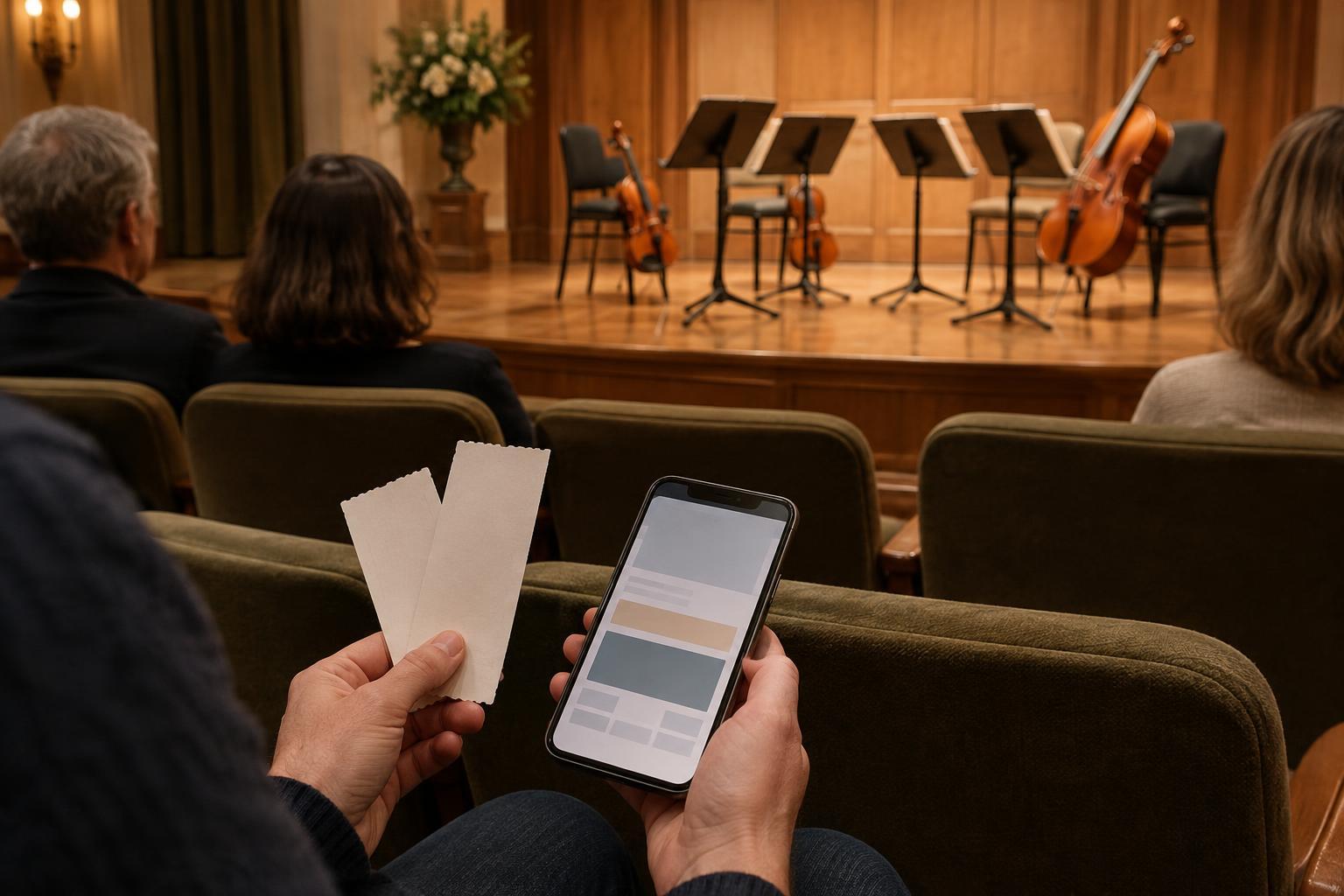
Finally, compare the stated ticket price with the amount due at checkout. Booking fees, concessions and eligibility rules may be explained in a separate ticketing section. Check whether you need to show proof for a reduced-price ticket, how tickets will be delivered, and whether exchanges or refunds are available. If the programme or performers are important to your decision, read the organiser’s policy on changes as well; concert details can sometimes change.
A useful final check is simple: can you identify what you will hear, who will play, where to go, when to arrive and what your ticket covers? If the answer is yes, you have read enough to book with confidence. You do not need prior knowledge of every composer to enjoy chamber music; a clear sense of the event’s shape is a good starting point.