Finding your way in
Chamber music can take place in a concert hall, but it may also be heard in a church, library, museum or small community space. The entrance and check-in arrangements therefore vary. Before leaving, check the venue details on your ticket or booking confirmation, including the address, door-opening time and any information about accessible entrances. If something is unclear when you arrive, front-of-house staff or volunteers are usually the best people to ask.
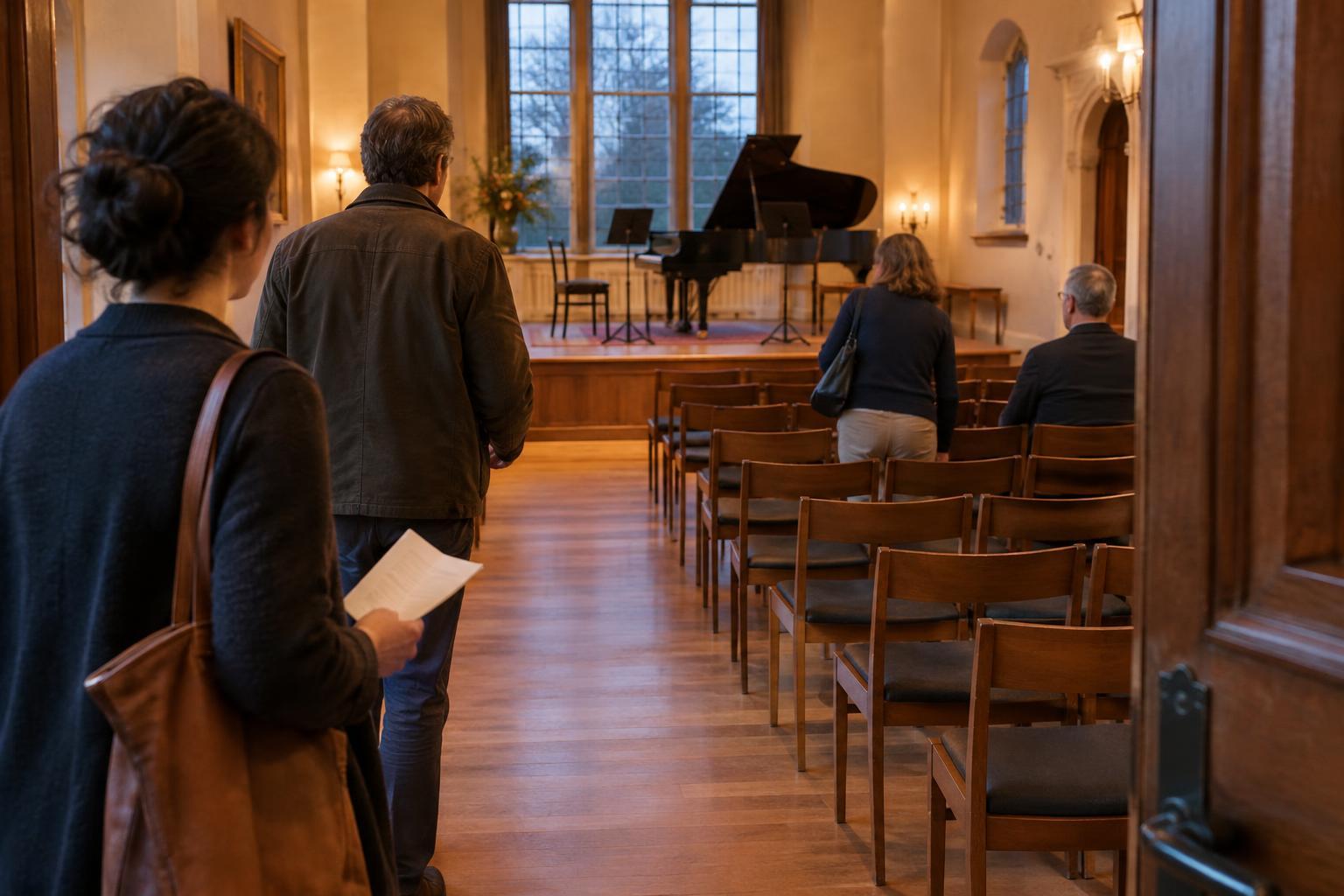
Allowing a little time before the advertised start makes the visit less hurried. You may need to show a ticket, give your name at a desk or follow signs to a particular room. There might be a place to leave a coat, though not every venue has one. If you need a step-free route, a particular seat or help locating a facility, ask on arrival rather than trying to work it out in the dark once the concert begins.
Tickets, programs and seats
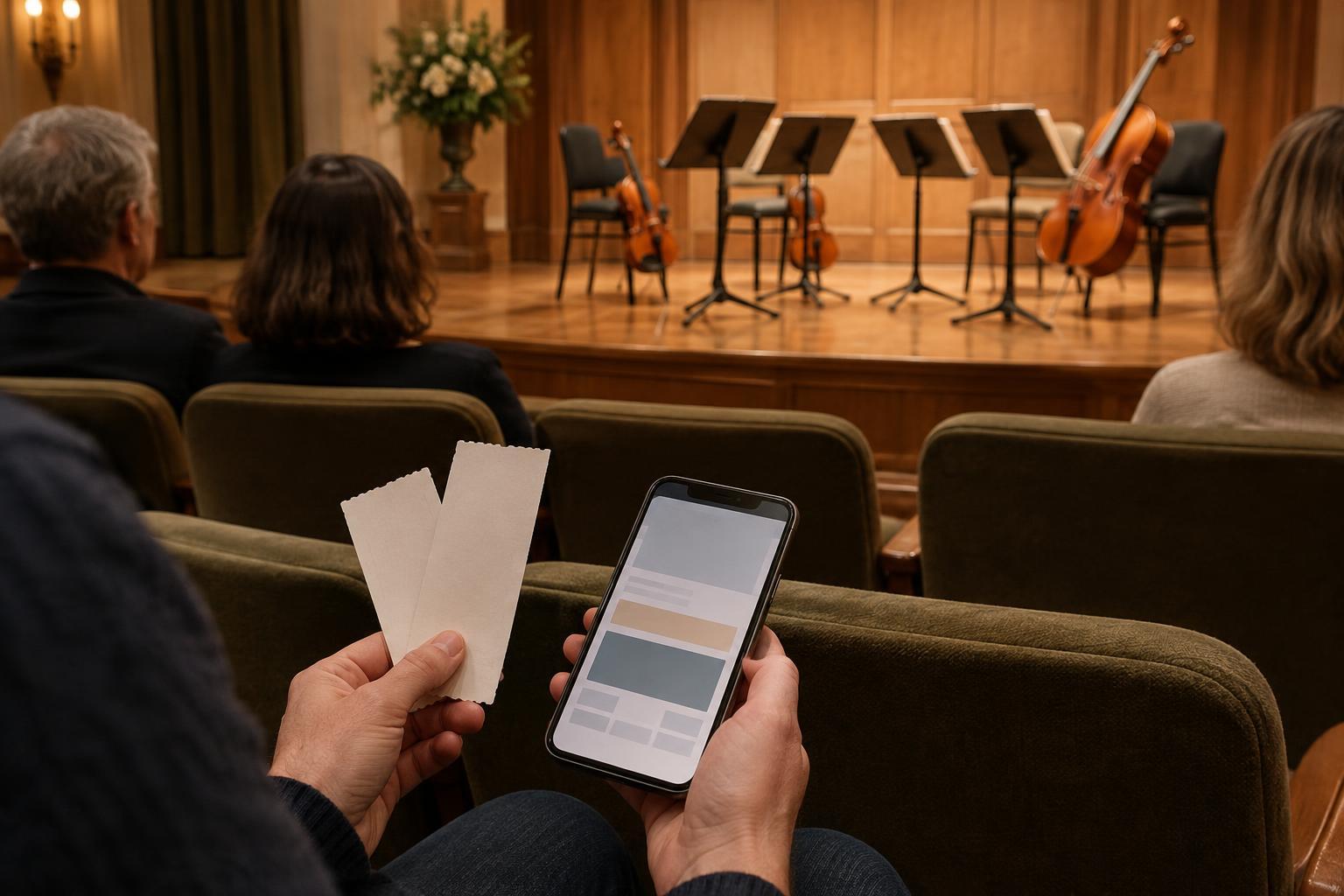
Your ticket may specify a seat, a section or simply admission to the room. For reserved seating, an usher can help you find your row. With unreserved seating, you can generally choose from the available places unless signs indicate otherwise. A seat nearer the front can make it easier to watch the players communicate; farther back, you may prefer the overall blend. In a small room, even a modest change in position can alter what you hear.
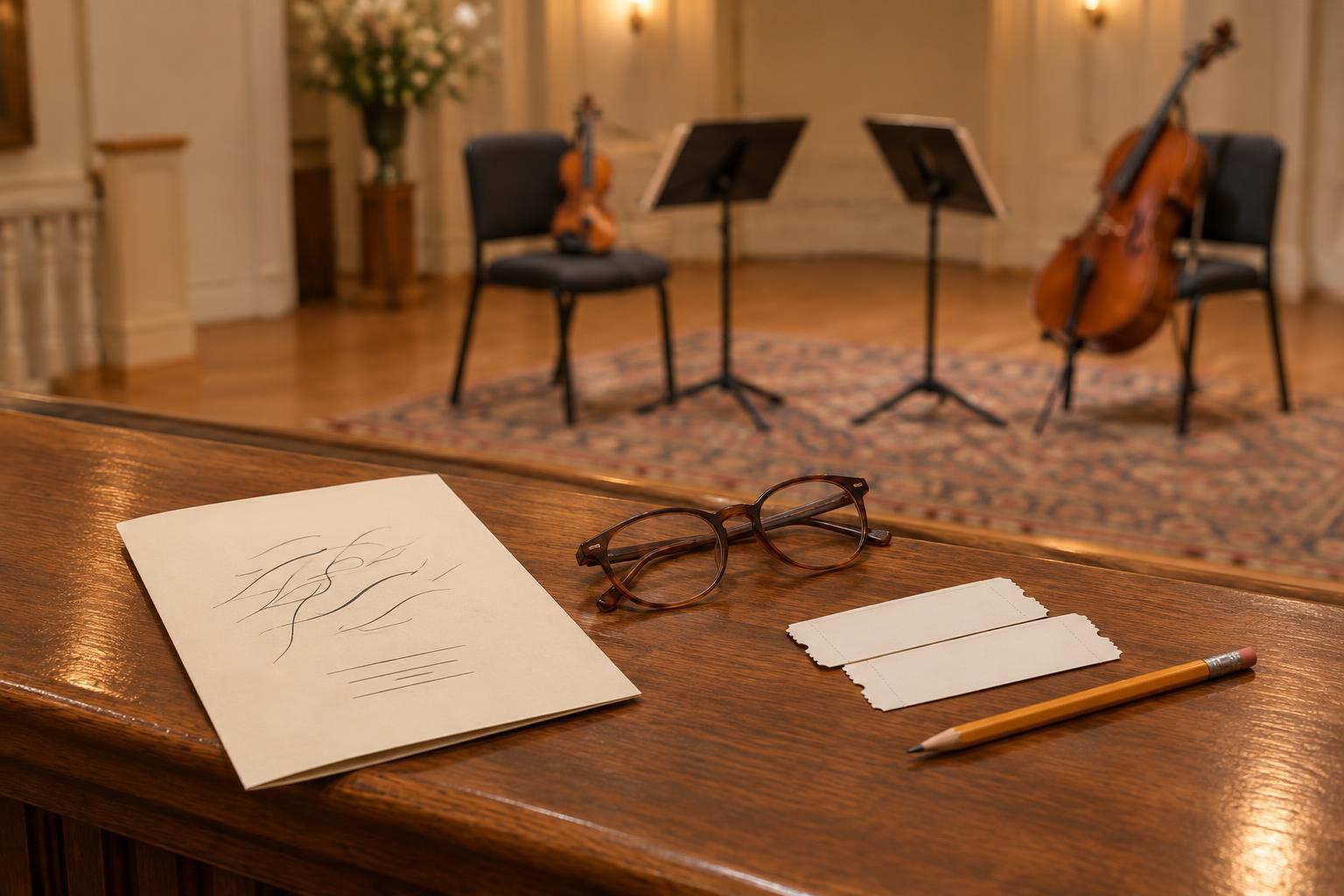
Look for a printed program or a notice describing the works. It can tell you the order of performance, the performers’ names and whether there will be a break. Some programs include notes about the music, but you do not need to study them before listening. A quick glance at the number of movements in a piece can be useful later: a pause between movements is not always the end of the work.
Before taking your seat, this is also a good time to visit the restroom, silence your phone and put away anything likely to rustle. Venues differ on photography, food and drink, so follow posted guidance. If you are unsure whether you can bring a drink into the performance space, ask rather than assume.
The minutes before the first note
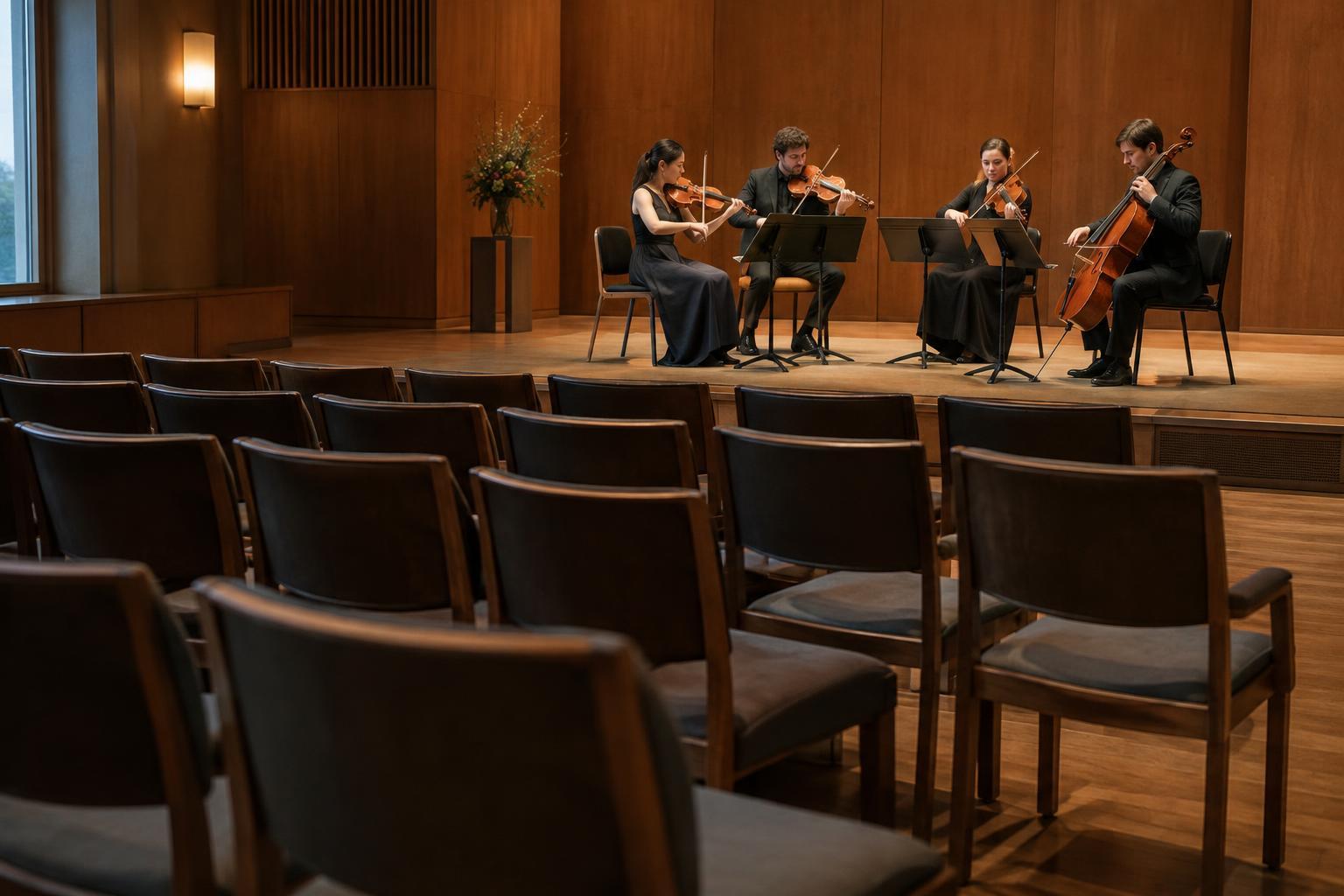
The room may feel sociable while people arrive. You can talk quietly, read the program or simply look around. Musicians might already be onstage, adjusting chairs, checking music stands or warming up. These sounds are part of getting ready, not necessarily the start of the performance.
A change in lighting, an announcement or the performers’ entrance usually signals that it is time to settle. Applause as the musicians come in is common, but there is no need to worry about getting every convention right. Let the room guide you. Once the music starts, try to keep conversation, screens and other avoidable sounds to a minimum. The quieter texture of a string quartet or a song recital can make small noises unusually noticeable.
If you arrive after the performance has begun, staff may ask you to wait for a suitable pause before entering. That protects both the performers’ concentration and the audience’s listening. Late-seating practices differ, so follow the guidance at that particular event.
Listening without worrying about the rules
You do not need specialist knowledge to enjoy chamber music. One approach is to notice how the players exchange ideas: a melody may move from violin to cello, or a piano phrase may be answered by a clarinet. Watching gestures and eye contact can help you hear those shifts. At other moments, you might simply attend to a sound you like without trying to name it.
Audiences often wait until a complete work ends before applauding, even if it has several movements with short silences between them. If you are uncertain, wait a moment and follow the other listeners. Applause is a way to thank the performers, not a test of whether you recognized the form. Concerts also differ in atmosphere; some are notably informal, while others are more restrained.
Breaks, endings and leaving
If there is an interval, the program or an announcement will usually make that clear. You can stretch your legs, talk about what you heard or take a quiet moment. Check when the next part begins so you can return to your seat without rushing. If there is no interval, a brief pause onstage may simply mean that performers are preparing the next piece.
At the end, the musicians may return to acknowledge applause, and there may or may not be an encore. Wait until the performance is clearly over before gathering your belongings. As you leave, you do not need to have formed a polished opinion. Remembering one striking sound, one exchange between players or one question you would like to explore is plenty to take home from a first visit.