A place to begin with Price’s chamber music
Florence Price is often introduced through her orchestral music, but her chamber works invite a different kind of attention. In a small ensemble, a melody can pass from one player to another in a matter of seconds, and a change in texture can feel as important as a change in volume. Her Piano Quintet in A minor is a place to hear how she develops musical ideas through that close conversation.
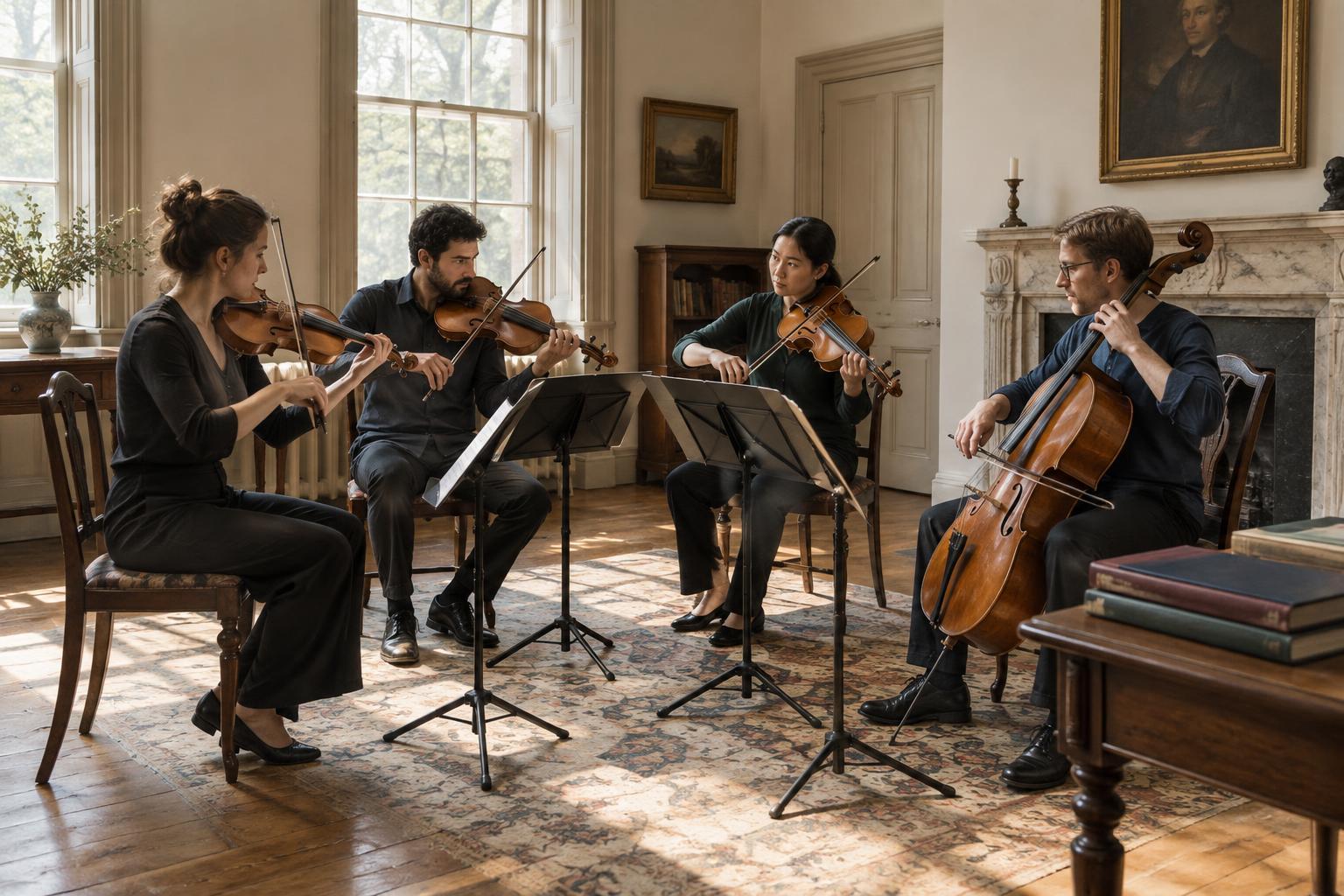
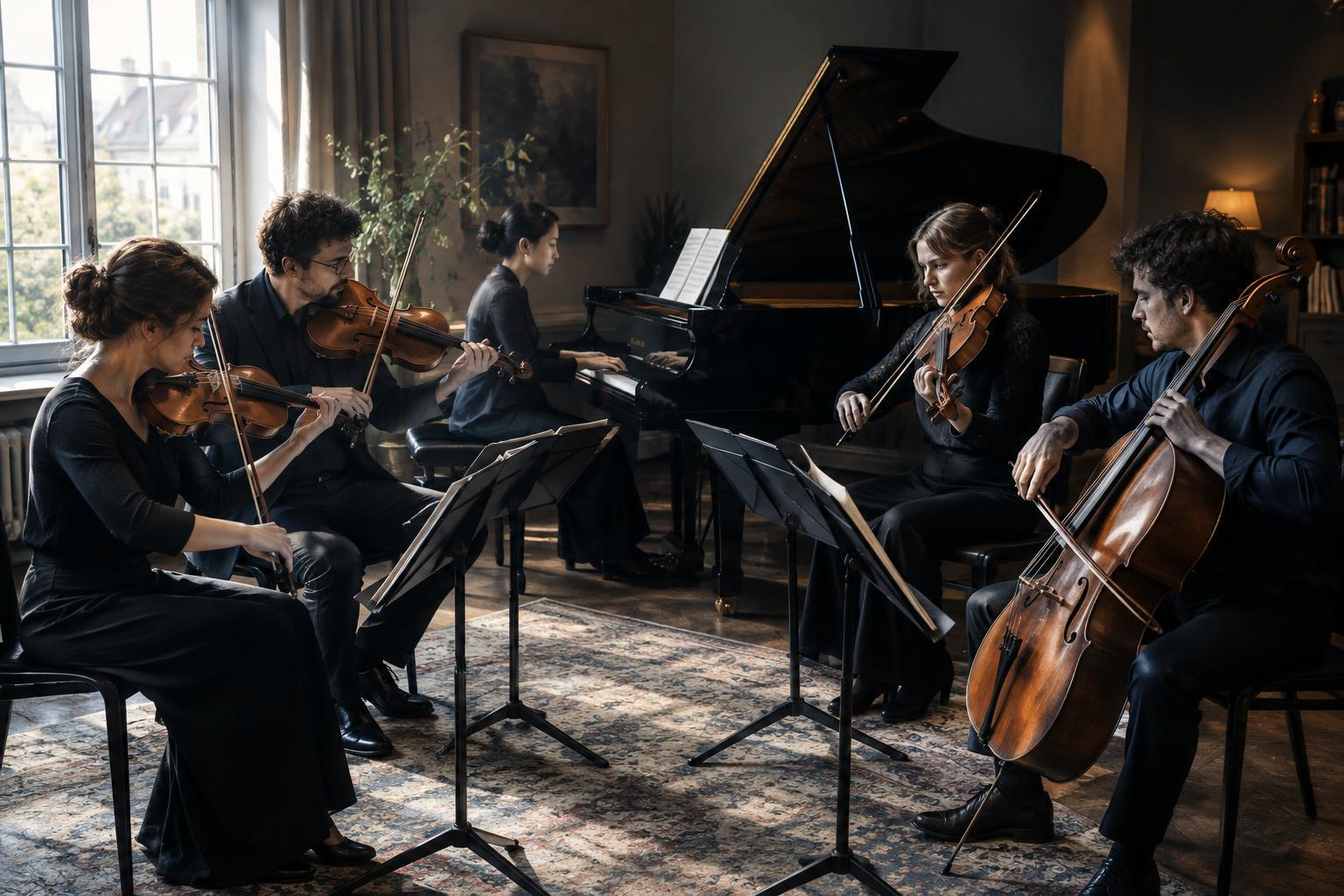
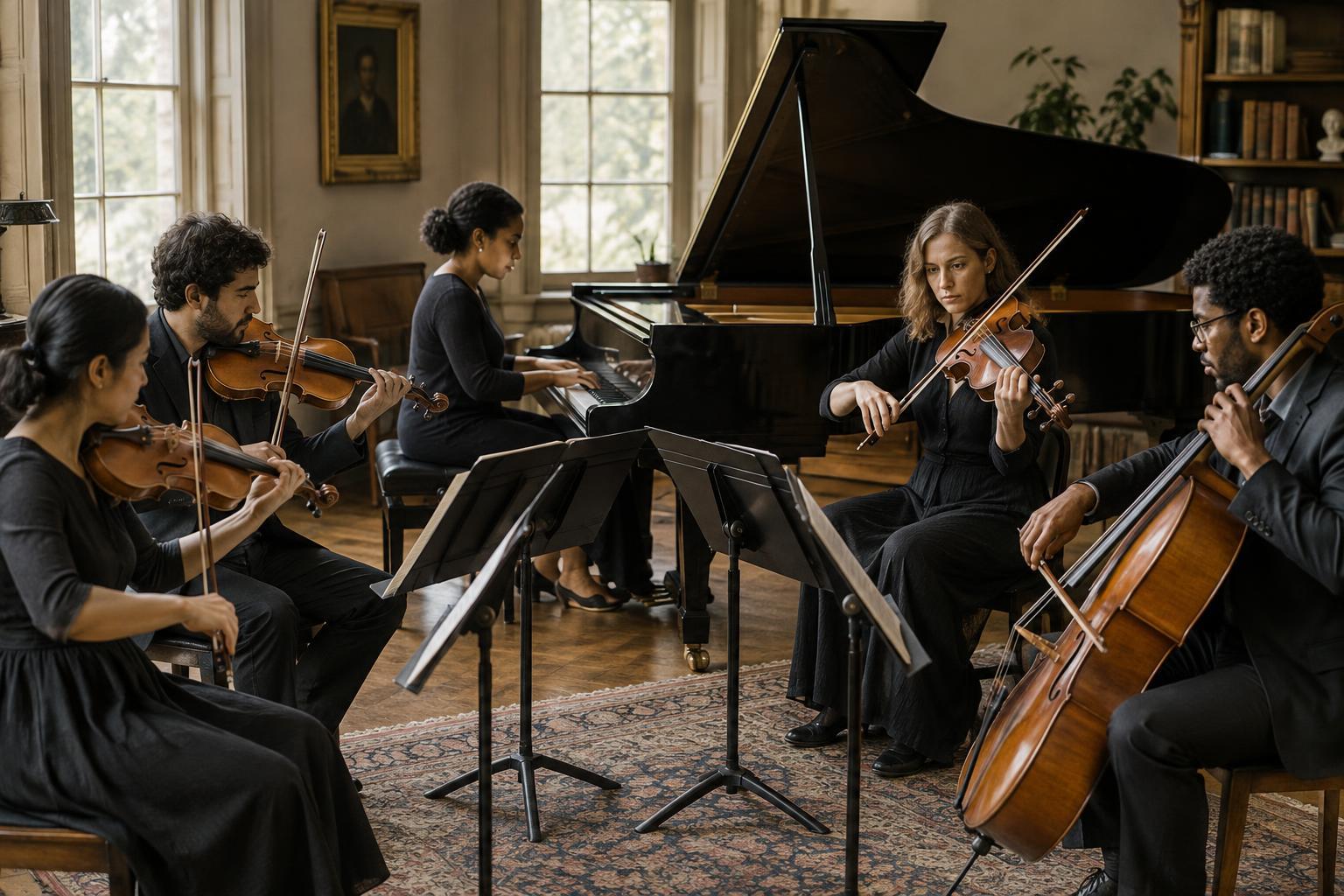
The work brings together a piano and a string quartet: two violins, viola and cello. That familiar combination offers considerable variety. The piano can set a broad harmonic scene, add a crisp rhythmic accent or briefly take the foreground. The strings can respond as a group or speak in individual lines. Rather than trying to identify every instrument throughout, begin by noticing who introduces an idea, who answers it and how its character changes along the way.
Listen for balance, contrast and return
The first time through the quintet, follow its larger shifts in character. Some passages invite you to settle into a singing line; others draw attention to a firm pulse or a more animated exchange. Ask what creates each change. Is the piano playing fuller chords? Have the strings moved from a shared sound to separate voices? Has a short rhythmic figure become more prominent? These questions offer a useful route through the piece without requiring a score.
On a second listen, focus on returns. A musical idea need not come back in precisely the same form to feel familiar. Its rhythm might remain recognizable while its instrumentation changes, or a phrase first heard clearly might reappear surrounded by busier writing. Price’s chamber music rewards this kind of listening: the interest lies not only in an individual theme, but in the ways the players reshape and share it.
Hearing the lyrical and the dance-like
Price’s music often brings lyrical writing into contact with strongly marked rhythm. In the quintet, let the slower, more songful moments unfold at their own pace. Notice whether a string line seems to float above the accompaniment or whether the piano supports it with a repeating pattern. Even a modest change in register—from low cello to high violin, for example—can alter the emotional weight of a phrase.
The quintet also includes a movement identified as a juba. In Price’s music, that term points listeners toward dance-like rhythmic energy. Listen to how repeated figures, accents and changes in emphasis create motion. You do not need to reduce the passage to a single beat or label every rhythmic pattern. It may be more revealing to hear how the ensemble handles the pulse together: when the instruments reinforce one another, and when their parts make the rhythm feel more playful or unsettled.
Where the quintet leads next
This piece can serve as an introduction to Price’s wider chamber repertoire, particularly because its five players make the musical exchanges relatively easy to follow. After hearing the quintet, try a work for fewer instruments and compare how she distributes melody and accompaniment. A smaller group may leave more space around each line, while the quintet can move quickly between intimate dialogue and a fuller ensemble sound.
There is no single correct path through the Piano Quintet in A minor. You might follow the cello throughout one movement, then listen again for the piano’s role in shaping its direction. You might notice a lyrical passage on one hearing and the rhythm beneath it on the next. Those changing points of attention are part of the pleasure of chamber music: each return to the work can make a familiar conversation sound newly detailed.