A string quartet with another layer of sound
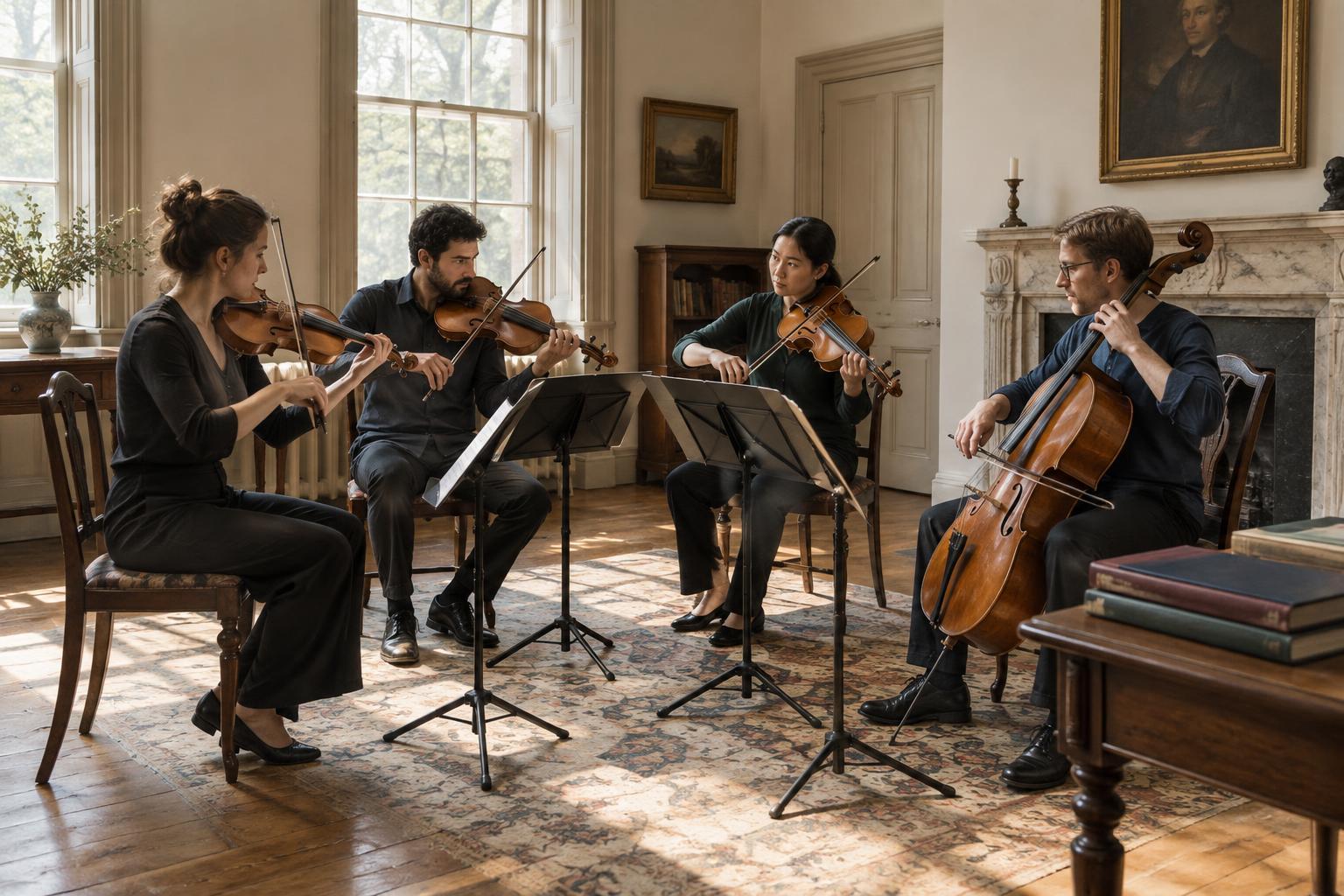
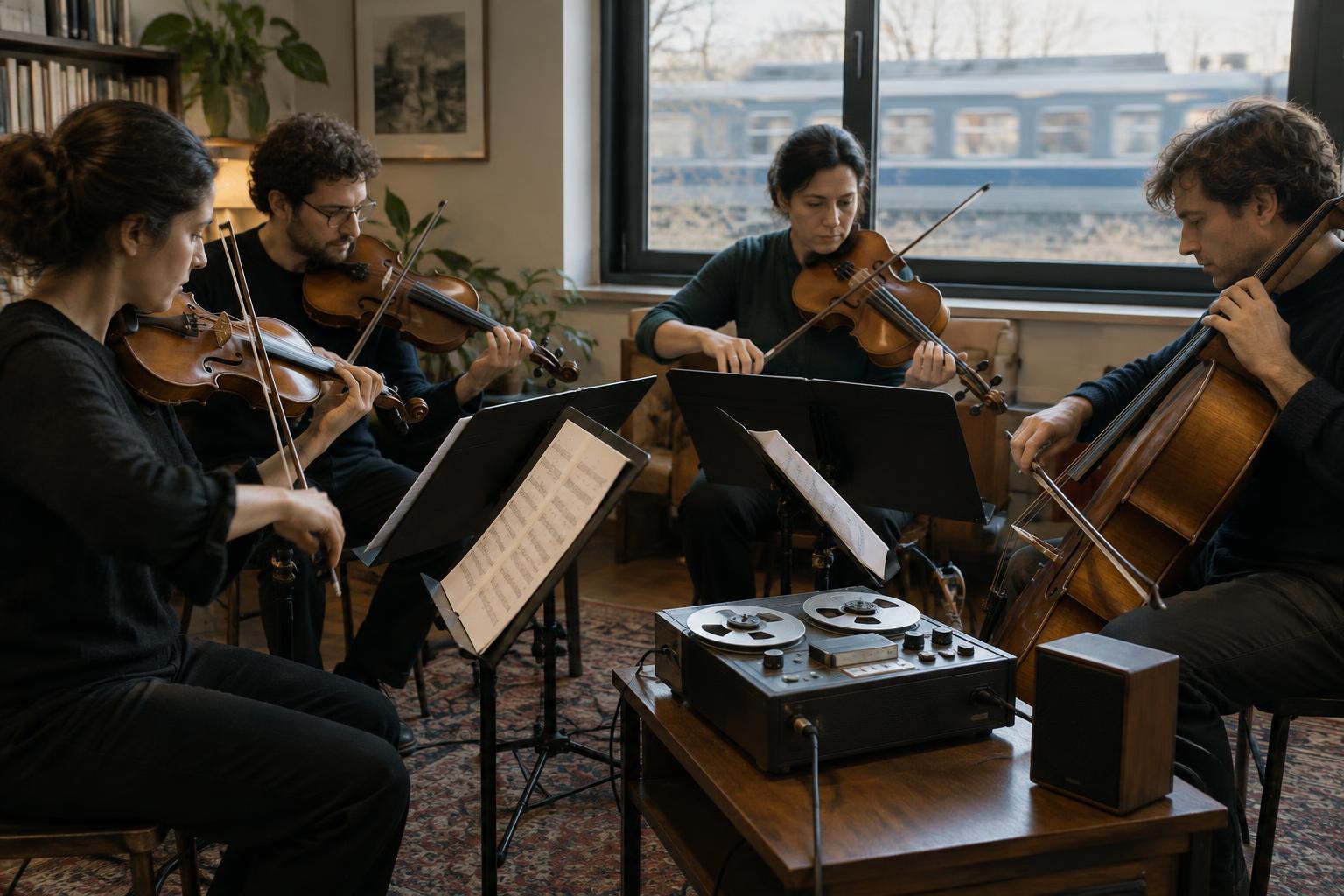
Steve Reich’s Different Trains is written for string quartet and recorded sound. Onstage, the familiar chamber-music lineup—two violins, viola, and cello—plays alongside a fixed recording. That recording contains spoken voices, train sounds, and additional string parts. The result is neither a conventional quartet with background effects nor a spoken documentary with musical accompaniment. Live and recorded elements are closely coordinated, each helping to shape what the listener hears.
Reich drew on his memories of travelling by train across the United States as a child. He set those journeys against a disturbing historical contrast: had he been a Jewish child in Europe during the Second World War, trains might have carried him toward persecution rather than safety. The work does not treat those experiences as equivalent. Instead, the contrast gives the same everyday sound—the motion of a train—radically different meanings.
How the voices become melodies
One of the most distinctive things to hear is the relationship between speech and strings. Short fragments of recorded speech often arrive with a clear rise and fall in pitch. A string instrument then plays a phrase shaped to match that vocal contour. Rather than setting a complete text to a tune, Reich draws musical material from the way a particular person speaks. The voice retains its character, while the quartet makes its shape easier to notice.
This technique rewards attention to small details. Listen for a spoken phrase, then for the violin, viola, or cello line that seems to echo it. The resemblance may be clearer in the phrase’s rhythm and direction than in any exact note you could name. As these gestures recur, they become part of a larger musical pattern. Repetition can make a fragment feel familiar, but changes in harmony, texture, and the surrounding voices keep it from feeling static.
The train sounds matter musically too. Their regular motion and sharp calls sit naturally beside Reich’s pulsing rhythms. Yet they are more than a source of rhythm: they establish a setting that changes in significance as the piece moves between places and memories.
Following the work’s three-part journey
The three movements are titled America—Before the War, Europe—During the War, and After the War. Those titles offer a useful map, but you need not know every recorded word to follow the work. In the first movement, recollections of American train journeys are set within brisk, repeating string figures. The sounds of travel can suggest movement and childhood recollection, even as the overall premise casts a shadow over them.
The second movement turns to accounts associated with wartime Europe and the Holocaust. The voices here call for a different kind of attention: they are people’s remembered experiences, not simply raw material for an ingenious musical device. The strings still take their cues from speech, but the surrounding context changes how their repeated phrases feel. In the final movement, postwar voices and sounds enter. Its title, After the War, marks a change in time rather than a neat resolution of what came before.
Hearing the movements in order makes the contrasts legible. A train rhythm that initially sounds energetic may later feel unsettling; a short spoken phrase can linger well beyond its appearance. Reich lets such connections emerge through sound rather than asking the quartet to illustrate a story scene by scene.
A practical way to listen
On a first hearing, try following just one strand at a time. Begin with the voices: notice when a new speaker enters and whether a string line picks up the rhythm or pitch of their words. Then listen to the quartet’s repeating figures. Are they driving forward, holding a pattern in place, or shifting beneath a voice? Finally, attend to the recorded and live strings together. Their close coordination can make it hard to tell where the four players end and the larger recorded ensemble begins.
If you hear the piece again, focus less on identifying every sound and more on how its meaning changes across the movements. Different Trains offers an accessible point of entry into Reich’s use of repetition because its patterns are tied to recognizable voices and train sounds. It also asks for patient listening: the musical design is compelling, but the memories carried within it deserve attention in their own right.