The quintet as a conversation
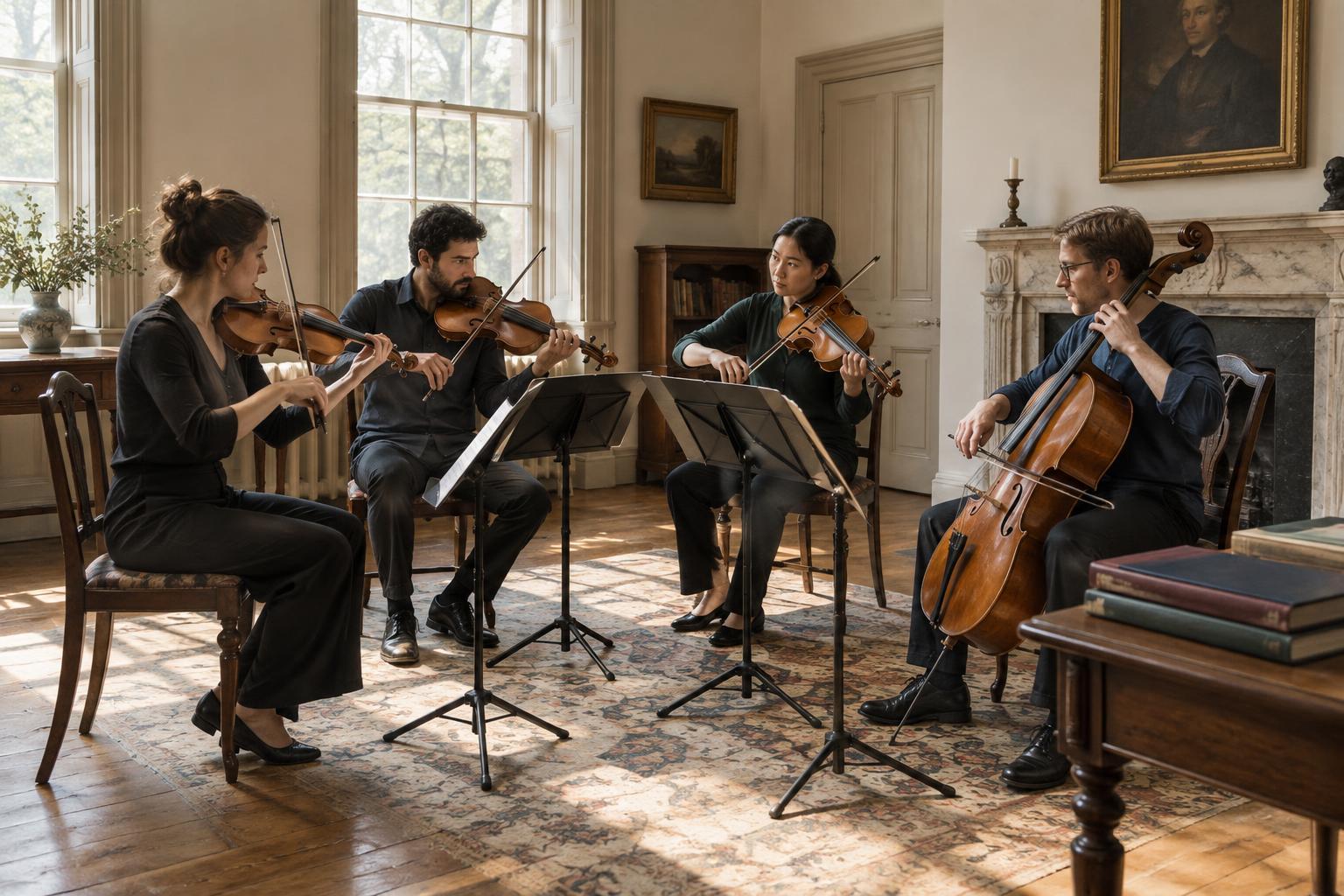
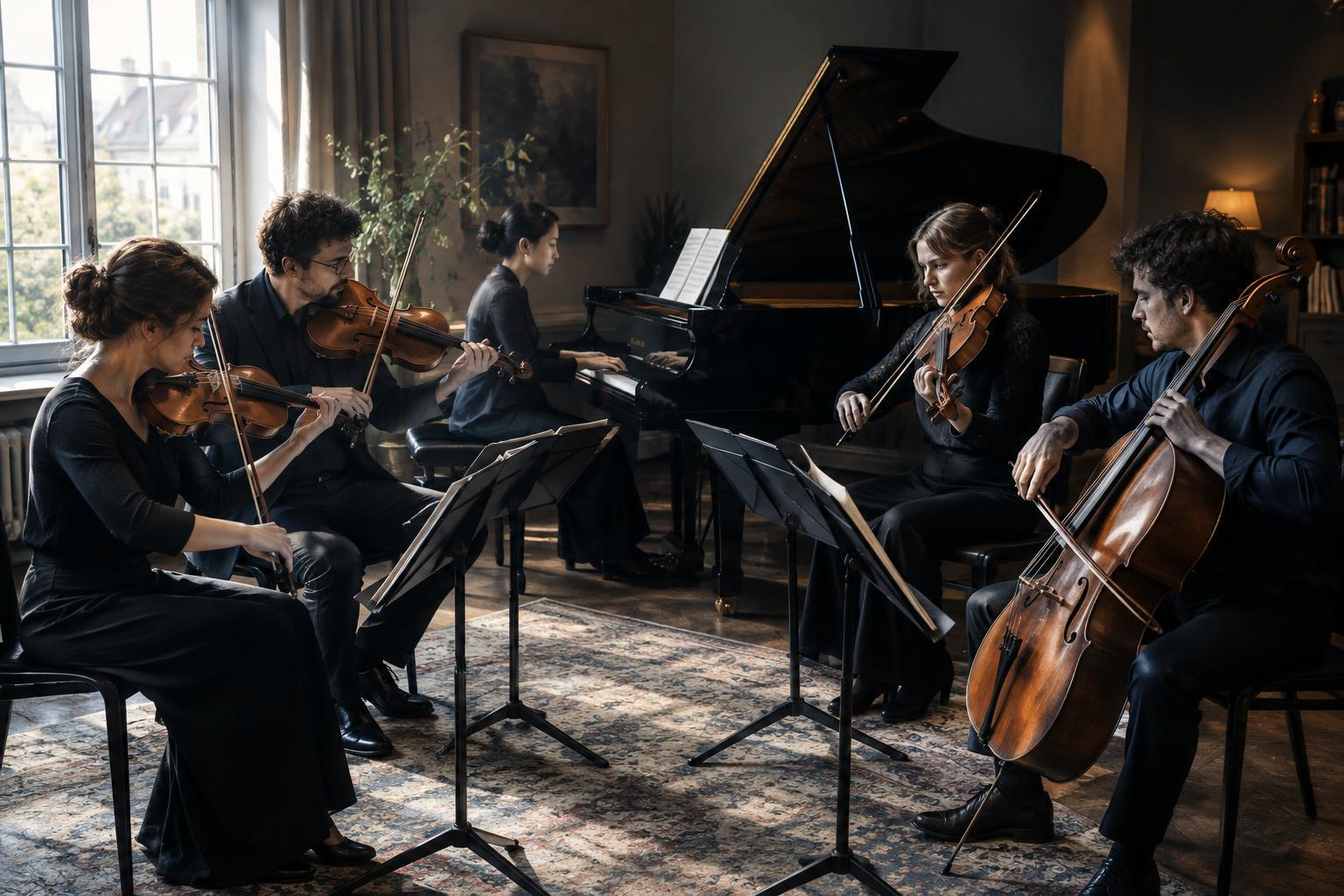
Shostakovich’s Piano Quintet, Op. 57, brings a piano together with a string quartet: two violins, viola and cello. That combination can produce the fullness of a small ensemble, but it also allows a single instrument to speak with striking clarity. In this work, the piano sometimes seems to lead from the front and sometimes joins a more intimate exchange among the strings.
The five movements are Prelude, Fugue, Scherzo, Intermezzo and Finale. Rather than listening for one mood throughout, notice how each movement changes the group’s manner of speaking. Formal titles such as “fugue” offer useful clues, but the immediate contrasts—weight against lightness, public gestures against private ones—are just as helpful on a first hearing.
Prelude: a commanding opening
The Prelude begins with a sense of ceremony. Its strong chords and measured pace ask the listener to take each gesture seriously. Yet the music does not remain simply grand: more searching phrases interrupt the firmness, and the instruments pass ideas between them. Listen to the difference between a statement made by the piano and one taken up or reshaped by the strings.
A prelude often prepares the ground for what follows, and this one is especially effective when heard alongside the Fugue. The opening’s weight makes the next movement’s restraint more noticeable. If the Prelude feels like an address to a room, the Fugue can feel like listening closely to individual voices within it.
Fugue: quiet lines gathering force
In a fugue, a recognizable musical idea enters in one voice and is then taken up by others. You need not identify every entrance to enjoy the process. At the start of this movement, try following whichever line catches your ear, then notice how another instrument begins to sound related to it. The texture can seem spare and inward-looking even as the parts become more closely woven.
Its slow tempo gives the music room to build tension without a constant show of volume or speed. Small changes in register, intensity and the number of voices playing can matter greatly. The movement’s power lies partly in that patience: a quiet idea receives sustained attention until it carries far more emotional weight than its first appearance might suggest.
Scherzo and Intermezzo: two kinds of contrast
The Scherzo breaks the concentration of the first two movements with quick motion and pointed rhythm. A scherzo may suggest playfulness, but here the energy can feel sharp as well as bright. Listen for brisk exchanges between piano and strings, and for the way accents make the music seem to dart, stumble or change direction. Its short, animated character is particularly vivid after the Fugue’s deliberate unfolding.
The Intermezzo shifts the pace again. It is slower and more reflective, giving melodic lines and sustained sounds space to register. Instead of treating it merely as a pause before the Finale, listen to how it restores a sense of gravity after the Scherzo. The contrast between these adjacent movements is one of the quintet’s most accessible features: the same five players can sound suddenly restless, then deeply attentive.
Finale: lightness without a simple answer
The Finale brings a more flowing, often genial character. After the preceding movements, its lighter touch may feel like a release. Listen for the ease with which musical ideas move among the instruments and for moments when that ease becomes less certain. Shostakovich does not require the listener to settle on a single emotional label: a passage can sound graceful while retaining an edge of hesitation.
On a second hearing, focus on the quintet’s overall shape rather than trying to remember every theme. The Prelude and Fugue form a substantial opening pair; the Scherzo changes the temperature; the Intermezzo slows the pulse; and the Finale looks ahead. That sequence gives a newcomer a practical map. It also leaves room to hear something different each time—perhaps the piano’s changing role, or how often the strings sound like four distinct voices rather than one unified backdrop.