Haydn and the classical conversation
Chamber music is music for a small group of players, usually with one musician on each part. The string quartet—two violins, viola and cello—is its best-known ensemble, but chamber repertoire also includes duos, trios, quintets and groups with piano or winds. Its history did not begin with Joseph Haydn. Still, his quartets offer a welcoming starting point for hearing how the genre developed.
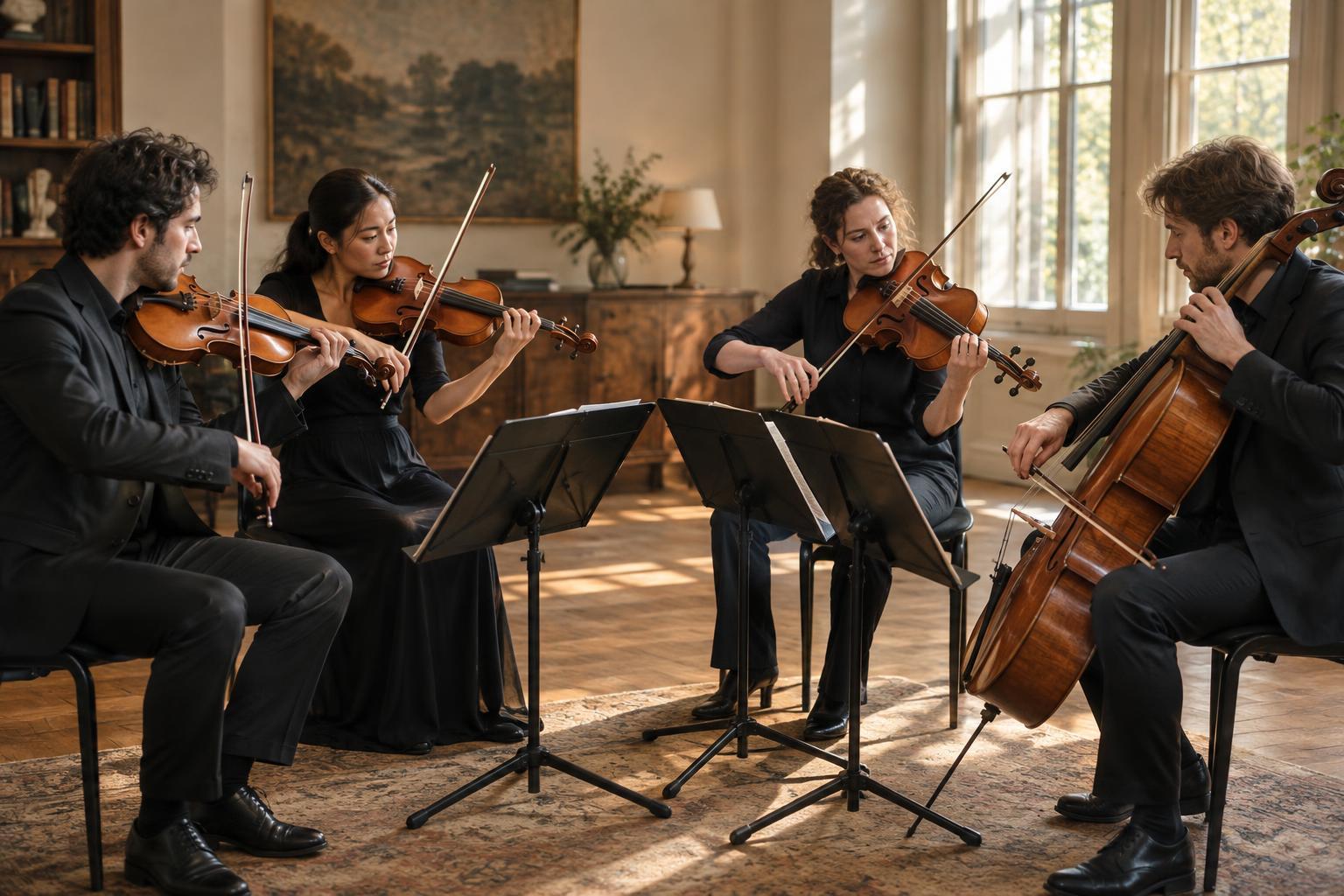
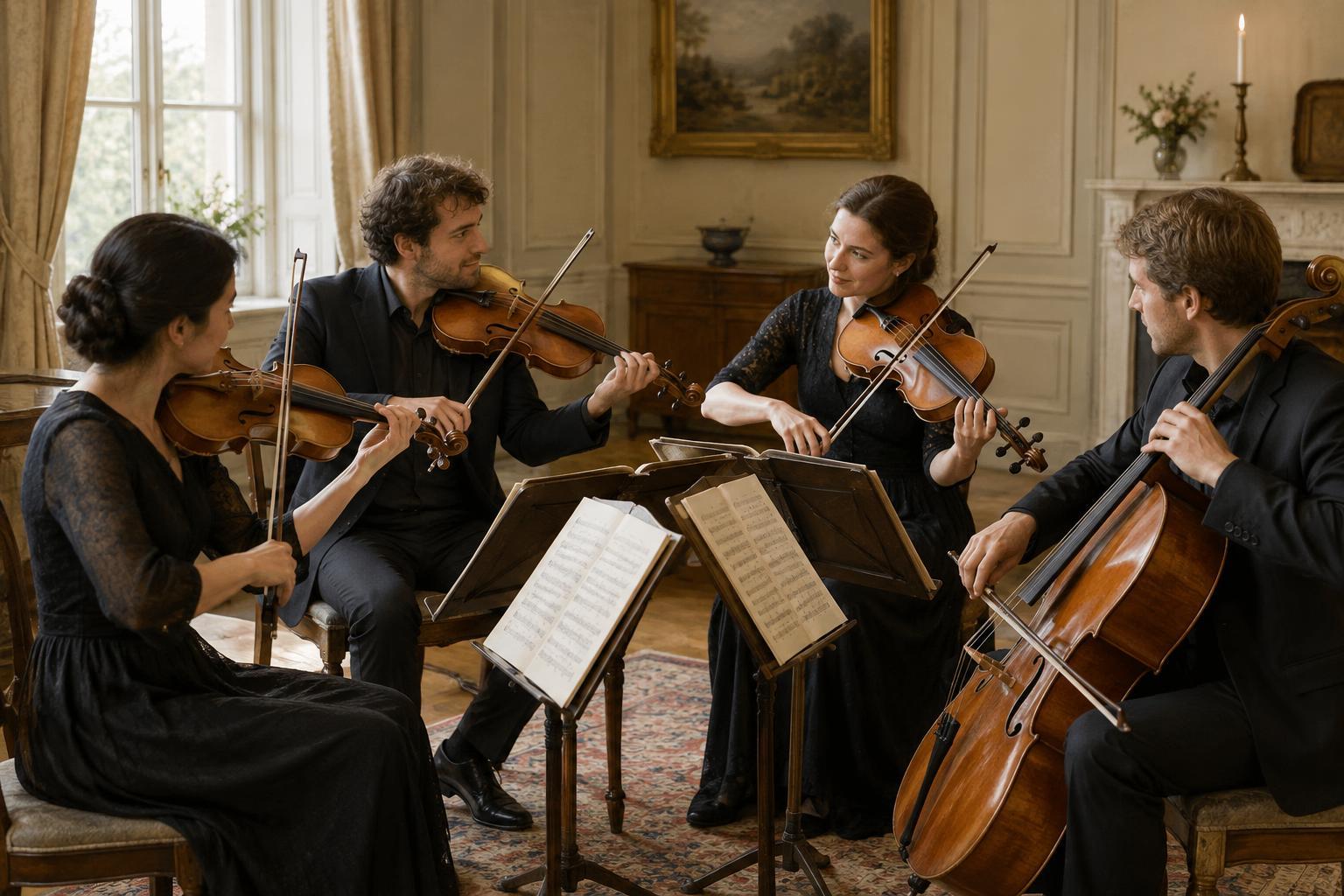
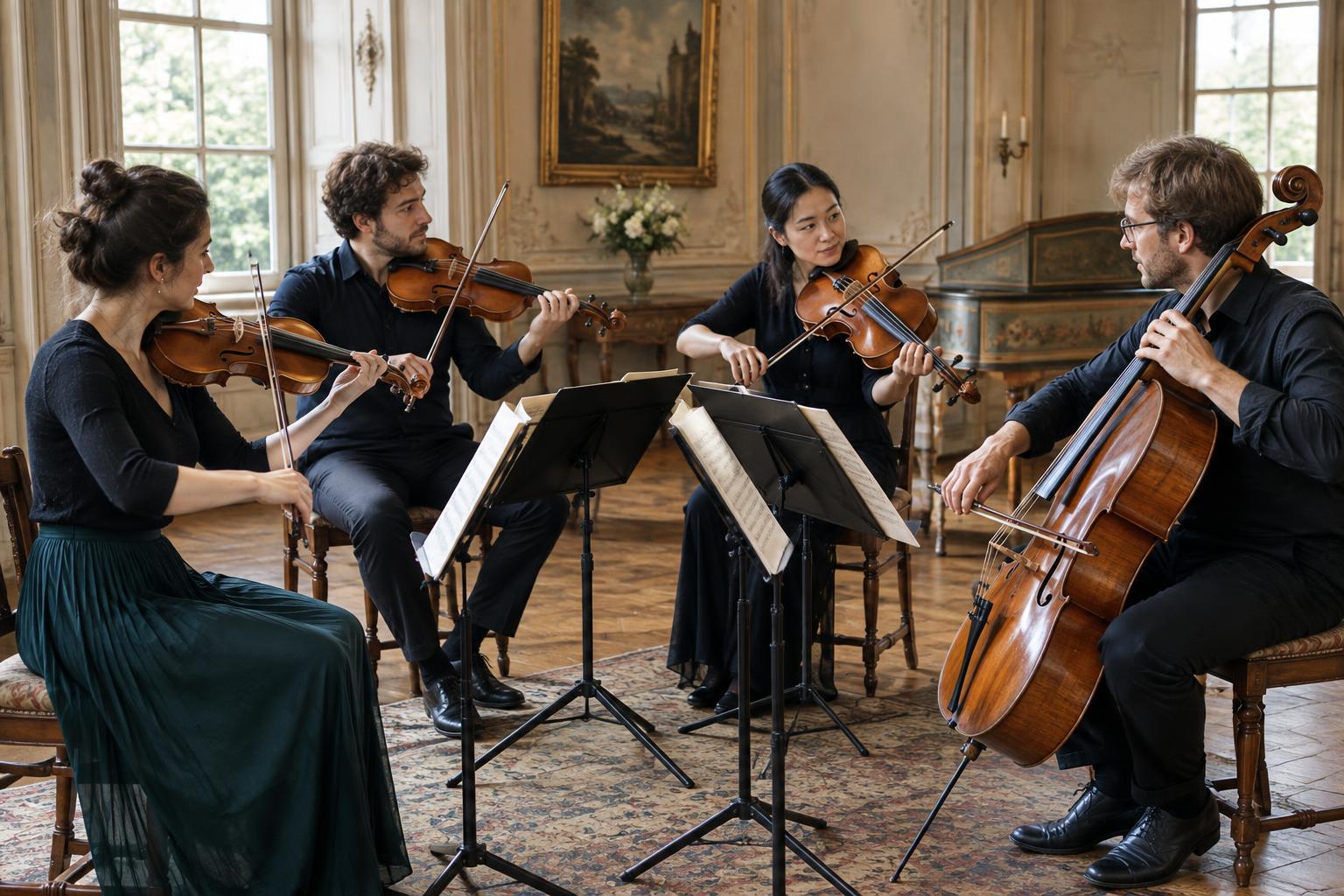
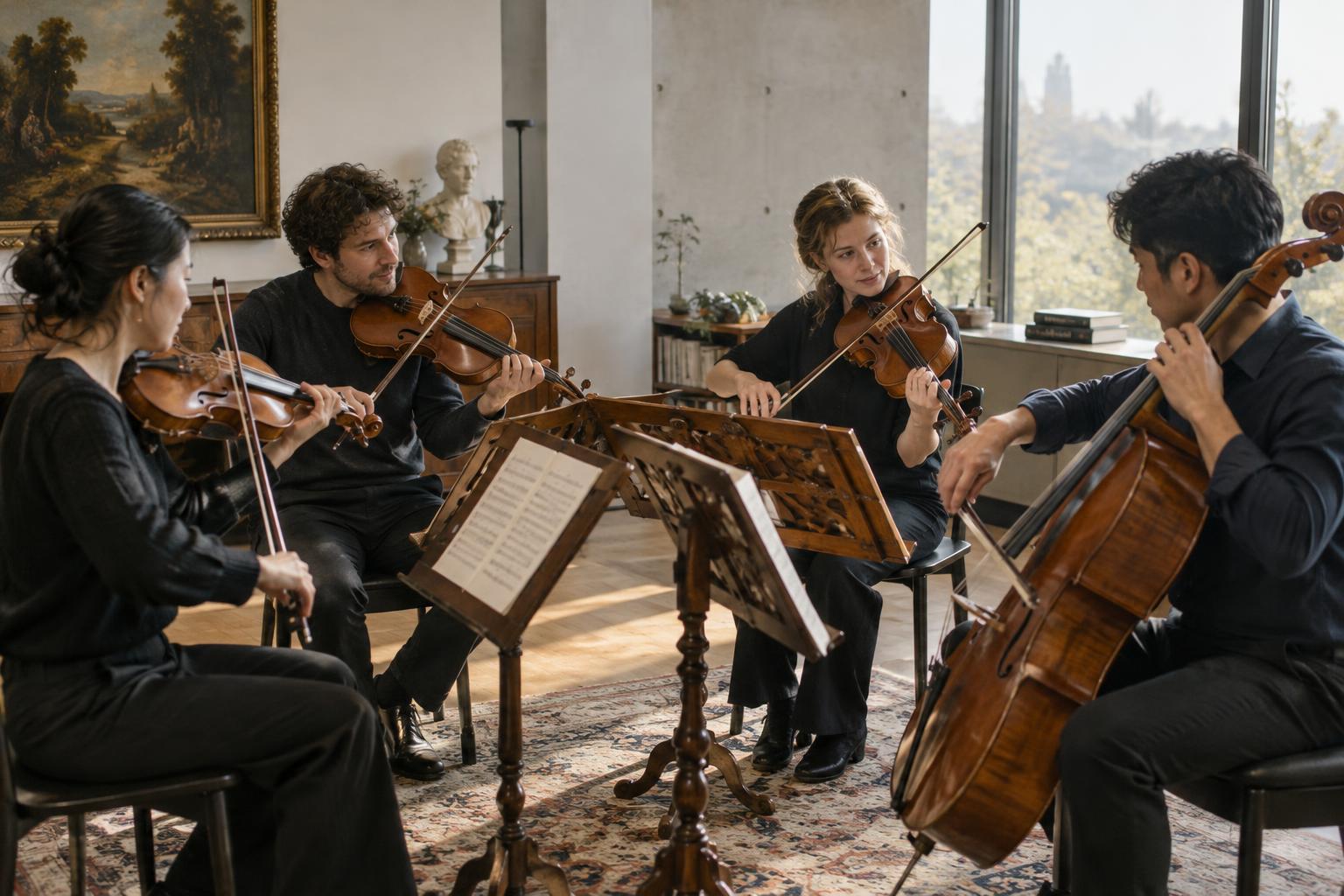
In Haydn’s quartets, listen for short musical ideas passed between the instruments. A phrase begun by the first violin may be answered, interrupted or reshaped by the cello. The result can feel like a conversation rather than a melody with accompaniment. Mozart’s quartets and string quintets make a useful next stop: notice how several lines can sound independent while still forming a clear whole. To get oriented, try following one instrument through a movement, then listen again for how its role changes.
Beethoven and Schubert stretch the possibilities
Ludwig van Beethoven built on classical models while pushing their scale and expressive range. His early string quartets provide a bridge from Haydn and Mozart; his later quartets can feel less predictable, moving between intimate, playful and intense passages. A beginner need not decode every formal decision. Start by noticing contrasts: where does the music pause, where does a familiar idea return, and when do the four players sound most united?
Franz Schubert offers another route into the early nineteenth century. His chamber music often pairs memorable melodies with striking changes of mood. The “Trout” Quintet adds double bass to piano, violin, viola and cello, creating a different balance from a string quartet. His String Quintet adds a second cello instead. Comparing those two ensembles is a simple way to hear how instrumentation shapes texture, even before considering what makes each piece distinctive.
Romantic-era color and larger ensembles
As the nineteenth century continued, composers explored rich sonorities and longer, more expansive musical arguments. Johannes Brahms’s piano trios and quintets reward attention to balance: the piano can sound powerful, yet the string players carry essential ideas of their own. Clara Schumann’s Piano Trio is another valuable work to hear in this setting. Its shifts between lyrical passages and energetic exchanges show how much variety three instruments can provide.
Not every chamber work of this period uses the familiar quartet or piano trio. Wind players have their own repertoire, while string sextets and octets broaden the palette without becoming orchestras. When choosing a first recording, consider the ensemble as well as the composer. A string-only work lets you hear closely related timbres interact; a work mixing piano and strings makes differences in attack and resonance easier to pick out.
New sounds in the twentieth century
The twentieth century has no single chamber-music style. Claude Debussy’s String Quartet uses shifting color and recurring ideas in ways that may feel different from a classical quartet’s clear exchanges. Béla Bartók’s quartets bring sharply varied rhythms, textures and playing techniques into the ensemble. Dmitri Shostakovich’s quartets often move between spare passages and forceful ones. These works can be approached through sound and gesture, without needing to master a theory of harmony first.
Chamber music also expanded beyond its usual instrument combinations. Olivier Messiaen’s Quartet for the End of Time uses clarinet, violin, cello and piano, while works by composers such as Ruth Crawford Seeger explore different relationships among a small number of voices. If a piece initially seems unfamiliar, listen for a repeated rhythm, a changing instrumental color or a moment when the texture becomes especially thin. Those details can provide a foothold.
Listening to chamber music now
Living composers continue to write for established groups and less familiar combinations. Some draw on older forms; others work with extended techniques, electronics or musical traditions beyond the European classical repertoire. These are possibilities, not a single definition of contemporary chamber music. The most useful question remains the one that works for Haydn: what are these particular players doing together?
A timeline is a map, not a ladder of progress. Try listening across it rather than completing one era before moving on: pair a Haydn quartet with a Beethoven quartet, or a Brahms piano trio with a recent work for the same instruments. Keep the ensemble constant and notice what changes in rhythm, texture and the way ideas pass between players. Then change the ensemble and hear how different instruments alter the conversation. That habit turns a large repertoire into a series of approachable listening discoveries.