Six quartets, one remarkable dedication
Mozart’s “Haydn” quartets are six works for two violins, viola and cello: K. 387 in G major, K. 421 in D minor, K. 428 in E-flat major, K. 458 in B-flat major, K. 464 in A major and K. 465 in C major. Mozart dedicated the published set to Joseph Haydn, whose string quartets offered a compelling example of what four players could do together. The dedication signals admiration, but these pieces are not attempts to write exactly as Haydn did. They show Mozart working through the quartet’s possibilities in his own voice.
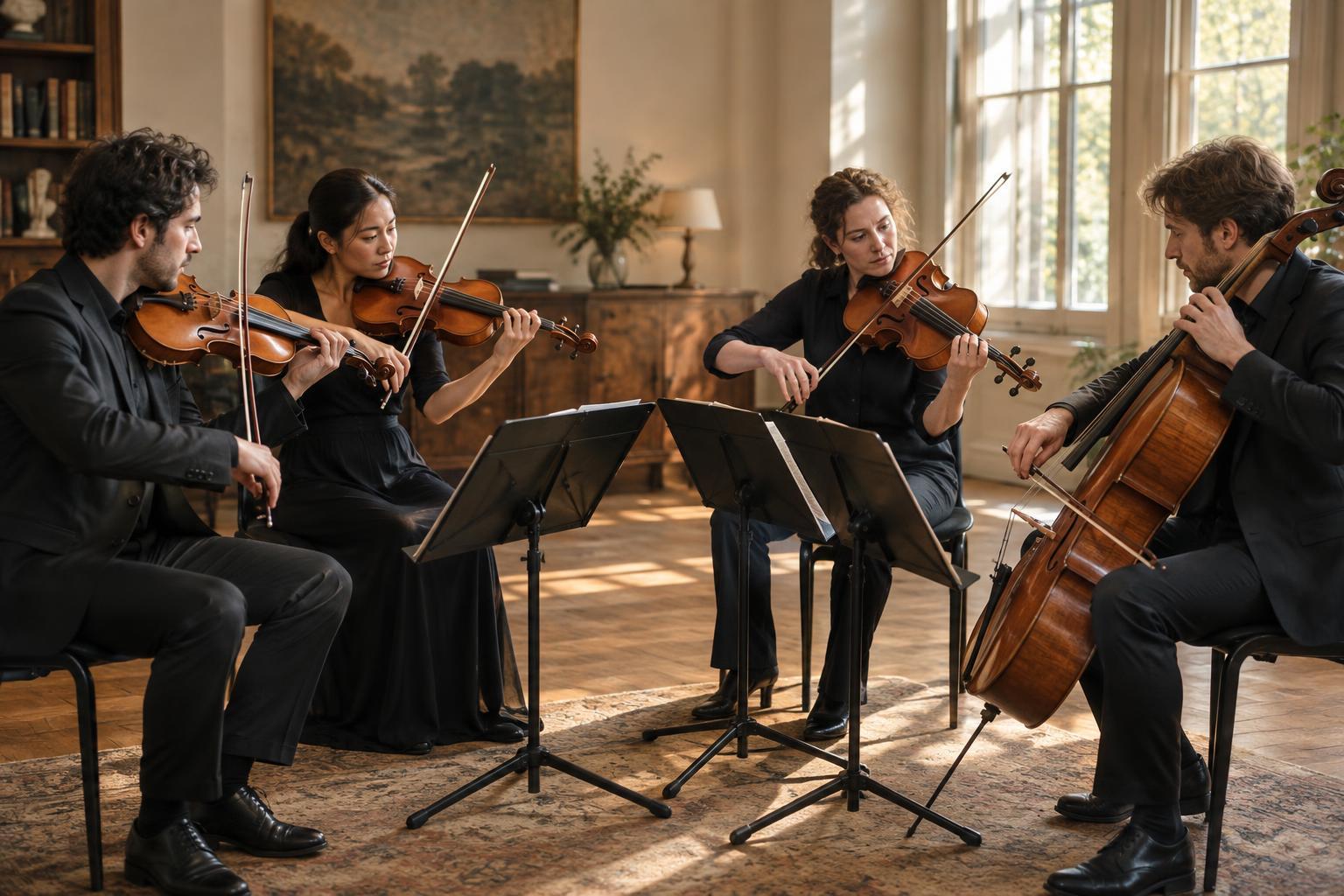
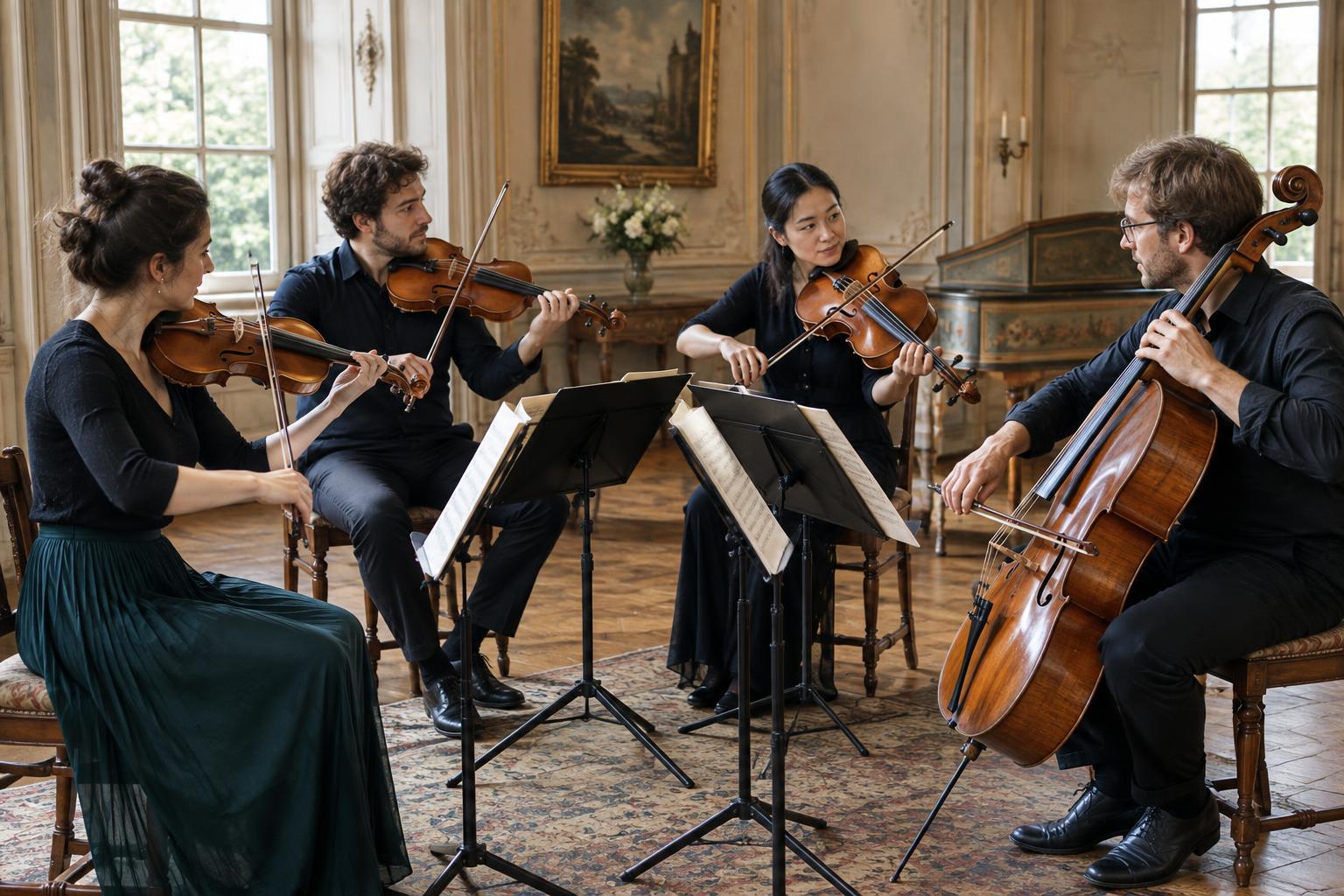
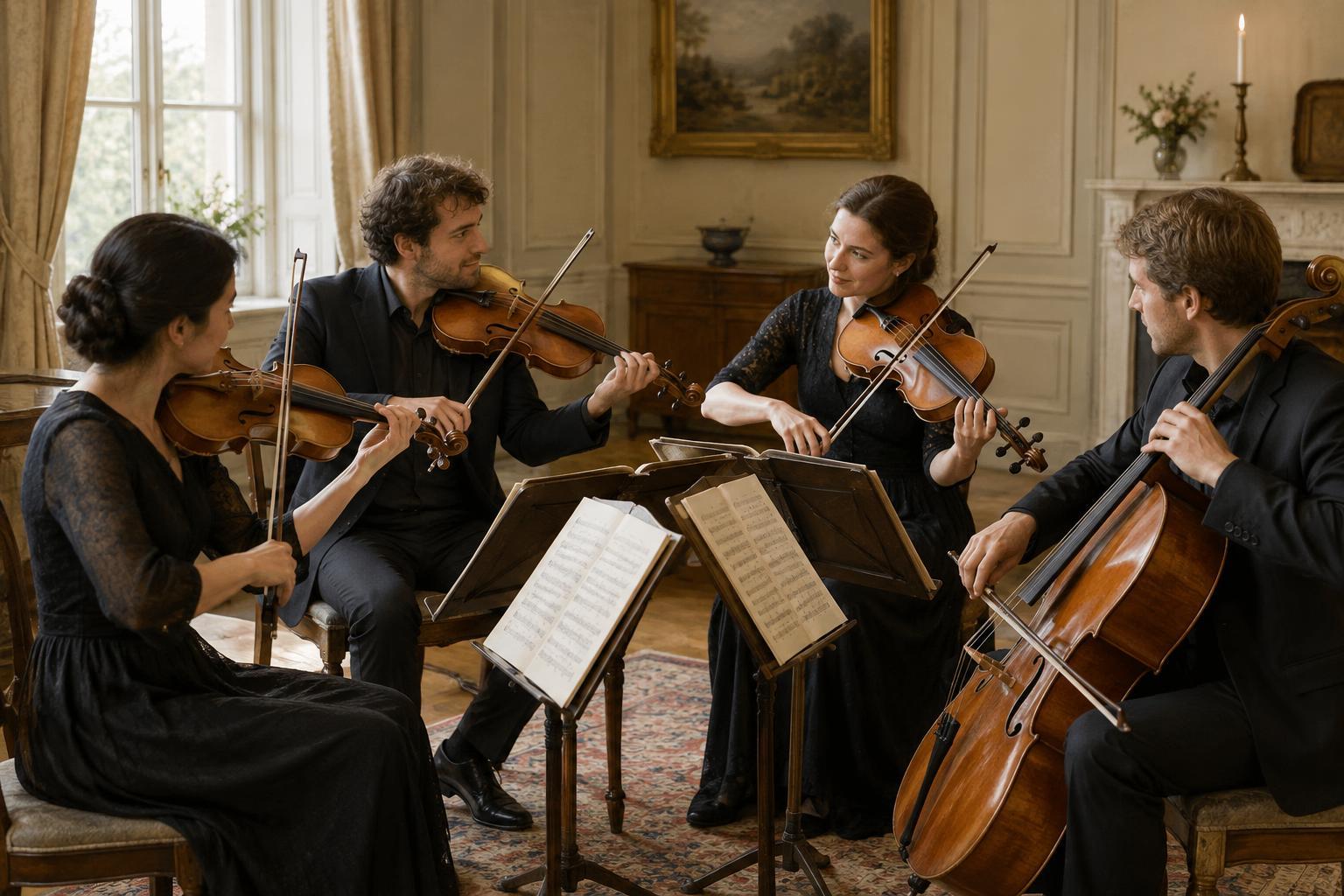
A string quartet can sound intimate without being simple. Each player has a distinct line, yet every line affects the whole. In these works, a tune may begin in one instrument and acquire a new meaning when another takes it up. A supporting figure may become the main event. Listening for those changes can be more rewarding than trying to identify every formal detail on a first hearing.
A conversation rather than a solo with accompaniment
One feature that makes the set distinctive is the attention given to all four instruments. The first violin often carries a memorable melody, but it does not have exclusive control of the argument. The second violin and viola can answer, interrupt or extend an idea, while the cello does more than mark the bass. Sometimes the interest lies in how several modest parts fit together rather than in a single standout tune.
Try following one instrument for a minute, then switching to another. Notice who introduces a short rhythm and who repeats it; notice, too, when an apparent accompaniment begins to demand attention. This approach works particularly well in the G-major quartet, K. 387, whose finale brings imitative lines into energetic interplay. You need not label the technique to hear its effect: the players seem to pick up one another’s thoughts and carry them forward.
Different characters within a shared format
The six works belong together, but they do not project a single mood. The D-minor quartet, K. 421, has a more troubled character than the bright opening of the B-flat-major quartet, K. 458. The latter is often called “The Hunt,” a nickname associated with the call-like gestures at its start. Hearing those two openings side by side is a quick way to appreciate how much expressive range Mozart finds within the same four-instrument ensemble.
Other contrasts emerge over a longer listen. K. 428 can feel searching even when its surface is graceful; K. 464 rewards attention to the way familiar-sounding material is varied and reconsidered. Such impressions need not be everyone’s experience. What matters is that the quartets invite you to hear how rhythm, harmony and the distribution of parts shape a movement’s character. A change in which instrument leads can be as consequential as a change in volume or speed.
The surprise at the start of the “Dissonance” Quartet
K. 465 has the set’s most famous opening. Before its lively main section begins, the instruments enter in a slow introduction whose notes create an unusually unsettled harmonic sound. The music does not immediately make its direction clear. When the brighter, faster passage arrives, it can feel like a release—not because the introduction was a mistake, but because Mozart has made uncertainty part of the journey.
The nickname “Dissonance” is useful, though it describes only one aspect of a much larger work. On a first hearing, listen to the opening without trying to solve it. Notice how long it takes before the ensemble feels firmly grounded to you, and whether the arrival of the fast music changes your impression of what came before. That experience captures a strength of the set: Mozart can make a listener curious about where a piece is going.
Where to begin listening
There is no required order. For an inviting entry point, begin with the buoyant opening of K. 458, then try the darker K. 421. If you enjoy hearing musical ideas passed among players, choose the finale of K. 387. If an unusual opening appeals to you, start K. 465 from its first note rather than skipping to the faster section.
After sampling movements, return to one complete quartet. The slower movements and minuets provide contrast that short excerpts cannot convey, and a finale may bring earlier habits of listening into sharper focus. Mozart’s dedication to Haydn points toward a tradition of inventive quartet writing; the pleasure of these six works lies in hearing how Mozart makes that tradition his own, one exchange among four players at a time.