Why begin with Op. 33?
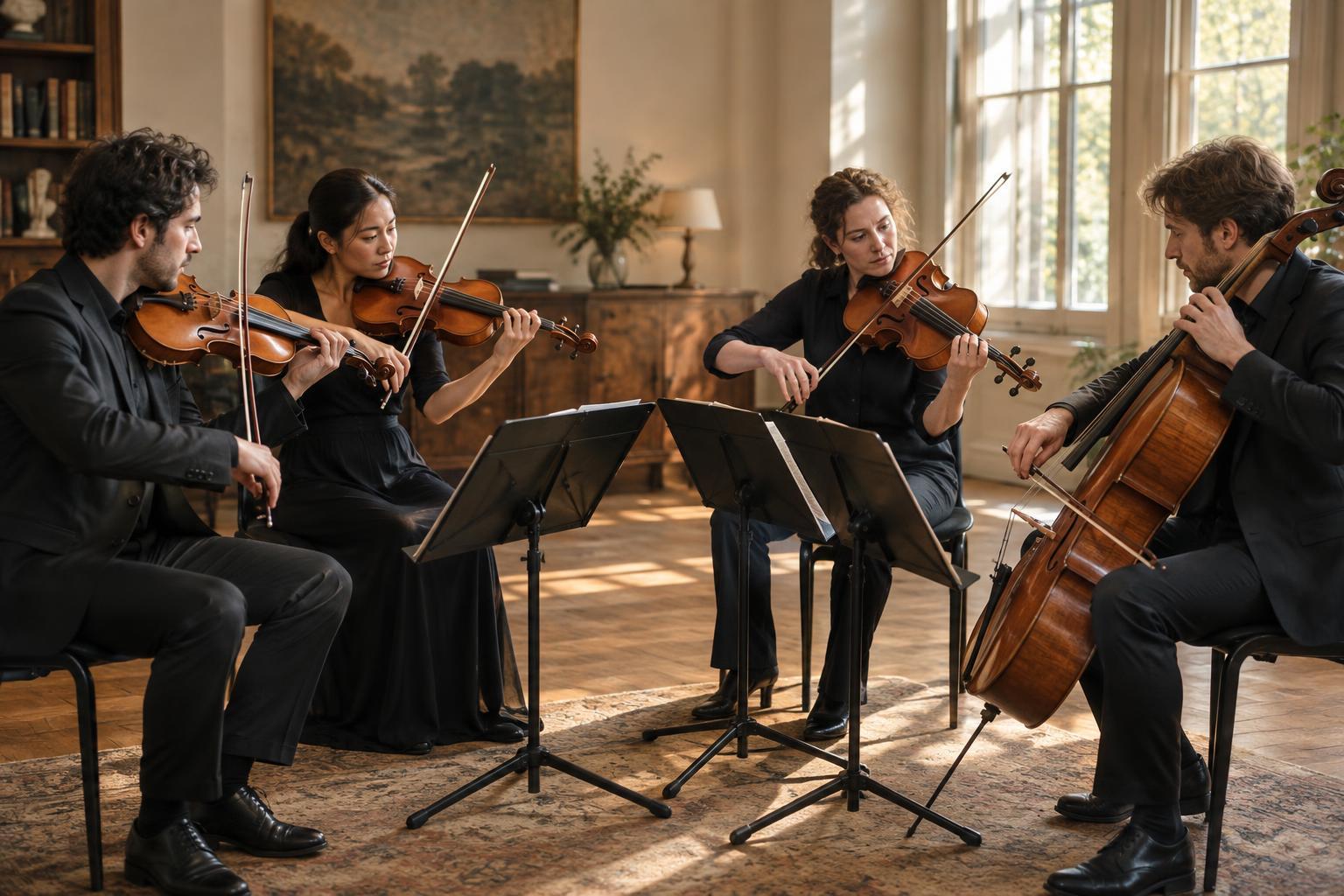
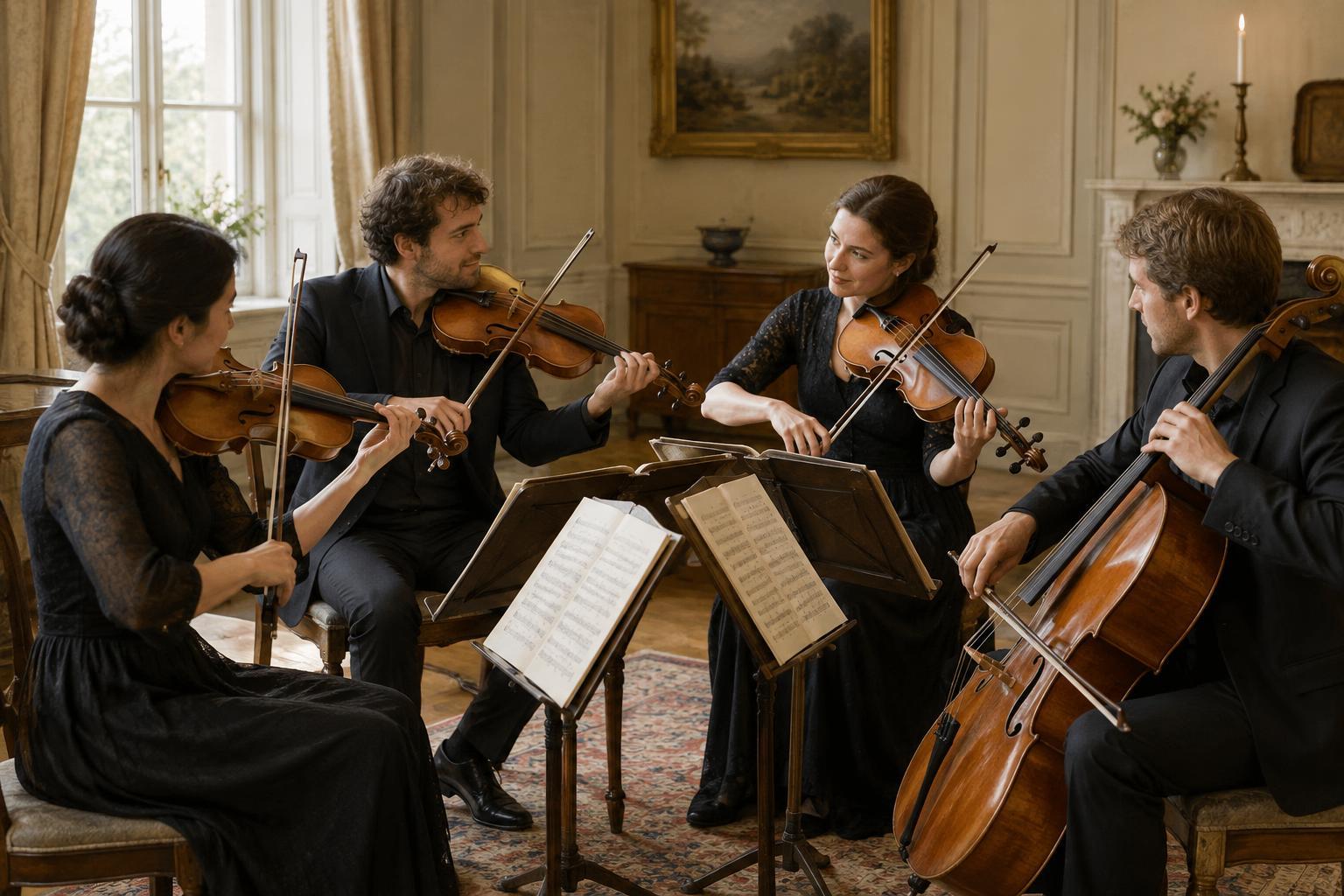
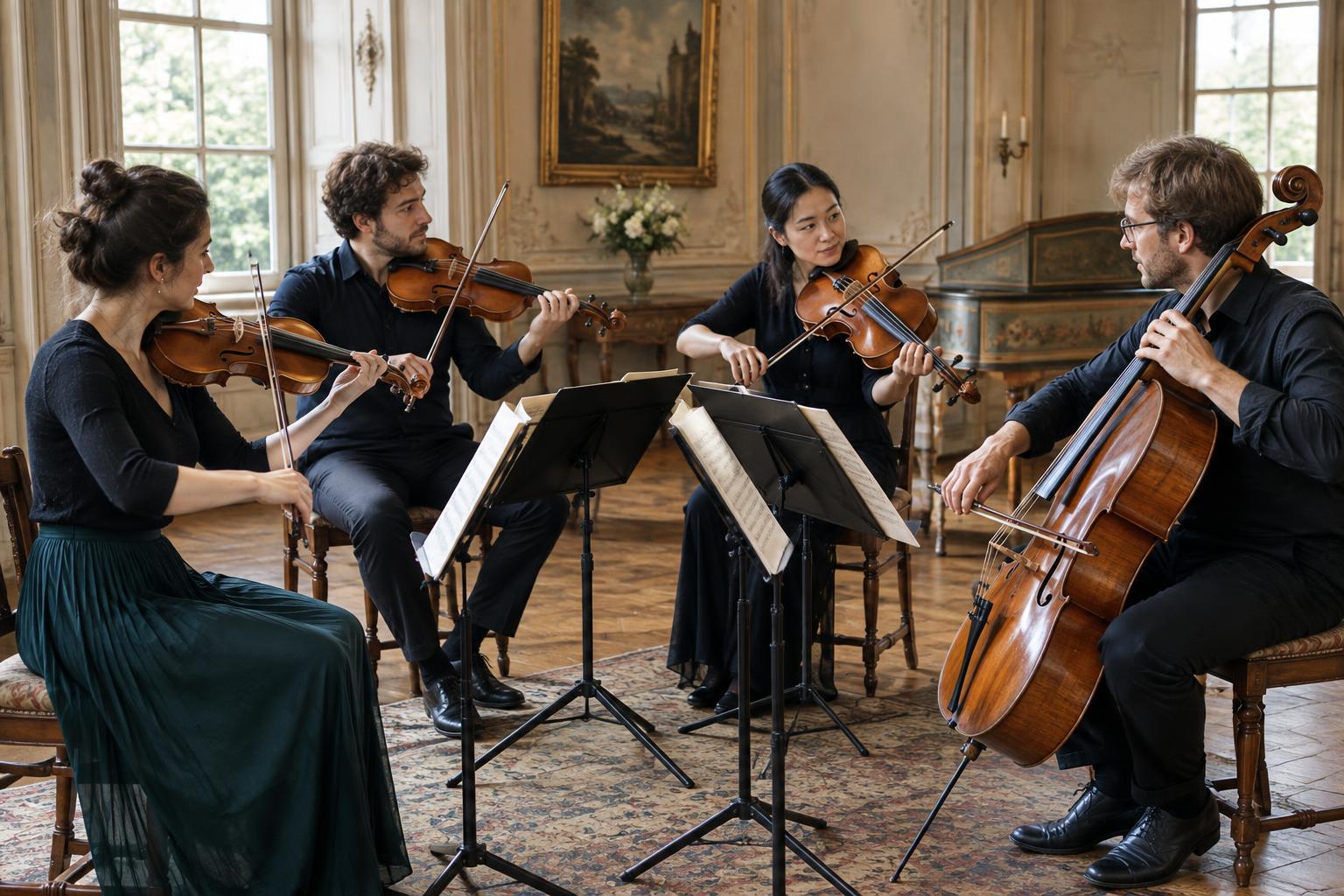
A string quartet has just four players: two violins, a viola and a cello. That small group can sound remarkably varied. One instrument may carry a melody while the others support it; moments later, the melody may pass around the ensemble. Joseph Haydn’s six Op. 33 quartets are a welcoming place to hear those exchanges. Their ideas are often easy to recognize, even when the music takes an unexpected turn.
These works do not require you to know musical theory or to hear all six in order. Start with one quartet and notice how much can happen to a short phrase. Haydn may repeat it, shift its emphasis, give it to a different player or interrupt it with something contrasting. Listening for those changes is more useful than trying to identify every chord.
Hear four players, not one melody and an accompaniment
The first violin often draws attention because it plays in a higher register, but a quartet becomes more interesting when you follow the other parts too. The cello can provide a steady foundation, answer a phrase or launch an idea of its own. The viola fills the middle of the sound and can be a vital partner in the conversation. The second violin may echo the first, challenge it or help keep the rhythm moving.
Try listening to a passage twice. On the first hearing, follow whichever line catches your ear. On the second, listen for what happens underneath or between its phrases. Do the other instruments agree with the leading voice, or do they seem to steer the music elsewhere? Haydn’s shifts of texture make this a practical way to hear how the ensemble works together.
Use the movements as a map
A quartet in this set has four movements, each with its own pace and character. An opening movement often introduces ideas that return in altered forms. A slower movement offers room to notice tone, phrasing and the space between notes. A dance-like movement provides a change of pace before the finale sends the work toward its close. This broad outline can help you find your bearings without predicting every detail.
One distinctive feature of Op. 33 is Haydn’s use of movements labeled scherzo. The word suggests play, and these movements can make familiar dance rhythms feel lively or slightly off balance. Listen for repeated sections and for a contrasting middle passage, often called a trio. When the opening music returns, it may sound different simply because you have heard what interrupts it.
Two quartets to try first
The Quartet in E-flat major, Op. 33 No. 2, is commonly nicknamed “The Joke.” Its finale is a good lesson in musical expectation. Near the end, pauses and brief returns of the tune make it surprisingly hard to tell when the piece is finished. Rather than looking for a trick on your first hearing, ask what normally signals an ending to you. Haydn’s humor works because he gives you reasons to expect one, then asks you to listen a little longer.
The Quartet in C major, Op. 33 No. 3, is often called “The Bird.” Its nickname can draw attention to light, quick gestures, but you need not hear a literal birdcall to enjoy it. Notice how short figures give the music motion and how the instruments share them. Nicknames are useful starting points, not instructions for what every listener must imagine.
A simple way to listen more closely
Choose one movement and give it three hearings. First, enjoy its overall shape: where does it feel settled, and where does it become restless? Next, follow one instrument as long as you can. Finally, listen for a small idea that comes back. It might return in another register, with different accompaniment or at a moment you did not expect.
If you attend a performance, watching the players can clarify exchanges that are hard to separate by ear. At home, you can replay a passage and switch your attention from one part to another. Neither approach has to produce a single correct interpretation. Op. 33 rewards curiosity: the more familiar a phrase becomes, the easier it is to hear Haydn do something new with it.