How to use the three-period map
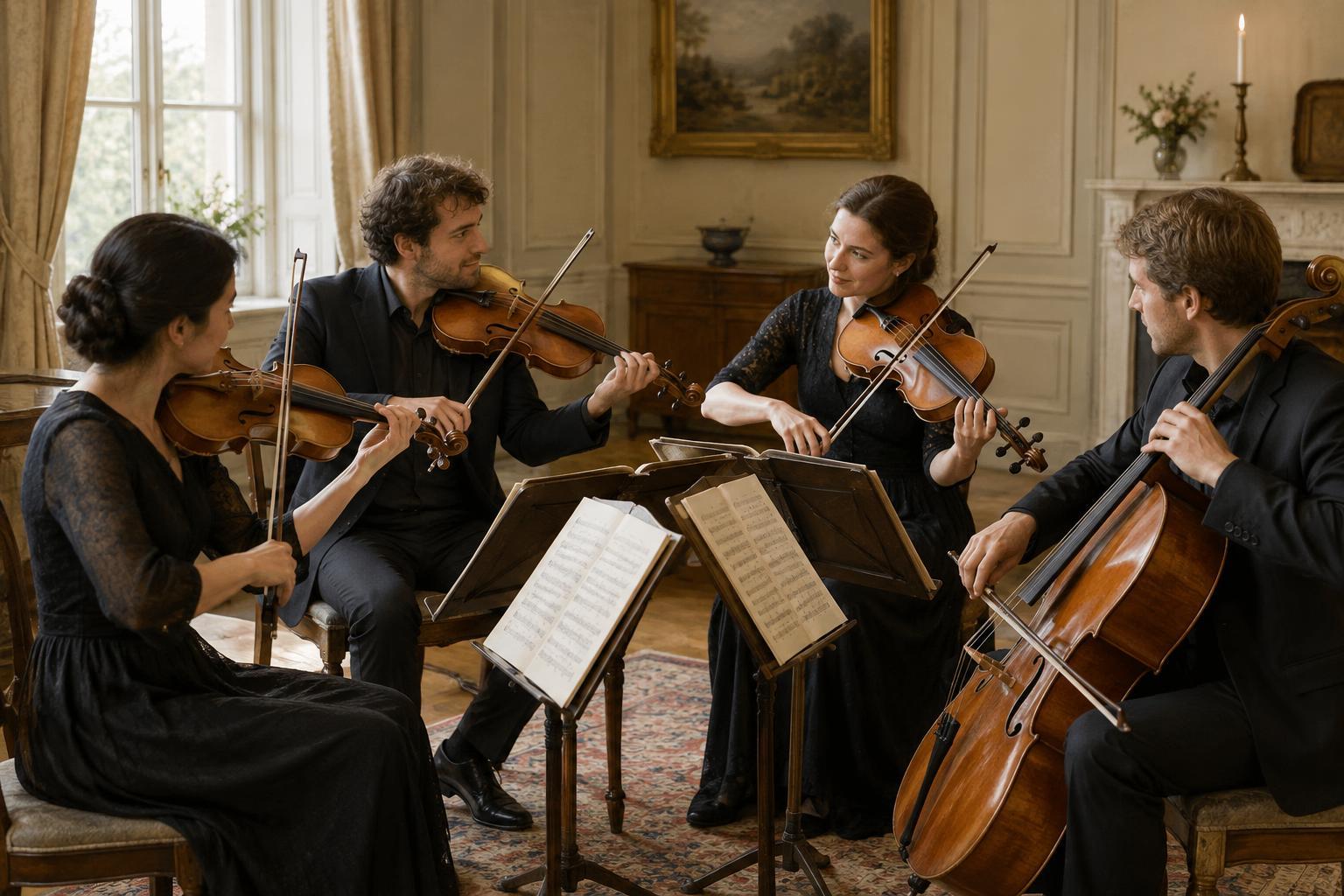
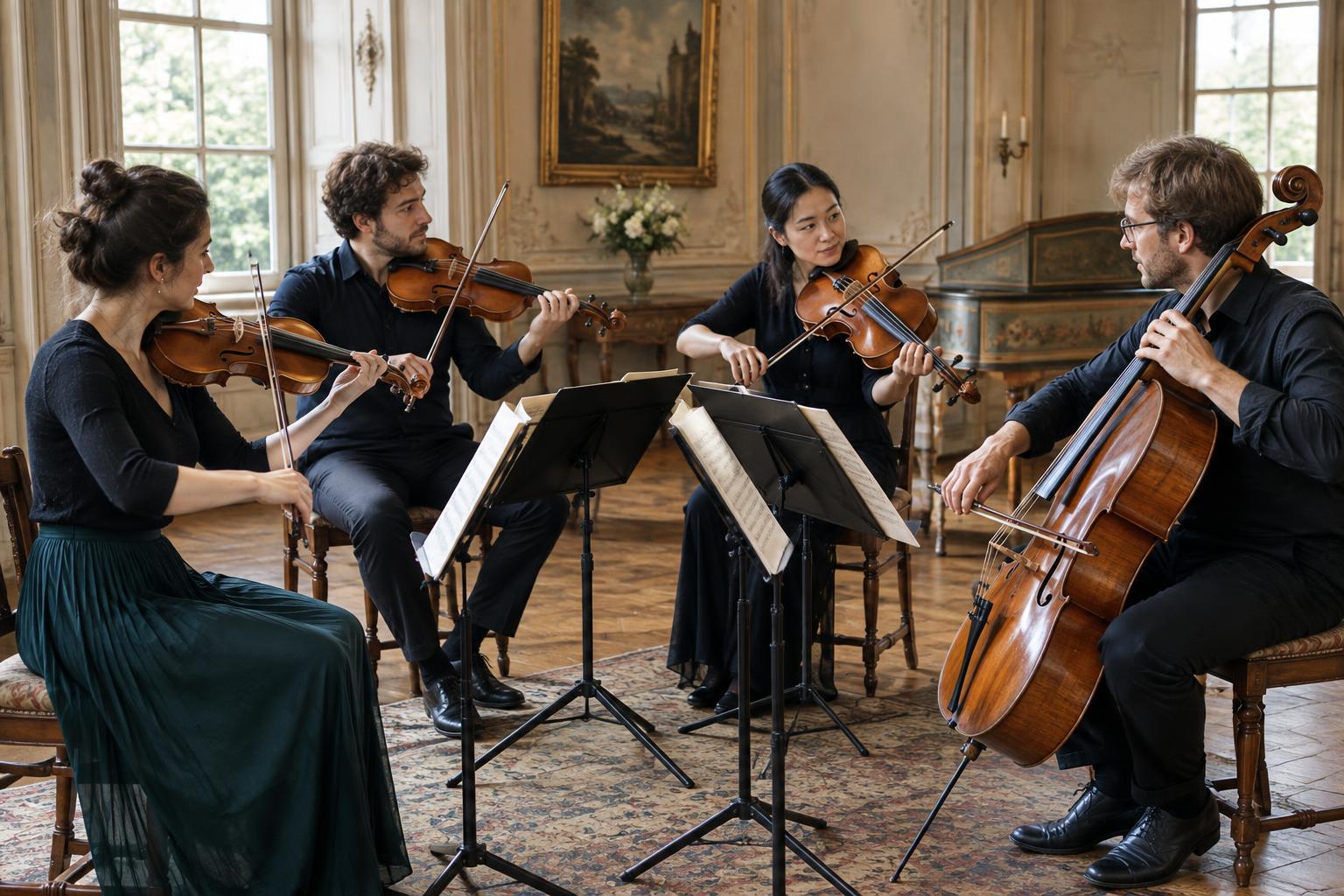
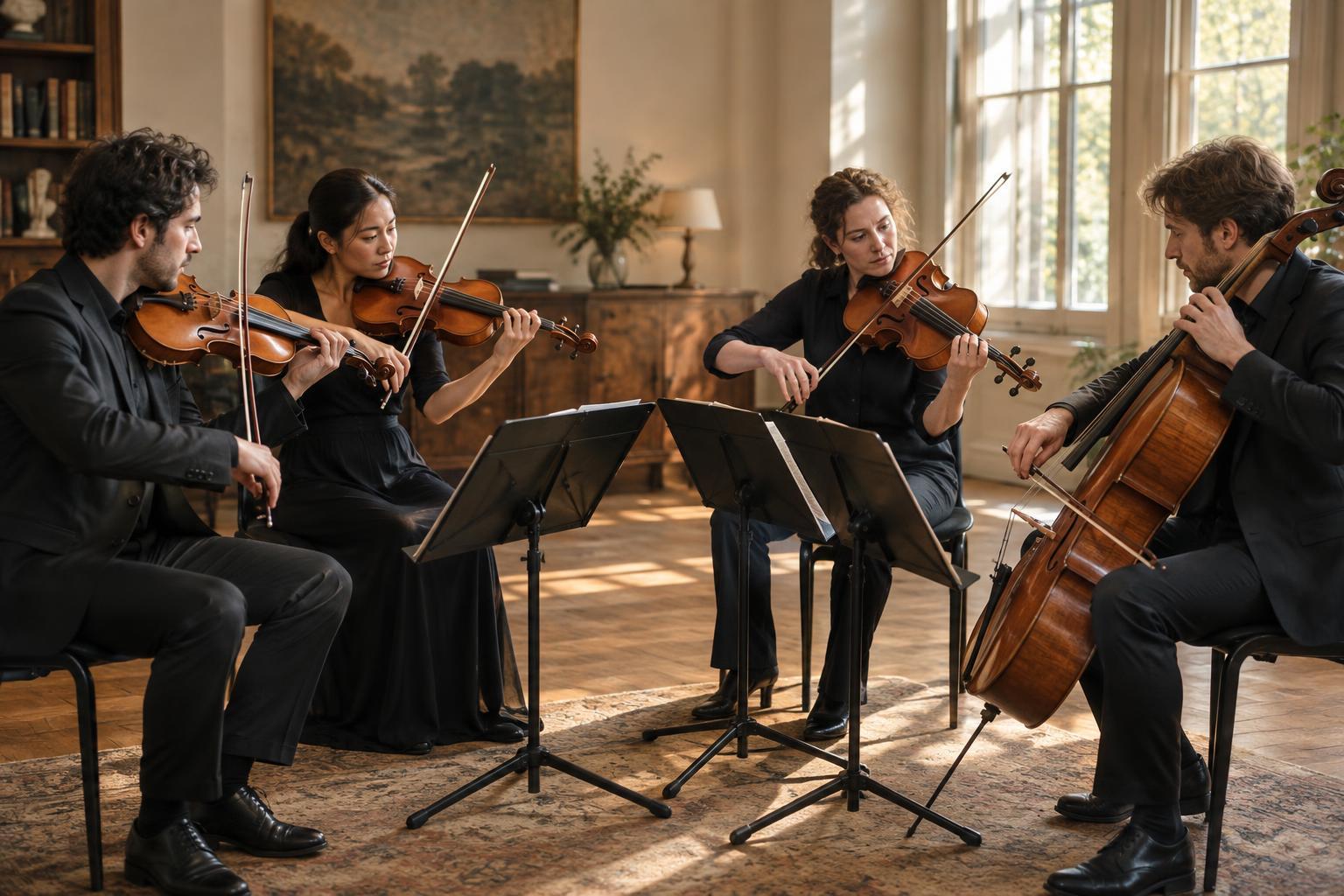
Beethoven wrote sixteen string quartets, each for two violins, viola and cello. Dividing them into early, middle and late groups offers a useful listening map, but not a strict rule about how the music sounds. Across all three groups, the players trade ideas, interrupt one another, combine into a single texture and separate again. Following that conversation is often more rewarding than trying to identify every theme.
A practical first route is to hear one quartet from each group rather than tackling the complete cycle in order. Try Op. 18 No. 4 for an early work, Op. 59 No. 1 for the middle period and Op. 132 for the late period. Afterward, return to whichever sound held your attention. The familiar three-period labels describe broad changes in Beethoven’s approach; individual works can resist tidy placement.
Early quartets: Op. 18 and the art of conversation
The six quartets of Op. 18 form Beethoven’s early quartet collection. Their four-movement outlines and lively exchanges connect them to the quartet tradition he inherited, yet each has a distinct personality. Listen for the way a small figure passes between instruments and gains a new meaning through a change of register, rhythm or harmony. Even when one violin carries the melody, the other players are rarely just background.
Op. 18 No. 4, in C minor, is an inviting entry point if you enjoy strong contrasts and a restless first movement. Op. 18 No. 1 offers another route: its opening is poised, while its slow movement asks for more patient, sustained attention. You need not study their forms before listening. Notice when an idea returns, whether it feels familiar or altered, and how the ensemble prepares you to hear it again.
Middle quartets: a wider canvas
The three Op. 59 quartets, often called the “Razumovsky” quartets, broaden the scale of the conversation. Movements may take longer to unfold, and a musical idea can travel through several contrasting settings before it reaches a conclusion. Op. 59 No. 1 is a helpful starting point: its opening cello melody immediately gives you something recognizable to follow as the texture changes around it.
The other middle-period quartets offer useful contrasts. Op. 74, nicknamed the “Harp” quartet, takes its nickname from a plucked passage in the first movement. Op. 95 is shorter and more concentrated; its sharply opposed gestures can make it feel unlike the spacious Op. 59 works. Its place on the border between middle and late styles is a reminder that these categories are guides, not walls. If an Op. 59 quartet feels too long at first, listen to one movement, then come back for the full arc.
Late quartets: listen for new kinds of connection
The late group is usually understood to include Op. 127, Op. 130, Op. 131, Op. 132 and Op. 135. These works do not share one mood or one blueprint. Op. 131 links seven movements without pauses, inviting you to hear continuity across striking changes of tempo and character. Op. 132 places an extended slow movement near its center, giving the surrounding music a different sense of weight. Op. 135 can seem comparatively compact, but it still rewards close attention to subtle shifts.
Op. 130 presents a special listening choice. Beethoven first wrote the formidable Grosse Fuge as its finale, then supplied a different, shorter final movement. The fugue is also published separately as Op. 133, and recordings may present either ending or both. There is no need to decide which is the “right” experience before listening. Hearing the alternatives can reveal how a final movement changes your memory of everything that came before it.
Build a listening route of your own
For a short survey, pair Op. 18 No. 4, Op. 74 and Op. 135. For a route built around longer arcs, try Op. 18 No. 1, Op. 59 No. 1 and Op. 131. Listen to each quartet once for its overall shape, then revisit a single movement and follow one instrument. The viola or second violin is a good choice: their parts can reveal connections that are easy to miss when you focus only on the highest melody.
Different ensembles may make the same passage feel urgent, spacious, playful or restrained. Treat those differences as invitations to listen again, not as a test of which interpretation you ought to prefer. Beethoven’s quartets become easier to navigate as particular sounds turn into landmarks: a cello opening, a plucked exchange, an abrupt silence or a theme that returns in an unexpected voice.