Listen to the space between notes
A useful first question when listening to a phrase is: what happens between one note and the next? In legato playing, notes sound connected, as though they belong to one continuous gesture. In staccato playing, each note has a clearer ending before the next begins. You may hear a brief gap, or simply the impression that each sound has been released on its own.
The difference is not the same as slow versus fast. A quick passage can flow legato, and a slow passage can be played with carefully separated notes. Nor does staccato necessarily mean loud or forceful. Soft, short notes can sound light and playful; strong, short notes may sound insistent. To identify the articulation, set aside speed and volume for a moment and follow the length and connection of the sounds.
Try imagining someone speaking a short sentence. Legato resembles words carried in one breath, while staccato resembles words given distinct, clipped endings. This comparison is only a starting point: musical notes have different lengths, and performers can make countless degrees of connection or separation.
Hear how each instrument makes the effect
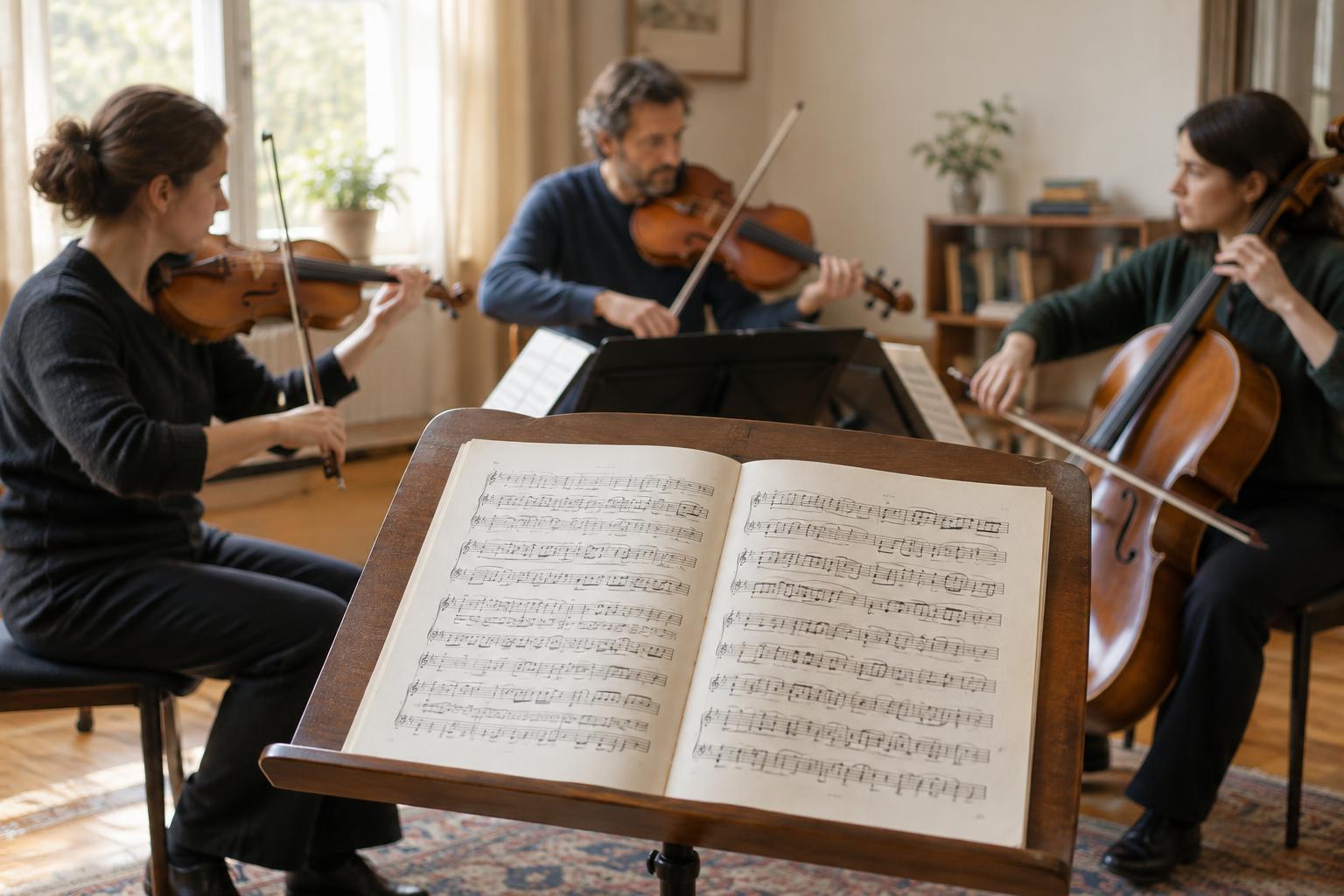
On a bowed string instrument, legato may sound like a smooth sweep across several notes. A violinist or cellist can keep the bow moving through a phrase, sometimes changing bow direction so gently that the line still feels unbroken. For staccato, the player gives notes more individual beginnings and endings. Listen for a little space around each sound, rather than assuming every audible bow change breaks the line.
Wind players shape connection and separation with breath, fingers and tongue. A clarinetist playing legato might let a melody flow through changing pitches with few pronounced attacks. In a staccato passage, repeated tongue movements can make the notes sound neatly detached. Breath still supports the phrase, even when the notes themselves are short.
On a piano, the sound naturally fades after a key is struck, so the pianist cannot sustain a note in quite the same way as a singer or wind player. Even so, careful timing of key releases, overlapping sounds and use of the pedal can create a connected line. Shorter key contact and well-judged pauses can make notes sound staccato. Pedal use and the room’s resonance may soften those gaps, so listen to the overall shape as well as to silence.
Follow the musical line, not just single notes
Articulation helps tell you which notes belong together. A legato melody often invites you to follow a long arc toward a high point or a gentle ending. Staccato notes may form a pattern of small gestures: a bounce, a pulse or a sequence of pointed replies. Neither style has one fixed emotional meaning. Context, harmony, register and dynamics all affect whether a passage feels tender, humorous, restless or calm.
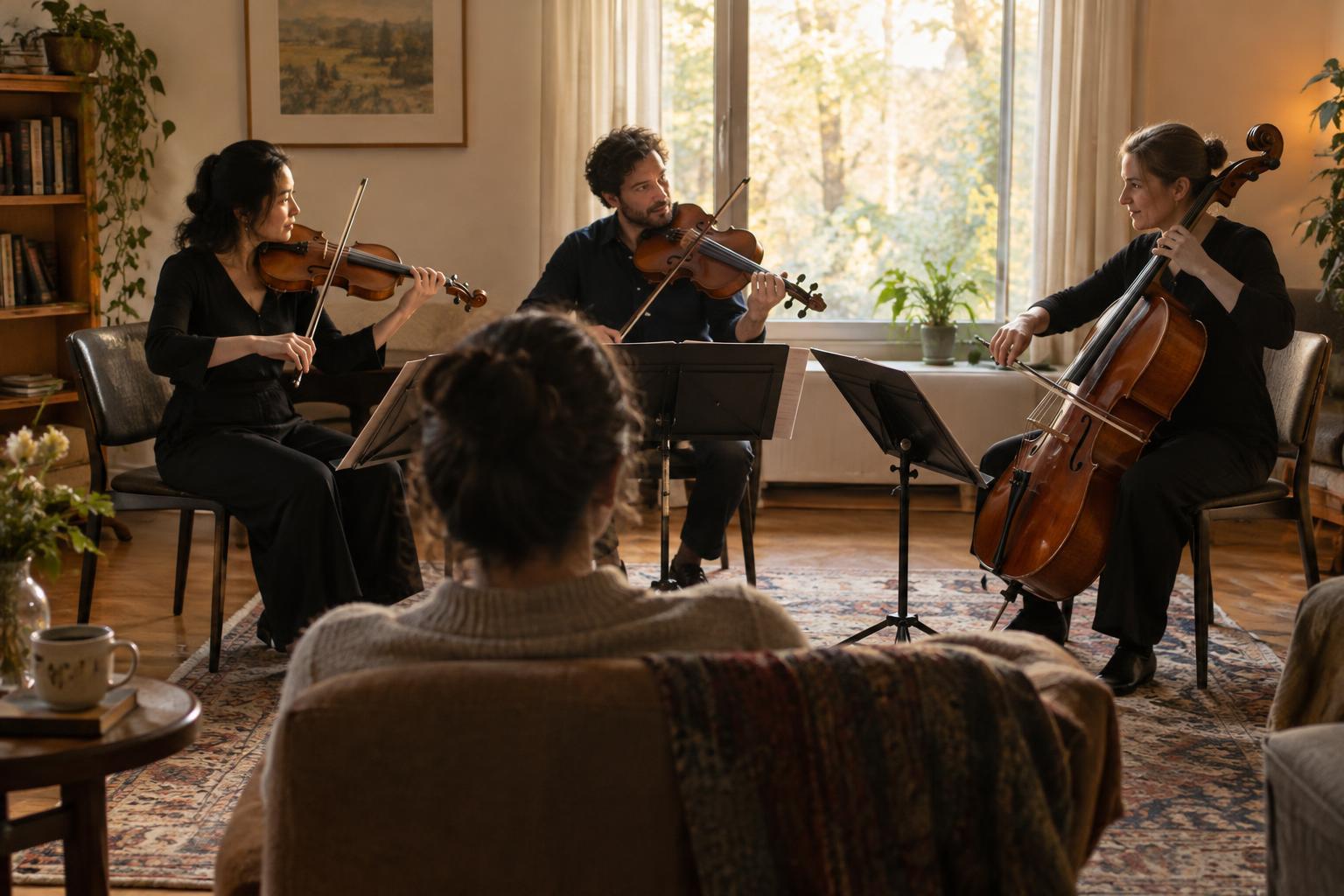
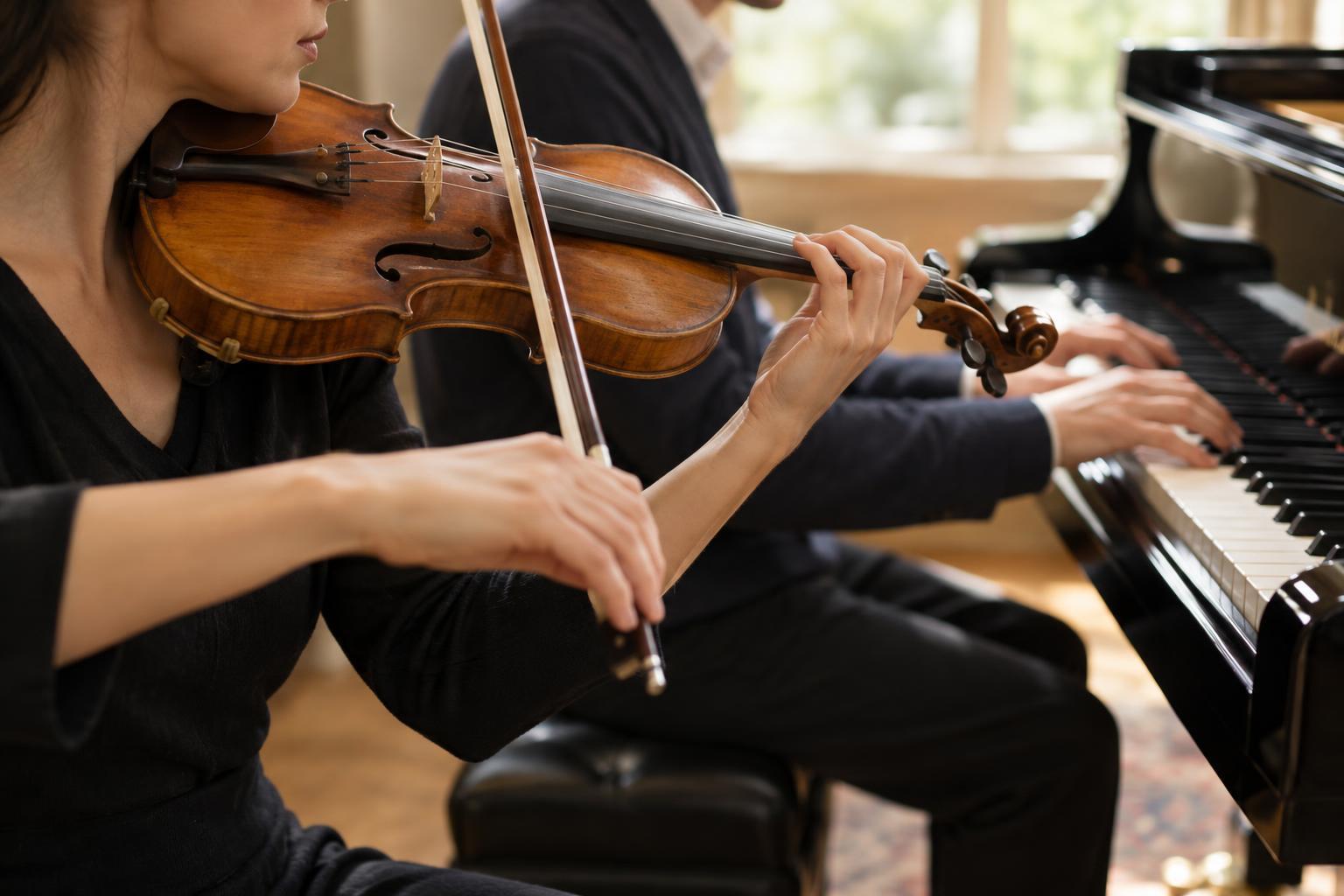
Chamber music offers especially clear chances to hear the contrast because the players can take different roles at once. A cello might carry a connected melody while a piano supplies short, regular chords. Later, the roles may reverse, or two instruments may pass a detached figure back and forth. Instead of trying to label an entire movement as legato or staccato, choose one instrument and trace how its notes are shaped for a few measures.
Listen, too, for changes within a phrase. A performer might connect several notes and then make the last one short, giving the line a crisp finish. A series of detached notes might lead into a longer, smoother answer. These shifts are part of the musical conversation: they can mark a new idea or help one player’s gesture stand apart from another’s.
Try a simple listening exercise
Choose a short passage you can replay easily, preferably with a melody you can hum. On the first listen, ignore the instrument names and tap whenever you hear a note clearly end before the next one starts. On the second, stop tapping and try to hum along without breaking the line. Which stretches invite one continuous breath, and which seem to ask for separate syllables?
Next, listen for the beginnings of notes. Are they rounded and gently joined, or do they have crisp, individual attacks? Then listen for their endings. A sharp attack alone does not make a note staccato; the shortened duration and sense of release matter too. Compare the melody with any accompaniment you can hear. Different articulations happening simultaneously are often easier to recognize than a subtle change in one instrument.
If you play or sing, try the same few notes both ways. Connect them as smoothly as you can, then give each one a distinct ending without changing the tempo. The physical contrast can make the listening distinction clearer. You do not need formal training to try it; even humming a familiar tune is enough.
Expect shades between the two
Legato and staccato are useful listening labels, but they are not on-and-off switches. Players can make notes almost connected, gently separated or very short. A resonant hall may make detached notes seem to linger, while a close recording may reveal tiny gaps that are less noticeable from a concert seat.
When you are unsure what you hear, ask a modest question rather than searching for a perfect label: does this phrase encourage me to hear one flowing line, or several distinct sounds? Following that change of shape is already a way into the music. It helps you hear not only the notes being played, but how performers turn them into a conversation.