First listen: meet the piece without taking notes
An unfamiliar chamber piece can feel busy even when only a few musicians are playing. One instrument begins an idea, another interrupts, and a quiet passage may change direction before you have settled into it. On your first listen, resist the urge to catch everything. Your aim is simply to experience the piece from beginning to end.
Notice broad impressions rather than technical details. Does the opening feel still or restless? Do the players often move together, or does the music sound like a conversation? Where does your attention sharpen or drift? These are useful observations, not tests with correct answers. If the work has several movements, let the silence between them mark a fresh start rather than trying to connect everything immediately.
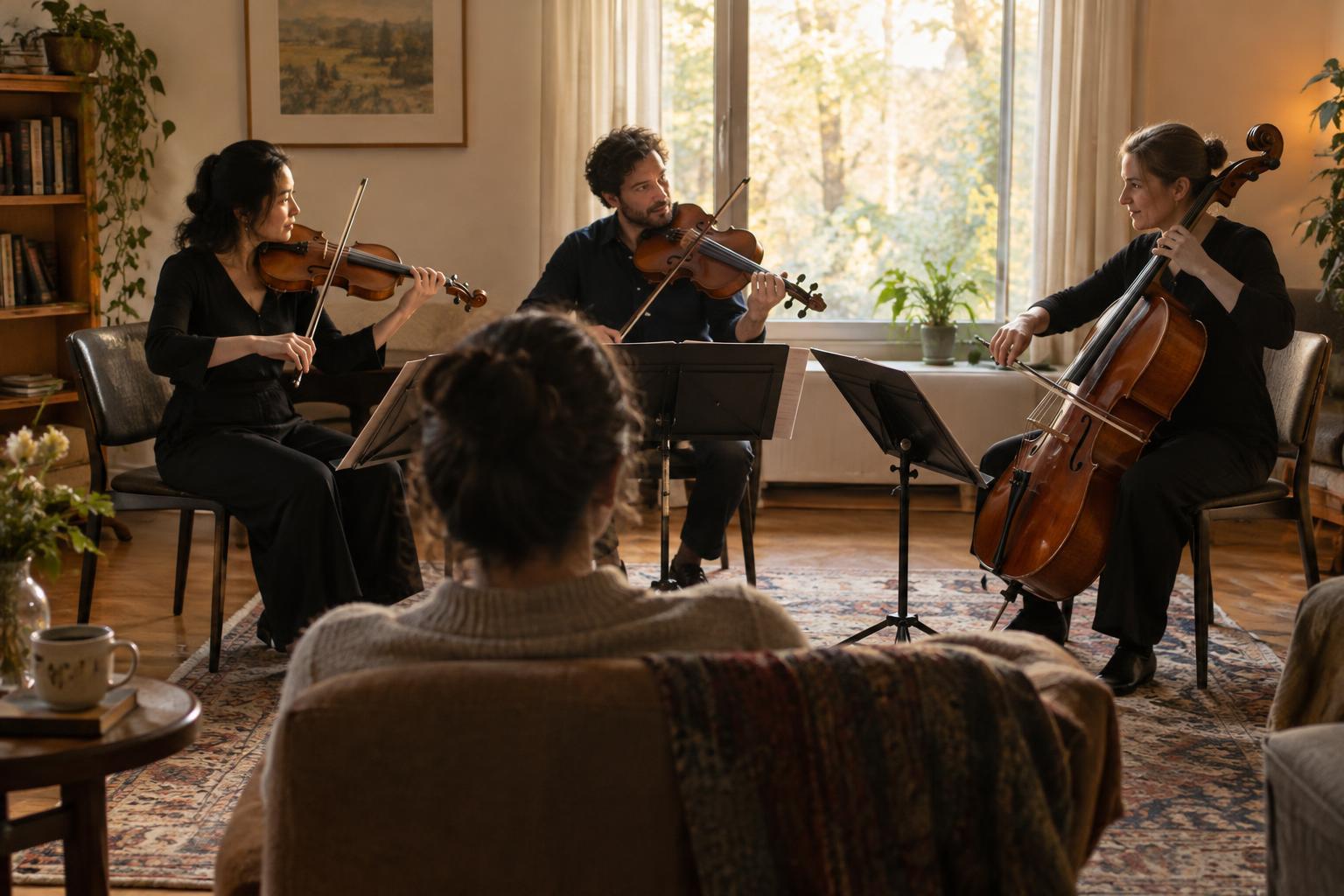
Choose a setting in which you can hear comfortably, and give the music room to unfold. You need not keep your eyes on a recording’s progress bar or read a description while it plays. At the end, write down just two or three things you remember: perhaps a sudden pause, a warm lower-instrument sound, or an ending that surprised you. Those memories will give your next listen a place to begin.
Second listen: follow the conversation
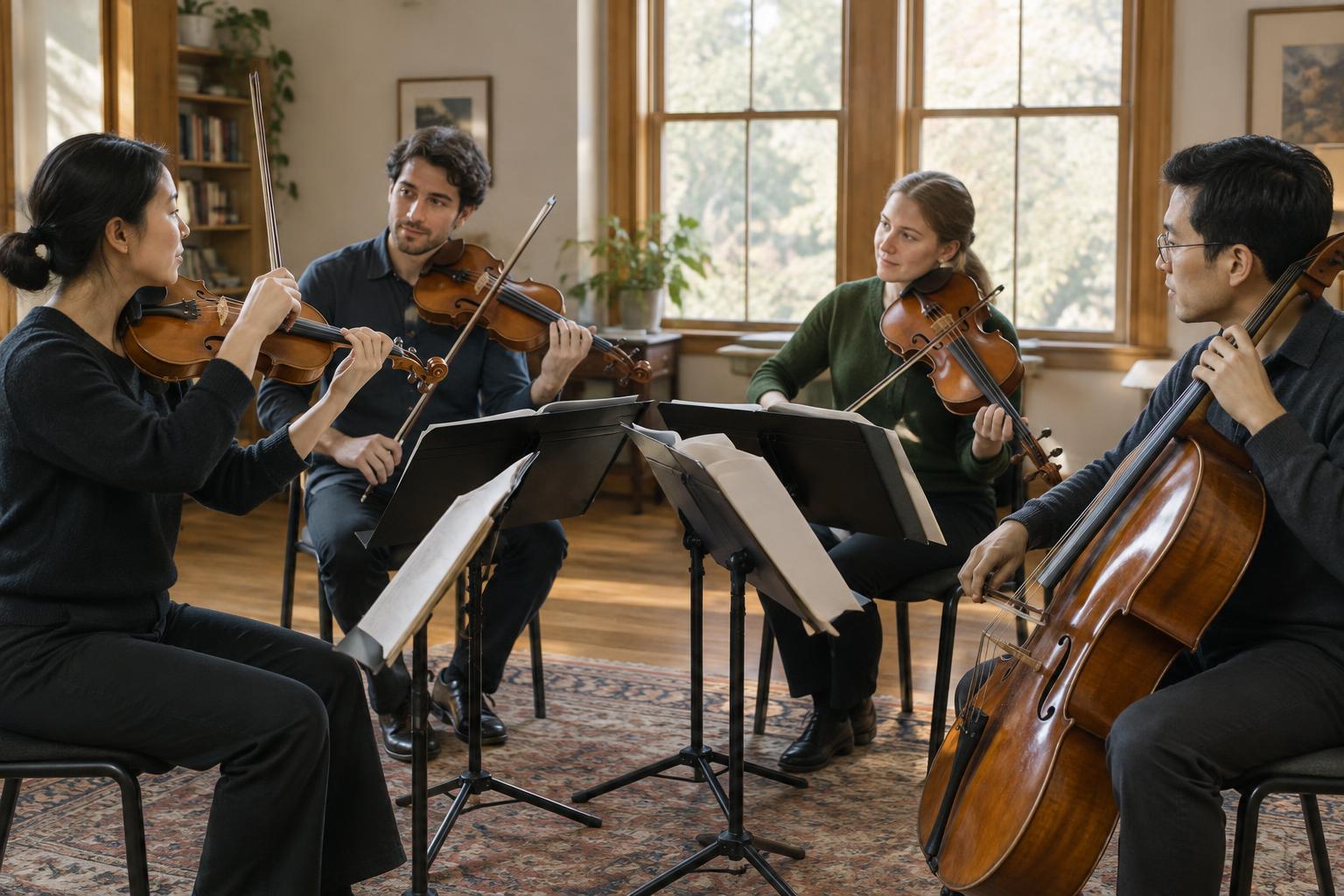
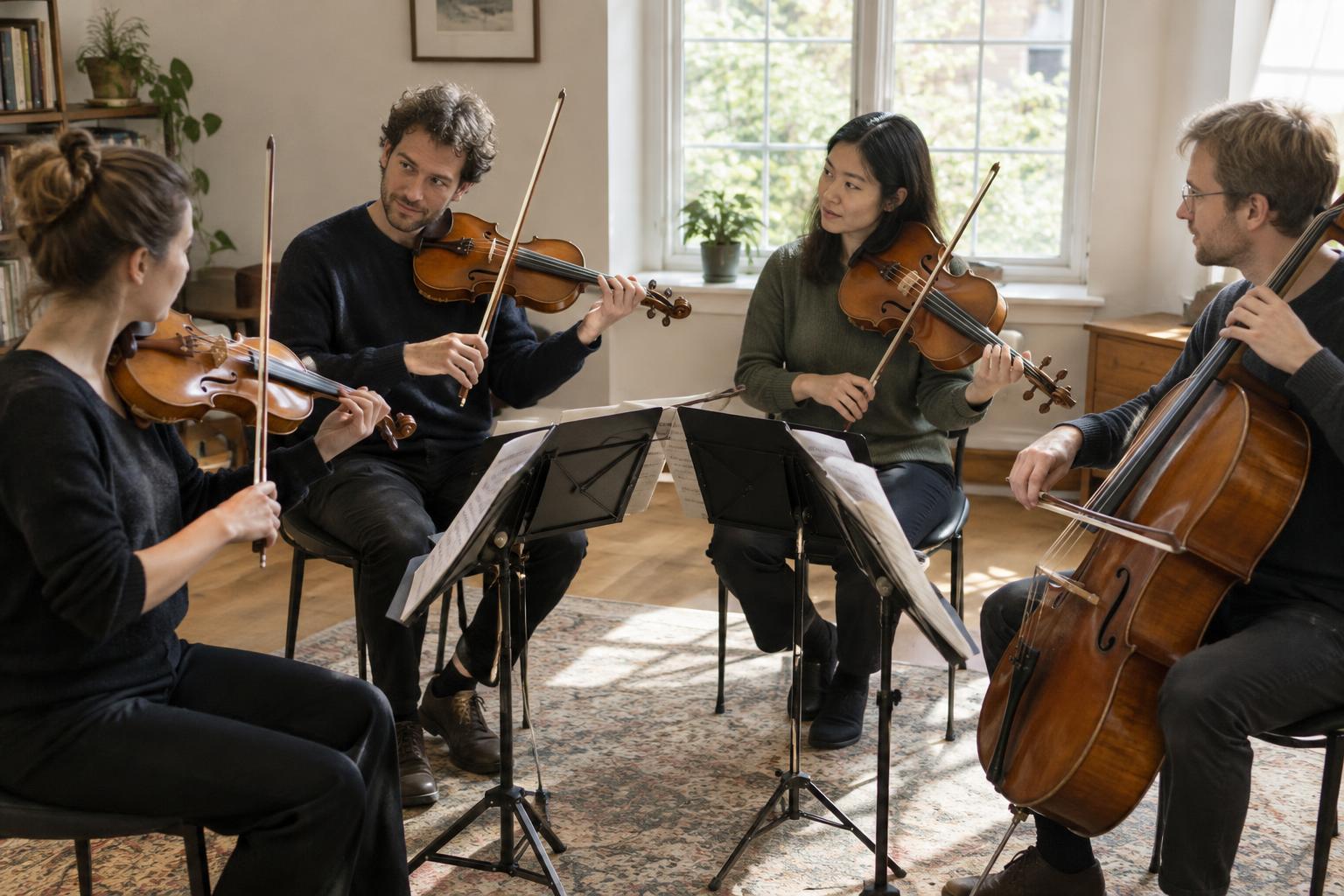
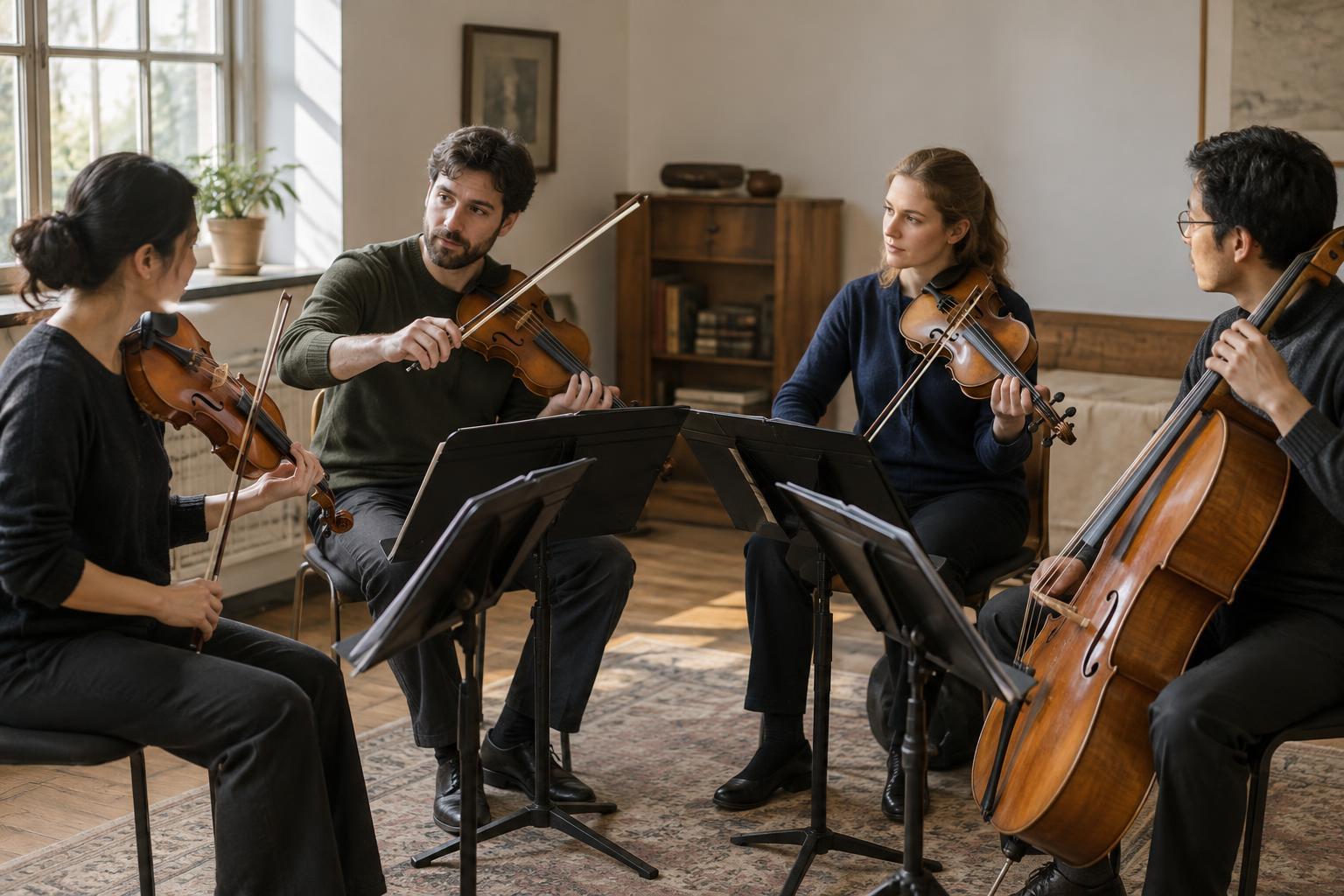
Chamber music rewards attention to how players share the work. On a second listen, pick one instrument and follow it for a while. Is it carrying a tune, providing a steady pulse, answering another player, or resting? Then shift your attention to someone else. A part that seemed like background may turn out to shape the pace or character of the whole passage.
You do not have to know the instruments by name to hear their roles. Try asking, “Who begins this idea, and who responds?” Listen for moments when the players sound closely joined, as well as moments when one pulls away. If you lose track, wait for a clear entrance, a change in texture, or a silence. Chamber music offers many chances to rejoin the conversation.
This is also a good time to notice sound itself. A short, detached note can make an exchange feel playful; a long, sustained note can make it feel spacious or tense. Rather than attaching a fixed emotion to every passage, consider how the players’ sounds affect one another. Hearing that relationship can make a piece more vivid than trying to decode it note by note.
Third listen: notice returns and changes
By the third listen, some sounds may be familiar. Follow that recognition. Does an opening gesture come back later? If it does, is it played by the same instrument, at the same energy level, or against a different accompaniment? Even a small change can alter how a familiar idea feels. You can notice this without knowing the work’s formal plan.
Pay particular attention to transitions. A melody might break into shorter pieces, a busy texture might thin out, or a firm rhythm might become less predictable. Ask what changed just before the music seemed to enter a new place. If the piece has multiple movements, compare their characters: which one leaves room for reflection, and which one seems driven by exchange or momentum?
Finally, listen to the ending in relation to the beginning. Does it settle something that was left open, revisit an earlier sound, or head somewhere unexpected? There may be no single answer. The value of a third listen is that you are no longer hearing only a stream of new events; you are beginning to hear relationships across time.
Make the method your own
Three listens are a framework, not a requirement. You can spread them across several days, replay one movement instead of the entire work, or use the approach before attending a concert. If the piece is long, choose a short passage and try the same sequence there: hear it as a whole, follow the players, then listen for change.
Afterward, a program note or instrument guide may help you name something you have already heard. It can also suggest a feature you missed. Neither outcome means your earlier listening was incomplete. The point is to build a personal connection to the music, then let context add to it rather than replace it.
When you return to the piece months later, you may notice something entirely different. That is part of the pleasure of chamber music: a line once heard as accompaniment can become the center of your attention, and a familiar exchange can reveal a new balance. Start with curiosity, and let each listen give you one more way in.