Start with the whole picture
Following a score is not a test of how quickly you can name notes. Think of it as a map of what the players are doing. For a first attempt, choose a short movement for two to four instruments and find a score that shows all their parts together. A recording with a clear balance between the instruments can make it easier to hear what you see.
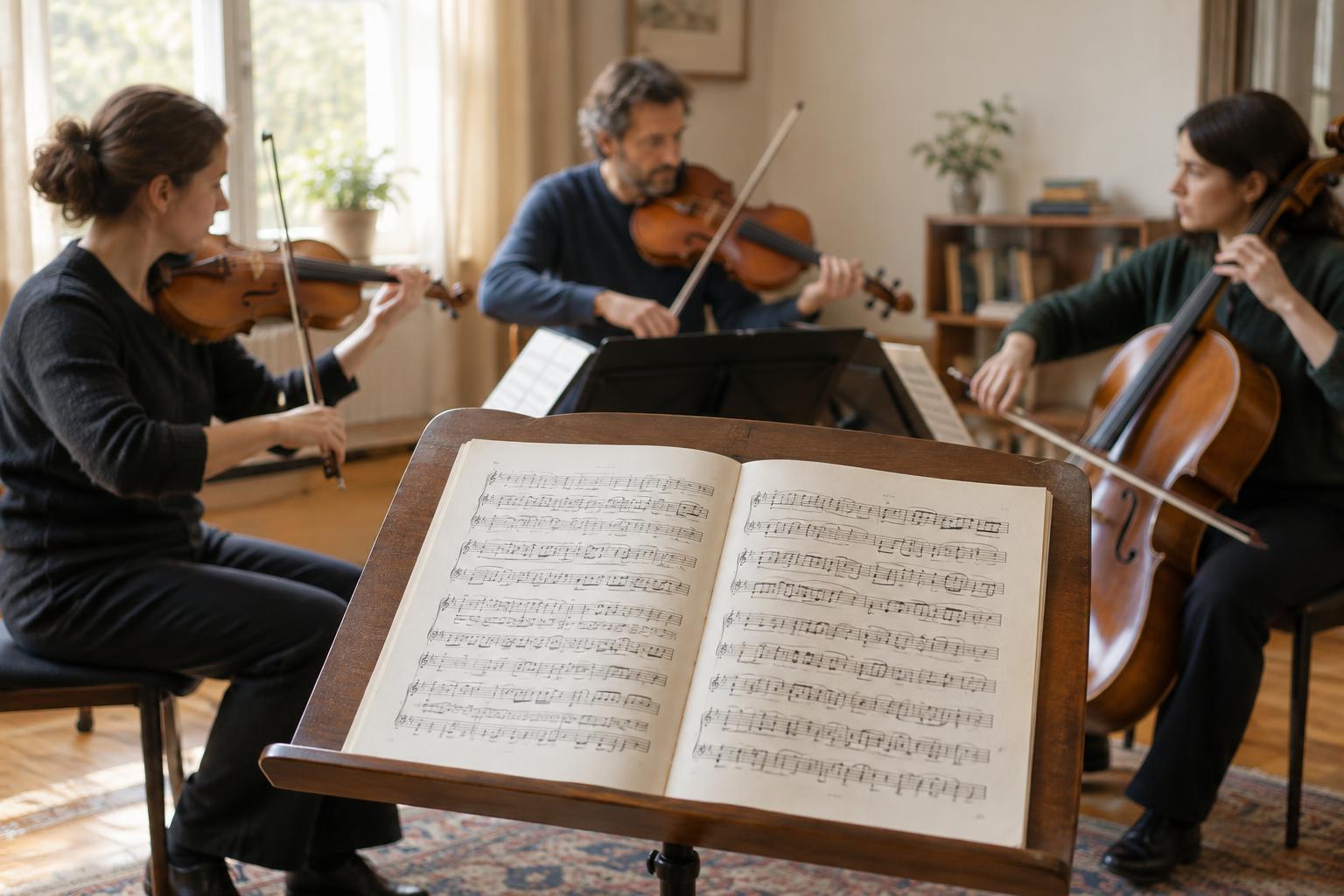
Before pressing play, look at the left edge of a page. Each instrument has its own staff, and the staves lined up vertically show sounds that occur at roughly the same time. One such group of staves is called a system. Read across the page as the music proceeds, then move to the next system. Notice the instrument names and the tempo marking, but do not worry if unfamiliar symbols remain.
Find a few reliable landmarks
The vertical lines crossing each staff divide the music into measures. Measure numbers, if printed, are useful for finding your place again after a distraction. Some scores also have rehearsal letters or numbers: these mark larger points in the piece and are especially handy when you want to replay a passage. If the score shows a repeat sign, the performers may return to an earlier section rather than continue down the page.
Listen once without trying to follow every measure. Instead, note an obvious event: an instrument begins alone, everyone pauses, or a lively passage gives way to a quieter one. Find that event on the page. A long rest looks different from a busy run of notes, and a new tempo or dynamic marking can signal a change you hear. Two or three landmarks are enough to keep you oriented.
Watch the shape of the conversation
On a second listen, choose one instrument to follow. Notice when its line rises or falls, when it plays repeated short notes, and when it rests. You need not identify exact pitches to see these shapes. If that instrument stops, look at the other staves: another player may take up a similar pattern, answer it with a contrasting phrase, or provide a steady accompaniment beneath it.
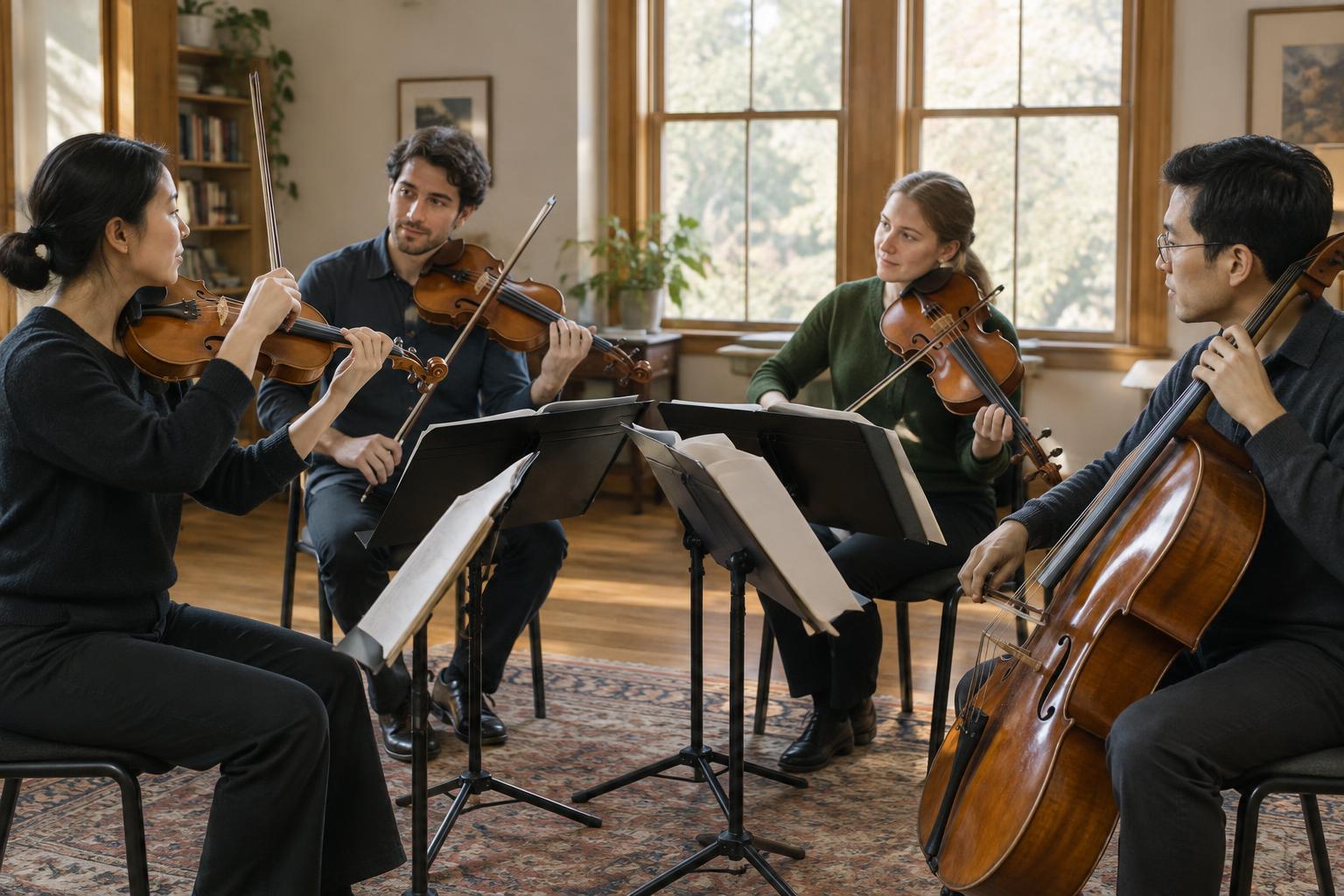
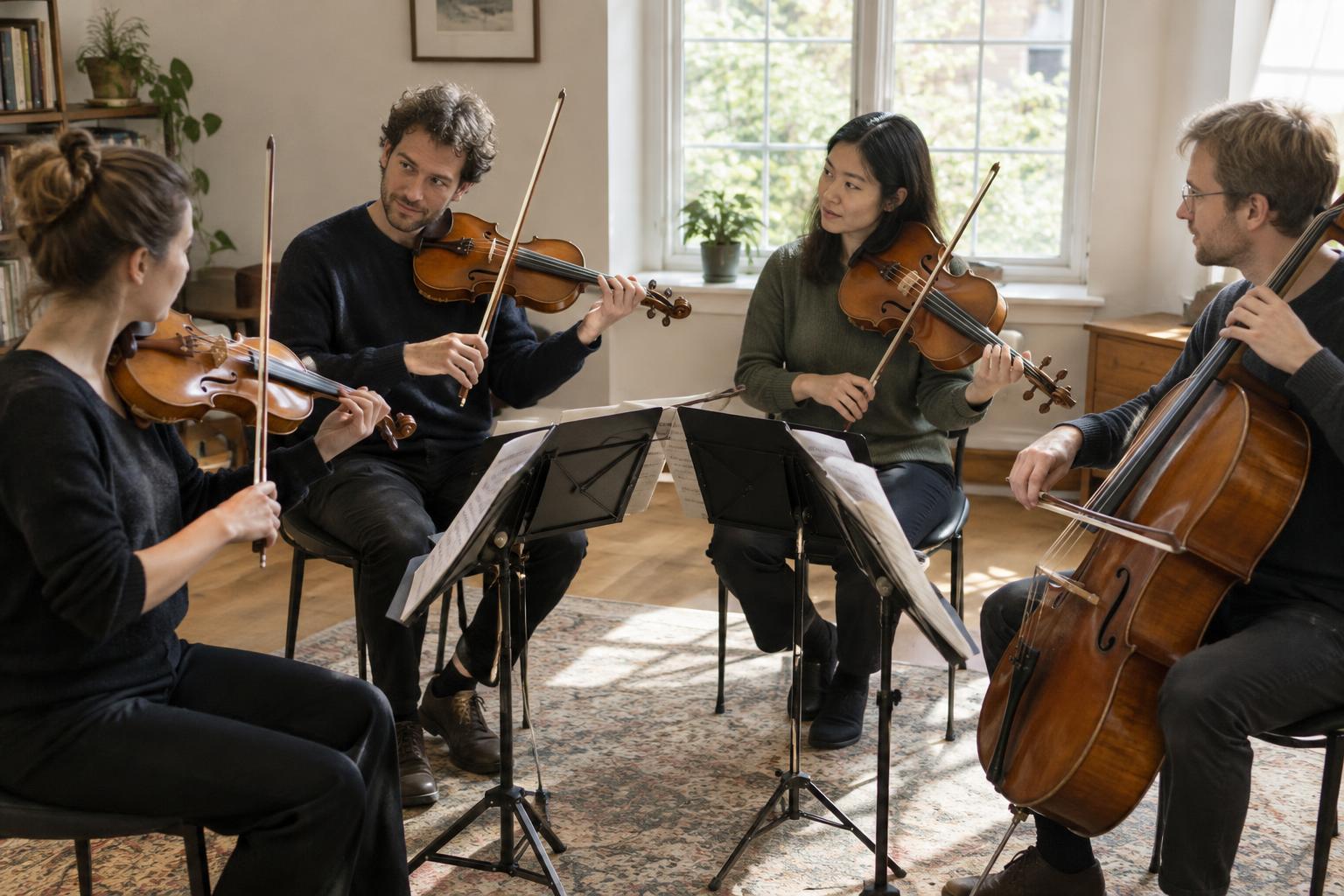
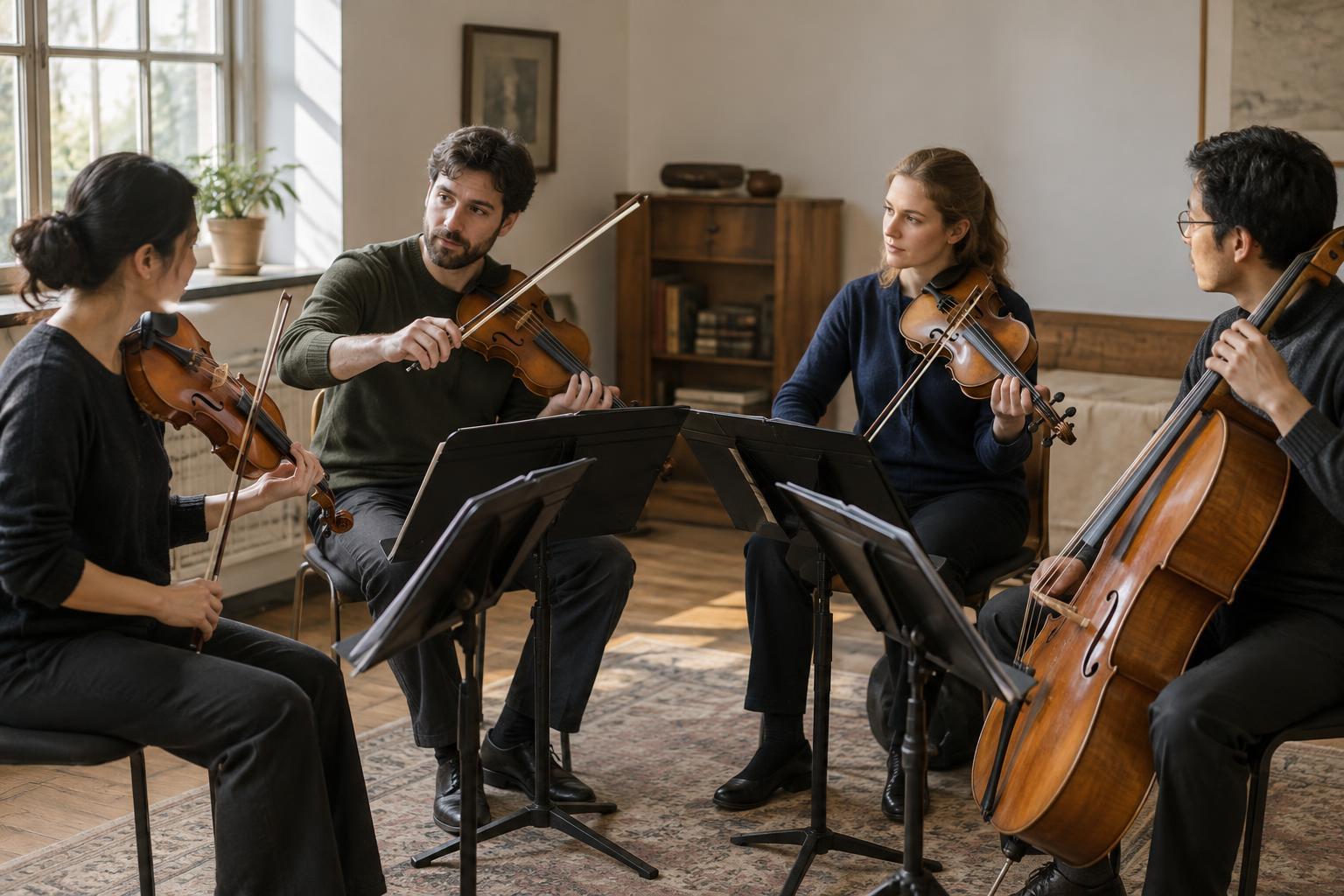
This exchange is one of the pleasures of chamber music. A melody is not always confined to the highest staff or the loudest instrument. Try following a distinctive rhythm instead: perhaps a pair of quick notes followed by a longer one. When that rhythm appears in a different part, listen for how its character changes. The score can reveal a handoff that was easy to miss by ear alone.
Use notation as a listening aid
A few markings offer useful clues. Dynamics such as p and f suggest softer and louder playing; a crescendo sign points toward a gradual increase in intensity. Slurs often group notes into a connected gesture, while dots above or below notes can indicate a shorter articulation. Compare what you see with what you hear, remembering that performers shape phrases rather than treating each mark as an isolated instruction.
Some details may not match your expectations immediately. A player may count several measures of rest before entering, and recordings can differ in pacing. Scores for instruments such as clarinet may also display written pitches that differ from the sounds you would identify by ear. None of this prevents you from following entrances, rhythms, and larger patterns. If you lose your place, wait for your next landmark instead of trying to catch up note by note.
Make each listen manageable
Try a simple three-pass routine. First, listen without the score and notice the piece’s overall character. Next, follow one staff and mark a few moments of change in your mind. Finally, listen for interactions between two instruments: who introduces an idea, who answers, and when they play together. Replaying a short passage is often more illuminating than pushing through an entire movement while feeling lost.
You can then put the score aside and listen again. A useful score-following session should sharpen your attention to the music, not keep your eyes fixed on the page. With practice, the marks become familiar signposts, and the score becomes a way to hear more of the small conversations taking place among the players.