Start with the running order
A printed program is a map, not a test. You do not need to absorb every biography and note before the music begins. First, find the running order: the works to be played, their composers, the performers, and any listed interval. This gives you a sense of the evening’s shape and helps you know whether the next piece is a short work or one part of a larger composition.
If you arrive with a few minutes to spare, look at the titles beneath each work. These often name its movements, the substantial sections that make up a sonata, quartet, or similar piece. A work with four listed movements may contain several pauses before it is finished. Knowing that in advance can help you stay oriented without checking the page after every quiet ending.
Use movement titles as landmarks
Movement headings may include words such as Allegro, Adagio, or Scherzo. These can suggest a broad pace or character, but they are not a promise that every moment will feel fast, slow, or playful. Treat them as landmarks rather than instructions for what you must hear. You might notice a change in energy, texture, or mood as one movement gives way to another.
It is easy to lose your place, especially when performers leave only a brief silence between movements. There is no need to solve the puzzle while the music is happening. Listen for the next clear beginning, then glance at the program if it helps. If you are still unsure, you can check at the interval or after the performance. The music does not depend on your knowing exactly which line of print you have reached.
Read notes for one useful clue
Program notes can offer background about a piece’s form, instrumentation, or expressive contrasts. Rather than trying to remember the whole essay, choose one clue to listen for. A note might mention a melody passed between instruments, a recurring rhythm, or a change from a lively opening to a restrained middle section. That single detail can give your ear a starting point while leaving room for your own response.
Not every description will match what you notice. Words such as “restless” or “tender” are interpretations, not answers you have to reproduce. You may hear something quite different, or be drawn to a sound the notes barely mention. A printed explanation is most useful when it opens a door to the music, not when it competes with it.
Look down without missing the room
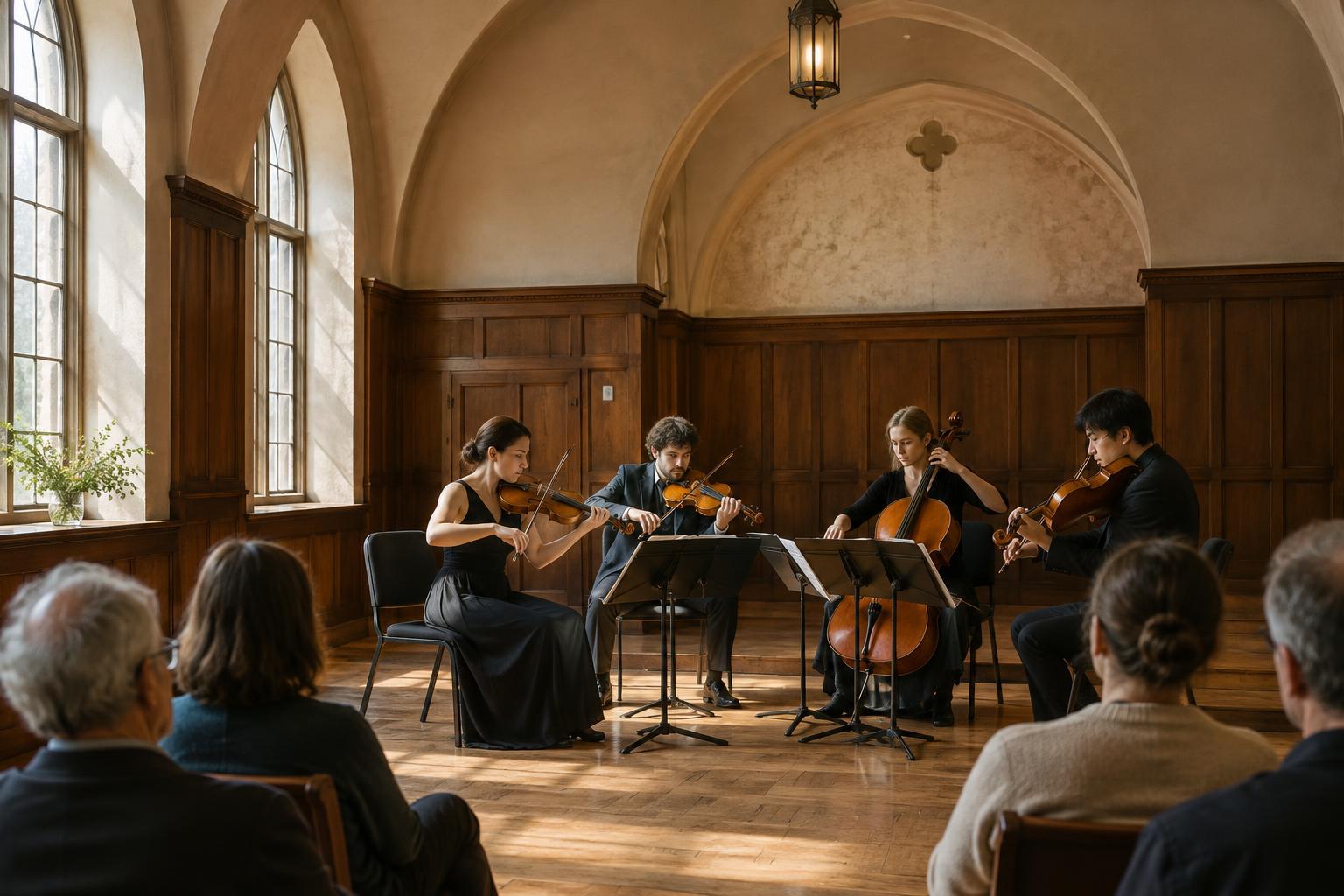
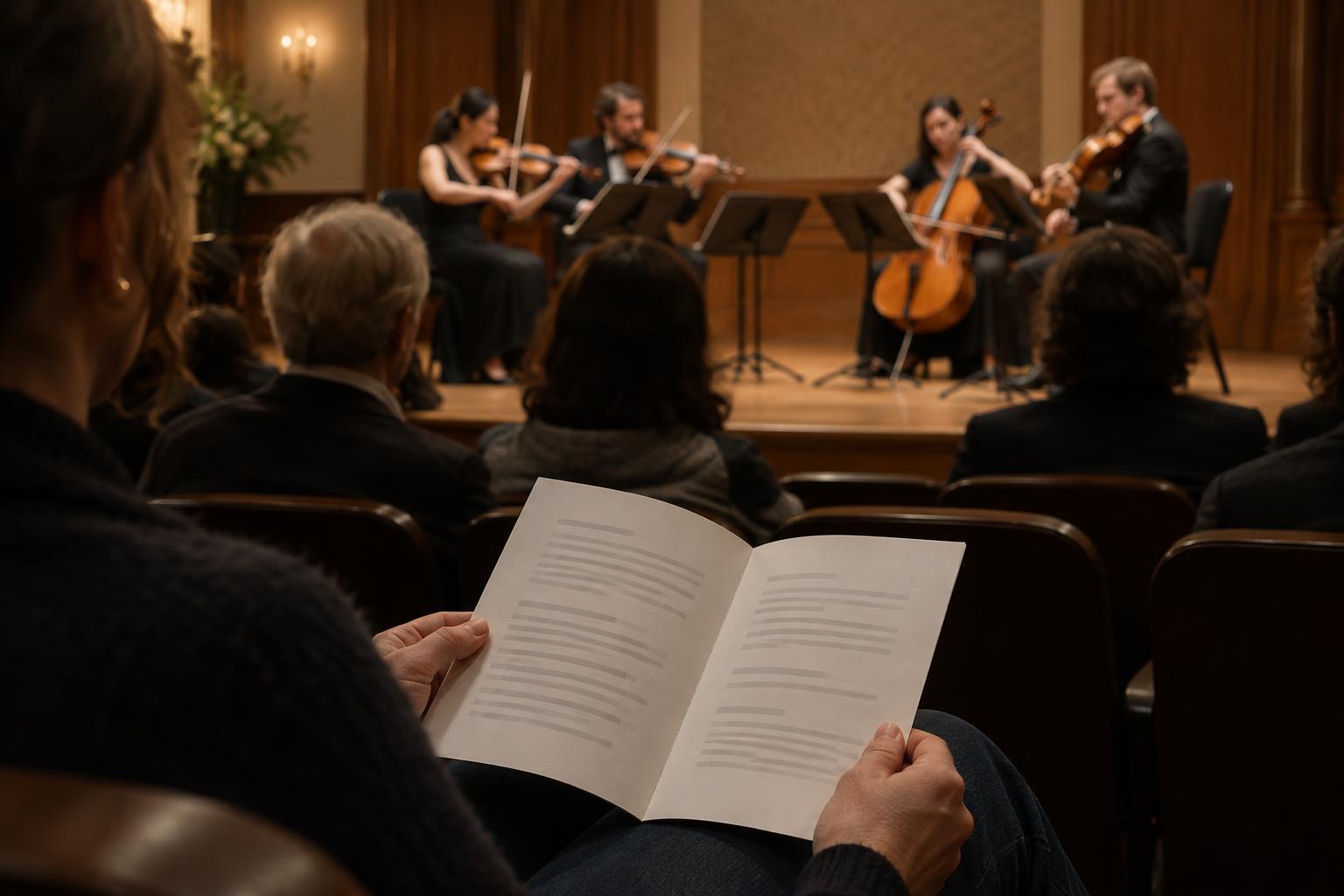
During a performance, brief glances at the page are usually more helpful than sustained reading. Try scanning a heading before a piece starts, then looking up as the players prepare. In chamber music, much of the experience comes from watching and hearing musicians respond to one another: a shared breath, a change in who carries the melody, or a gesture that passes around the group.
Be considerate with the booklet itself. Turn pages during applause or another natural break when possible, and move slowly if the paper is noisy. If the lights are low, avoid using a bright phone screen to read the program unless the venue explicitly provides for it. You can always leave an unread paragraph for later; you cannot replay a live phrase because you were searching for a date in a biography.
Let the program answer questions afterward
The booklet remains useful when the piece ends. If a passage caught your attention, the movement list may help you identify where it occurred. Performer biographies can clarify which musician played which instrument, while the repertoire list gives you names to remember if you want to hear a work again. Looking back after listening may make the notes more meaningful because you now have sounds of your own to connect with them.
A program can also help with small uncertainties about concert customs. If it lists several movements under one work, a pause may not mean the piece is over; applause habits vary by audience and occasion, so following the room is reasonable. Above all, use the printed page in service of listening. It is there when you need a reference, and it is just as useful closed on your lap.