The room is part of the performance
A string quartet can play the same piece in three places and give listeners three noticeably different experiences. In a recital hall, you might hear each instrument’s line with particular clarity. In a church, a final chord may linger after the players stop. In a living room, you may notice the small sounds of breathing, bowing and turning pages. None of these settings is inherently the right one for chamber music. Each draws your attention to something different.
A venue shapes sound through its size, surfaces and furnishings, as well as the distance between players and listeners. Hard surfaces tend to reflect sound, while curtains, carpets and occupied seats absorb some of it. The arrangement of the performers also matters: a piano lid, a wall behind the players or a wide space between instruments can change what reaches your seat. Knowing this can make an unfamiliar concert more interesting. Rather than judging the sound against a single ideal, listen for what the room reveals.
Recital halls: detail and a shared focus
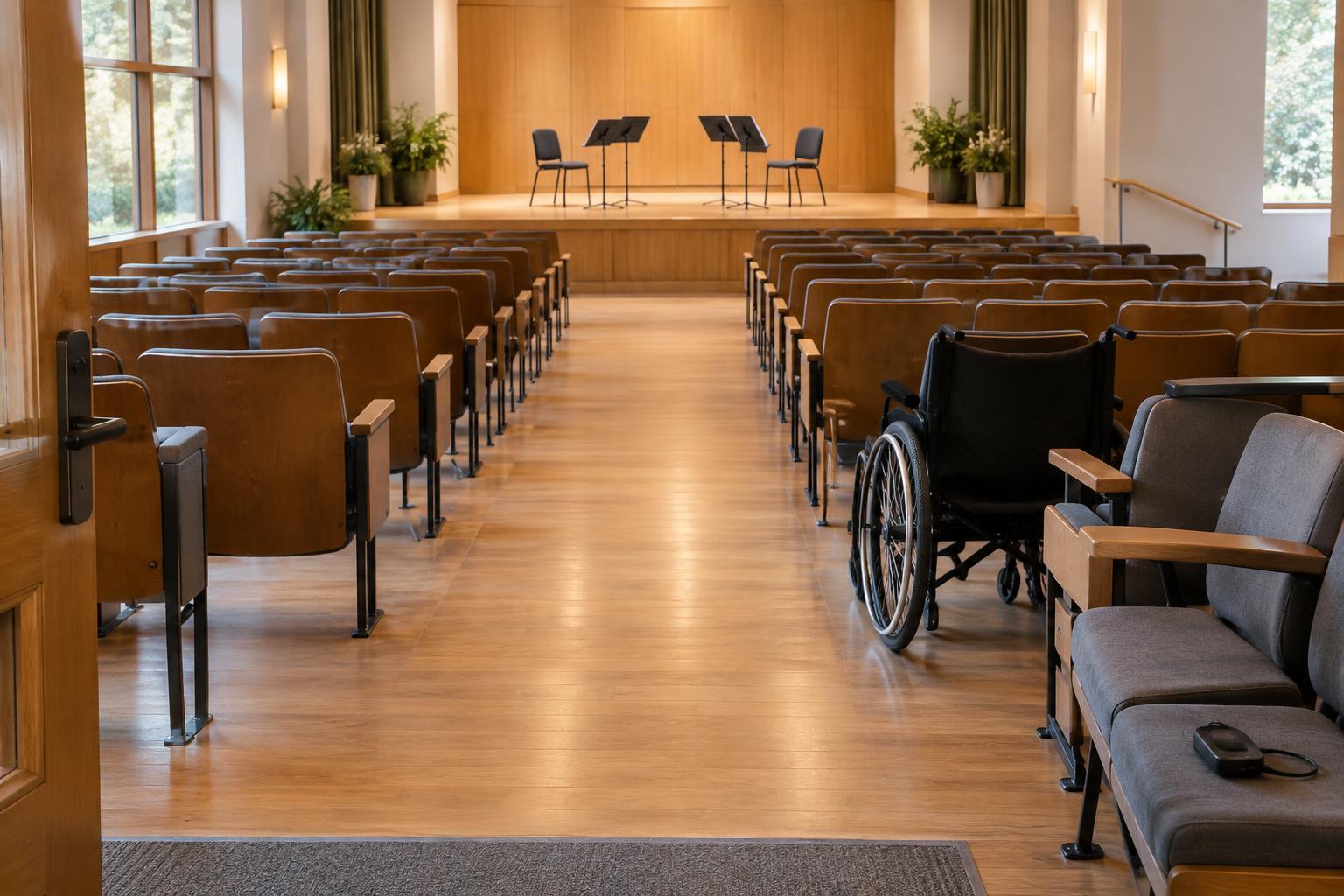
Recital halls are usually arranged to give an audience a clear view of a stage and a reasonably balanced sound. For chamber music, that can make it easier to follow musical exchanges: a violin begins a phrase, a cello answers and the piano joins beneath them. The experience still varies from seat to seat. Near the front, you may hear more of the instruments’ immediate sound; farther back, their sounds may blend more fully with the room.
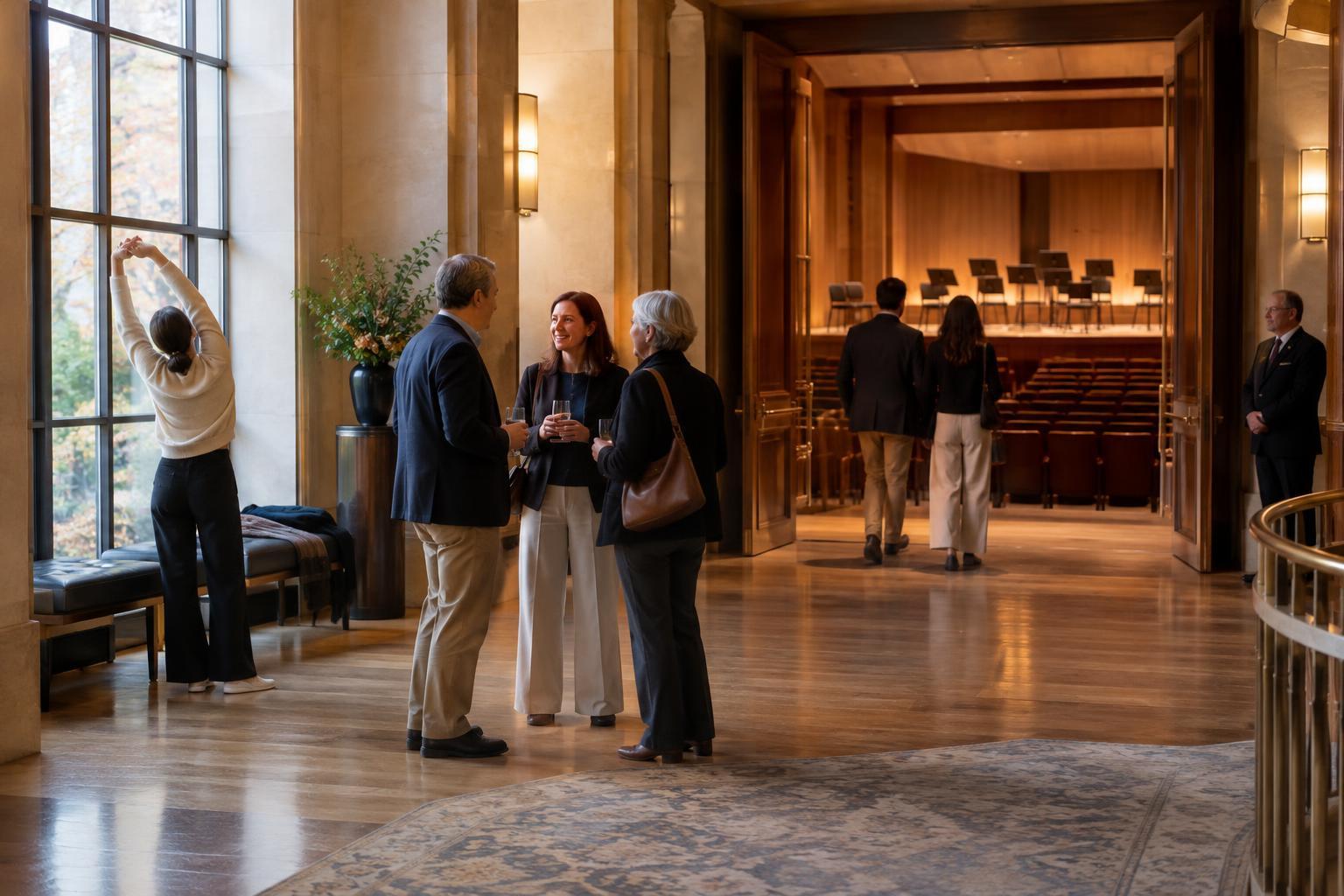
The familiar layout also provides useful cues for newcomers. House lights dim, performers enter and the audience settles into a collective quiet. If you are unsure when a piece has ended, look for the players to relax, lower their instruments or acknowledge the audience. Between movements, a brief pause does not always mean the entire work is over. There is no need to worry about getting every convention right; attentive listening matters more than perfectly timed applause.
Churches: space, resonance and patience
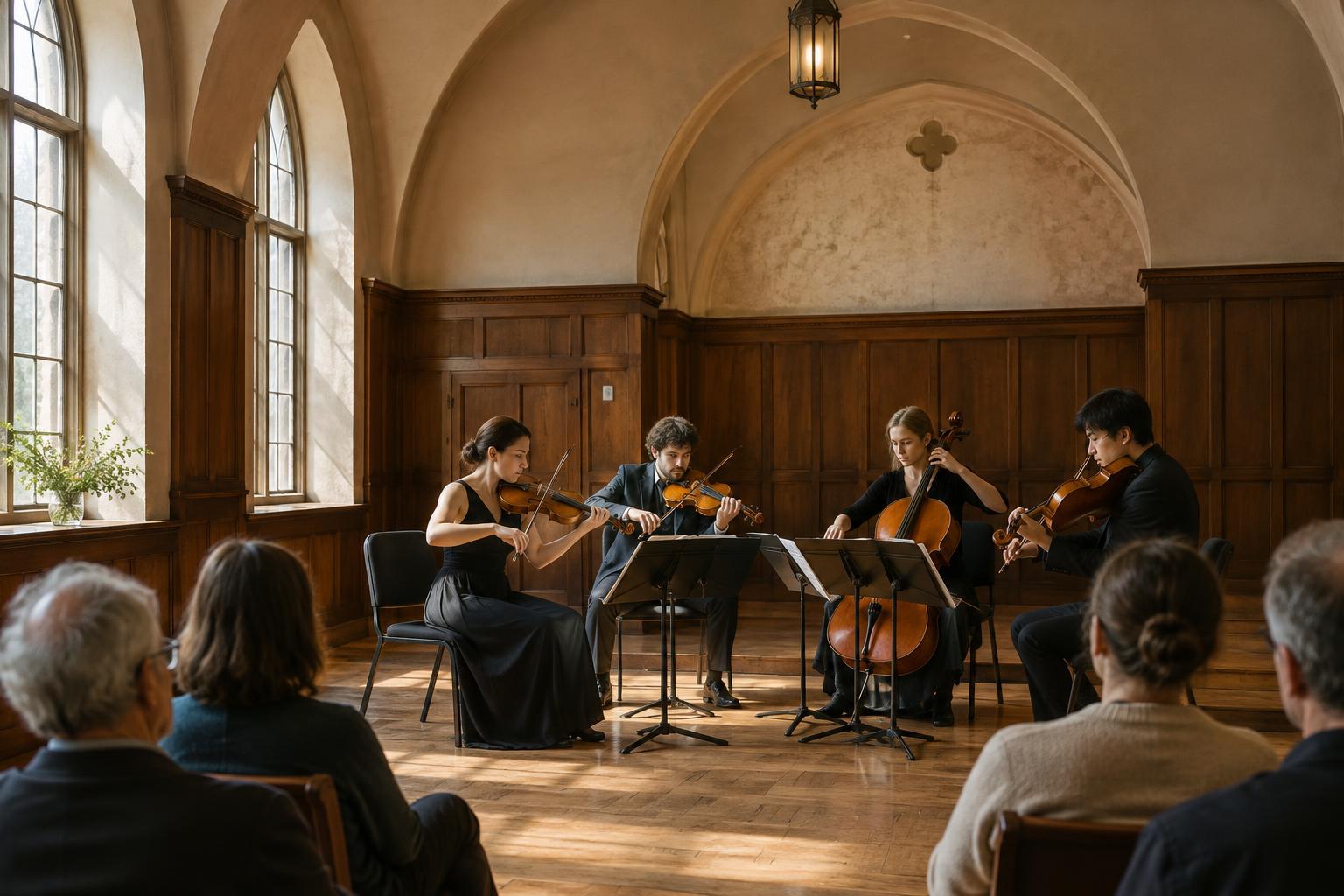
Many churches offer generous space and reflective surfaces. Their acoustics can give sustained notes and harmonies a sense of breadth, which some listeners find especially affecting in slower music. The same lingering sound can make fast passages or closely spaced notes less distinct, depending on the building and where you sit. Musicians may respond by leaving more space between phrases or adjusting how sharply they articulate notes.
A church concert may also ask for a little practical planning. Sightlines can be interrupted by pillars or other features, and seating may differ from a conventional hall. Temperature and accessibility can vary by building, so check the venue information in advance if either is important to you. Once seated, try listening to the room after a phrase ends. The fading sound is not separate from the performance; it is part of how the music reaches you.
House concerts: closeness and conversation
A house concert places players and listeners in a comparatively small space, sometimes only a few steps apart. At that distance, chamber music can feel less like a presentation from a stage and more like a conversation taking place in front of you. You may hear details that are less prominent in a larger room: the start of a note, a quiet accompaniment or the way players watch one another for a cue. The balance may also be unusual if you sit very close to one instrument.
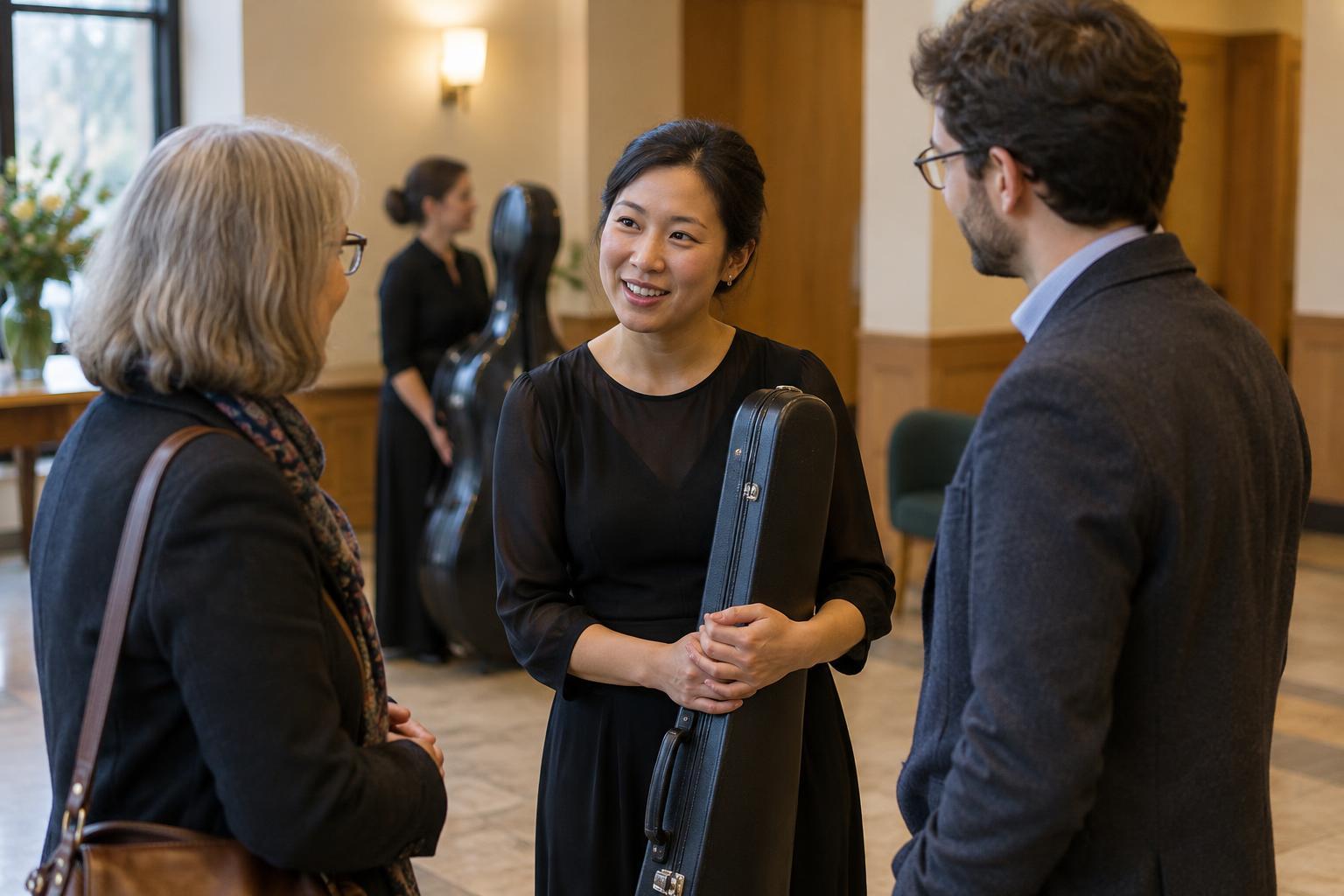
The social atmosphere often differs as well. Performers might introduce the music informally, and conversation may be possible before or after the playing. Still, a small room makes audience sounds noticeable. Silence your phone, avoid speaking during the music and follow the host’s guidance about seating, arrival and refreshments. If you need to leave early, choosing a place near an exit can help you do so with less disruption.
How to listen wherever you are
You do not need technical knowledge to notice a venue’s effect. At your next concert, choose one simple question: Can you hear the individual instruments clearly, or do they blend? What happens to a chord after the players release it? Does the distance from the performers change how you experience a quiet passage? These observations are not a test of the venue. They are ways to engage with a particular performance.
If you have a choice of seats, think about your priorities. A clear view can help you follow the players’ interactions; a more central seat may offer a different balance than one beside a wall or close to the stage. For any unfamiliar venue, check practical details such as entrances, seating arrangements and accessibility before you go. Then let the room be part of what you discover. Chamber music is an exchange among players, but the place where you hear it helps shape your side of that exchange.