You do not need the perfect question
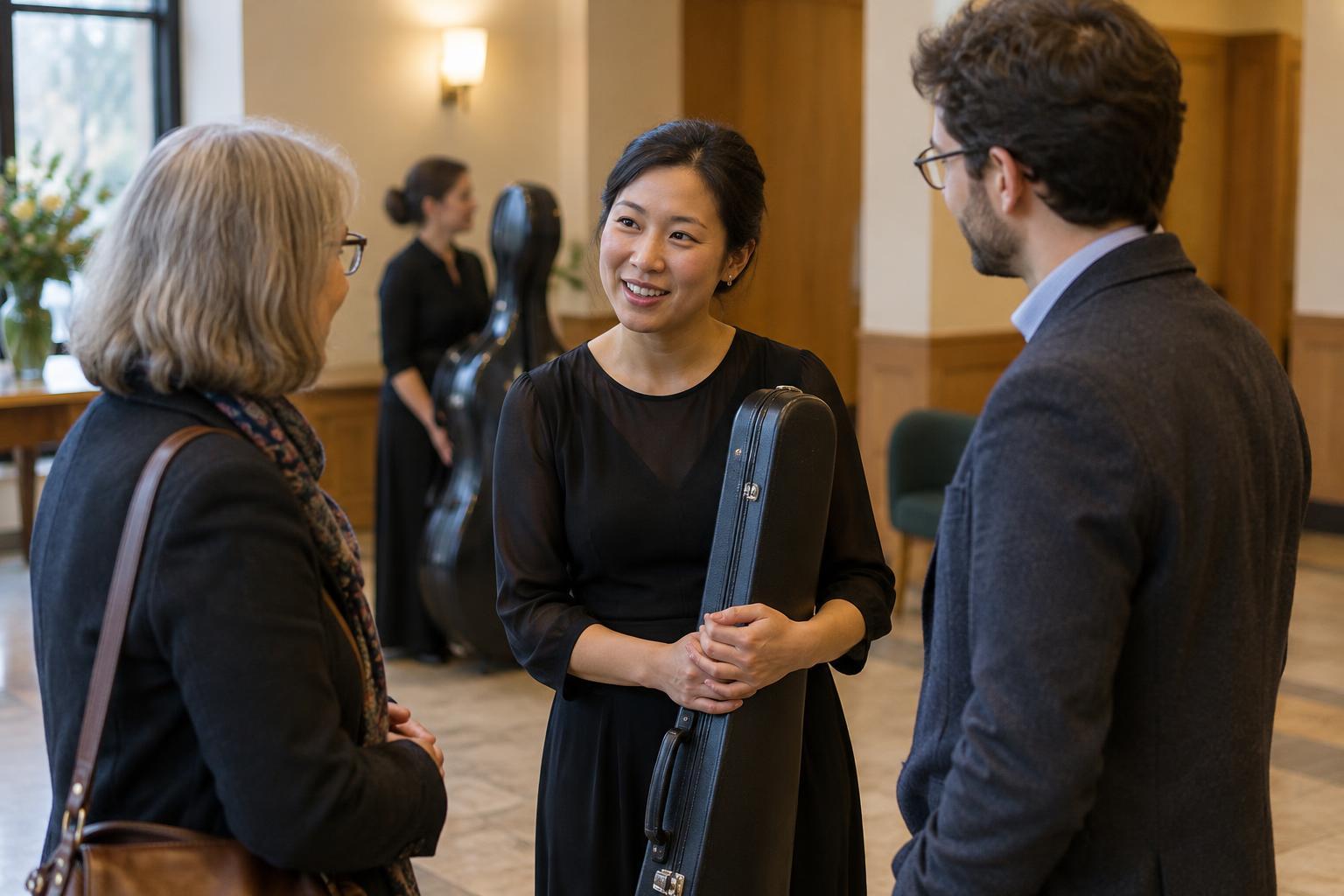
Meeting musicians after a concert can feel intimidating, especially if you are new to chamber music. The performers may have spent years learning the works you have just heard, while you may still be deciding how to describe them. That difference does not make your response less welcome. A brief, specific observation or a sincere question is often enough to begin a good conversation.
Start from something you noticed rather than trying to demonstrate expertise. You might say, “I enjoyed how the mood changed in the slow movement,” or “The conversation between the clarinet and strings caught my attention.” You do not have to identify a technique or name every instrument correctly. If you are unsure what produced a sound, asking about it gives the musician something concrete to answer.
Choose a question that invites an answer
Useful questions leave room for the musician’s own perspective. “What drew you to this piece?” and “How did the group decide on the pace of the opening?” invite different kinds of answers: one about repertoire, the other about interpretation. If a moment surprised you, describe it and ask how the players approached it. Musicians may welcome a chance to talk about a choice the audience could hear but not see being made.
Try to keep your first question reasonably narrow. “How do you make music together?” could lead in many directions; “When the melody passed from violin to cello, how did you coordinate that handoff?” offers a starting point. A question about practice, rehearsal, or the character of an instrument can work just as well as one about the piece. Listen to the answer before adding a follow-up. An exchange is usually more rewarding than a prepared list.
Read the room at a reception
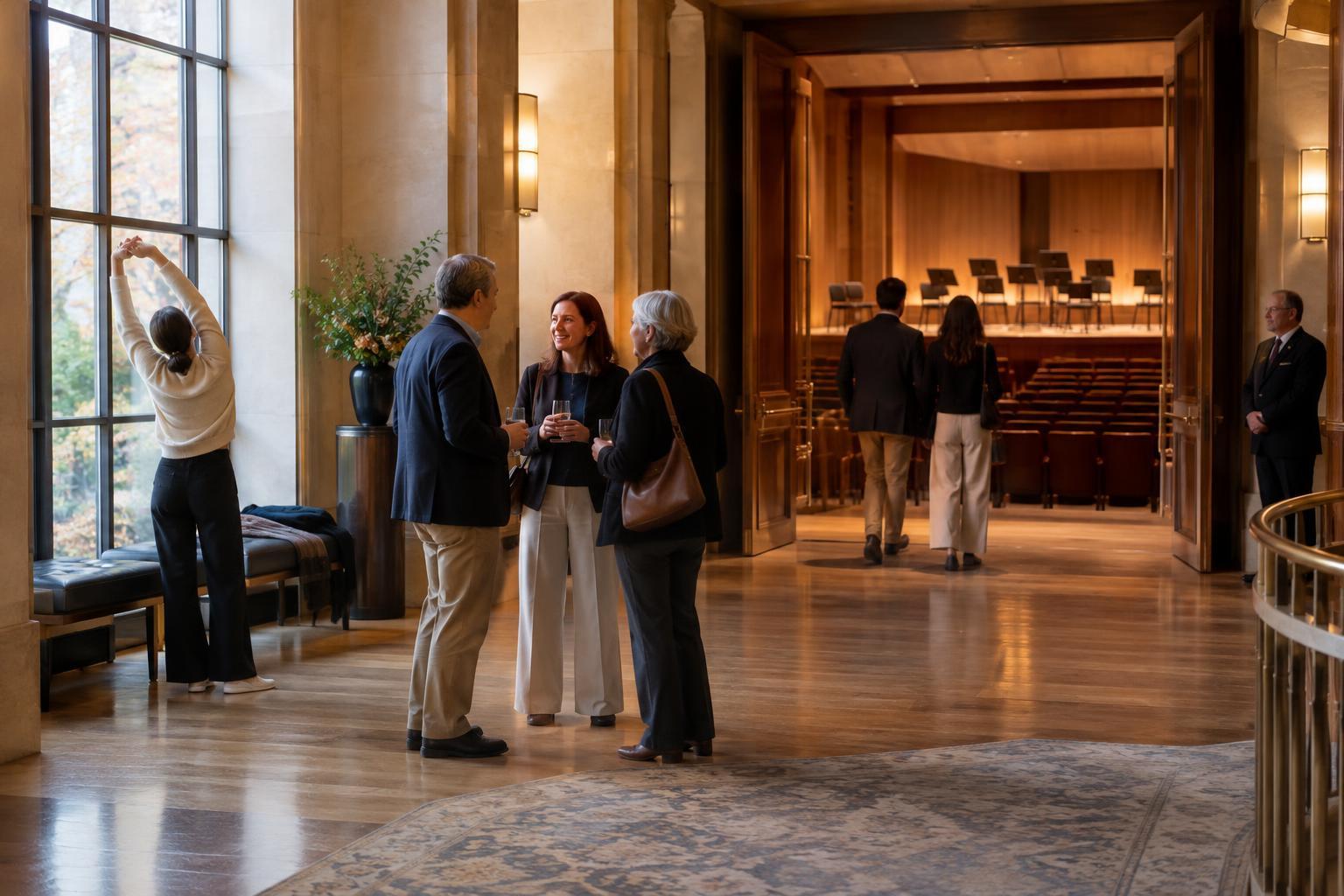
A reception is a social space, not a private lesson or an extension of the stage. Musicians may be greeting friends, speaking with several audience members, packing up, or preparing to leave. Wait for a natural opening, introduce yourself if it feels appropriate, and begin with one short comment or question. If others are waiting, let the conversation end after a response or two. You can say, “Thank you for taking a moment to talk with me,” and make room for the next person.
Compliments are easiest to receive when they are sincere and specific. “I loved the quiet ending” gives a performer more to respond to than a long comparison with other concerts. It is also fine simply to say that you enjoyed the performance. Avoid insisting that a musician explain what a work was “really” about, or asking them to judge a colleague’s playing. An interpretation can be personal, and not every musical decision has a single verbal explanation.
Make a public Q&A useful for everyone
In a Q&A, the question is shared with the whole room. Briefly identify the moment or subject you mean, then ask one question. For example: “In the final movement, the players seemed to trade short phrases. How did you rehearse those exchanges?” This gives the musician a clear route into an answer and helps listeners who may not know the score.
Keep a personal account short enough that the question remains clear. If you want to discuss a detailed reaction to the performance, a reception may be a better setting, if one is offered. Be mindful of the moderator’s role and the time available; a hand raised does not guarantee every question can be taken. If someone else asks what you had in mind, you can listen for a new angle rather than repeat it.
Let the conversation stay human
Musicians are people with different preferences for talking after a performance. One may enjoy discussing bowing or breath, while another may prefer to talk about the experience of playing with an ensemble. Follow the answer you receive instead of pressing for technical detail. If a term is unfamiliar, it is reasonable to ask what it means. Curiosity is more useful than pretending to understand.
A conversation may last thirty seconds or several minutes; neither length determines its value. Thank the musician, respect any stated boundaries about photos or recordings, and allow them to move on. You can then carry something from the exchange into your next listening experience: a passage to notice, a question about how players communicate, or simply the reminder that chamber music is made through choices shared among people.