Why concerts have an intermission
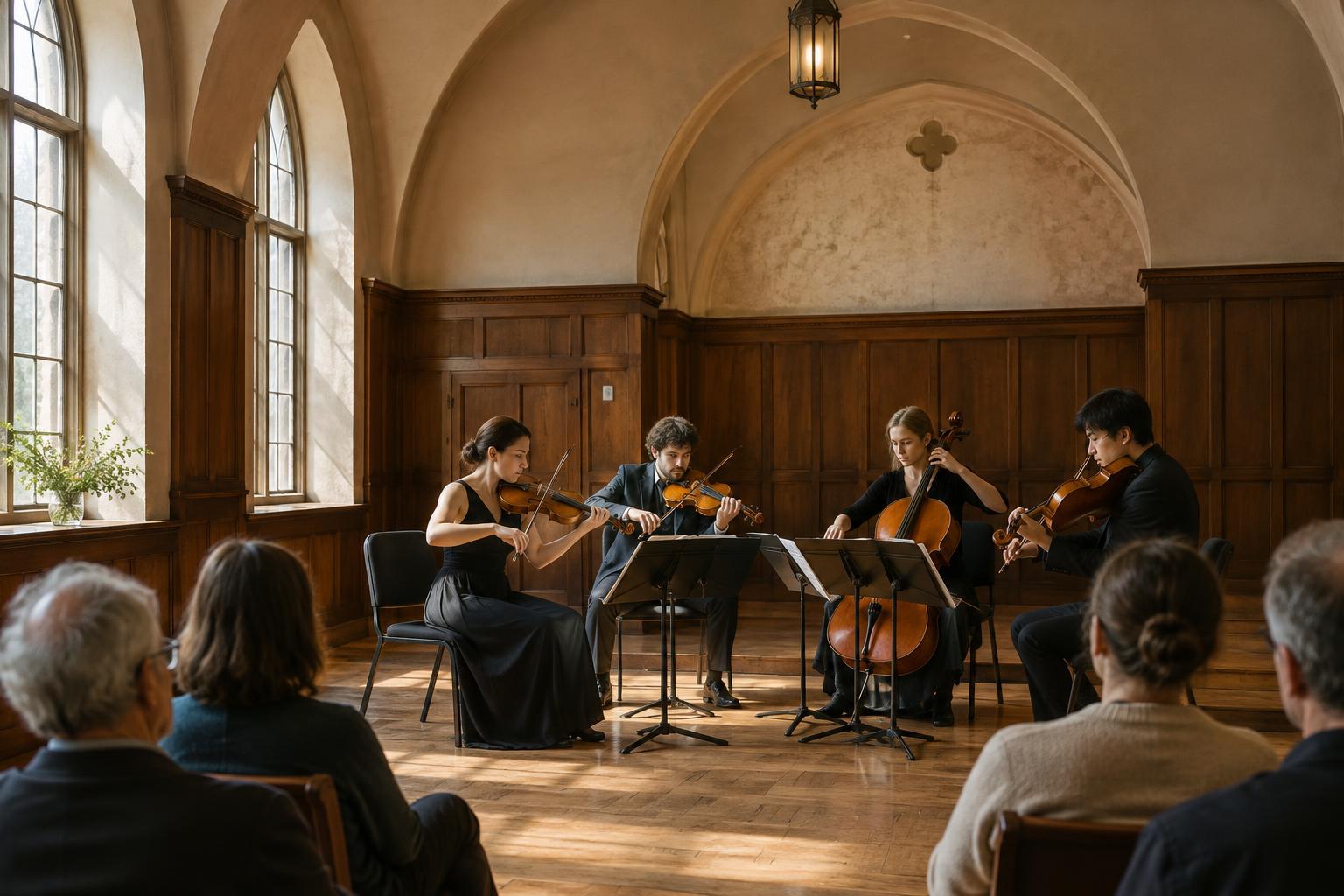
An intermission is a planned break between parts of a concert. It gives listeners time to move around, use the restroom, get a drink, or look at the program. It also gives performers and stage staff time to rest, adjust the stage, or prepare for a different group of musicians. Not every chamber music concert has one: a short program may run straight through, while a longer one may include a single break.
The printed program or a pre-concert announcement may indicate whether there will be an intermission and approximately how long it will last. Treat that duration as a guide rather than a promise. If you need to leave promptly at the end of the concert, an intermission can also be a good moment to check your belongings and plan your route out without disturbing the final performance.
What happens in the lobby
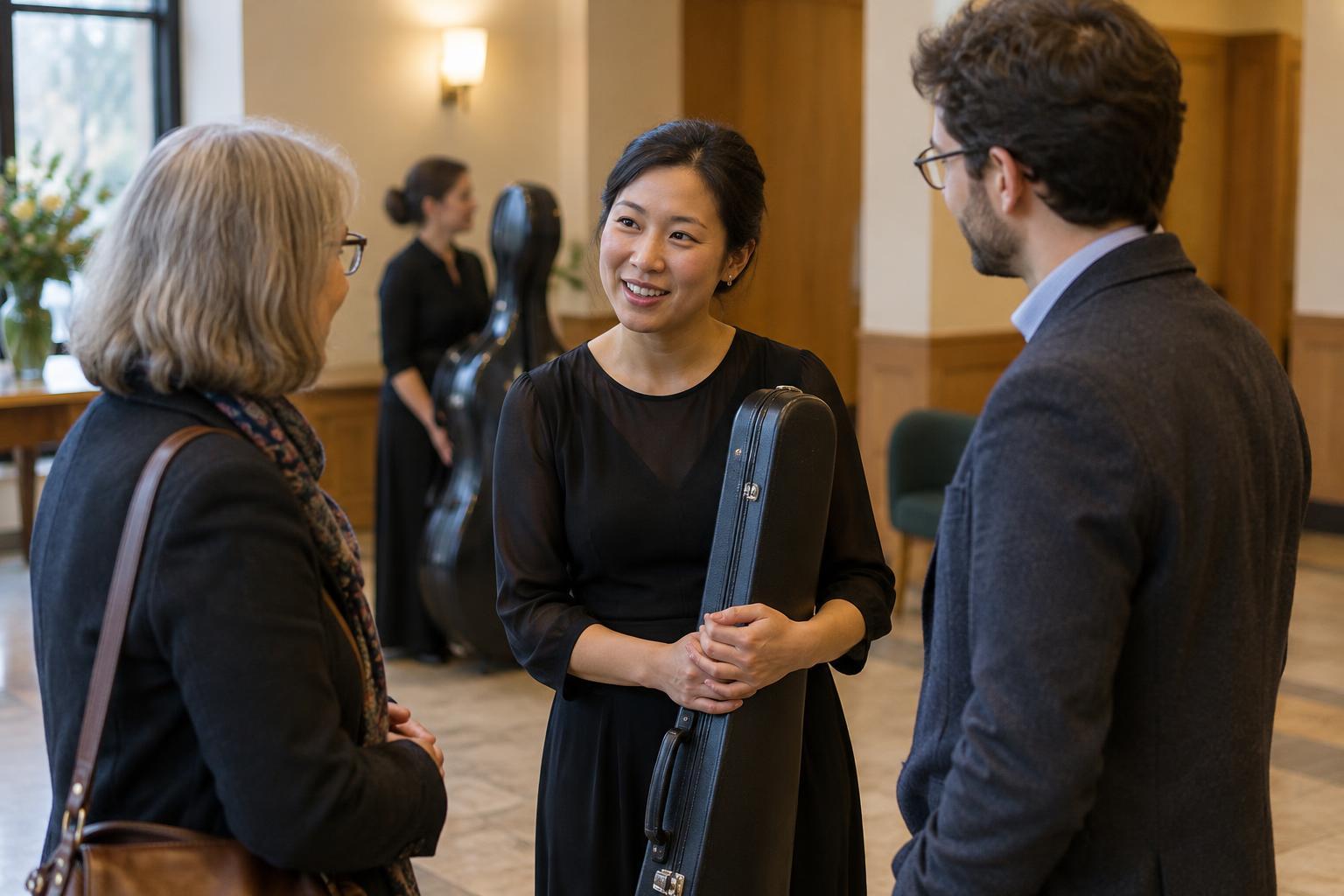
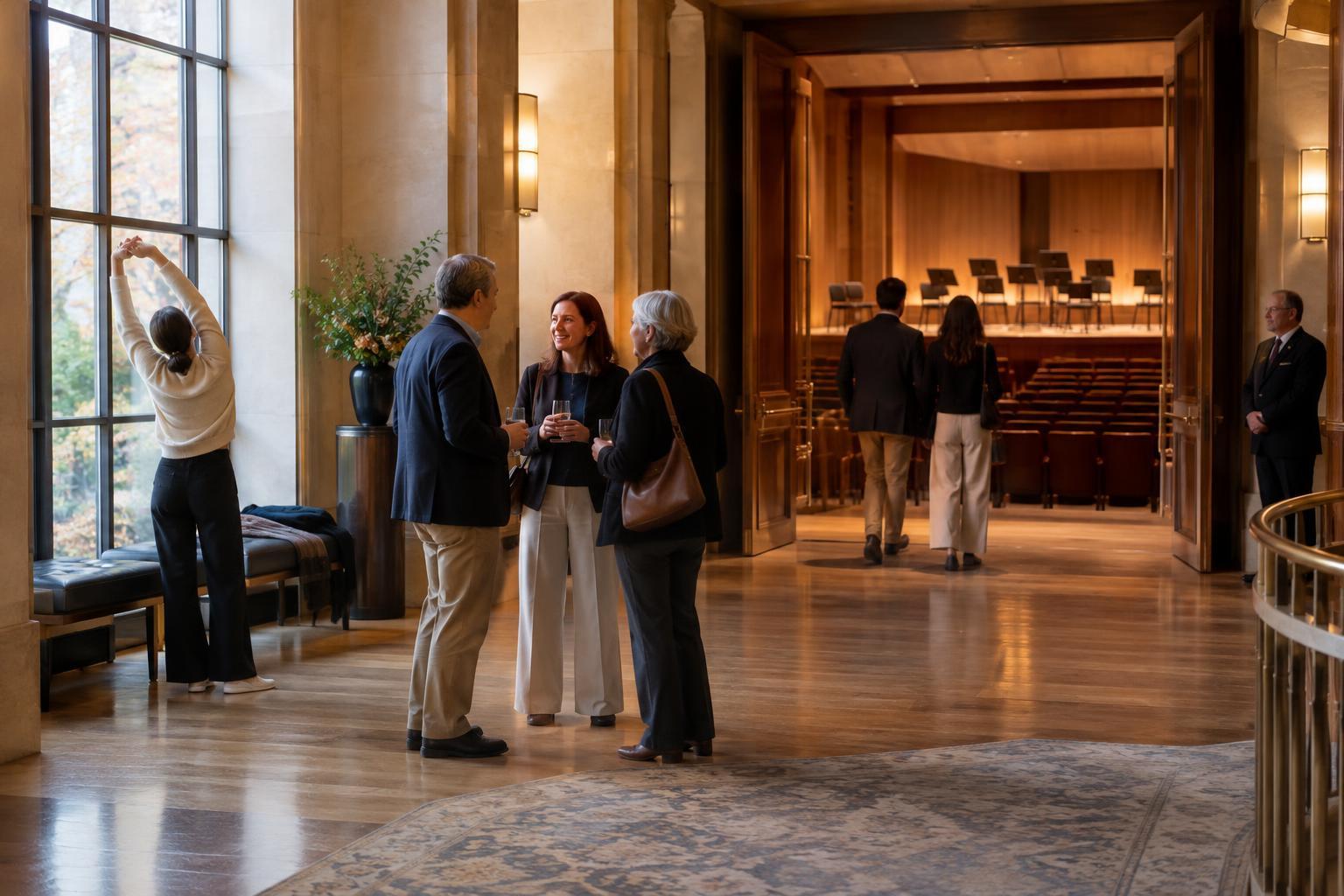
The mood usually shifts as soon as the audience leaves the hall. People may compare impressions of the first half, read program notes, visit a refreshment counter, or simply stand somewhere quiet. You do not need to know what to say about the music. “I liked the way the instruments answered each other” is as welcome a starting point for conversation as a discussion of the score, and listening quietly is fine too.
Lobby space can be busy, especially near restrooms and service counters. If you want something to drink, leave enough time to finish it before returning; many venues do not allow food or beverages at seats. This is also a useful time to check that your phone is silent. If you are unsure where to go, an usher can often point you toward facilities or explain the venue’s return-to-seat procedure.
How to know when to go back
Venues signal the end of intermission in different ways. You might hear a chime, see lobby lights change, hear an announcement, or notice ushers inviting people inside. Sometimes the clearest sign is a steady flow of listeners returning to the hall. If you are away from the lobby, keep an eye on the time and head back a little early rather than waiting for a final call you may not hear.
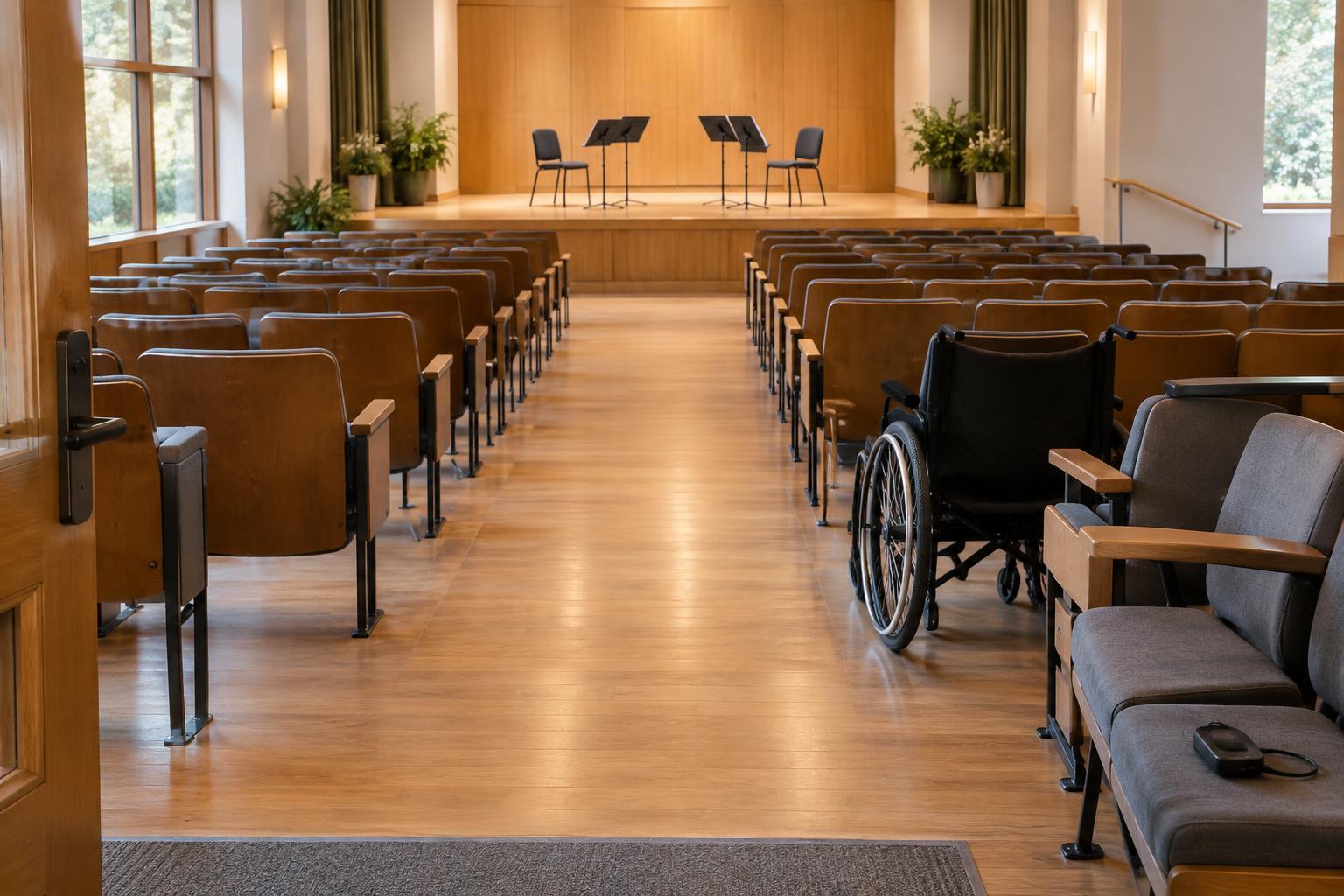
Once inside, make your way to your seat while the house lights are still up. Have your ticket ready in case staff need to check your section again, and let people pass if you are standing in an aisle. Settle your coat and program before the musicians enter. The room may become quiet gradually, but a dimming of the lights or the performers’ return is a good cue to stop talking and put your phone away.
If you miss the start of the second half
Do not rush through the doors if the music has begun. Many halls pause entry until a suitable break, such as the end of a movement or piece. In chamber music, even a door opening or footsteps in an aisle can be noticeable during a soft passage. Ask an usher where to wait and follow their direction; depending on the venue, they may offer a temporary seat or guide you to your own at the next opportunity.
If there is no usher nearby, wait outside the hall rather than guessing whether a quiet moment means the work has ended. A brief silence can be part of the music. You can check the program to see what is being played, then listen for applause or another clear transition. Missing a few minutes is disappointing, but entering calmly at an appropriate moment is kinder to the musicians and the listeners around you.
Make the break work for you
Intermission does not have to be a social test or a race through a checklist. If you enjoyed the first half, you might revisit a program note to learn which piece comes next. If you found the music demanding, a short walk and a change of scene may help you listen with fresh attention. People experience concerts differently, and there is no required way to spend the break.
The simplest plan is to note where you are seated, take what you need, and return when the venue signals that the concert is resuming. Allow extra time if stairs, crowds, or a longer route make moving through the building slower for you. With those small practical details handled, you can let intermission be what it is meant to be: a pause before everyone gathers to listen again.