Mark the decision, not the whole discussion
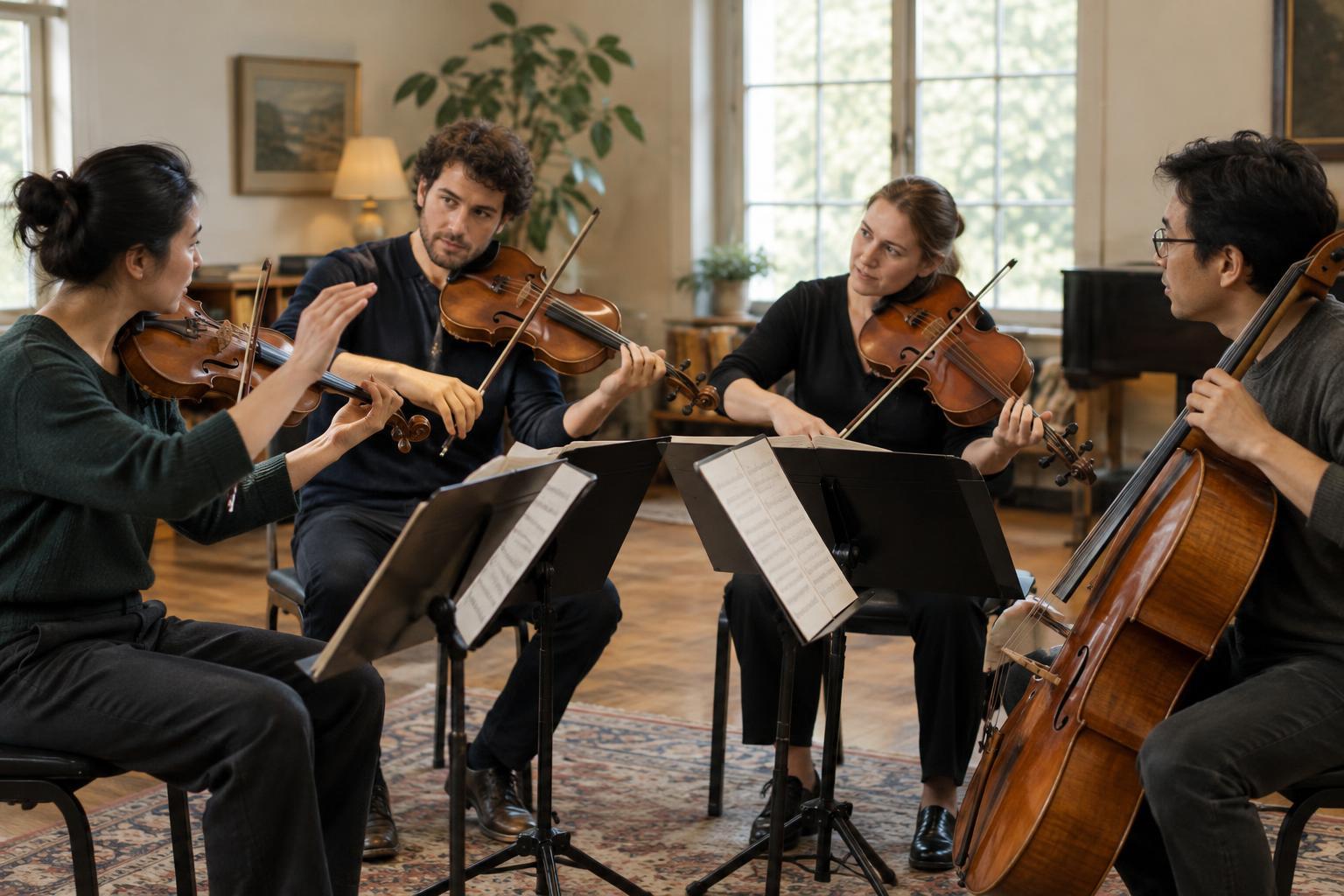
In a chamber rehearsal, a few minutes of conversation may lead to one practical decision: a passage will be lighter, an entrance will wait for a breath, or everyone will release together. Your part needs a reminder of the result, not a transcript of how the group arrived there. Write something brief enough to understand while playing, such as “watch cello,” “shorter,” or “release together.”
Before adding a mark, ask what problem it will solve next time. If the printed score already makes the instruction clear and you are unlikely to forget it, you may not need another note. If the group has agreed on something that differs from your first instinct, mark it immediately. That distinction keeps your part readable and gives the markings you do make a clear purpose.
Make entrances and handoffs easy to find
Long rests, repeated patterns and quick changes of texture can make it hard to rejoin an ensemble confidently. Circle a rehearsal letter or number if it helps you locate the passage. You can also mark a useful cue: the instrument or musical gesture you expect to hear just before your entrance. “Viola rising line” is often more helpful than a mark that only says “come in,” because it tells you what to listen for.
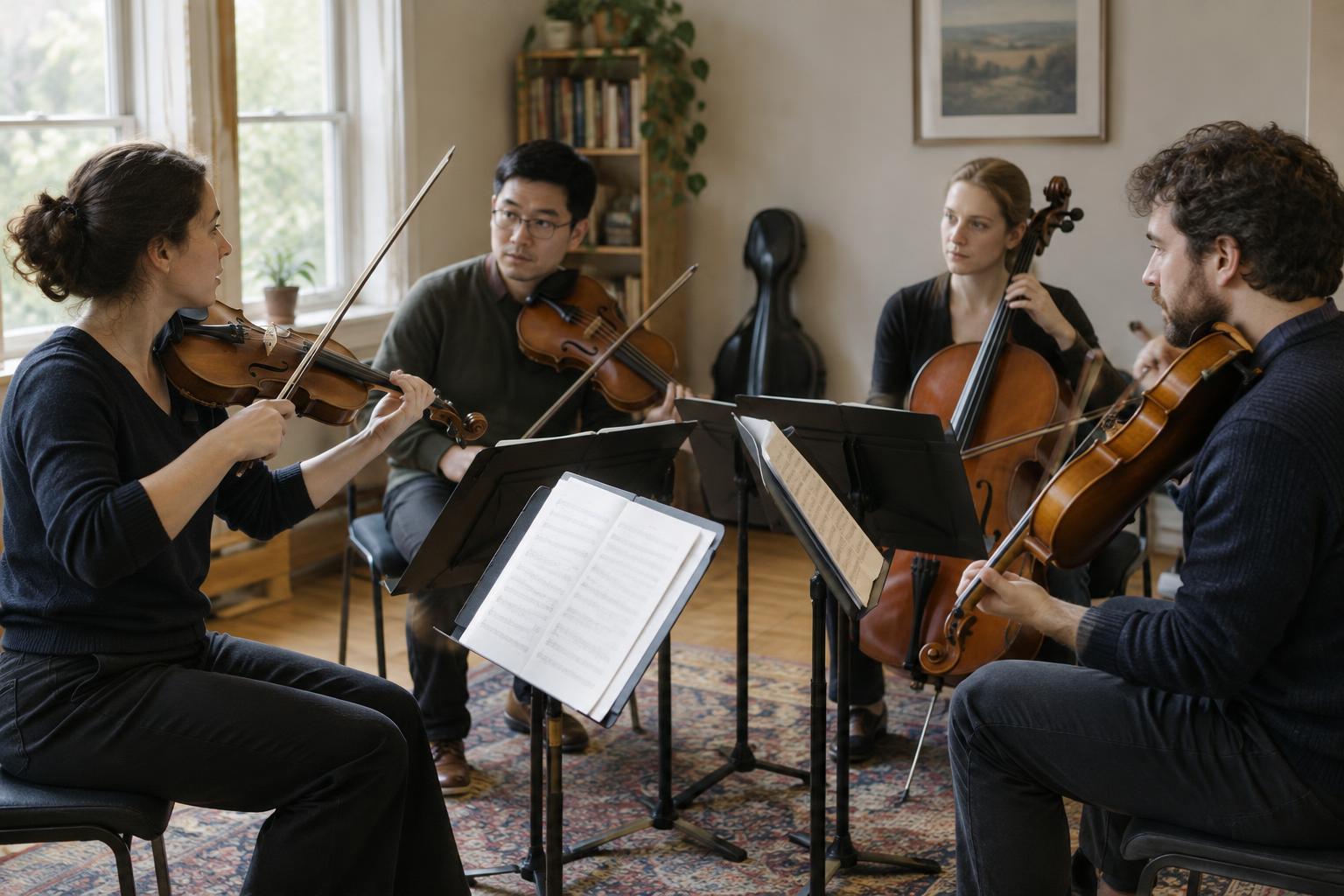
Mark handoffs when one player finishes a phrase and another takes it over. A small arrow or a note such as “to flute” can prompt you to shape your ending in response to the next player. For a shared cutoff, identify the person whose motion or breath will guide it. These reminders are especially valuable when you have few notes of your own: they keep your attention on the music happening around you.
Use a small, consistent vocabulary
A marking has to make sense at a glance. Choose short words and symbols that you can recognize without decoding them in performance. You might use an eye symbol to mean “look up,” a breath mark for a coordinated start, and a short written cue when a symbol would be ambiguous. Whatever system you choose, use it consistently within the part.
Be careful with vague instructions such as “more” or “careful.” More sound, more movement or more intensity? Careful about rhythm, tuning or balance? Replace a broad warning with the action you want to take: “listen to bass line,” “start softer,” or “leave space after chord.” If a passage remains difficult, a specific reminder gives you something to try; a dramatic warning on the page may only add pressure.
Keep the page legible and the markings reversible
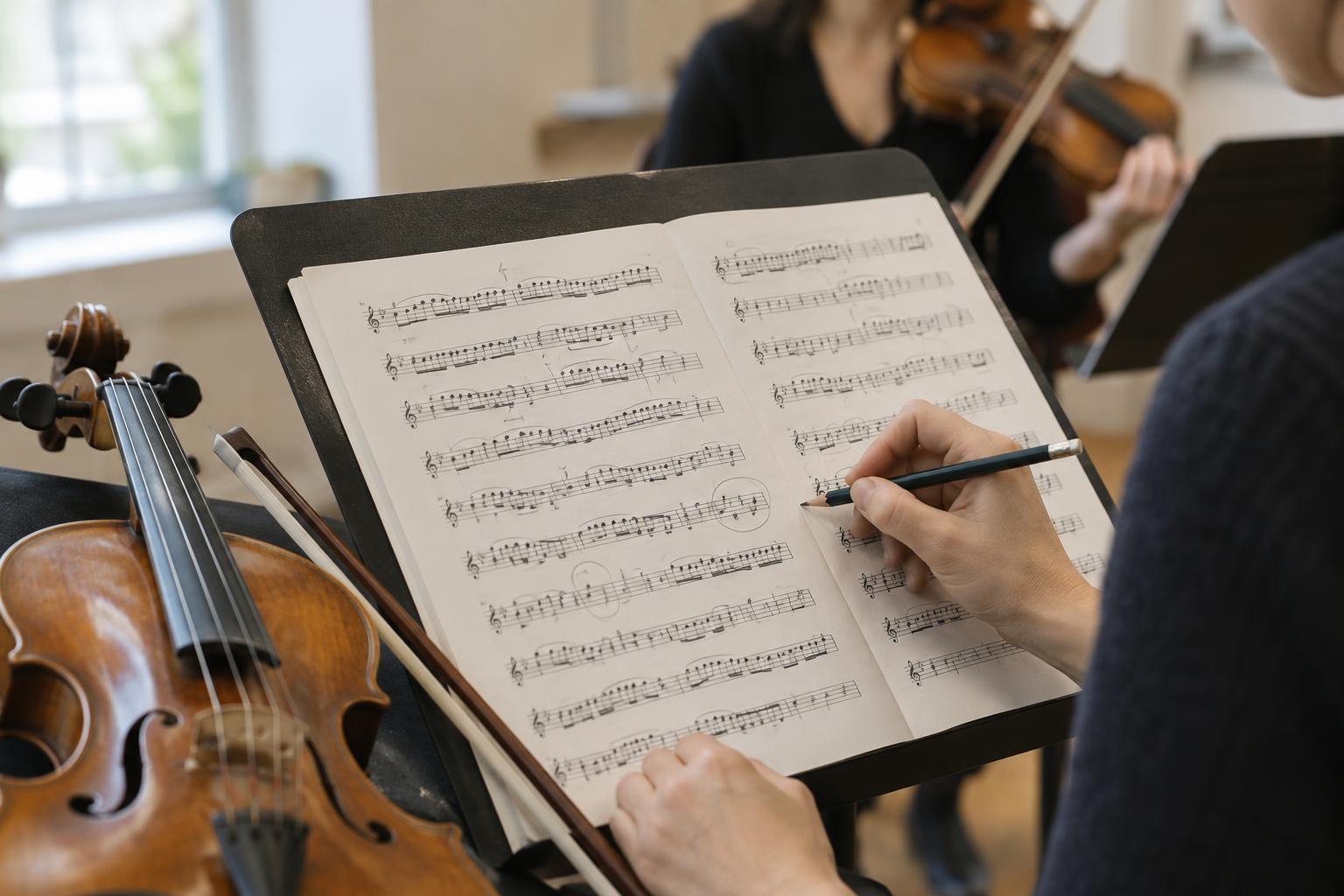
Pencil is useful for a paper part because ensemble choices may change. Write near the relevant notes without covering pitches, rhythms, dynamics or other printed information. If the page is crowded, place a brief note in the margin with a clear pointer to the measure it concerns. Avoid filling every empty space: you need to see the music first.
If you are using a borrowed part, follow the owner’s marking rules. With a digital part, check that your annotations are saved in the copy you will use at the next rehearsal. Distinguish personal reminders from group decisions if that helps you review them later. For example, “watch clarinet” may be your own listening prompt, while an agreed change in articulation needs to remain clear to everyone who relies on your part.
Review your marks between rehearsals
After rehearsal, take a few minutes to read through new markings while the conversation is still familiar. Expand any shorthand you no longer understand. If two instructions conflict, ask the group to clarify rather than guessing which one stands. You can also use your notes to plan practice: an entrance cue may call for listening through the preceding measures, while a balance note may call for playing a passage at different dynamic levels.
As the piece becomes familiar, erase marks that no longer help or that refer to decisions the group has replaced. Keep the cues you still need under performance conditions, when there is less time to think. The goal is not a perfectly clean page or a densely annotated one. It is a part that lets you find your place, remember shared choices and stay available to the other players.