What slow practice can reveal
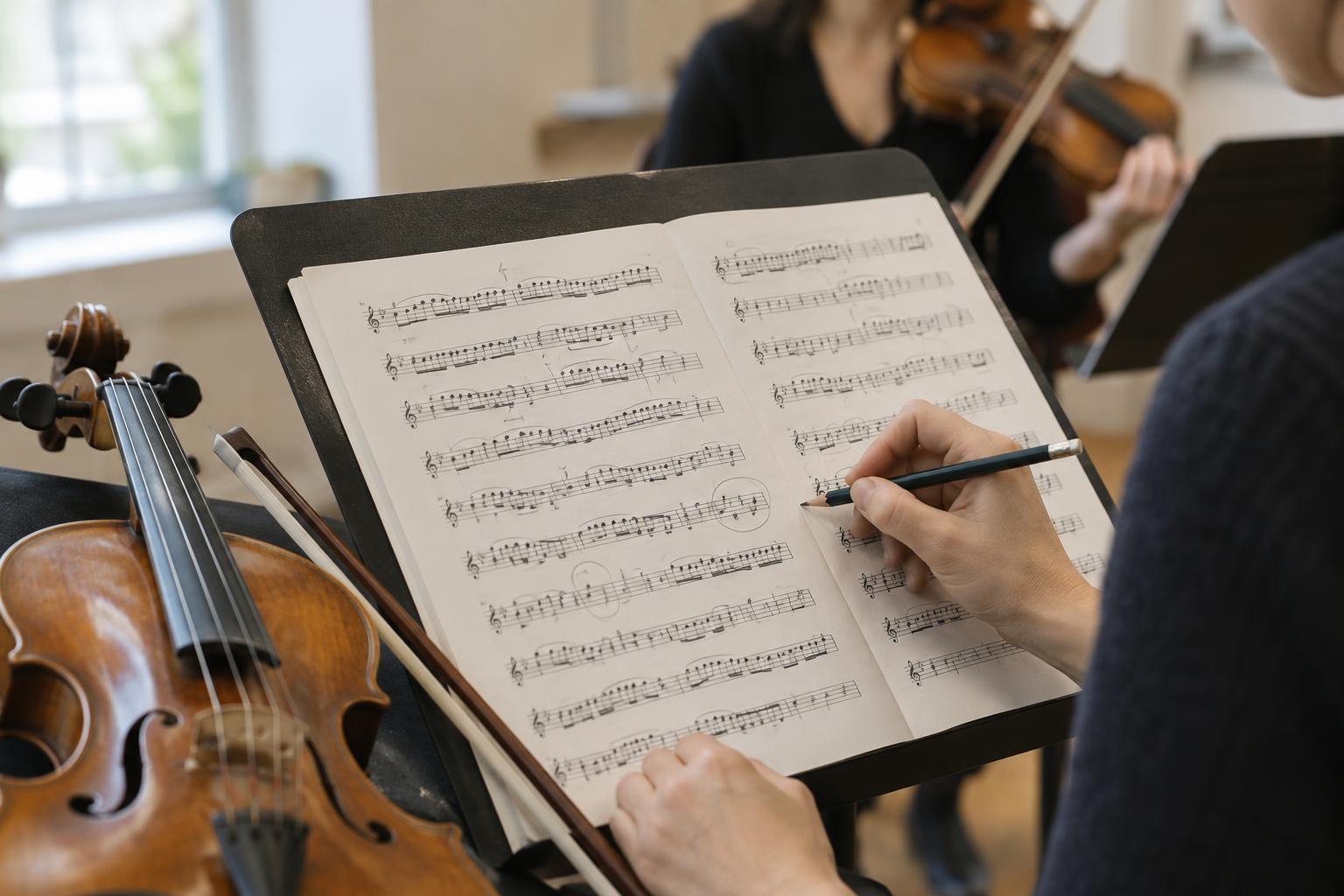
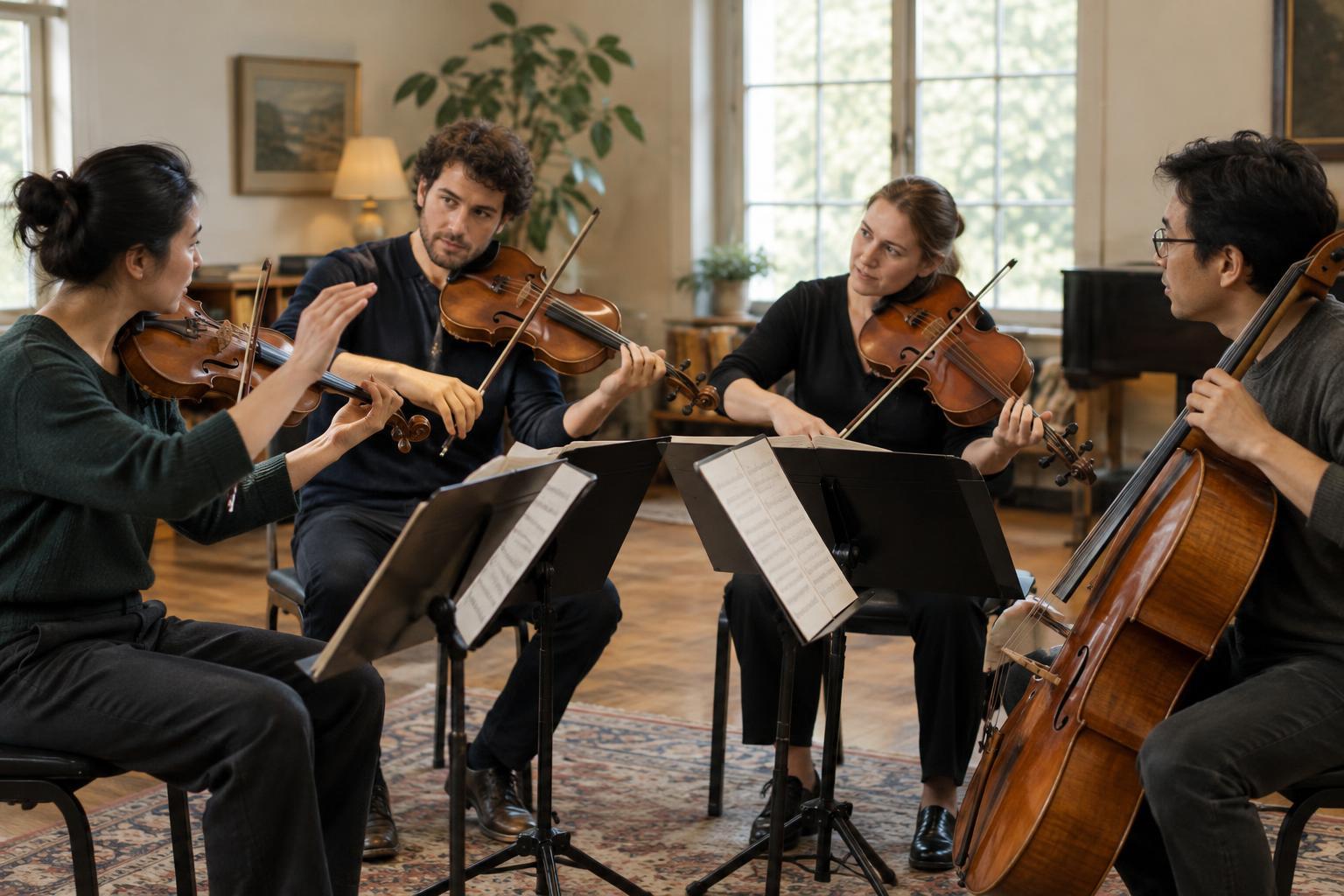
A passage can feel secure in an individual practice room and still become unsettled when several players put it together. An entrance may depend on a gesture that nobody has agreed to give. An accompaniment may rush toward a difficult note while the melody needs room to finish its phrase. At full speed, these problems can pass too quickly to identify. Slowing down gives the group time to hear the relationship between parts, not just each player’s own notes.
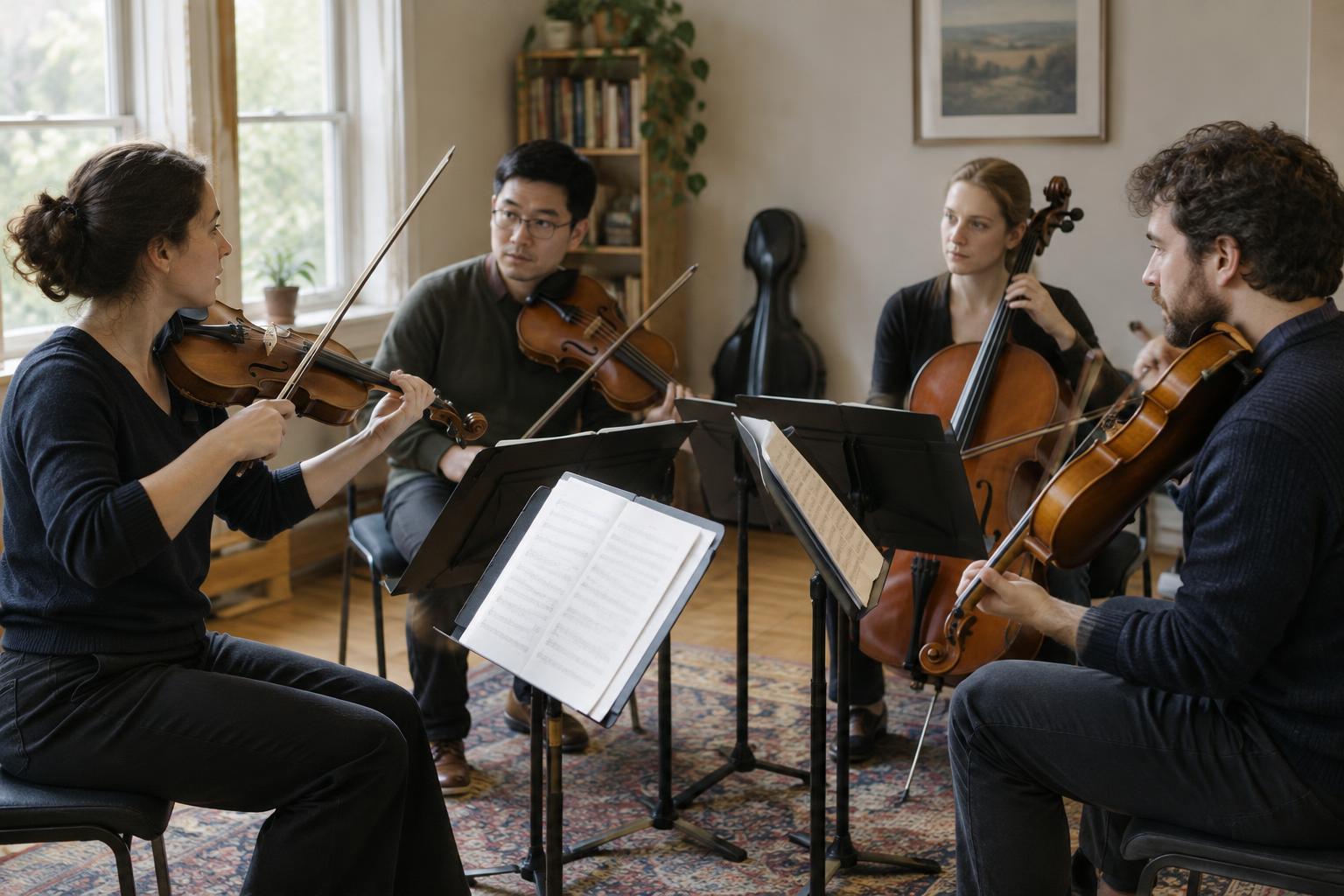
Slow ensemble practice is most useful when the group can name a question it wants to answer. Where does the beat feel unclear? Which instrument carries the moving line? Are releases happening together? Is a change of harmony being heard before the next entrance? A slower tempo lets players test their answers and make a shared decision. It is less useful when it becomes a routine replay of a passage without a listening goal.
Choose a tempo that preserves the music
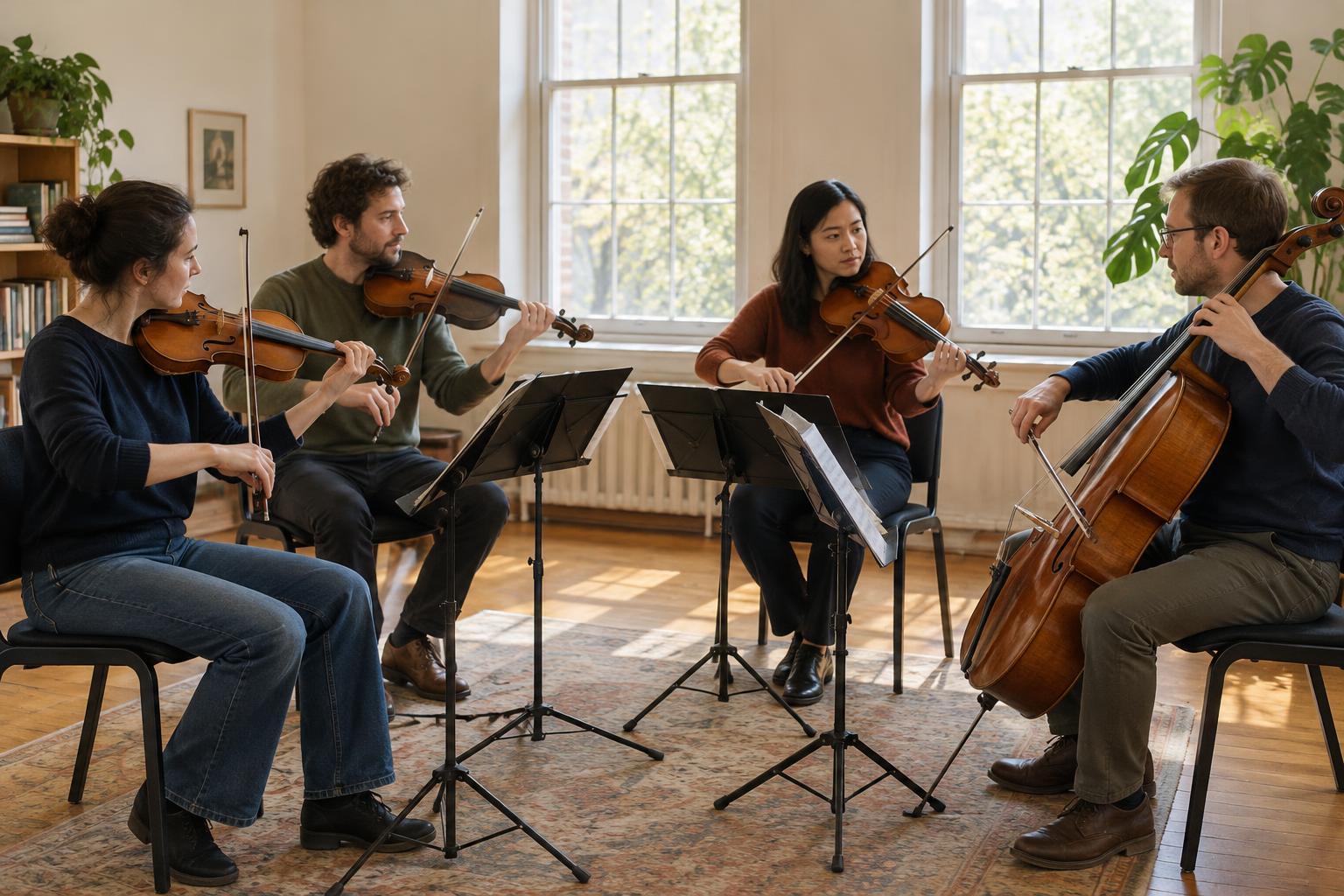
Start slowly enough that everyone can notice the detail under discussion, but not so slowly that the phrase loses its direction. If players cannot feel how one beat leads to the next, try a slightly quicker tempo or count in larger units. A string quartet might feel a lyrical passage in half-bar gestures even while examining individual eighth notes. A wind group may need to keep the natural length of a breath in mind rather than stretching every note equally.
Before playing, agree on the pulse and the point of the exercise. One pass might focus on matching the ends of notes; another might focus on the distance between a cue and an entrance. It can help to rehearse a short span that includes a bar before and after the trouble spot. That context shows whether the difficulty comes from the passage itself or from how the group arrives there.
Listen across the ensemble
At a reduced tempo, resist the temptation to treat rehearsal as simultaneous solo practice. Players can look up to see who initiates a phrase, listen for the bass line that anchors a harmonic change, and notice whether a quiet inner part sets the rhythm. If an attack is uneven, decide whether the group is following a visible cue, a shared breath, or a sound already in motion. The answer may differ from one entrance to the next.
Slow playing can also expose differences in articulation and note length. Two players may begin together but separate because one releases early or places a short note differently. Try singing or speaking the rhythm together, then return to the instruments and listen for the same shape. When tuning a sustained chord, allow enough time to hear how the notes relate, but remember that balance and intonation may change when the passage moves faster. The slow version is a way to investigate, not necessarily the final sound.
Build speed without losing the agreement
Once a passage works slowly, increase the tempo in manageable steps. Keep the same listening goal at each step: the cue should remain clear, the releases should still align, and the phrase should still have a destination. If one of those disappears, return to a tempo where the group can recover it. This is more informative than repeatedly attempting performance speed and hoping the passage settles.
Not every repetition needs to be a full run. A group can alternate a short slow pass with a faster one, then discuss what changed. Players may discover that a bowing, breath, fingering, or hand movement that felt comfortable slowly does not function at the intended tempo. Make the necessary adjustment and test it again. For a complex transition, practice moving into and out of it; an isolated bar may succeed while its connection to the next phrase remains uncertain.
A metronome can provide a common reference, especially when the group tends to accelerate through a difficult figure. It should not replace listening to one another. If the music calls for flexibility, first establish where the shared pulse lies and where the group intends to stretch or release it. Then rehearse that flexibility deliberately rather than treating every variation as a mistake.
Know when to return to a complete performance
Slow practice has done its job when the players understand what to do and can carry that understanding into a natural tempo. Give the passage a full-speed test without stopping, ideally within a longer stretch of music. This checks whether the solution holds while attention moves on to the next phrase. If it does not, identify the specific moment that changed instead of slowing the entire section again.
Finish by playing for the musical effect you want an audience to hear. Precision matters, but chamber music also depends on momentum, character, and a sense of conversation. Slow rehearsal helps a group agree on the details; playing at tempo lets those details become part of a living phrase.