Find out what makes the boundary difficult
In chamber music, a transition is more than the last bar of one section followed by the first bar of another. It may ask the group to change tempo, character, articulation, texture, or who leads, sometimes all at once. A passage that works in isolation can still feel uncertain when everyone arrives at it from the preceding music.
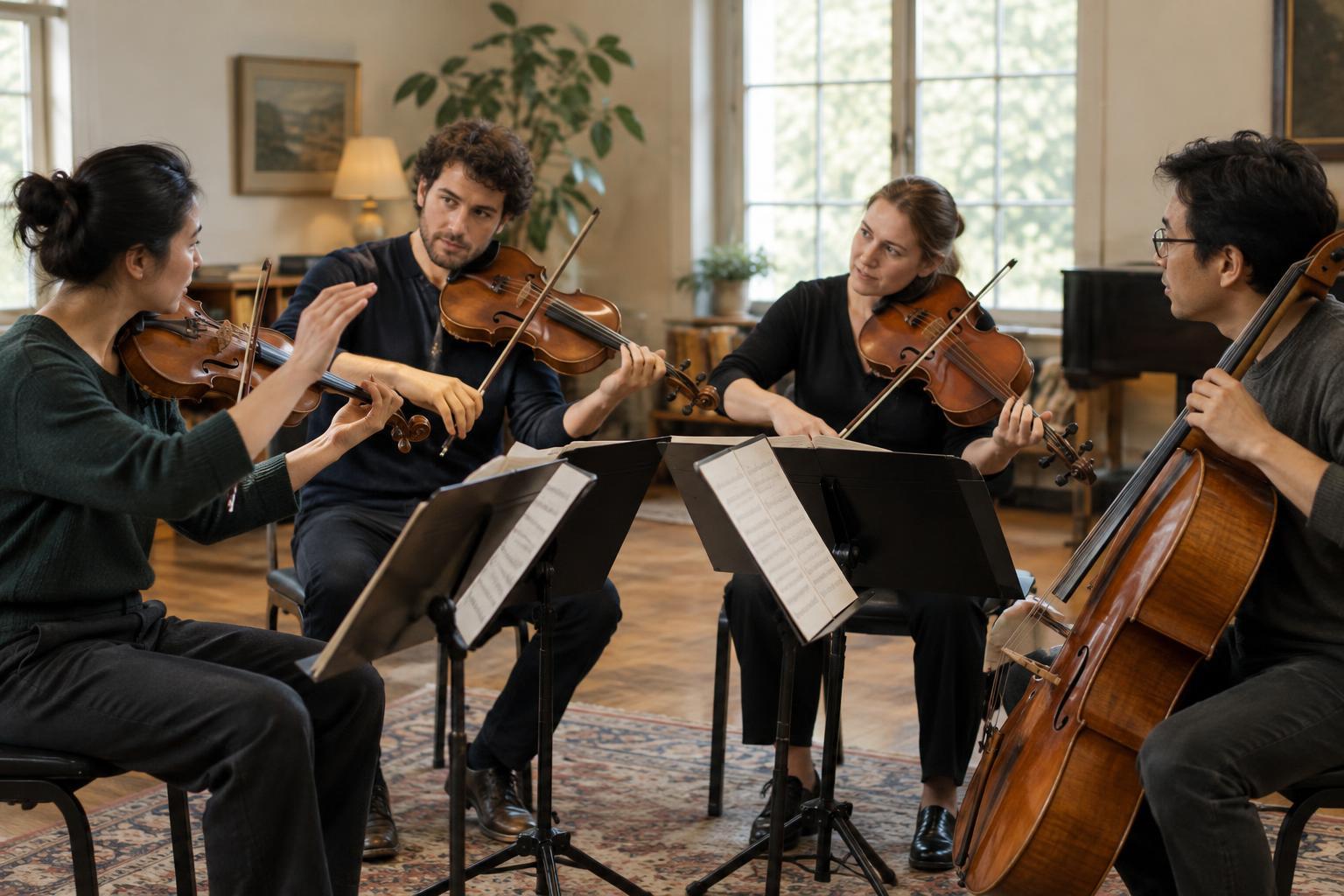
Before repeating the passage, name the specific problem. Does the new tempo begin too fast? Is the first note of the new section unclear because an inner voice carries the cue? Do players disagree about how long a final chord should resonate? Play from several bars before the boundary and ask each musician where their attention shifts. The aim is not to assign blame, but to replace a vague feeling of instability with a question the group can test.
Agree on the destination before practicing the change
First, play a short stretch of the new section on its own. Settle its pulse, dynamics, articulation, and mood. If the destination is uncertain, practicing the approach will only produce different versions of the same uncertainty. Then play the end of the earlier section and decide which details must continue through the boundary. A melodic line might carry across it, for example, even when the accompaniment changes.
Talk about the amount of space the music needs. A held note, rest, breath, or release may be part of the transition rather than a pause between two unrelated passages. If the score leaves room for interpretation, try more than one approach and choose deliberately. The group should be able to describe not only when the new section starts, but how the preceding sound makes that start possible.
Make the cue visible and audible
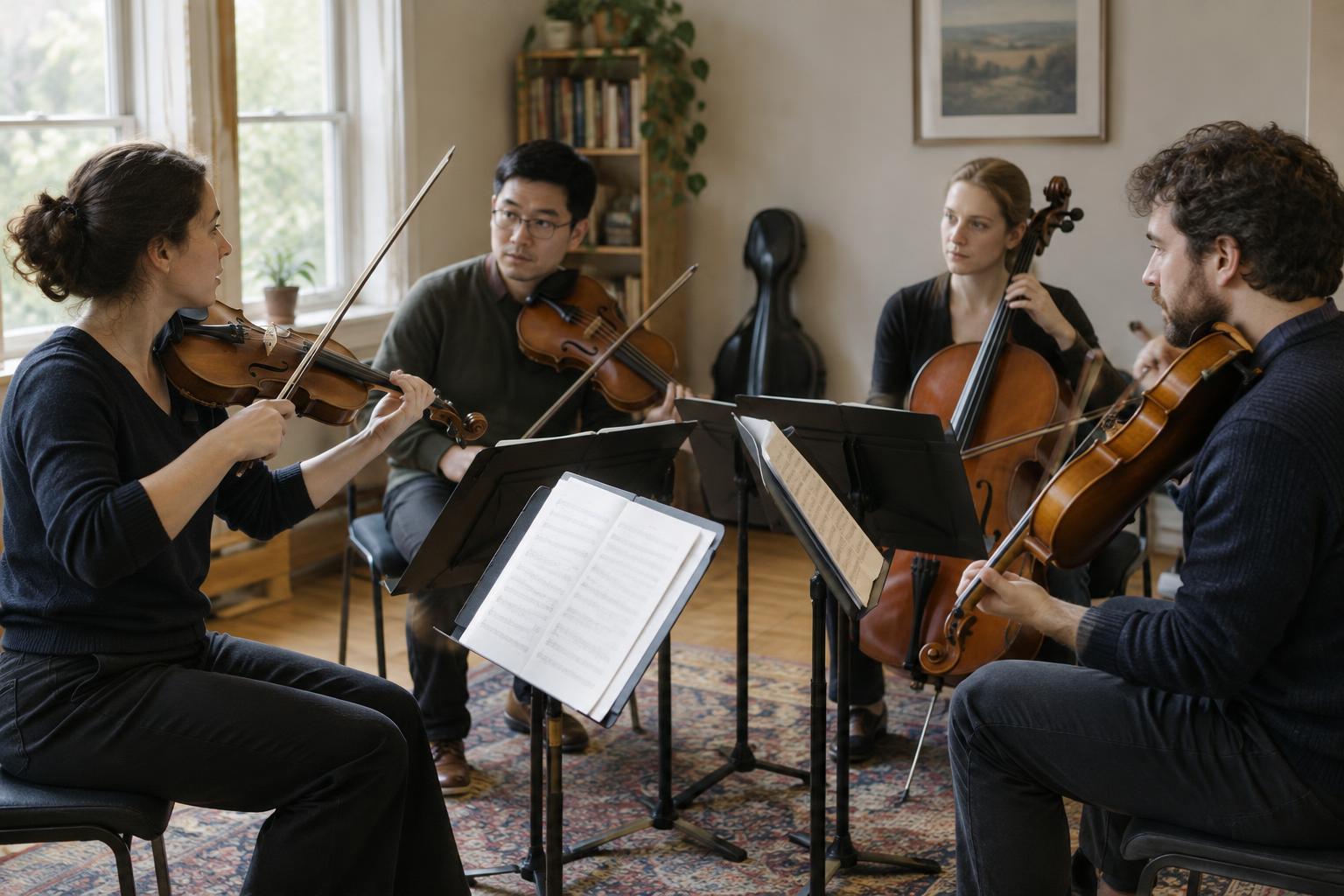
Many transitions improve when players know whose action they are following. The cue might be a violinist's pickup, a cellist's release, a pianist's bass note, or a wind player's breath. Leadership can change within a few beats, so agree on the exact moment that matters. A cue should support listening, not replace it: players still need to hear the shared pulse and the sound fading or building around them.
Rehearse the physical side of the cue without exaggerating it beyond the character of the music. A clear inhale, lifted bow, or coordinated release may be enough. Players who are not leading can help by looking up at the boundary and giving the cue room to register. If no single person can lead reliably from their part, find a shared landmark, such as a cadence or a repeated rhythmic figure, that everyone can recognize.
Loop a small passage, then widen it
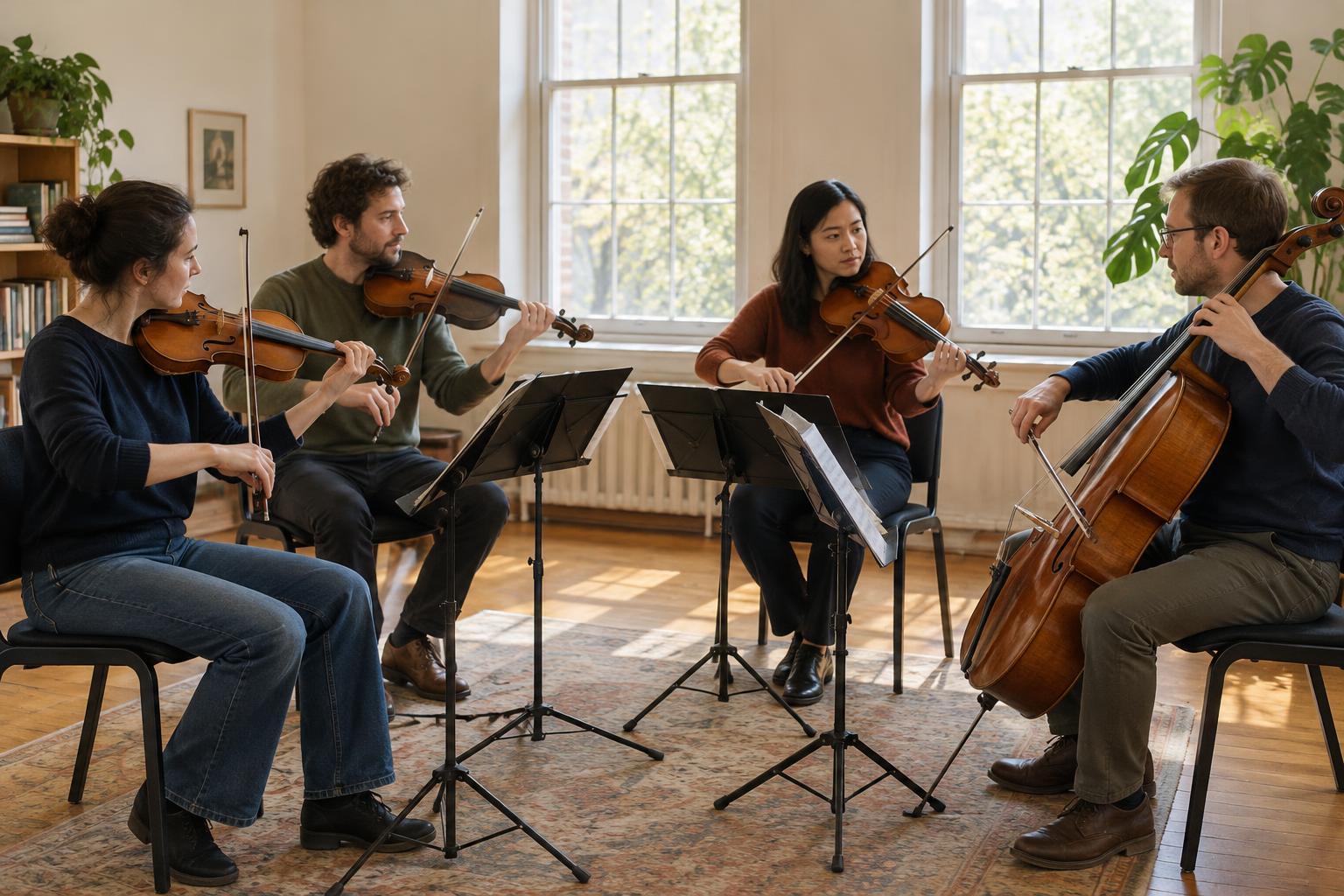
Start with a short loop that includes the final gesture of the old section and the first complete gesture of the new one. Repeat it slowly enough to hear releases and entrances, but preserve the intended character. Count or subdivide together if the difficulty is rhythmic; sing the line or tap the pulse if fingerings and bowings are distracting from the larger shape.
Change one variable at a time. For instance, establish the timing before refining the dynamic contrast. Then move the starting point farther back and continue farther into the new section. This matters because a transition can sound secure in a two-bar loop yet fail when the group arrives with the energy and tempo of the full phrase. After several successful repetitions, play through without stopping and note whether the agreed cue still works.
Check the musical effect, not just the accuracy
A transition is ready when it communicates a change clearly and feels connected to what came before. Listen for whether the new section begins with conviction, whether anyone has to make a last-second correction, and whether the final sound of the earlier section receives its proper weight. If possible, let someone listen from across the room or make a simple rehearsal recording; balance and timing may seem different away from the players' seats.
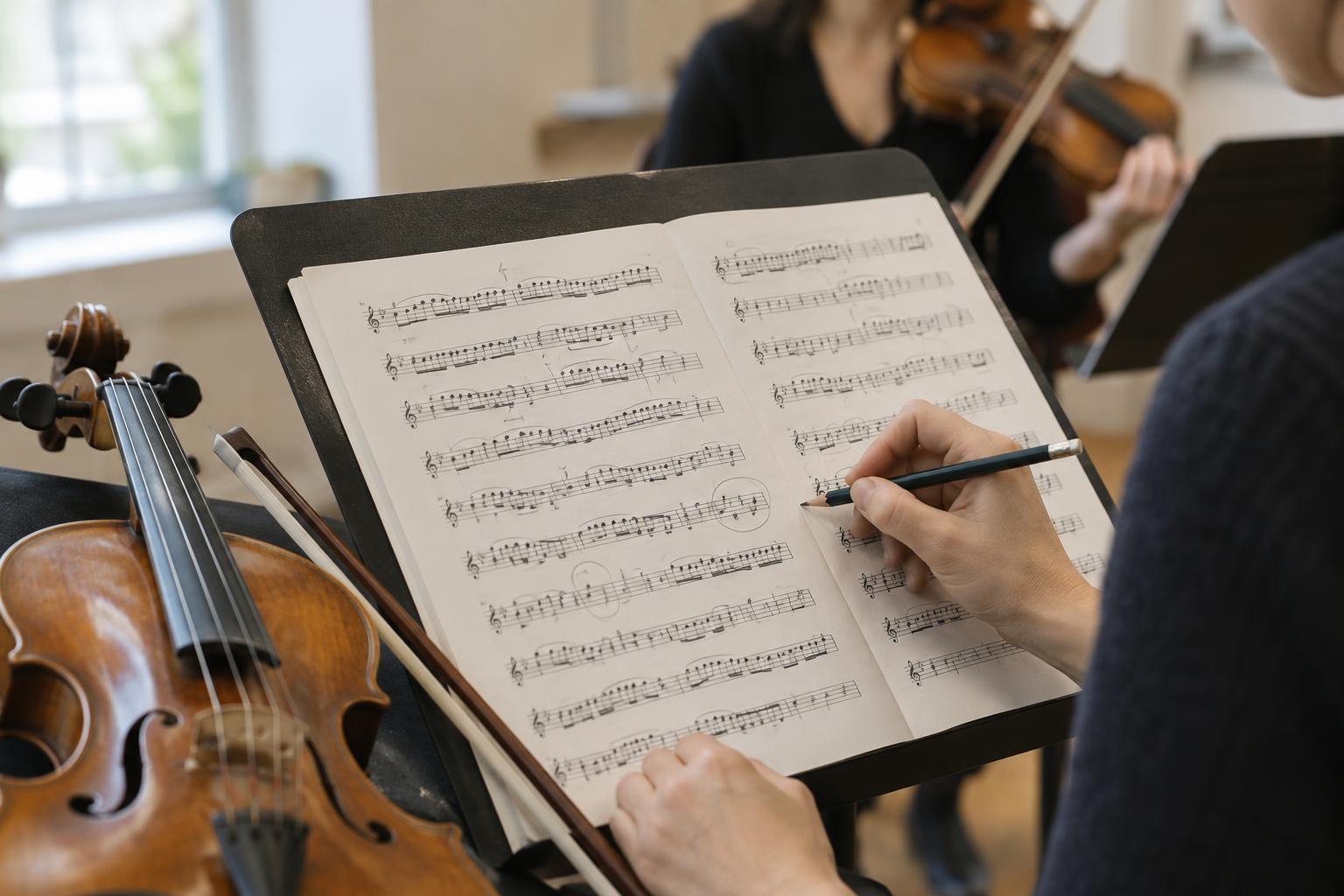
Finish by agreeing on a few memorable reminders rather than a long list of instructions: who gives the cue, what happens to the pulse, and what character the group is moving toward. Mark those decisions in parts if useful. At the next rehearsal, test the transition once in context before drilling it again. The goal is a dependable shared response that leaves the musicians free to listen and shape the music.