Start with the beat everyone shares
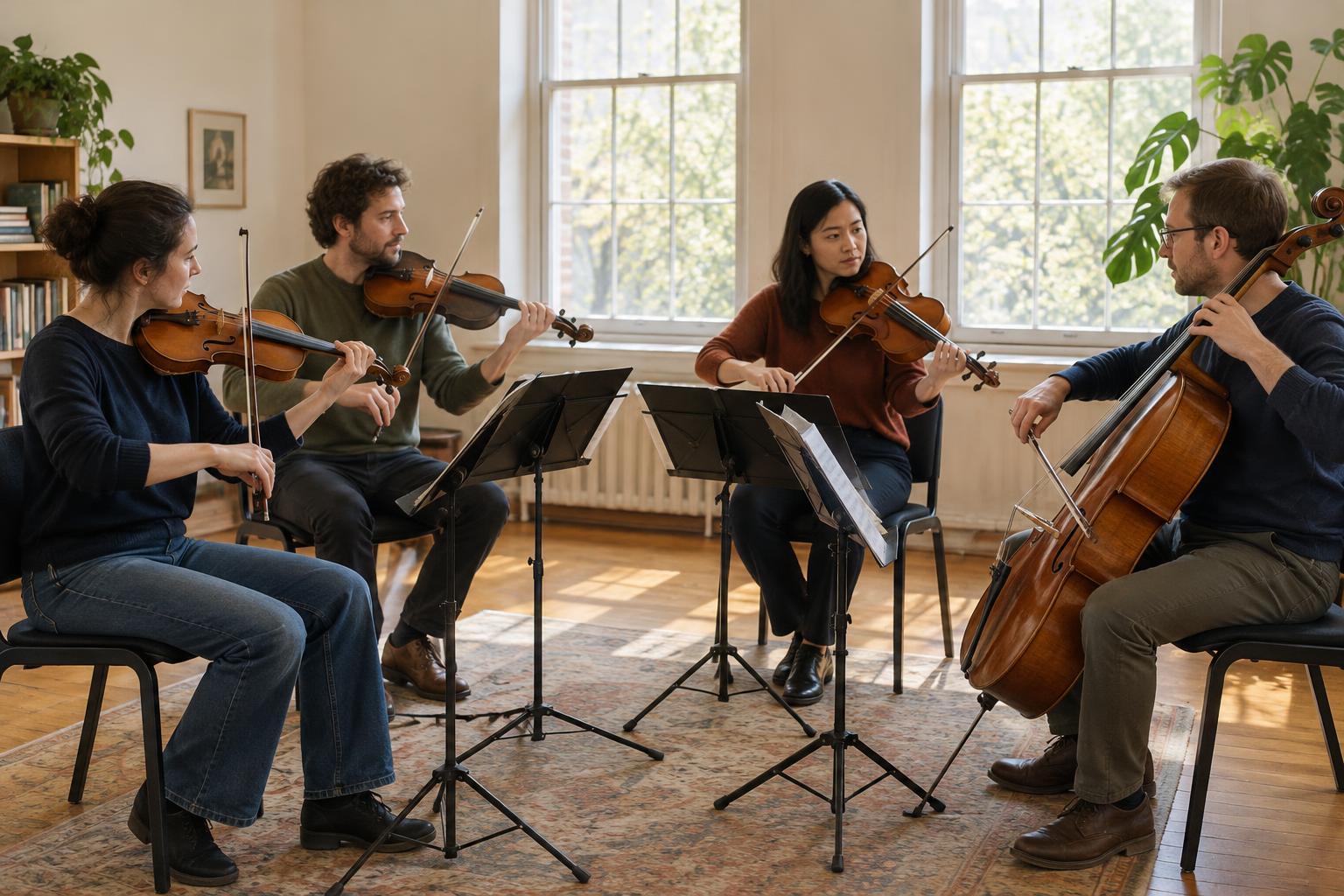
In chamber music, a rhythm can feel perfectly clear to each player and still fail to line up. One person may be following the broad beat while another is counting every eighth note. Neither approach is necessarily wrong, but the group needs a common reference. Before repeating a difficult passage, agree on what counts as the beat, where the phrase begins, and which arrival must happen together.
Try speaking the pulse while one player taps the written rhythm. Then exchange roles. This separates the steady framework from the notes placed within it. In a slow passage, the useful shared pulse may be smaller than the beat suggested by the notation; in a fast passage, counting every small note may make the music feel heavy. Choose a pulse that helps everyone anticipate the next event rather than one that merely describes the page.
Find the smallest division that solves the problem
Subdivision means mentally dividing a beat into equal parts. If an entrance falls halfway through a beat, counting two equal parts may be enough. If the difficulty involves a sixteenth-note rest or a note held across several smaller values, divide further until the entrance has an unmistakable place. For example, in a beat divided into four parts, speak “one e and a” at a comfortable tempo, then place the entrance on its written subdivision.
Use the division as a temporary measuring tool, not a new accent pattern. Players can silently count the small units while shaping the longer phrase. A useful test is to clap only the attacks and speak the subdivisions underneath them. If the attacks remain steady when the spoken count stops, the rhythm is becoming internal rather than dependent on a rehearsal chant.
In compound meter, first agree on whether the group feels the larger dotted-note beat or its three smaller parts. A player with running notes may need to feel all three; a player sustaining a long line may only need the larger pulse. Both can work together when they know how those layers relate.
Rehearse the overlap, not just each individual part
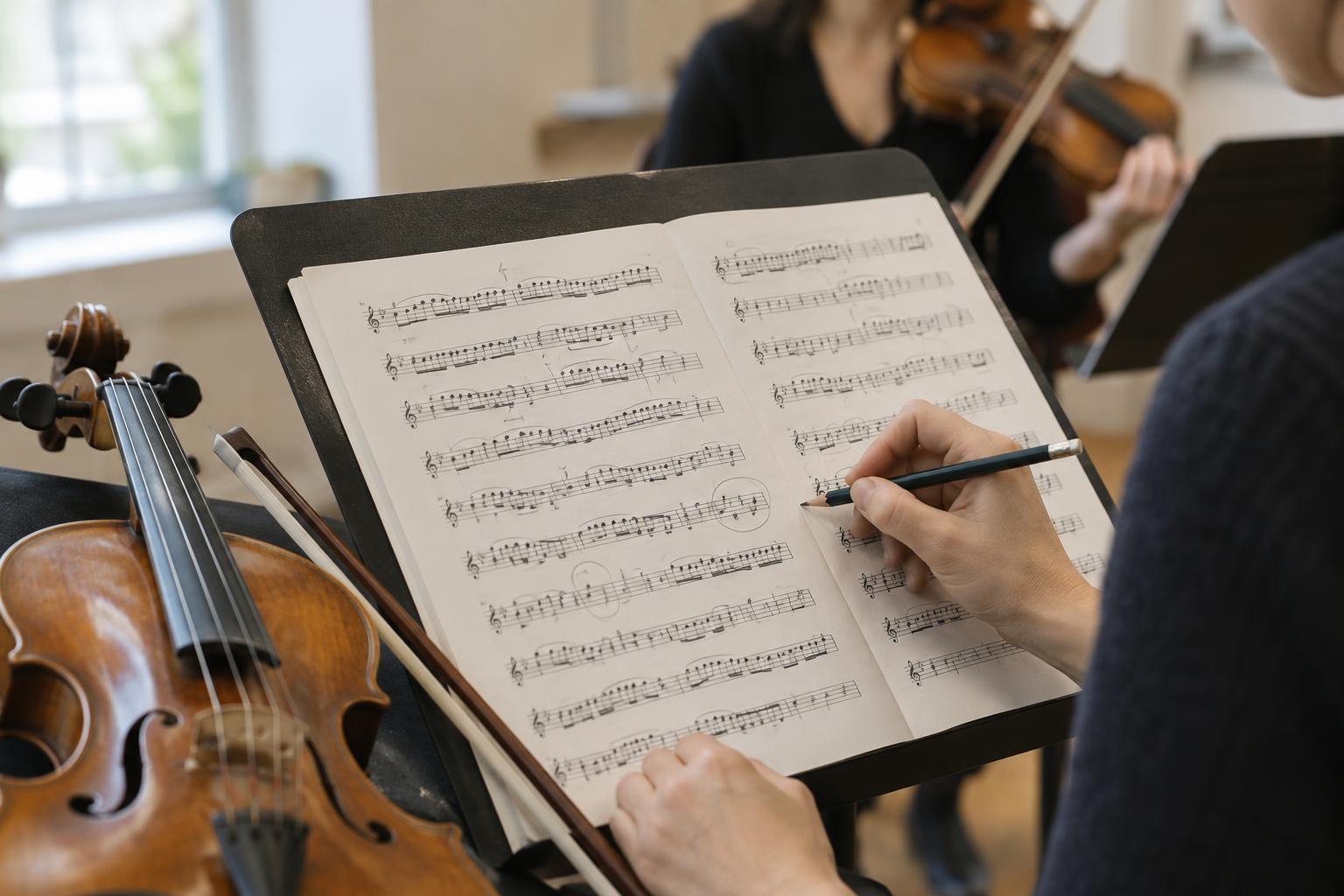
Many ensemble problems occur between events: one instrument releases a note while another enters, or a syncopated line crosses a steady accompaniment. Mark those handoffs in both parts. Ask which sound establishes the timing and which player must anticipate an entrance during a rest. Counting a rest is active work; it is not a pause in attention.
Start a few beats before the trouble spot and continue a few beats beyond it. Repeating only the misaligned chord can hide the reason it goes wrong. At a manageable tempo, have the players who supply the pulse perform alone while the others speak their rhythms. Then reverse the roles. Finally, restore the notes and dynamics without changing the underlying timing. This process shows whether the group is relying on a clear pulse or simply reacting to the loudest line.
A metronome can help check steadiness, especially when a passage accelerates unintentionally. It cannot decide how the ensemble will breathe, release, or respond to one another. After checking the passage, turn it off and see whether the players can maintain the same relationships by listening.
Use eyes, breath, and sound as timing information
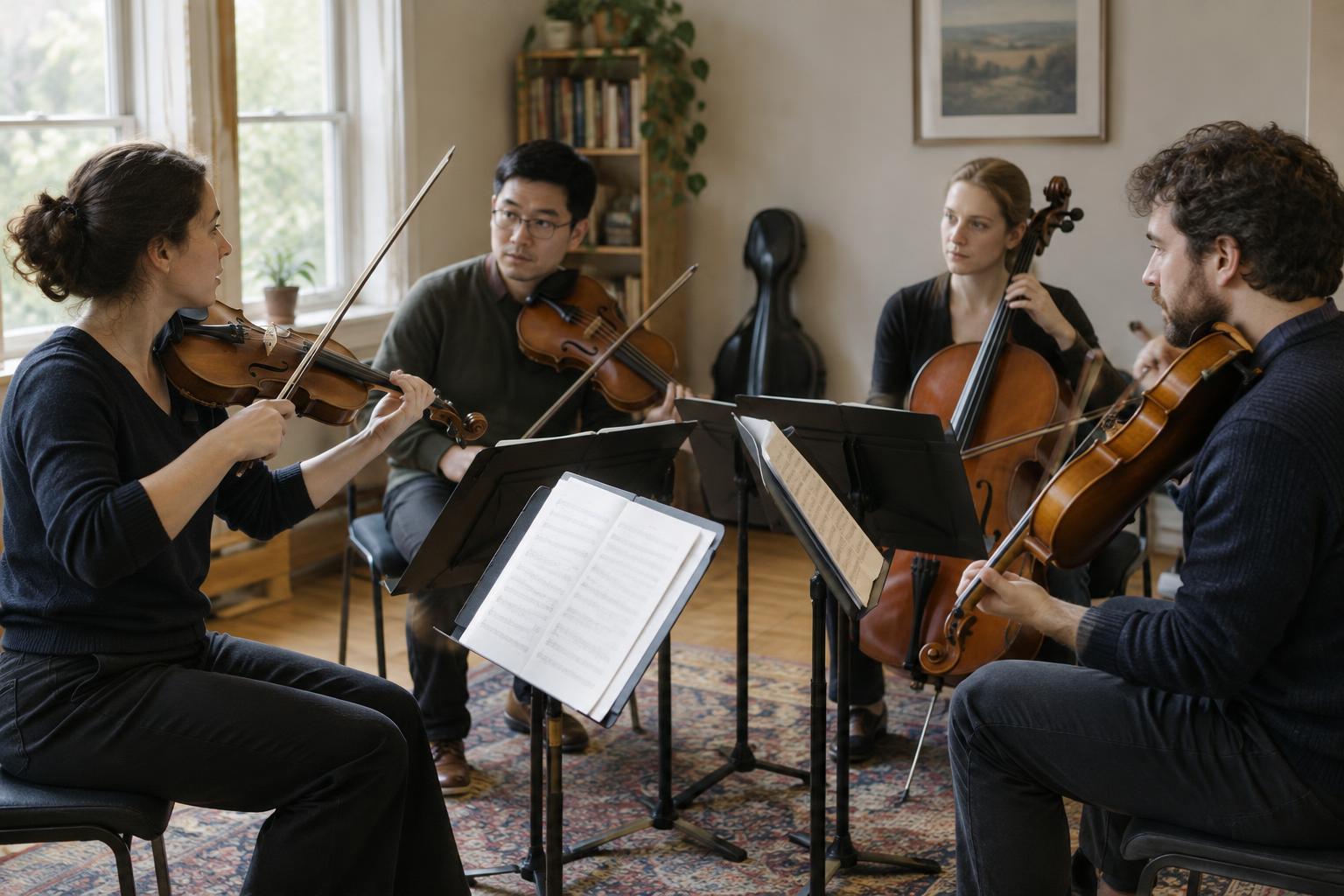
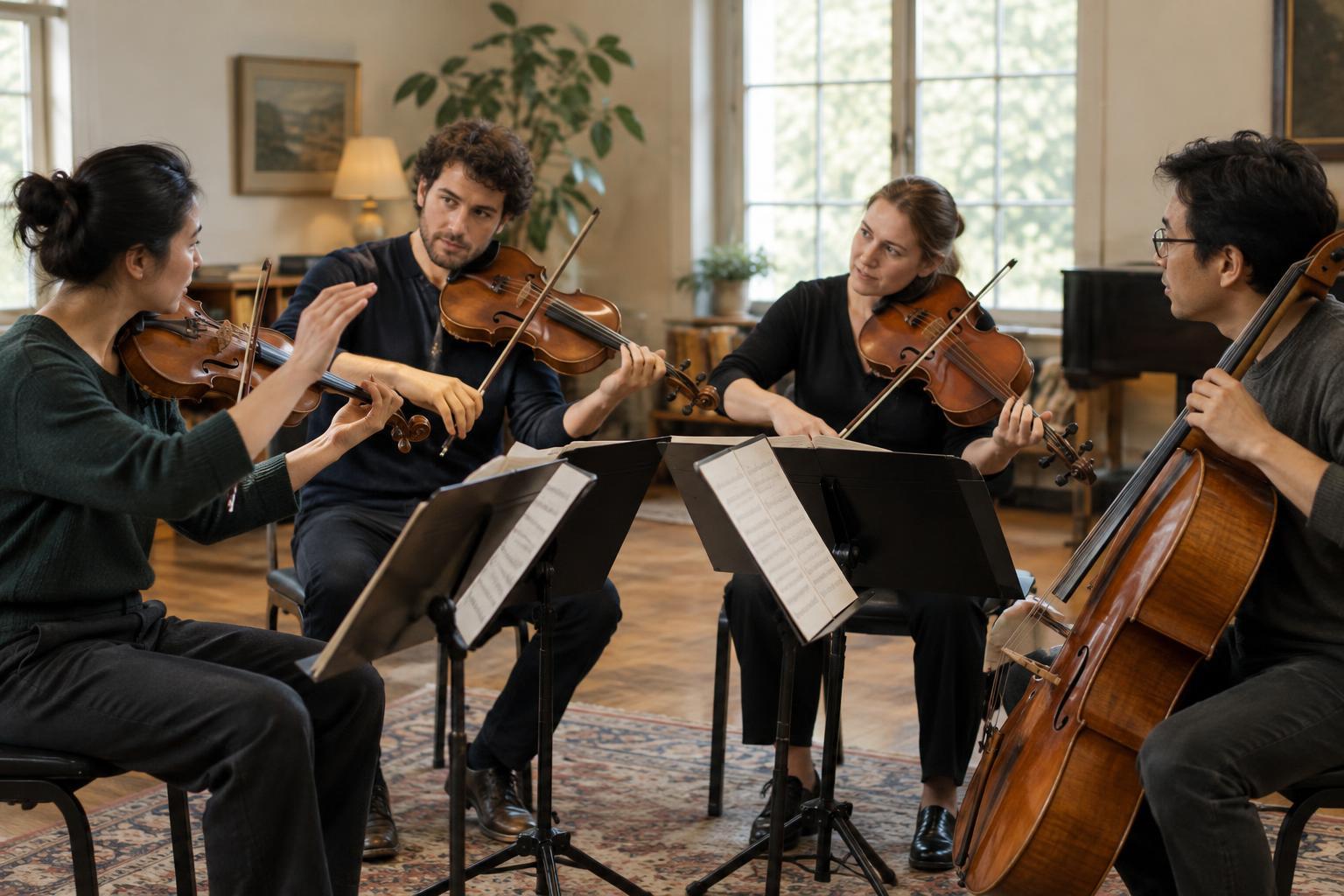
Subdivision is mostly internal, but chamber playing also depends on visible and audible signals. Before a shared entrance, a preparatory breath or small movement can show the tempo and character of the next beat. The gesture should match the music: a broad, quiet entrance needs a different preparation from a quick, sharp one. Decide who gives the cue, and make sure everyone can see or sense it.
Listen for reliable landmarks as well as counting them. A bass note, repeated figure, or change of harmony may confirm where the group is in the measure. Such landmarks are most helpful when players know exactly how their own notes relate to them. Waiting to hear a landmark before reacting may make an entrance late; anticipating it within the shared subdivision makes it possible to arrive together.
Let the counting support the phrase
Once the notes align, rehearse the passage at several nearby tempos and with the intended articulation. A rhythm that works only when every subdivision is spoken aloud may not yet be secure. Ask each player to identify the important shared arrivals, then play toward them while keeping the smaller divisions quiet in the mind.
The goal is not to make every note equally emphatic. Clear rhythm gives players the freedom to lean into a phrase, leave space at a cadence, or pass a line from one instrument to another without losing contact. When a passage slips again, return briefly to the agreed pulse and smallest useful subdivision. Then put the counting back in service of the music.