Agree on a reference before anyone adjusts
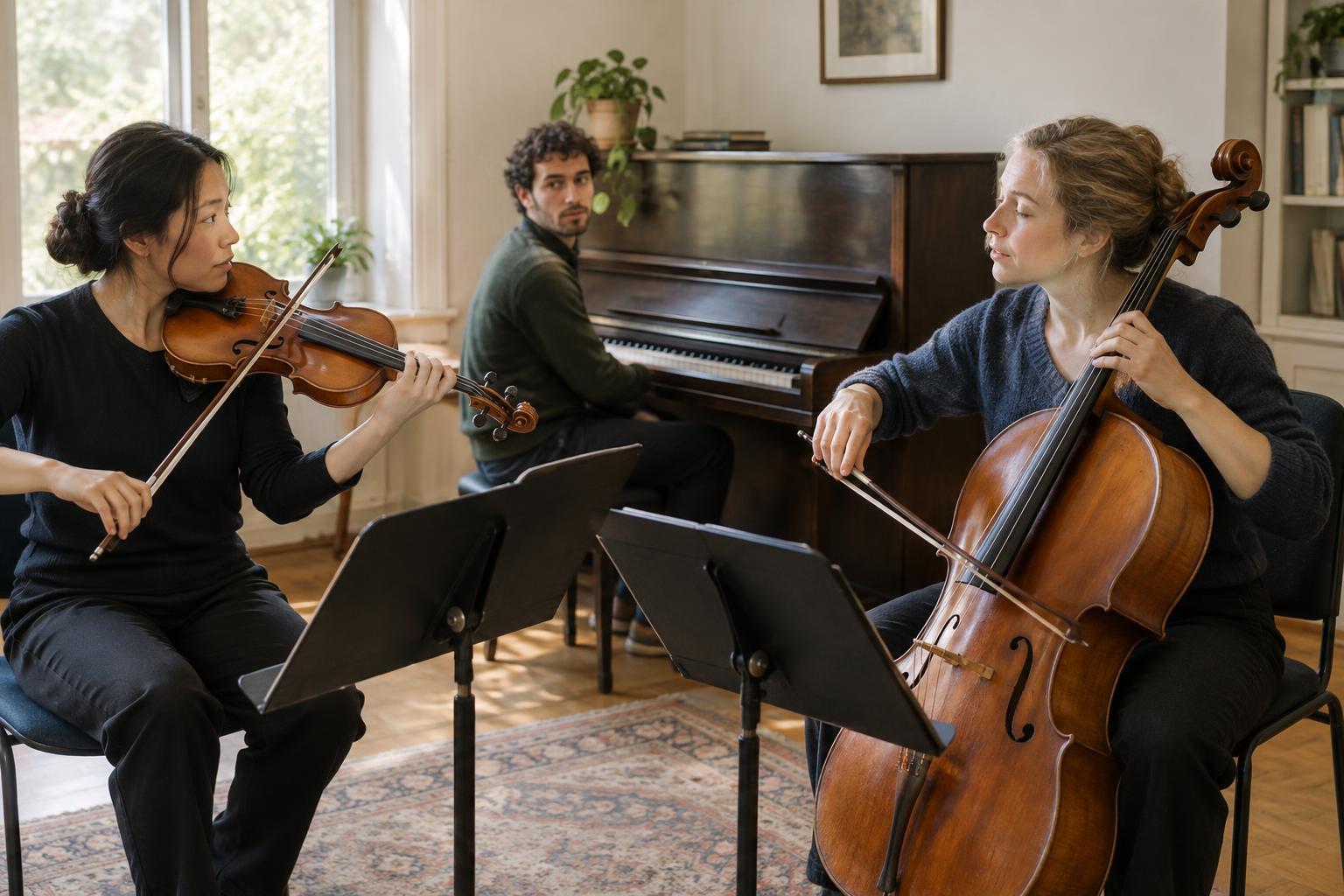
Ensemble tuning begins with a shared decision: which instrument will provide the reference, and which note will everyone use? If a piano is part of the group, its pitch is usually the practical starting point because a pianist cannot adjust individual notes during a rehearsal. Without piano, the players can agree on a reference from an instrument or a reliable tuning device. The familiar tuning note A is useful, but the important point is that everyone listens to the same pitch.
Let the reference sound clearly and long enough for others to hear it. Players should pause rather than all playing at once. A quiet room helps, but a perfectly silent one is not necessary; the aim is to hear the reference without competing notes. If the group uses an electronic tuner, decide on its reference setting together instead of assuming that every device is set alike.
Tune each instrument with a steady sound
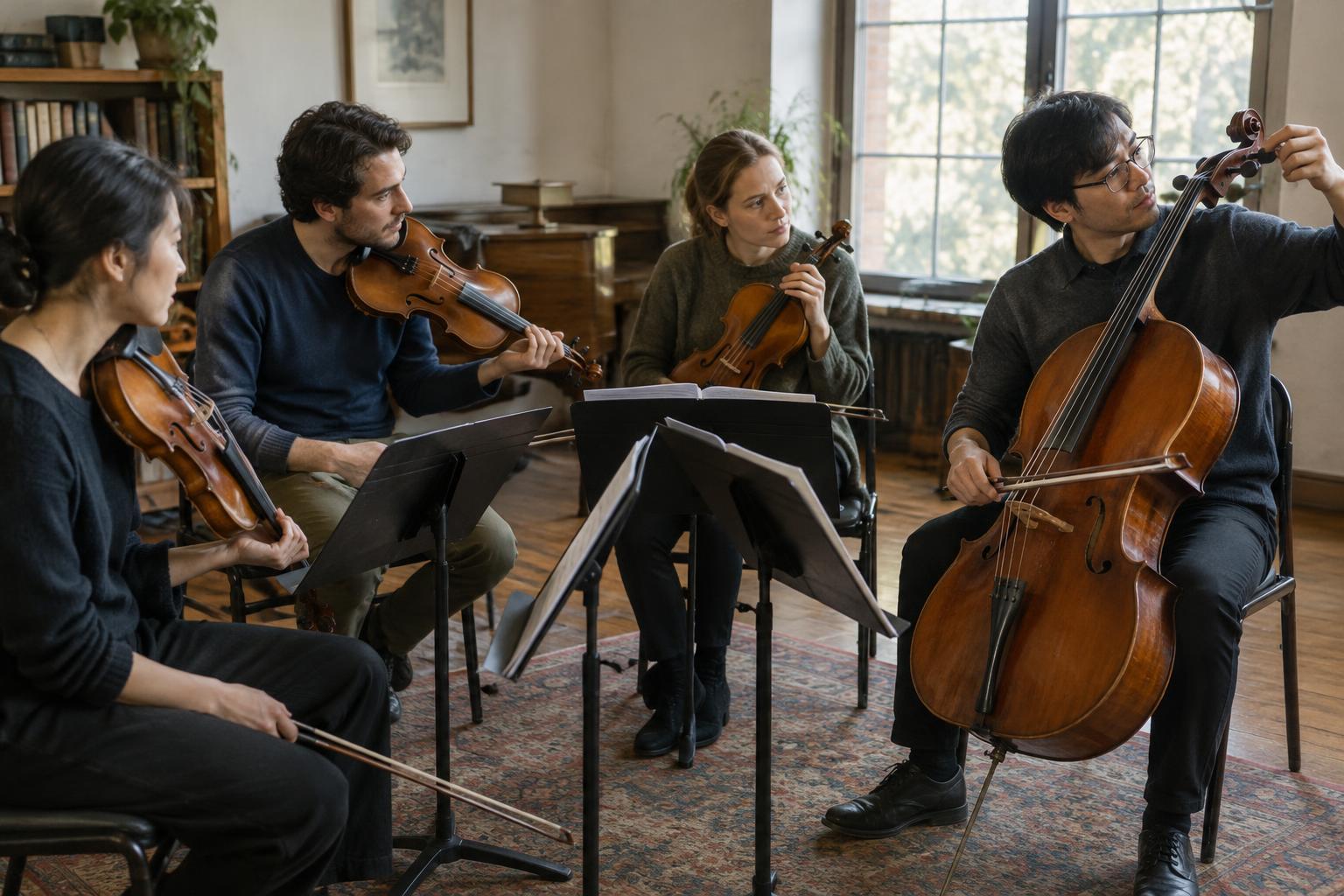
Each player should first find a comfortable, characteristic sound. A string player can tune the A string to the reference, then check the other strings against it, using open strings and careful listening. Small adjustments are safer and easier to judge than repeated large turns of a peg. Fine tuners, when available, are useful for the last small correction. After adjusting one string, check the others again: changing string tension can slightly affect what you hear elsewhere on the instrument.
Wind players need a steady breath and a settled tone before judging pitch. A note attacked sharply or allowed to fade may give a misleading impression. An instrument’s pitch can also change as it warms during playing, so an initial match may need a later check. Rather than forcing every note into place with unusual breath or embouchure pressure, players can make an appropriate instrument adjustment and then test the result with their normal playing sound.
Listen for movement, not just for a tuner reading
When two sustained notes are close but not quite aligned, the sound may seem to pulse or waver. Musicians often call these pulses beats. As the notes move closer together, the pulsing generally slows; with a well-matched unison, it becomes less noticeable. This gives the ear something concrete to follow. Play at a moderate volume, hold the note, and allow time to hear whether an adjustment helped.
A tuner can be a helpful starting point, especially in an unfamiliar group, but it cannot make every musical decision. It may show that two players are close to a reference while they still hear tension in a held interval. It also cannot account for every change of register, dynamic or instrument color. Use its display to orient the group, then listen to the actual combination of sounds.
Check the notes the music will use
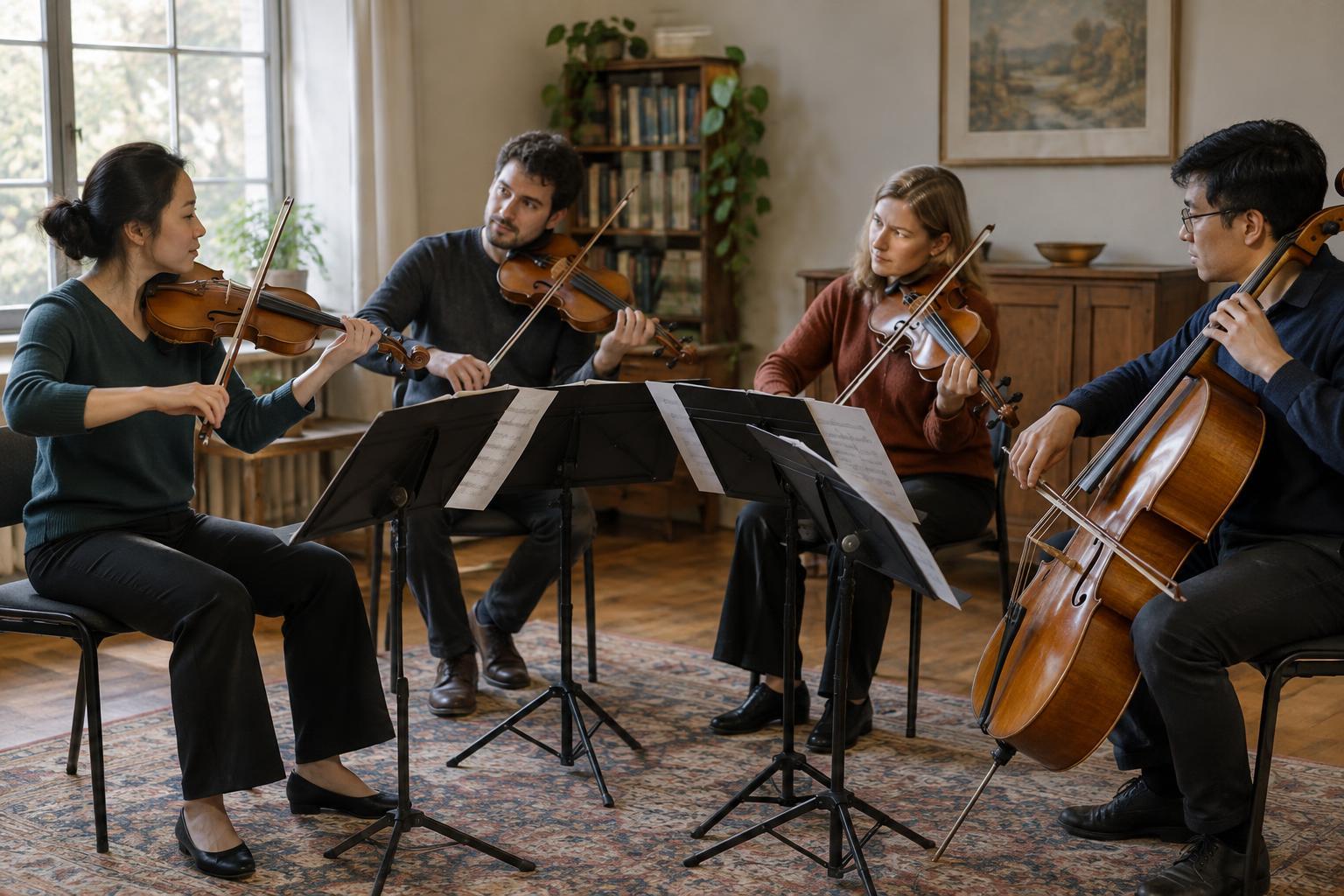
Matching one A does not guarantee that an ensemble will sound settled in a passage. Once individual instruments are tuned, play a few sustained notes or a chord from the opening of the piece. A unison reveals whether players meet on the same pitch; an exposed octave or a long chord reveals how the parts fit together. The group can also try a troublesome note from the score at the dynamic and register in which it appears.
In a string or mixed ensemble, some intervals may sound more stable with tiny adjustments made by ear. That does not mean one player should continually chase another. Listen for the role of each note: which instrument holds the foundation, which doubles it, and which completes the harmony? If a piano is present, the other players may need to balance their choices against its fixed pitches. Agreeing on who provides the anchor makes adjustments quicker and less confusing.
Keep tuning brief, courteous and ongoing
A useful routine has an order: establish the reference, let players tune individually, then test a small amount of music together. If something sounds uncertain, isolate it rather than restarting the whole process. One person can sound the anchor note while another checks their part. Players who are waiting can give the pair room to listen. This approach is usually more productive than everyone trying to correct the same chord at once.
Tuning is not finished when the opening note is played. Temperature, instrument response and the demands of a passage may change what the group hears during rehearsal. Notice recurring problems, then check them at a natural pause. Before a performance, a familiar routine can help the ensemble begin with confidence; during the music, attentive listening and modest adjustments matter more than a perfect-looking tuner reading.