An instrument that carries several parts
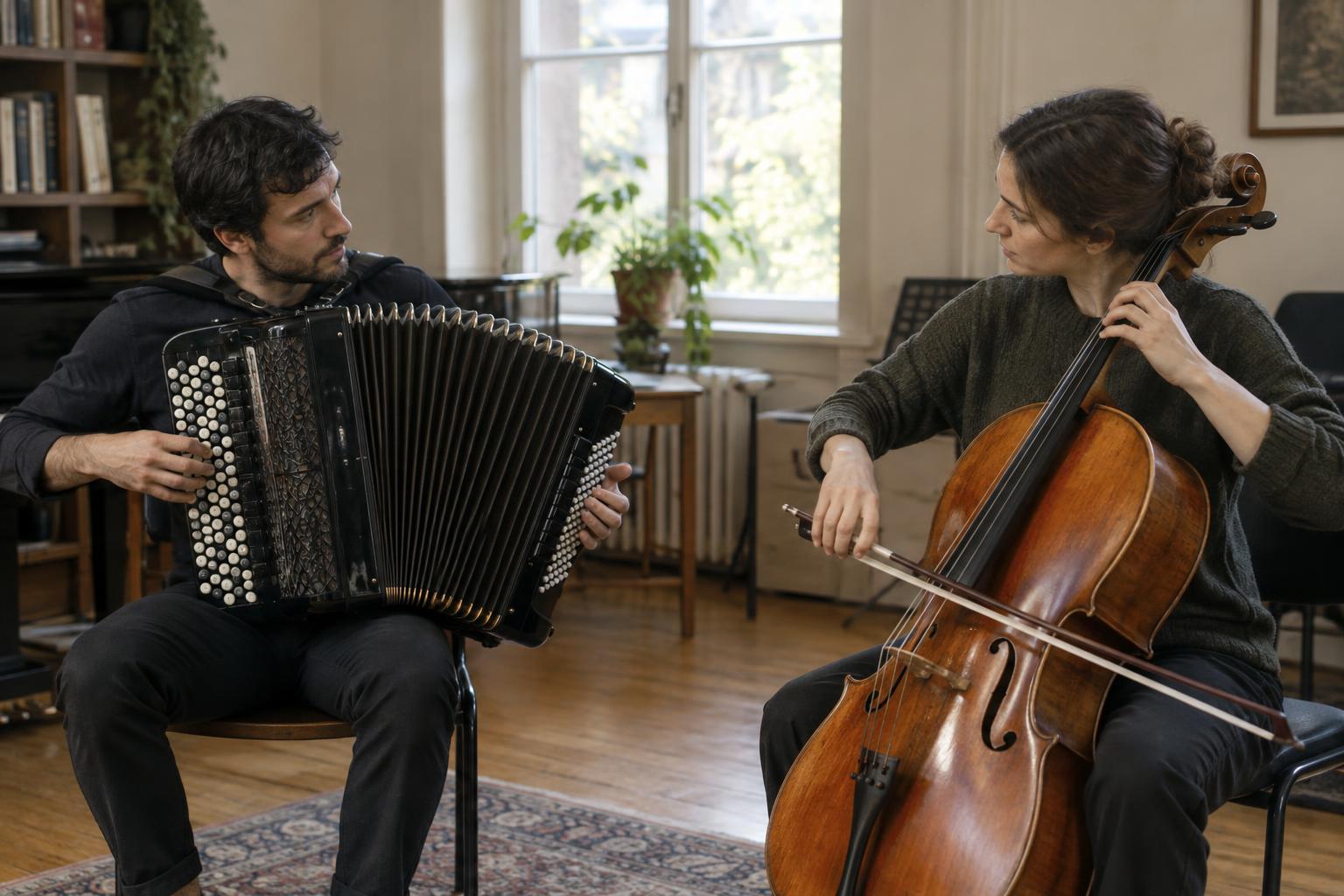
An accordion can sound like a compact ensemble. One hand may play a melody while the other supplies bass notes or chords, allowing a single player to suggest several musical layers at once. In chamber music, though, the accordion need not do everything. It might sustain a quiet harmony beneath a violin, trade short phrases with a clarinet or take over the bass line for a few measures.
That flexibility can make its role hard to identify on a first hearing. Rather than listening only for a familiar accordion tune, notice which part of the texture it occupies. Is it providing a continuous background, answering another player or marking the pulse? Its role can change within a single piece.
How reeds and bellows make the sound
The accordion is a free-reed instrument. Air moving through the instrument causes small metal reeds to vibrate, while keys or buttons select which reeds sound. The player moves the bellows to provide that airflow. Unlike a piano key, which sets a string vibrating and then lets its sound decay, an accordion note can continue for as long as the player maintains air movement and holds the key or button.
The bellows are central to expression. A player can shape a phrase by changing air pressure, easing into a note or ending it sharply. Bellows direction also changes when the player opens or closes the instrument. That reversal may be almost hidden, or it may create a perceptible break in a long line. Listen for how the accordionist places those breaks: they can feel much like breathing in a sung phrase.
Some accordions offer combinations of reeds with different tone colors. A setting with closely tuned reeds may produce a noticeable shimmer, while another can sound more direct. The available sounds depend on the instrument, so it is more useful to listen for changes in color than to assume every accordion has the same controls.
Why accordion layouts matter
Accordions do not all have the same playing layout. Some have a piano-style keyboard on the melody side; others use buttons. On the bass side, one instrument may offer preset bass notes and chords, while another gives the player individual notes across a wider range. Some instruments provide a way to switch between these approaches.
These differences affect what a player can do easily in an ensemble. Preset chords can give a passage a clear rhythmic foundation. Individual bass notes allow a more independent line, which can weave around a cello or follow a written counterpoint. A listener does not need to identify the keyboard system by sight to hear the result: pay attention to whether the lower part moves note by note or settles into recurring chord patterns.
Listening for balance and contrast
Because the accordion can sustain sound, it pairs differently with instruments whose notes fade after being struck or plucked. Next to a guitar, for example, it can hold a chord while the guitar adds crisp attacks. Beside a flute or a bowed string instrument, it can either blend into a long phrase or provide a contrasting pulse. The effect depends on register, dynamics and the choices of the players.
Try following the starts and ends of notes when the accordion plays with another instrument. Do they enter together, or does one continue after the other stops? A quiet sustained chord can make a short melody feel connected, while a sudden cutoff can leave space for another voice. In a dense passage, listen for the accordion’s lower notes separately from its melody; they may be doing different jobs.
Balance is part of the performance, not simply a fixed property of the instrument. A strong accordion chord may cover a soft partner, while restrained playing can leave room for delicate detail. In a small ensemble, those adjustments are often as revealing as the notes themselves.
A simple way into unfamiliar repertoire
Accordion chamber music can include arrangements as well as pieces written with the instrument in mind. Either can be rewarding to hear without first knowing its style. Choose a short passage and listen to it twice. On the first hearing, follow the melody. On the second, track the bellows-shaped swells, sustained notes and changes in the bass.
Then ask what the accordion contributes that another instrument might not provide in quite the same way. It may join a melodic line and its accompaniment in one gesture, or hold a steady tone while its partners move around it. Hearing those choices turns the accordion from a distinctive background color into an active chamber-music partner.