Start with the open strings
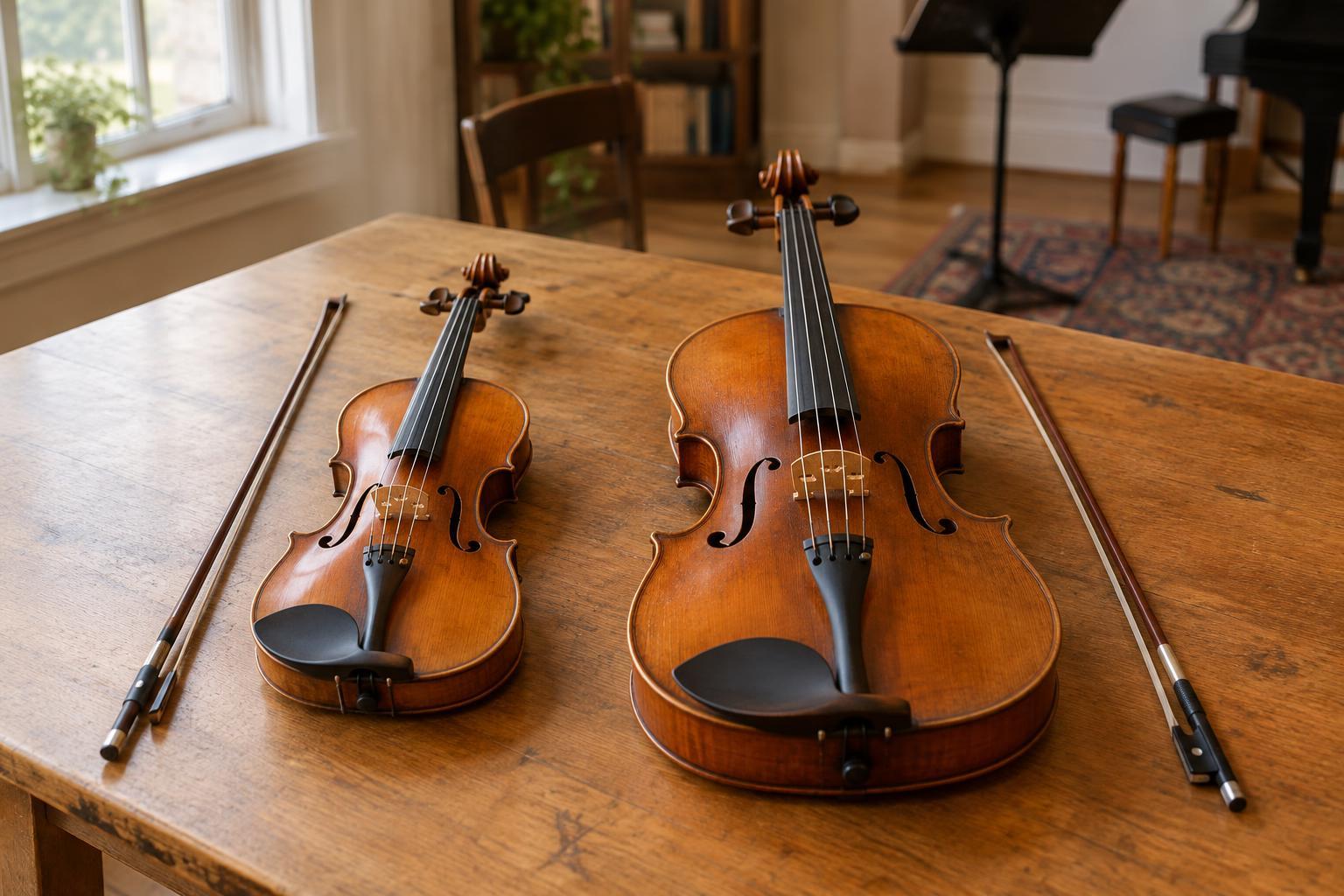
A violin and a viola can be easy to confuse by sight. Both are held under the chin, played with a bow, and built with four strings. The viola is generally larger, but the most useful difference for a listener is its tuning. From lowest to highest, a violin’s open strings are G, D, A, and E. A viola’s are C, G, D, and A. Three strings have the same names; the viola adds a lower C, while the violin adds a higher E.
That difference shapes where each instrument feels most at home. The violin can reach a sparkling high register without leaving its highest string. The viola can descend below the violin’s lowest note, into a register that often sounds warm or shadowed. Neither instrument is confined to its open-string notes: players stop the strings with their fingers to produce higher pitches. Still, the lowest open string gives each instrument a firm lower boundary.
Understand the overlap before judging the sound
The viola’s lowest open note is C3, the C below middle C. The violin’s lowest is G3, the G below middle C. From that G upward, their ranges overlap extensively. A viola can play notes that seem high, and a violin can play notes that seem low. A single pitch, heard without context, may not identify the instrument.
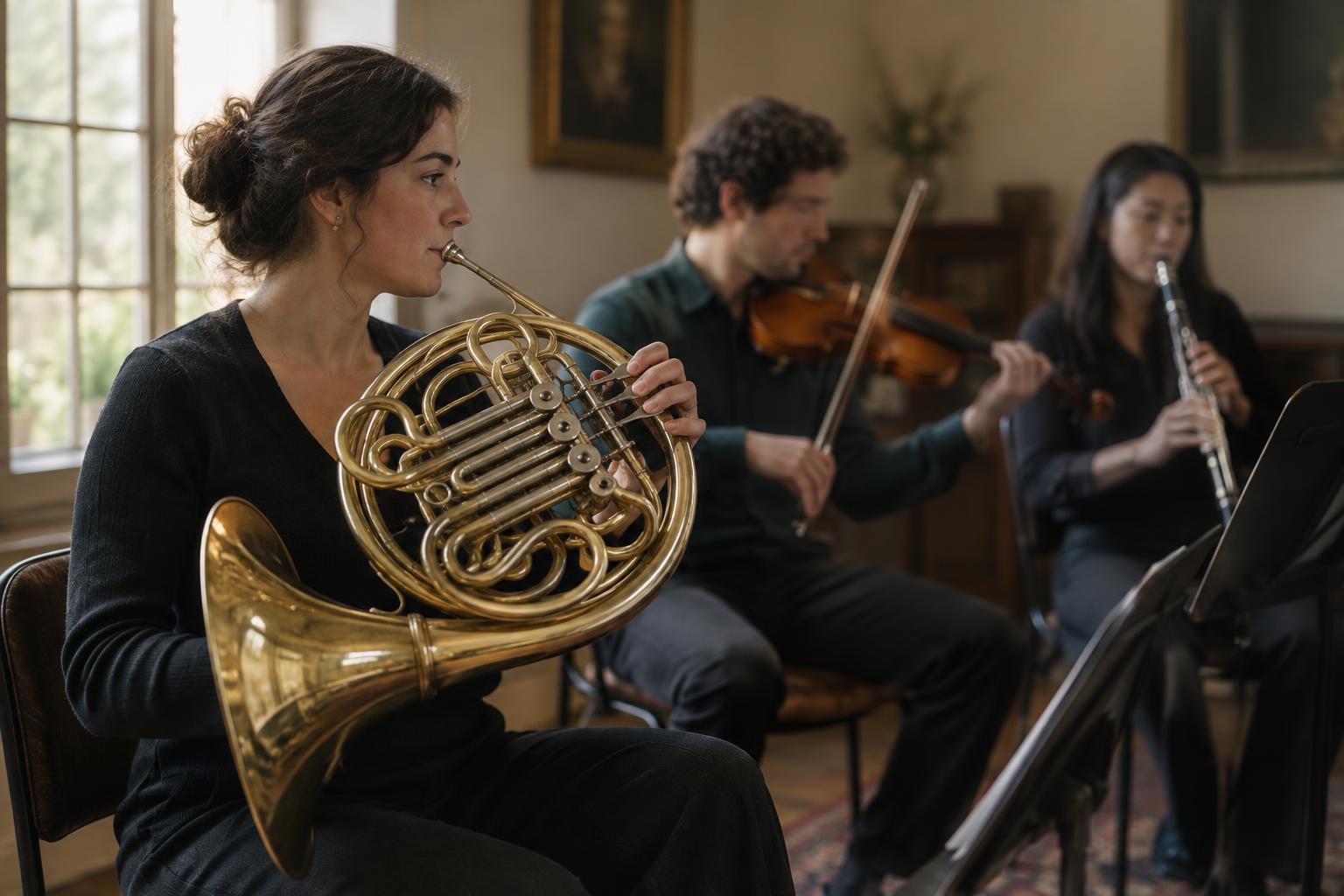
Listen instead for the edges of a phrase. A line that sinks below the violin’s lowest G must belong to a lower-pitched instrument, and it could be a viola. A line that repeatedly climbs into a brilliant upper register is more likely to be a violin, though a skilled violist can also play high passages. In a string quartet, the score usually assigns two violin parts, one viola part, and one cello part. The viola often occupies the musical space between the violins and cello, but it can also carry the main melody.
Hear timbre as a clue, not a rule
Range tells you which notes an instrument can play; timbre describes the character of its sound. A violin often has a focused, clear quality, especially on its E string. The viola’s C string can sound fuller and darker, while its middle register may have a mellow, slightly grainy character. These descriptions are listening aids, not guarantees. The player’s bowing, the instrument, the room, and the musical passage all affect what you hear.
The shared notes are especially revealing. If you hear a note around the middle of both instruments’ ranges, notice its weight and the way it begins. A viola phrase may seem to blend into the inner harmony; a violin phrase may project more sharply. But either player can change the sound by using a different string or bow stroke. Rather than deciding from one note, follow several notes and listen for a consistent character.
Try a simple listening exercise
Find a recording or demonstration in which violin and viola play separately. First, listen to each instrument’s four open strings from lowest to highest. Pay particular attention to the viola’s C and the violin’s E: these are the notes the other instrument cannot produce as open strings. Then listen to a short phrase from each instrument without looking at the player. Ask whether you hear a low foundation, a bright upper edge, or neither.
Next, try a string quartet. Follow the highest line for a moment, then shift your attention to the sound between that line and the cello’s bass. That inner voice may be the viola, although the second violin can occupy a similar register. If the instruments trade melodies, your first guess may change. That is part of the exercise: recognizing them is less about memorizing a fixed tone and more about combining range, timbre, and musical context.
Printed music offers another clue if you have access to a score. Violin parts normally use treble clef. Viola parts usually use alto clef, in which middle C sits on the center line of the staff; a viola part may switch to treble clef for high passages. You do not need to read either clef to enjoy the distinction. The score simply confirms what your ear can learn: these related instruments share a broad territory, but their different strings give them distinct starting points.