From key to sound
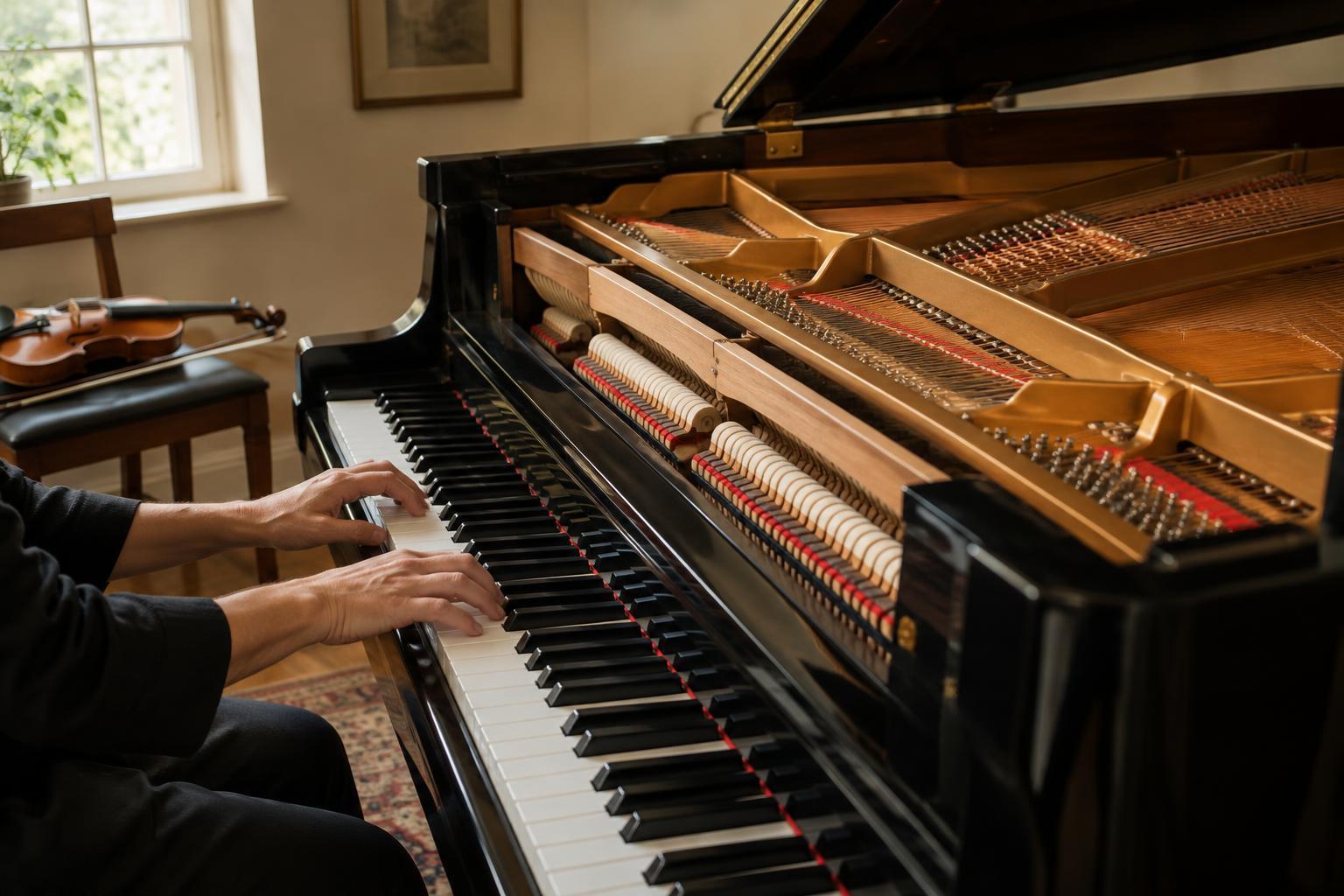
An acoustic piano is both a keyboard instrument and a percussion instrument. Pressing a key sets a mechanism, called the action, in motion. It sends a felt-covered hammer toward the strings assigned to that note. The hammer strikes and immediately moves away, leaving the strings free to vibrate. Their vibration travels through a bridge to the soundboard, the large wooden surface that helps project the sound into the room.
Most notes have more than one string, which contributes to the piano’s full, complex tone. Higher and lower notes also differ in their string construction and in the way they speak. A pianist therefore does not have one uniform sound to manage: a bright upper-register line, a dense middle-register chord and a low bass note each occupy a different place in the ensemble’s texture.
Why a piano note changes after it begins
On most keys, lifting a finger allows a felt damper to rest against the strings and stop their vibration. Holding the key down keeps that damper raised, so the note can ring. Even then, the sound naturally fades. Unlike a violinist or clarinetist, a pianist cannot keep adding energy to a note once the hammer has struck it. To make a melody feel connected or sustained, the pianist must plan the timing and weight of successive notes.
The speed of the hammer at impact has a major effect on a note’s volume and character. Pianists control this through the way they move the keys, but they cannot reshape a sounding note by pressing harder after it has begun. This helps explain an expressive feature of piano playing: what sounds like a long, singing phrase is often built from carefully judged beginnings, releases and spaces between notes.
Pedals: resonance with a purpose
The right pedal lifts the dampers from the strings. Notes can continue to ring after the keys are released, and other strings may vibrate in sympathy. This can make a phrase feel spacious, but it can also blur moving harmonies. In chamber music, a pedal choice affects everyone: lingering piano sound may warm a violin line or obscure a quiet entrance. Pianists often change or release the pedal in response to the harmony and to what their partners are playing.
The left pedal changes the sound differently. On a grand piano, it shifts the action so the hammers meet the strings in a different position, often producing a softer, altered color; its effect on an upright piano is not identical. Some pianos also have a middle sostenuto pedal, which can hold selected notes while others are played normally. Pedals expand the palette, but they do not replace clear finger releases or attentive listening.
Balance is more than playing quietly
A piano can cover another instrument without sounding especially loud to the pianist. Full chords, repeated notes and activity in the middle register can fill space that a partner’s melody needs. In a duo or trio, the pianist may lighten accompaniment figures, bring out only a few notes of a chord or leave a tiny gap around another player’s entrance. These choices preserve the musical shape while making room for the ensemble.
Balance also depends on the room and the instrument. A grand piano’s open lid helps direct sound outward, while a reflective room can make attacks and resonance more prominent. Players may need to adjust once they hear the group in the performance space. The aim is not a permanently subdued piano; when the piano has the main theme, the other players can make room in turn.
What to listen for in a chamber performance
Try following the piano’s role as it changes. Does it introduce a theme, answer another instrument or supply a steady pattern underneath? Notice whether bass notes support the harmony without dominating it, and whether chords end cleanly when a new phrase begins. Listen, too, for moments when a short piano note seems to belong to a longer line passed between players.
These details reveal why the acoustic piano is such a flexible chamber partner. Its hammers give notes a distinct beginning; its strings and soundboard give them resonance; its dampers and pedals help determine when that resonance ends. The pianist’s task is to shape those possibilities into a part that can lead, accompany and converse.