A keyboard that plucks
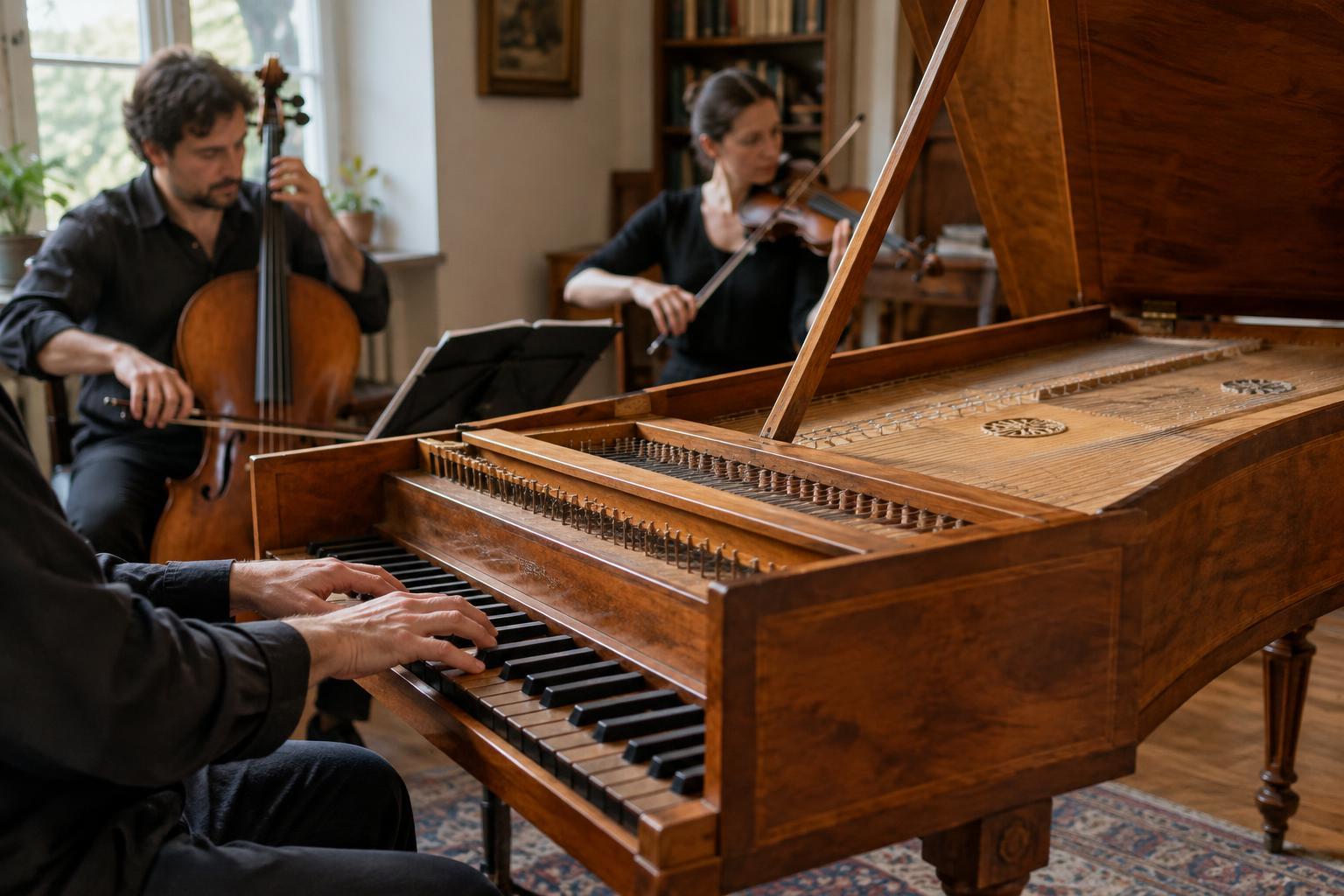
A harpsichord is a keyboard instrument, but it does not strike its strings with hammers like a piano. When a player presses a key, a small mechanism called a jack lifts a plectrum past a string and plucks it. The string rings, then a damper quiets it when the key is released. That crisp beginning to each note helps the harpsichord stay audible amid other instruments, even though its sound may fade quickly.
Pressing a key harder does not make an individual note much louder. Instead, harpsichordists shape a phrase through timing, articulation, the length of notes, and the way they spread or group chords. Some instruments offer more than one keyboard, or manual, and different sets of strings that can be selected for contrast. These features vary from instrument to instrument, so the sound you hear at one concert may differ noticeably from another.
What continuo means
In much Baroque chamber music, the harpsichord forms part of the basso continuo, often shortened to continuo. The player reads a bass line and uses it as the foundation for harmonies. Numbers placed under some bass notes, called figures, indicate intervals to include above them. Not every detail of the resulting keyboard part is written out: the player chooses a practical arrangement of notes that fits the harmony, the ensemble, and the moment.
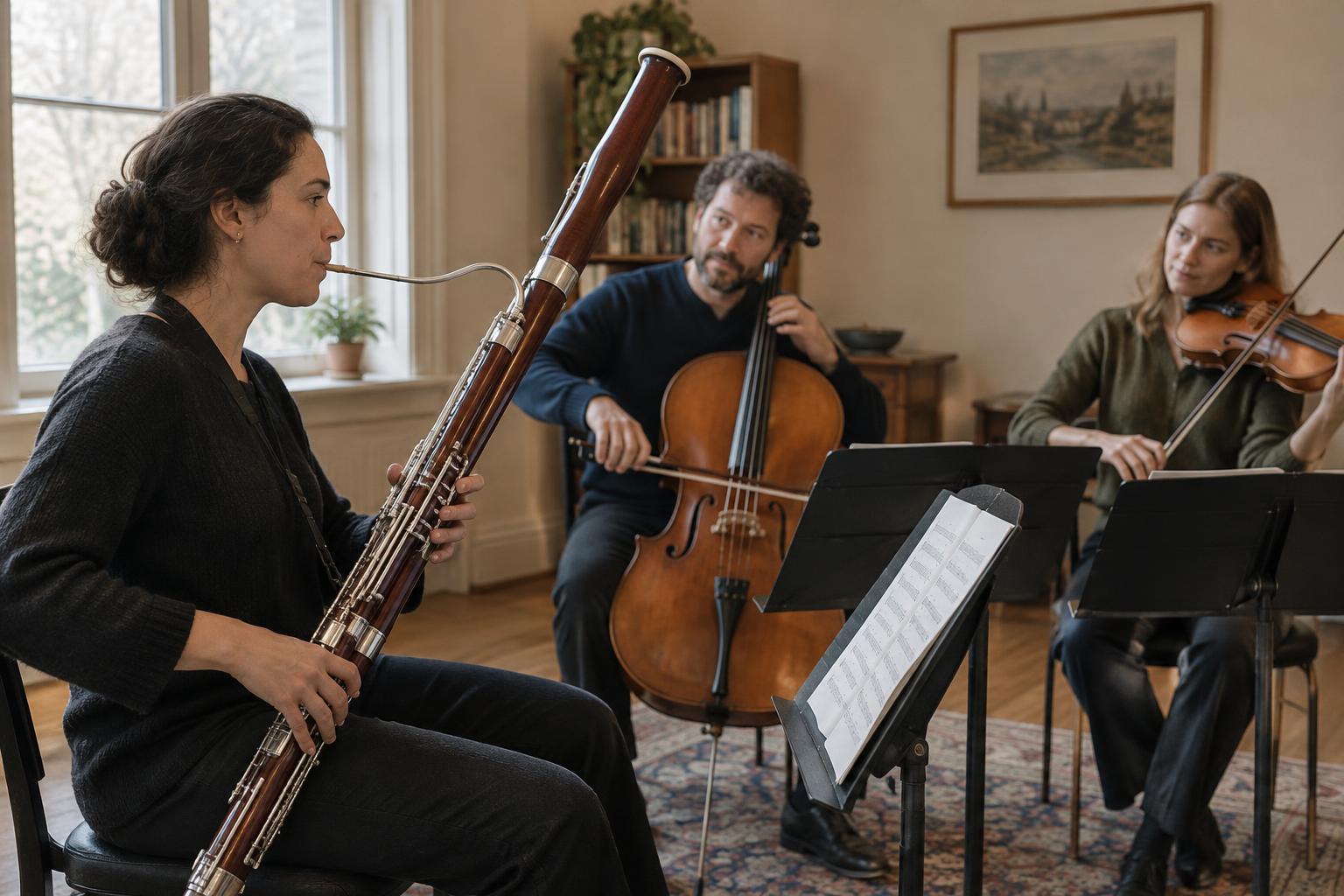
A low melodic instrument, such as a cello or bassoon, may play the bass line alongside the harpsichord. Their jobs overlap but are not identical. The bass instrument gives the line a sustained, singing presence; the harpsichord can add chords, rhythmic definition, and a clear sense of harmonic change. Together they provide a foundation for upper parts without necessarily drawing attention away from them.
Continuo is therefore more than a repeating accompaniment pattern. A keyboardist might play sparsely beneath a quiet solo line, then use fuller chords where the music calls for more energy. The choices are guided by the written part and by listening to the other players. Two performances of the same piece can sound different while still following its musical framework.
When the harpsichord steps forward
Not every chamber-music harpsichord part is continuo. Sometimes the composer writes out an independent keyboard line that converses with a violin, flute, or other instrument. The harpsichord might answer a short phrase, carry a melody, or share quick-moving figures with its partners. In these passages, listen to it as one voice in a conversation rather than as a chordal backdrop.
Even in a continuo role, it can briefly come into focus. A pause in the upper instruments may reveal a bass movement or a carefully placed chord. A change in texture can make its bright attack especially noticeable. Following these small exchanges is a good way to hear why chamber music depends on cooperation among parts, not simply on a soloist with accompaniment.
How to listen for its sound
Start by listening for the beginning of each note. The harpsichord's pluck can sound bright, dry, delicate, or resonant depending on the instrument, room, and playing. Try tracing the lowest notes first: when the bass changes, notice whether the keyboard harmony changes with it. Then shift your attention to the space between the melody and bass, where the harpsichord's chords often fill in the musical picture.
A recording may make the instrument seem prominent, while a concert seat farther away may blend it into the ensemble. Neither perspective tells the whole story. If you lose track of it, listen at a quieter point or just after another instrument ends a phrase. Rather than expecting the long, swelling lines of a piano, listen for patterns of attack and release that help the group breathe together.
A useful perspective for players and audiences
For players, the harpsichord rewards precise coordination without demanding that every note be played short. A slightly longer note, a delayed chord, or a lighter touch in the texture can change how a phrase feels. In continuo playing, clarity often matters more than filling every available space. The best choices depend on the score and on what the other musicians are doing.
For listeners, there is no need to decode every figured-bass symbol to appreciate the result. Ask a simpler question: what happens to the ensemble when the harpsichord enters, pauses, or changes its pattern? Its plucked strings can mark a pulse, color a harmony, and make room for another voice. Once you begin hearing those functions, this modest-looking keyboard becomes easier to follow—and harder to overlook.