A voice with more than one job
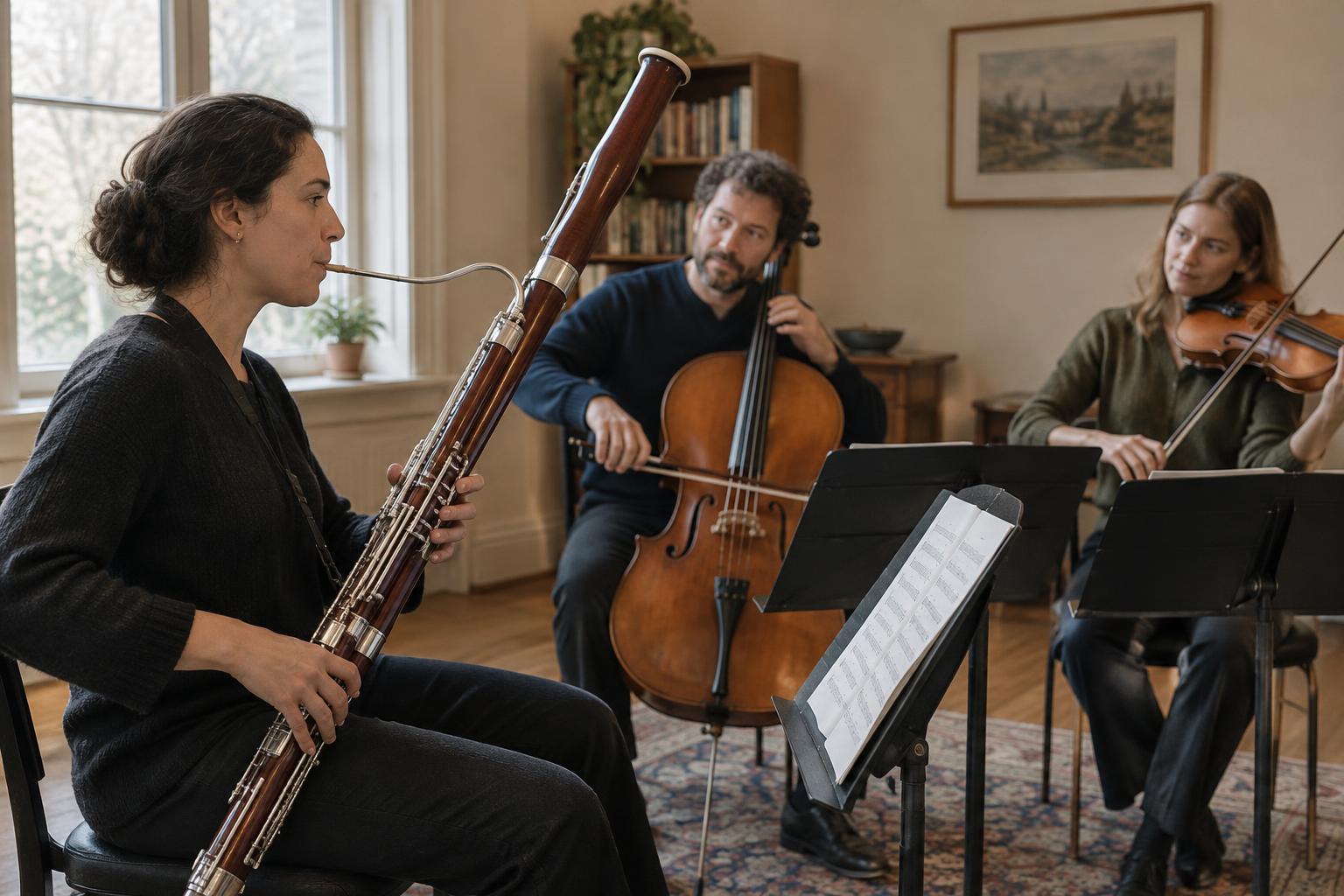
The bassoon is easy to identify by its folded wooden body and double reed, but its sound can be harder to pin down. In one passage it supplies a rounded, low foundation; in the next it sounds nimble, reedy, or almost vocal. Its tone changes noticeably across its range, giving composers and players several ways to fit it into a small ensemble.
Chamber music makes those changes especially clear. With only a few musicians playing, a bassoon line need not compete with a full orchestra. It may be the lowest voice, a partner in the middle of the texture, or the instrument carrying the tune. Listening for those shifts is a useful way to follow a piece, even when you cannot read the score.
Building the bass without disappearing
When the bassoon plays low notes, it often helps listeners hear where the harmony is going. A steady pattern beneath a melody can make the music feel grounded, while a moving bass line can create momentum between chords. This supporting part is not necessarily simple: its rhythm and choice of notes shape how the other lines are understood.
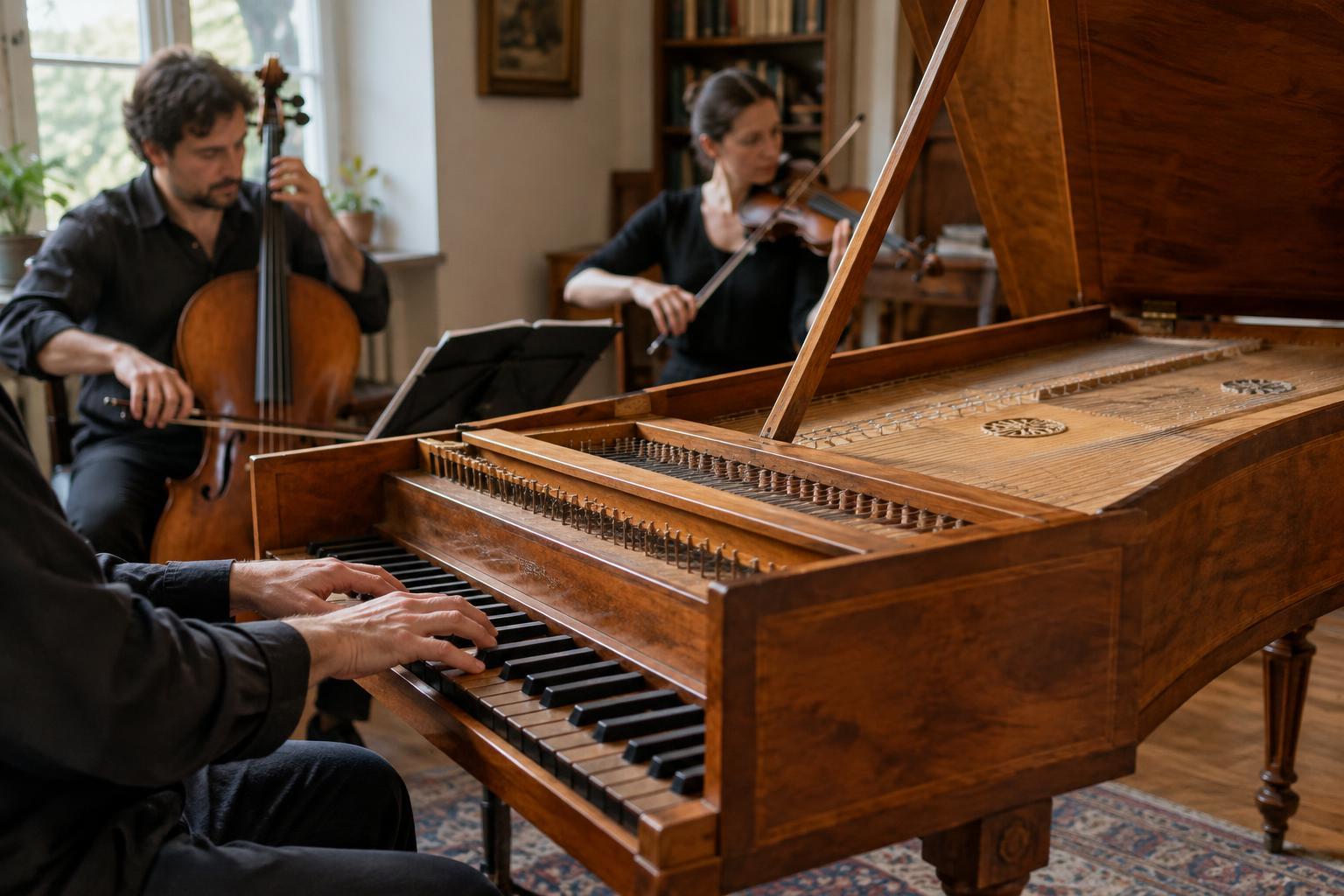
In a mixed ensemble, the bassoon may share this work with a cello, double bass, or piano left hand. Listen for whether they move together or divide the task. A cello and bassoon playing similar notes can reinforce the foundation while adding different colors. If one holds a note while the other moves, the bass may feel both stable and active at once.
Low notes also have limits. A very quiet bassoon line can be covered by a strongly played piano or several sustained instruments. Performers can preserve its presence by adjusting dynamics, spacing their chords, or allowing a brief gap around an important entrance. These choices help the bass remain audible without turning every supporting note into a solo.
The conversational middle ground
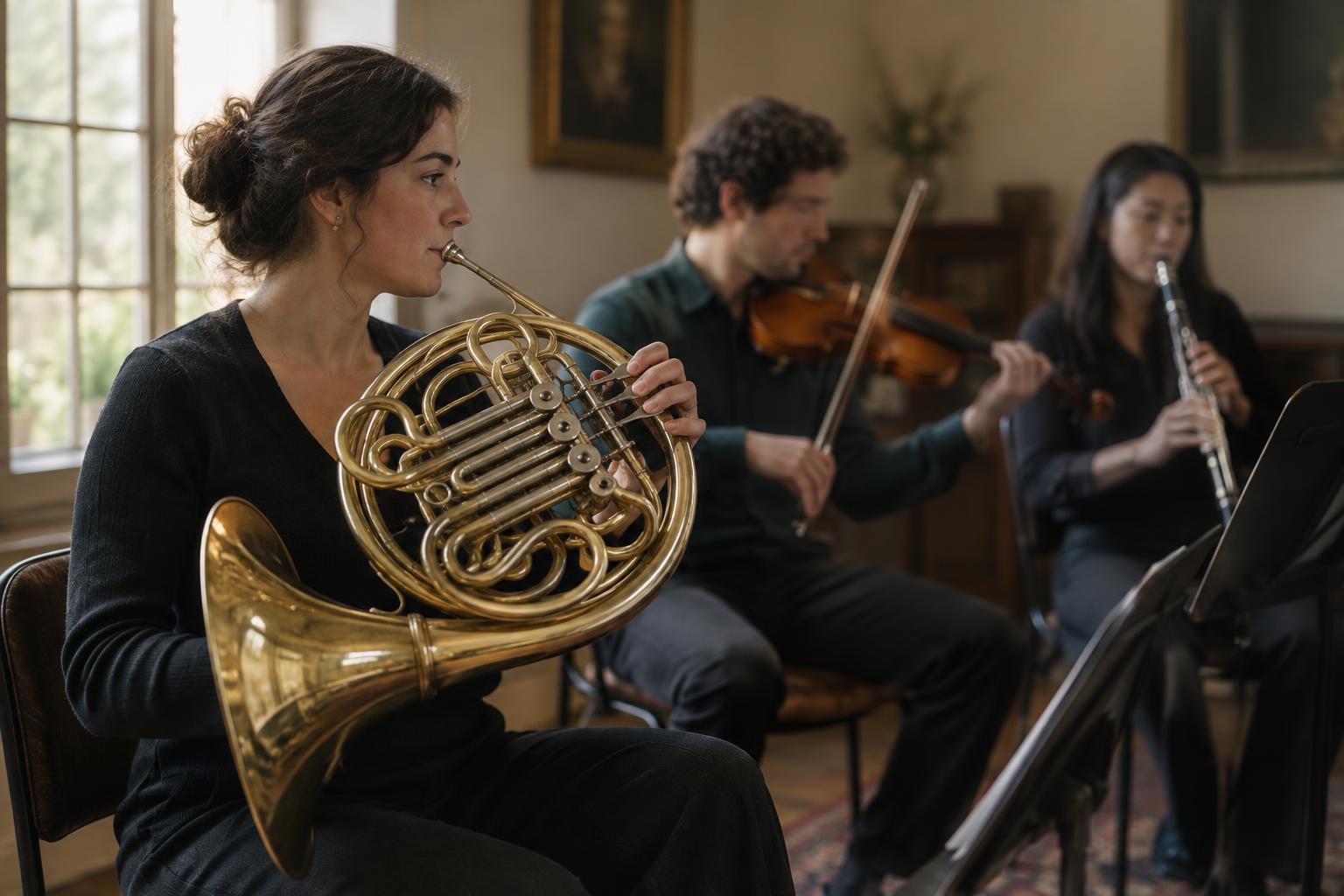
The bassoon often does its most interesting work between the melody and the bass. In its middle register, it can join a clarinet or viola in a shared phrase, answer a violin, or add a line that changes the character of a chord. These parts may not be the first thing you notice, but they can make the ensemble feel like a conversation rather than a melody with accompaniment.
Try listening for short gestures passed between players. A phrase might begin in a higher instrument and finish in the bassoon, or the bassoon might echo its rhythm with a different contour. The handoff can be smooth or deliberately contrasting. A rounded bassoon tone beside a bright upper voice makes the exchange easier to hear, while similar articulation helps the two lines feel connected.
Blending depends on more than volume. The length of each note, the shape of an attack, and the space left at the end of a phrase all affect how parts fit together. A bassoonist playing alongside strings, for example, may match their gentle phrasing without trying to imitate the way a bowed instrument produces sound.
When the bassoon takes the lead
As a solo voice, the bassoon can be expansive without losing its distinctive edge. A melody low in its range may sound intimate and weighty; higher phrases can feel more urgent or exposed. Quick passages reveal another side of the instrument, especially when the surrounding players leave room for its articulation to register.
The change from support to solo can be a dramatic moment in itself. Notice what happens just before the bassoon enters with a tune. Does another instrument finish the phrase? Does the accompaniment become quieter or less busy? When the bassoon returns to the background, has it handed its melody to someone else? These transitions can give a movement a sense of direction.
A good starting point for listening is to follow the bassoon through one short passage without judging whether it is the featured instrument. First locate its sound, then ask what it contributes: a foundation, an answer, a shared rhythm, or a melody. On a second hearing, follow the other players’ responses. The pleasure of chamber music often lies in discovering that a supporting voice has been part of the conversation all along.