A voice that can blend or stand apart
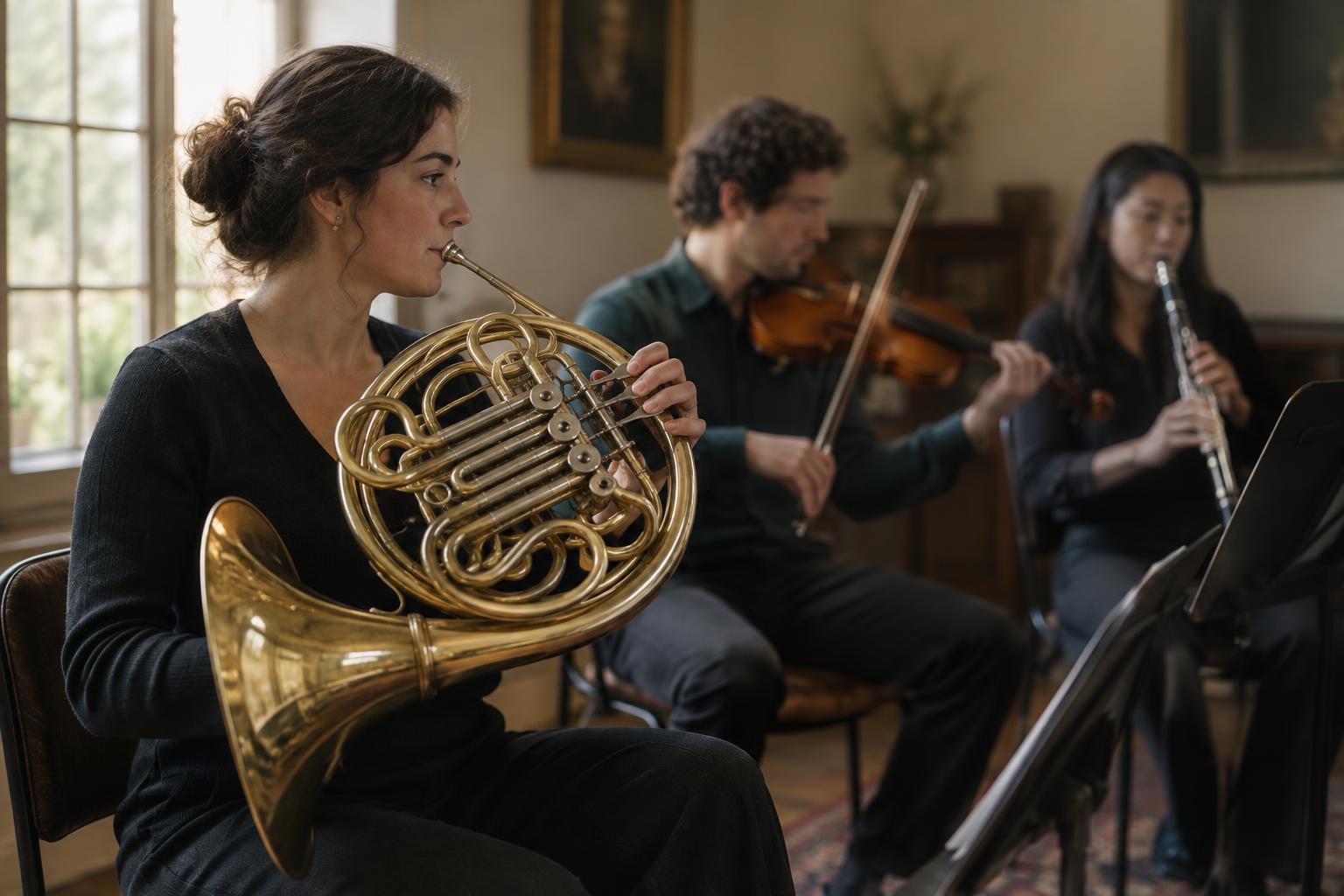
Despite its familiar name, the French horn is a brass instrument. The player buzzes into a mouthpiece, and that vibration travels through a long coil of tubing before emerging from a wide bell. Its sound can be rounded and mellow, but it is not always gentle. A horn can also sound bright, urgent or imposing, especially when it plays high or strongly.
This flexibility makes the horn valuable in chamber music, where every instrumental color is easy to hear. In one passage, its sustained notes may seem to grow out of a clarinet or viola line. In the next, a clear horn entrance can change the character of the whole group. Rather than listening for one fixed “horn sound,” notice how the player adjusts tone to fit the instruments nearby.
How range changes the color
The horn covers a broad range, and its register affects how it comes across. Lower notes often feel dark and grounded; middle-register notes can carry a warm, singing melody. Higher notes tend to project with more brilliance and may create a sense of tension or arrival. These are tendencies, not rigid rules: volume, articulation and the musical setting matter too.
Horn parts are usually written for a transposing instrument. On the common horn in F, the sound is a perfect fifth lower than the written note. Listeners do not need to calculate that interval, but it can help anyone following a score understand why the notes on the page may not match a piano keyboard at the same pitch. In performance, the more useful question is where the horn sits in the ensemble’s overall texture.
The player’s control of tone
Valves allow the modern horn player to use different lengths of tubing and move between notes. Changes in breath, embouchure and articulation shape each note further. A smooth connection can make a phrase feel vocal, while short, clean notes can give a passage lift and momentum. Because chamber music exposes fine details, the start and end of a horn note can be as expressive as its sustained sound.
The player also keeps a hand in the bell. Hand position helps shape the tone and can alter pitch slightly. Closing the bell more fully produces a distinctive stopped sound that is often tighter and more piercing than an open tone. When you hear an abrupt change of color without a change of instrument, this technique may be part of the reason.
The horn’s jobs in a small ensemble
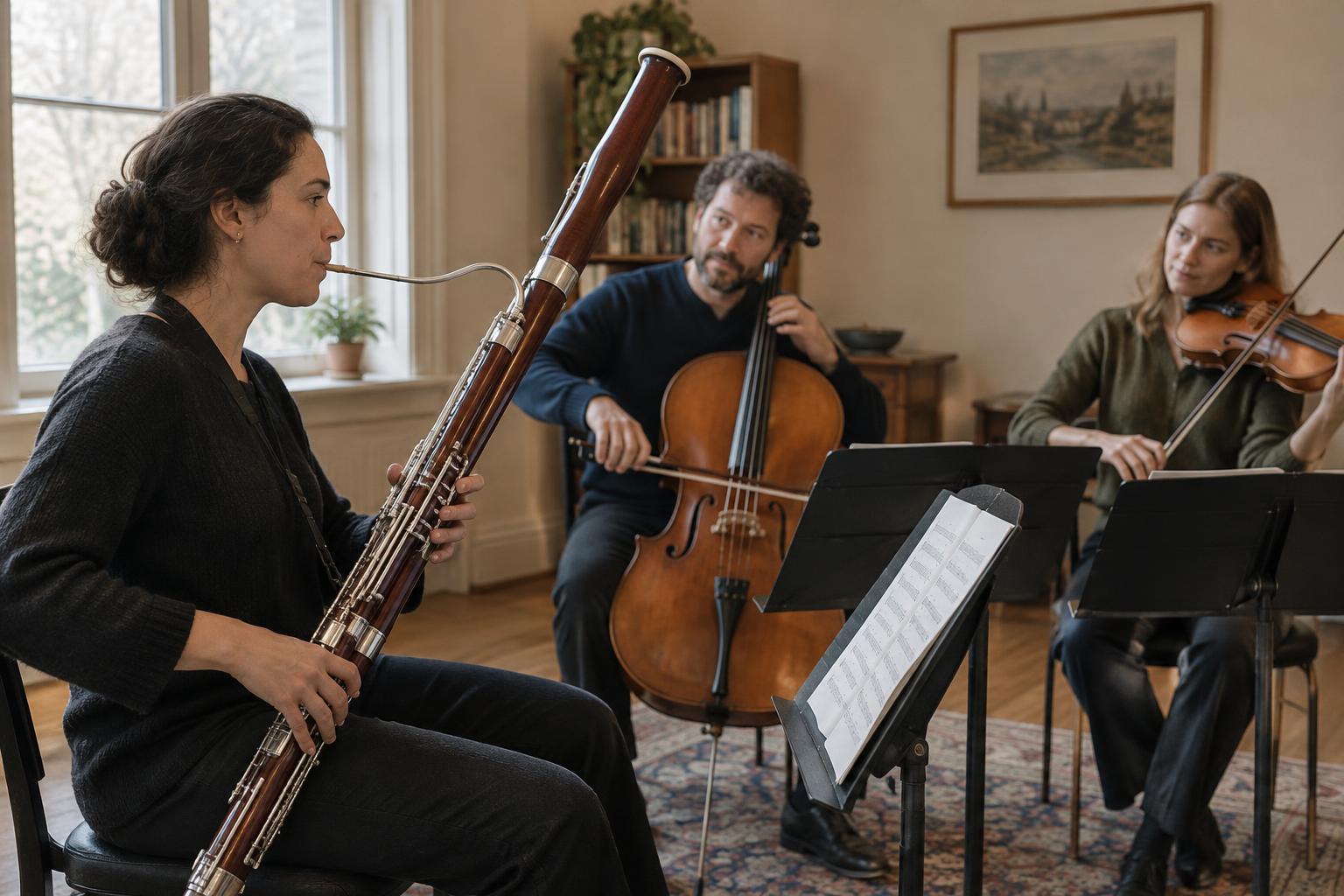
In a wind quintet—flute, oboe, clarinet, bassoon and horn—the horn can act as a bridge. It may reinforce a bassoon line, blend into a warm chord with the clarinet or answer the brighter flute and oboe. It can also carry a melody above the other players. The interest lies in those changing relationships: a note that sounds prominent alone may disappear into a shared chord a moment later.
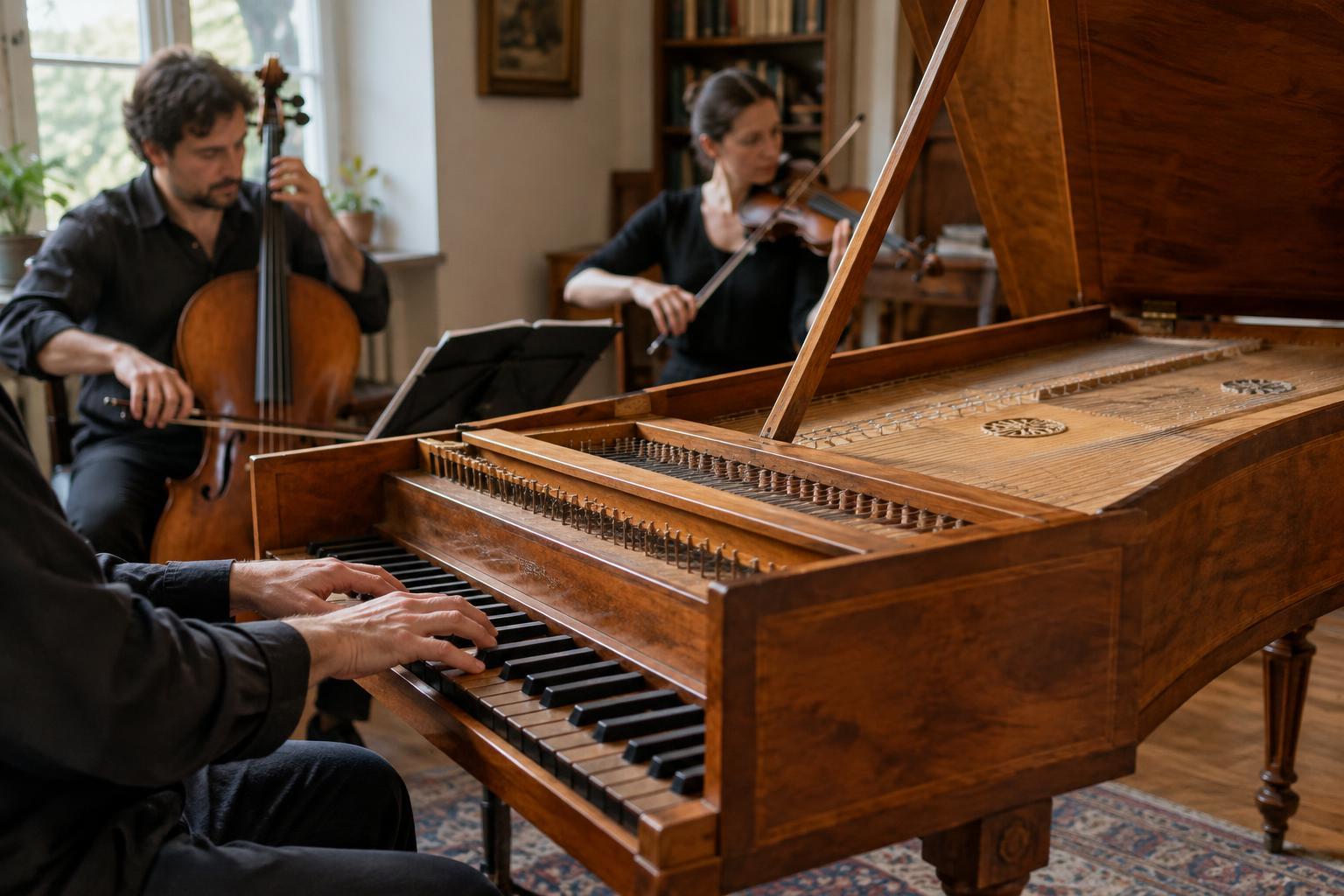
With strings, the horn adds a color that bowed instruments cannot make in quite the same way. It might support a violin melody, fill the space between upper and lower strings, or take over a phrase as the strings shift to accompaniment. In a horn trio with violin and piano, each instrument has a noticeably different way of sustaining sound. Listen for how a phrase passes between them without losing its shape.
What to listen for in performance
Start by following entrances. Does the horn introduce an idea, echo another player or arrive only when the harmony needs weight? Then listen to balance. A strong horn tone can command attention, while a restrained one can let a quieter instrument remain in front. Chamber players continually adjust to one another, so an effective horn part is not simply a matter of playing softly or loudly.
Finally, notice what happens at the end of a phrase. A horn note may taper into silence, hold steady beneath moving notes or hand a melody to another instrument. These small choices reveal the horn’s special place in chamber music: it can be a solo voice, a partner in conversation and part of the ensemble’s shared sound.