Why quiet matters in a small room
Chamber music often places a few performers close to their listeners. A soft violin entrance, a pianist’s fading chord or the pause before a phrase can be part of what makes the performance absorbing. In that setting, a brief alert or a whispered sentence may be more noticeable than it would be in a larger, louder event. Quiet audience etiquette is not a test of expertise. It is a way of giving the musicians room to play and other listeners room to hear.
The goal is thoughtful attention, not an impossible promise never to make a sound. People shift in their seats, breathe and sometimes cough. If you are new to concerts, you do not need to anticipate every convention before you arrive. A few simple preparations will prevent most avoidable interruptions, and you can respond calmly when something unexpected happens.
Settle your phone before the music begins
Before taking your seat, silence your phone and check alarms, reminders and other devices that might make noise. Vibration can still be audible against a chair or inside a bag, so a setting that makes no sound or buzz is the safer choice. If you need to remain reachable, consider how you will step outside to check messages rather than watching the screen during the performance.
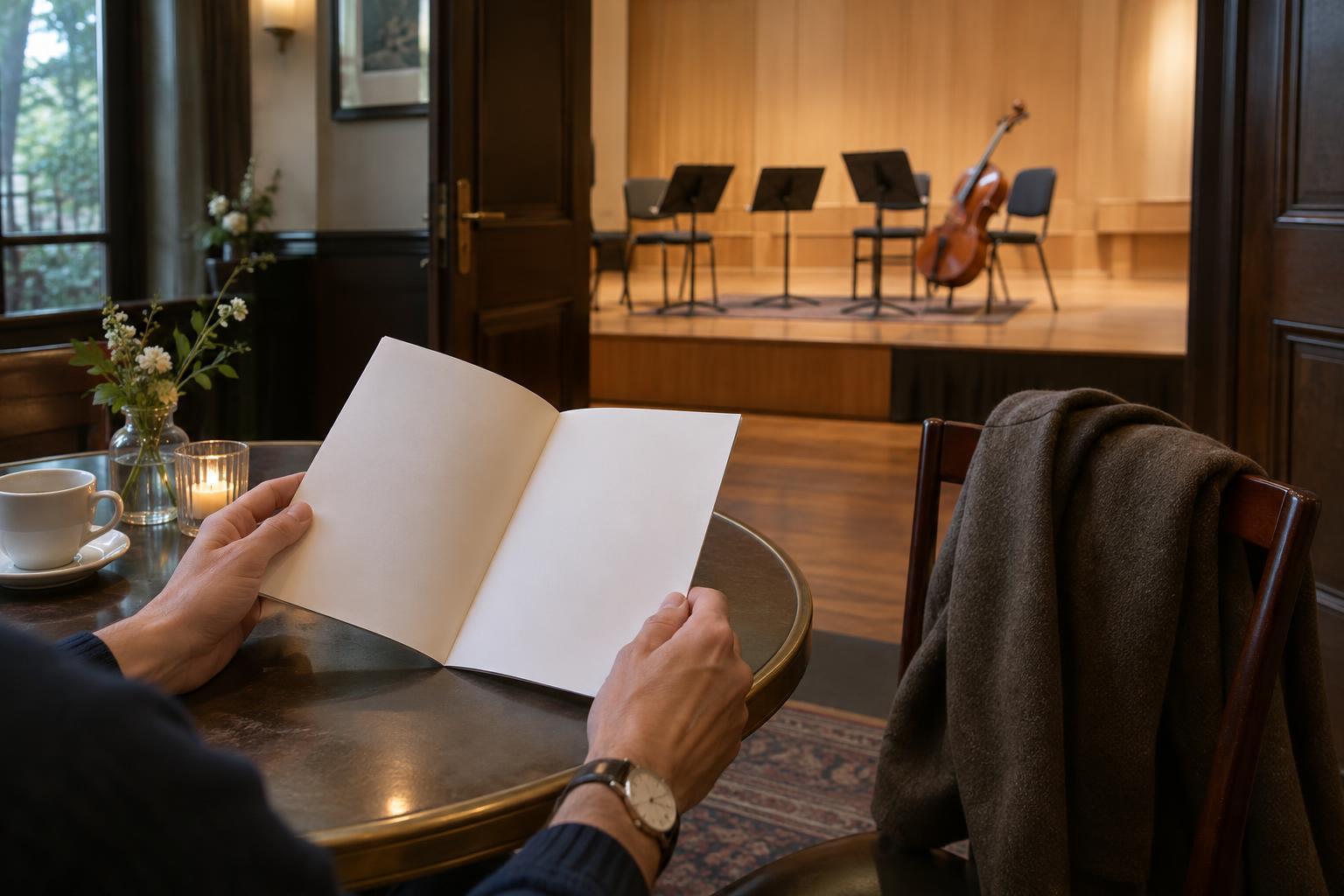
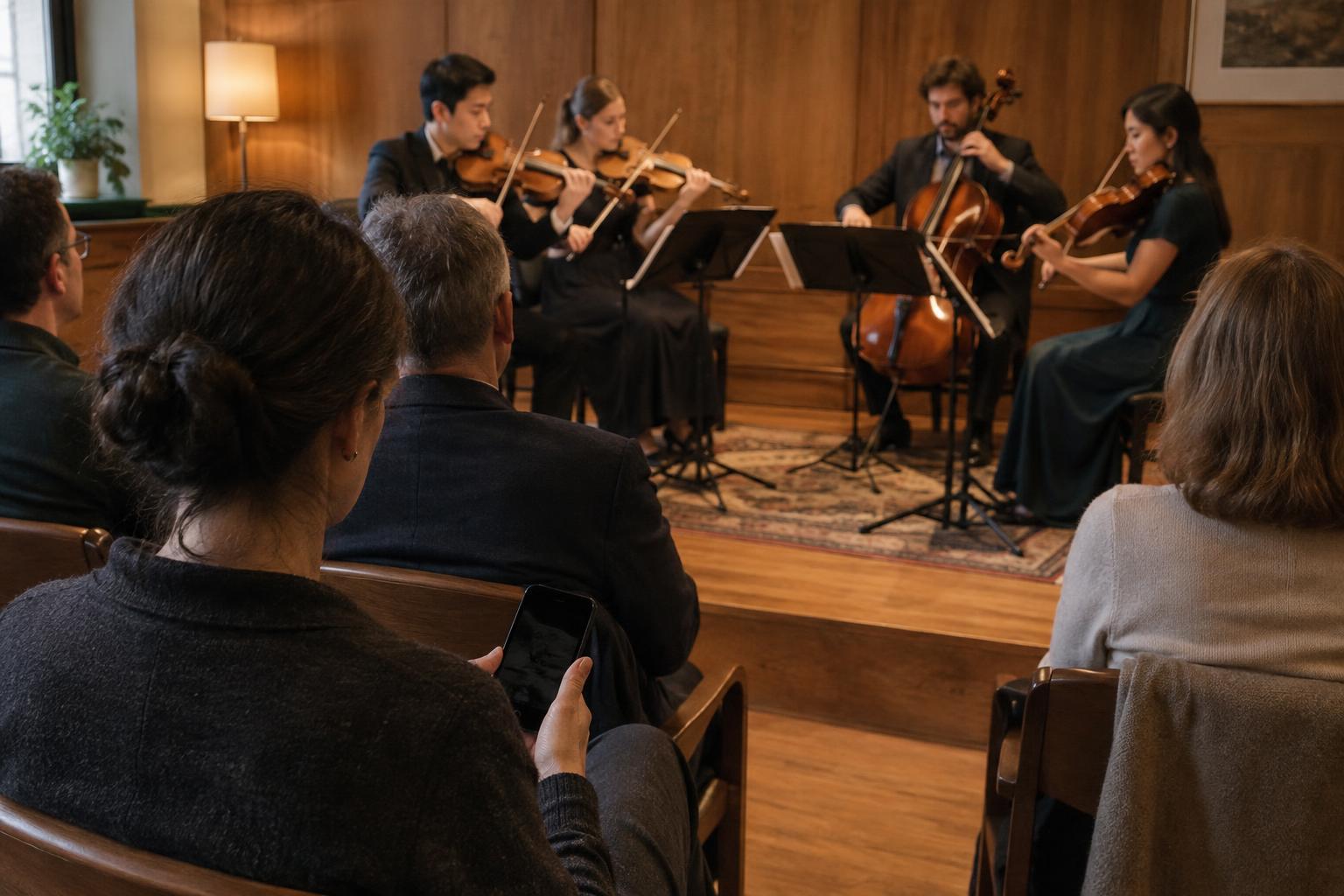
Even a silent screen can draw attention in a dim room. Try to finish reading the program, sending messages and finding your ticket before the players begin. Keep the phone put away until an interval or the end, unless you have an urgent reason to leave. Do not assume photography or recording is permitted: follow the venue’s guidance. If you must use your phone, stepping out is less distracting than trying to hide a lit screen.
Save conversation for the pause
A comment that seems quiet to the speaker can travel surprisingly far during a gentle passage. Save questions, translations and reactions for an interval or for after the piece. If you want to point something out to a companion, a glance at the program may be enough; you can discuss the moment later. Listening together does not require explaining the music as it unfolds.
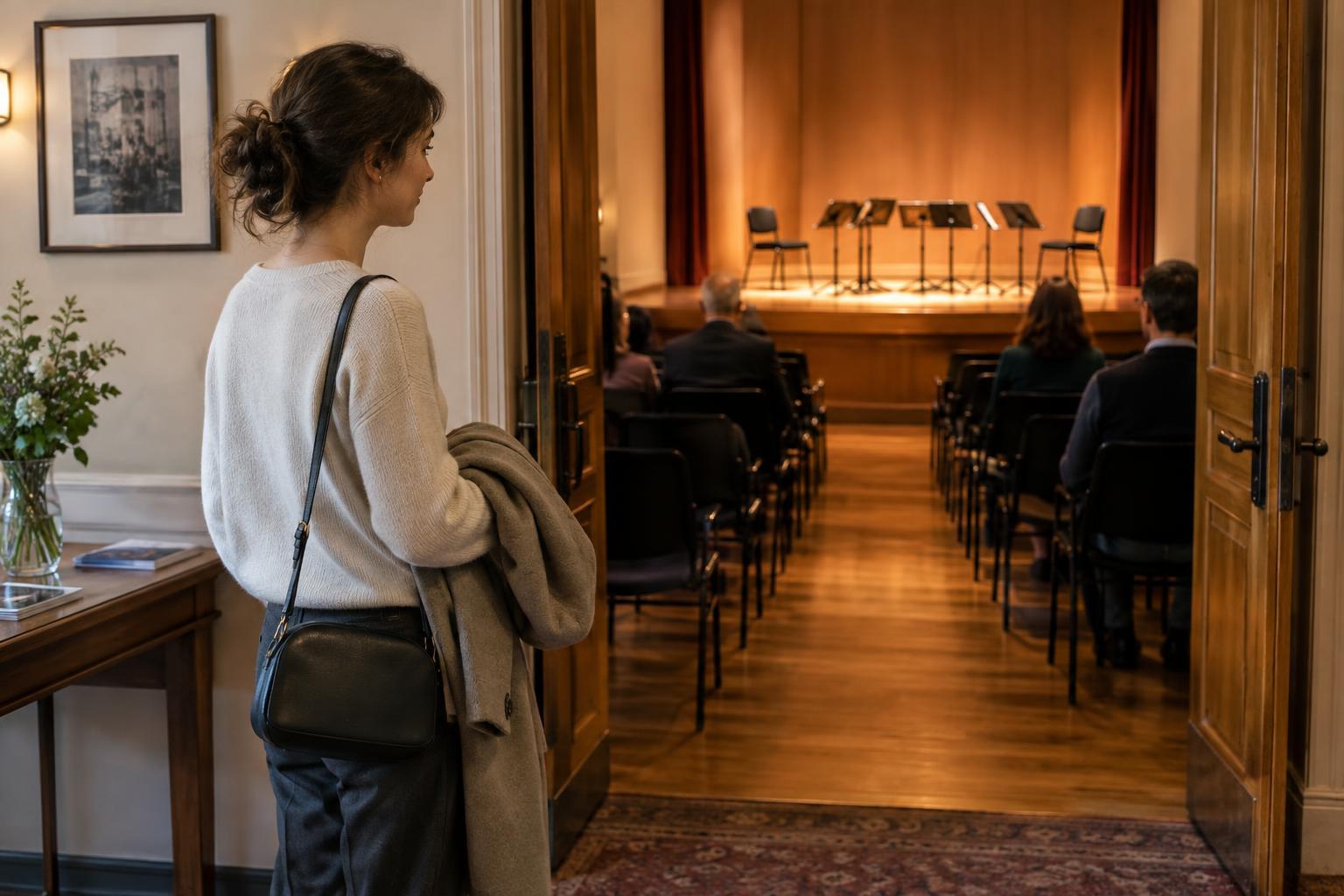
Conversations are easiest to finish before the performers take their places. If you arrive while someone is speaking from the stage, give that introduction the same attention you would give the music. When you are unsure whether a piece has ended, waiting a few seconds before talking is usually comfortable. Chamber works can have several movements, with short pauses between them; those pauses may still be part of the shared listening experience.
Handle coughs without turning them into an event
An occasional cough is human, and most people in the room will understand. If you feel one coming, covering your mouth and turning slightly away from nearby listeners can help. Having water or an unwrapped lozenge ready may be useful if the venue permits them. Open any crinkly wrapper before the performance rather than during a quiet passage.
If coughing continues, leaving briefly can be more comfortable for you and for those around you. Choose a moment when movement is least disruptive if you can, then ask an usher about returning or wait for a suitable break. There is no need to rush out over a single cough or to apologize repeatedly afterward. The practical question is simply whether staying seated or stepping away will cause less disturbance.
Be considerate without policing the room
If someone else’s phone rings or a neighbor coughs, a glare or whispered correction can add another interruption. Give them a moment to deal with it. If a repeated problem makes listening difficult, an usher can usually help more discreetly than an exchange during the performance. The same courtesy applies to your own mishaps: silence the sound, put the device away and return your attention to the players.
Good concert culture leaves space for both concentration and ordinary human needs. Prepare what you can, keep avoidable sounds to a minimum and use breaks for the things that can wait. That is enough to help an intimate performance feel attentive rather than tense.