Dress for the venue and for comfort
There is no single outfit for every chamber music concert. A performance in a concert hall may feel more formal than one in a library, community space, or private home. If the event information gives a dress code, follow it. Otherwise, neat clothes that let you sit comfortably are a reliable choice. You do not need to dress as though you are performing.
Think about the practical details of the room and the trip there. A layer you can put on or take off helps if the temperature differs from what you expected. Shoes that are comfortable for walking, stairs, and standing in a queue are often more useful than shoes chosen only for appearance. If you are unsure what to wear, aim for clothes that would feel appropriate at a quiet evening out rather than trying to guess what other audience members will choose.
Pack lightly, but bring the essentials
Your ticket or booking confirmation is the first thing to check before leaving. If it is on your phone, make sure you can find it without searching through messages at the door. Bring any identification or concession documentation the venue says it requires. A small bag can hold your keys, glasses, and an extra layer while being easy to keep out of the aisle.
Reading glasses may be useful if you want to look at a printed program, even though you can enjoy the music without reading along. Water can be helpful before or after the performance, but check whether drinks are allowed in the auditorium. It is worth looking at the venue’s bag, coat-check, and accessibility information in advance rather than assuming every space has the same arrangements. Leave bulky or noisy items behind when you can; a rustling bag is surprisingly noticeable during quiet music.
Keep sounds and scents in mind
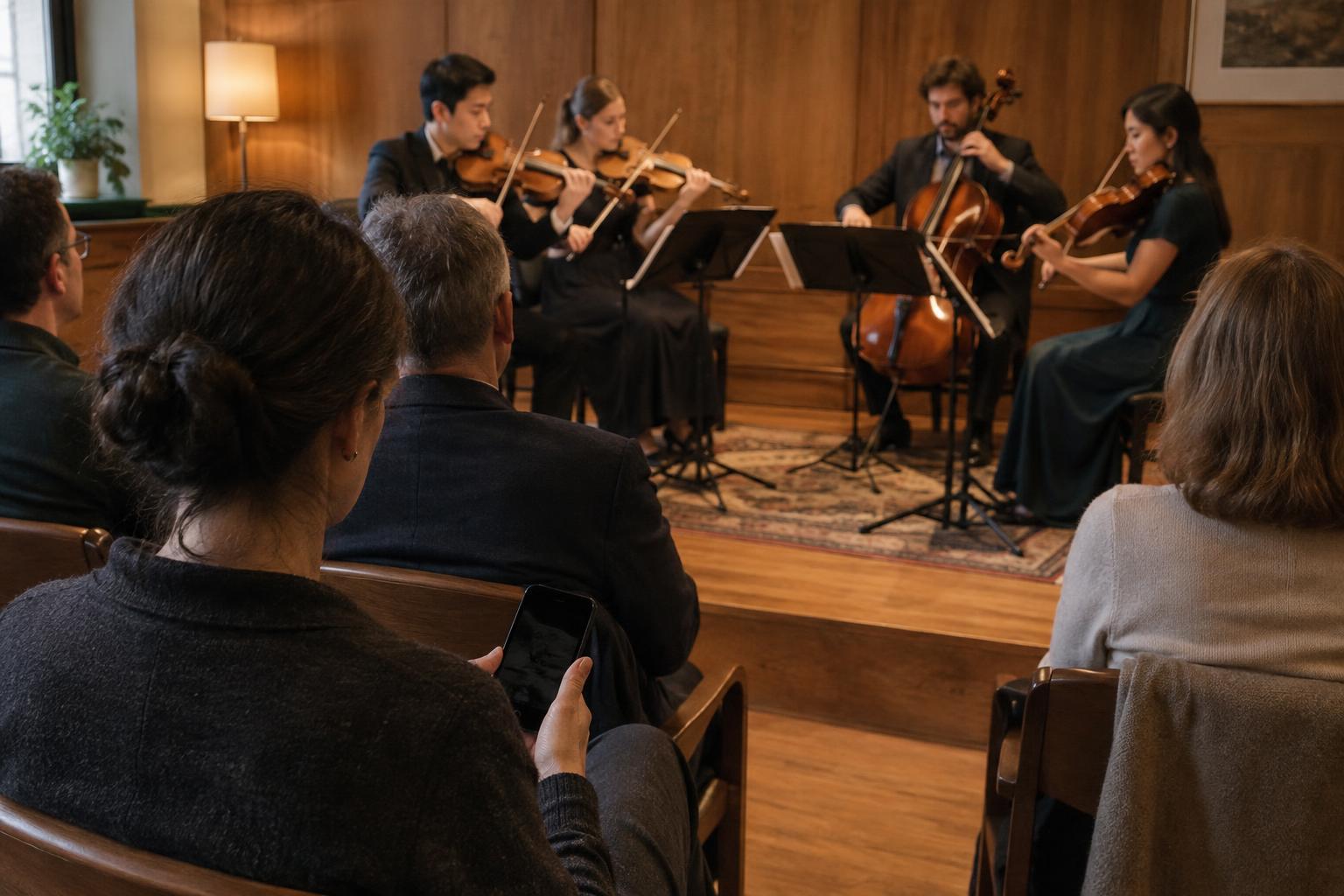
In chamber music, a handful of players may be making very soft sounds. That closeness is part of the pleasure, but it also means small audience noises can carry. Choose accessories and clothing that will not jingle or crinkle each time you shift in your seat. Before the music starts, silence your phone fully, including alarms and notification sounds, and put it away. A lit screen can distract people nearby even when the device makes no noise.
Go easy on strong fragrance. Seats may be close together, and some listeners are sensitive to scents. If you need to unwrap a cough drop or take something from your bag, doing so before the performance or during a break is less disruptive. These courtesies are not a test of whether you belong at a concert. They simply help everyone hear the details they came to enjoy.
Plan for the whole visit, not just the music
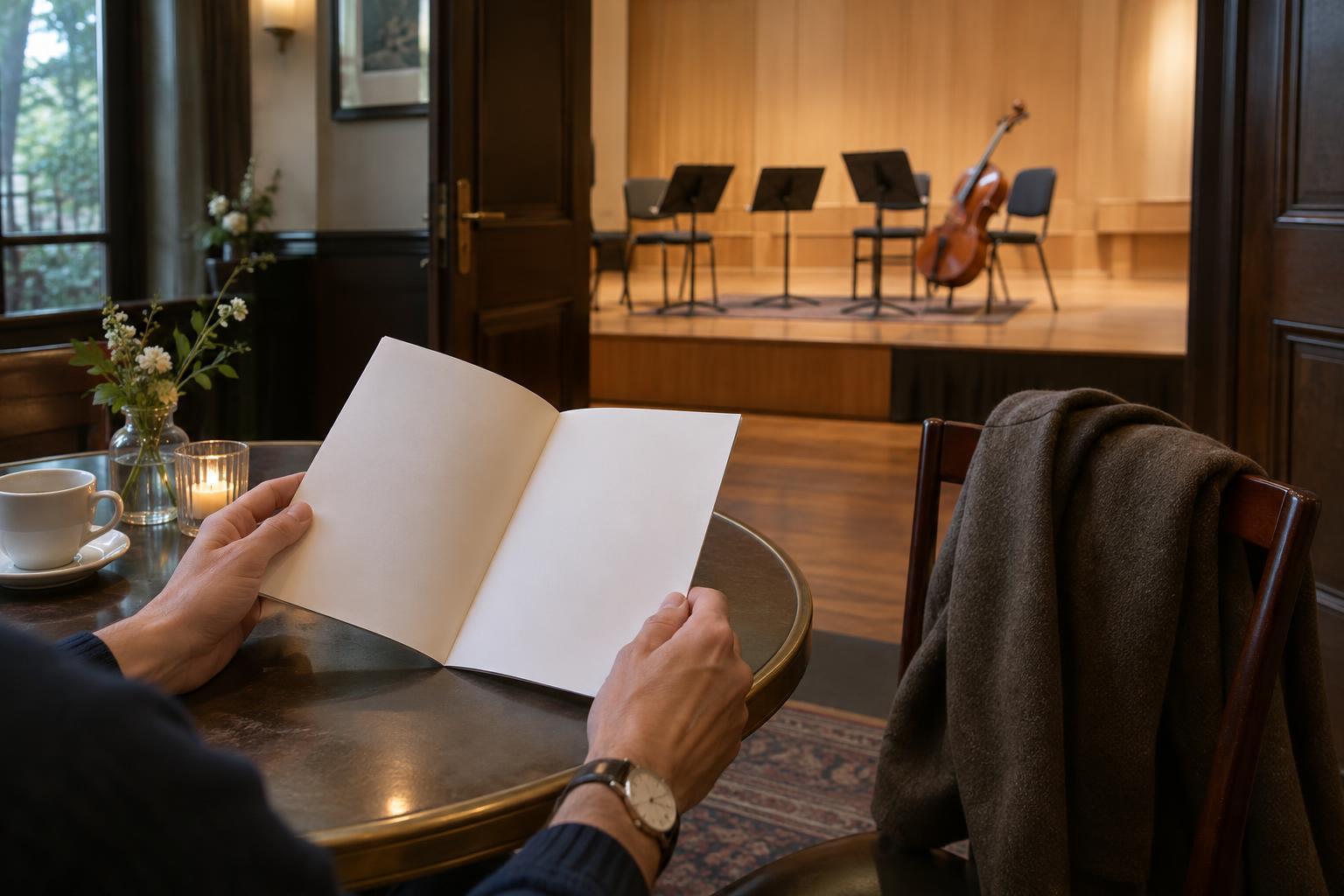
Check the location and arrival instructions before you set out. Reaching the venue with time to find your seat, use the restroom, and look over the program usually makes the start of the concert more relaxed. Some venues restrict entry while a piece is in progress, so arriving early can spare you a wait outside the room. If you have seating or access needs, contacting the venue beforehand is better than hoping to sort them out at the last moment.
You do not need specialist knowledge to attend. A program may list the works and performers, but it is fine to set it aside and listen without following every movement. Applause customs vary: if you are uncertain, waiting to see what others do is an easy option. Once you are seated, the most useful thing you have brought is your attention. Comfortable clothes and a few well-chosen essentials let you give it to the music.