The simple answer: wait for the whole piece
At many chamber concerts, the usual custom is to applaud when an entire work has ended, rather than after each movement. A string quartet, piano trio, or sonata may have several movements, each with its own ending and a short pause before the next begins. That pause gives the players a moment to reset and lets the audience carry the sound of one movement into the next.
This is a convention, not a test of whether you belong in the room. Applause between movements is rarely a disaster, and customs differ among audiences and performances. If you are new to chamber music, the most useful approach is to listen, notice what the players are doing, and allow a beat before deciding to clap.
Why a pause is not always an ending
A movement is a section of a larger musical work, somewhat like a chapter in a book. It may end emphatically, softly, or on a note that seems to ask a question. The players might lower their instruments, turn a page, adjust a chair, or exchange a glance before continuing. None of these actions necessarily means the whole piece is over.
Some pauses are especially short. A composer may intend one movement to lead almost directly into the next, with little space for applause. In other works, the silence is part of the expressive effect: after an intense or quiet ending, a few seconds can give the music room to settle. Waiting through that silence is one way an audience can take part in the performance.
How to tell when the work has finished
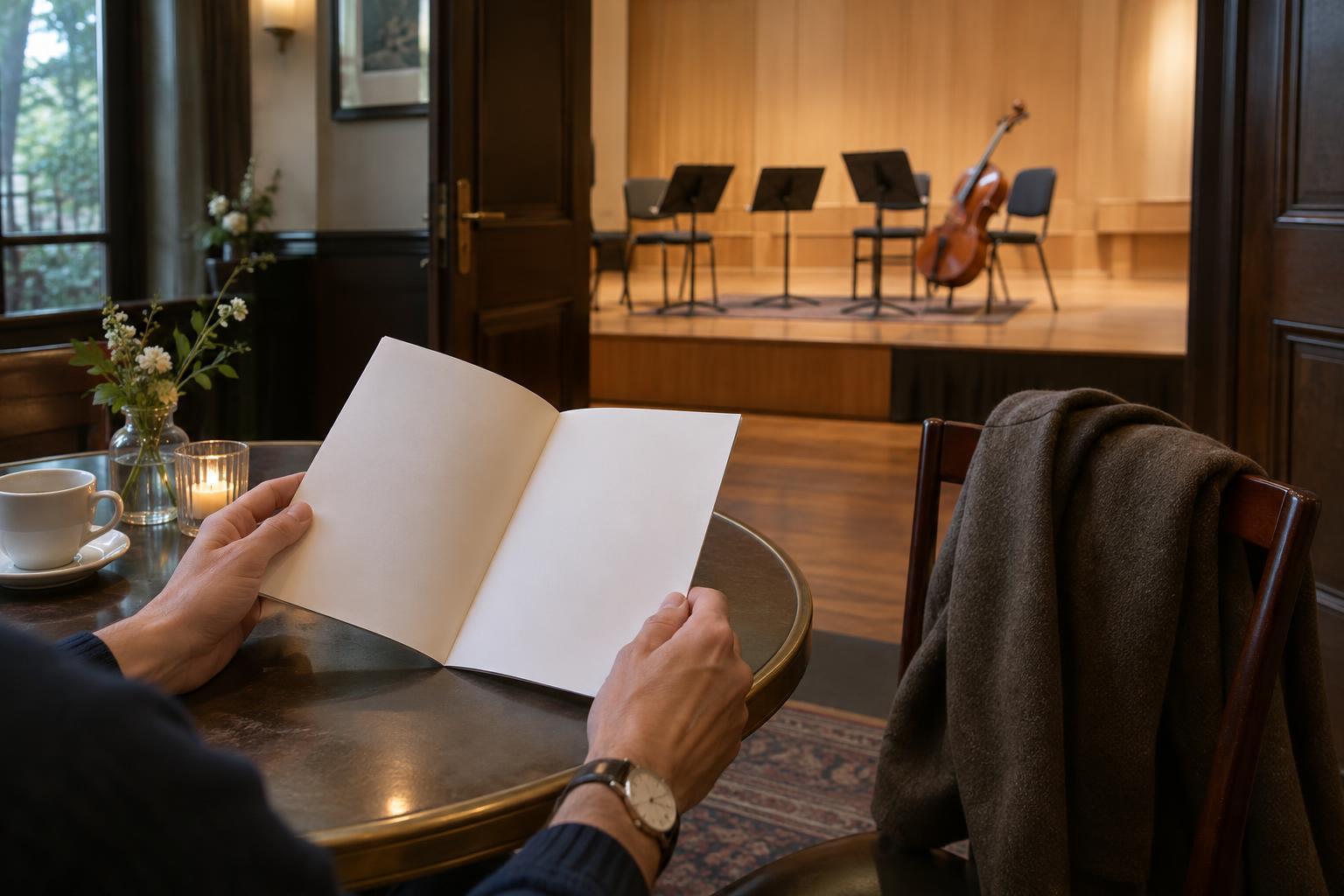
A printed or digital program can help. If it lists a work with several movement titles or tempo markings beneath it, you can follow where you are in the larger piece. You do not need to memorize the titles. Simply knowing that more sections are coming can make a convincing-sounding ending less confusing.
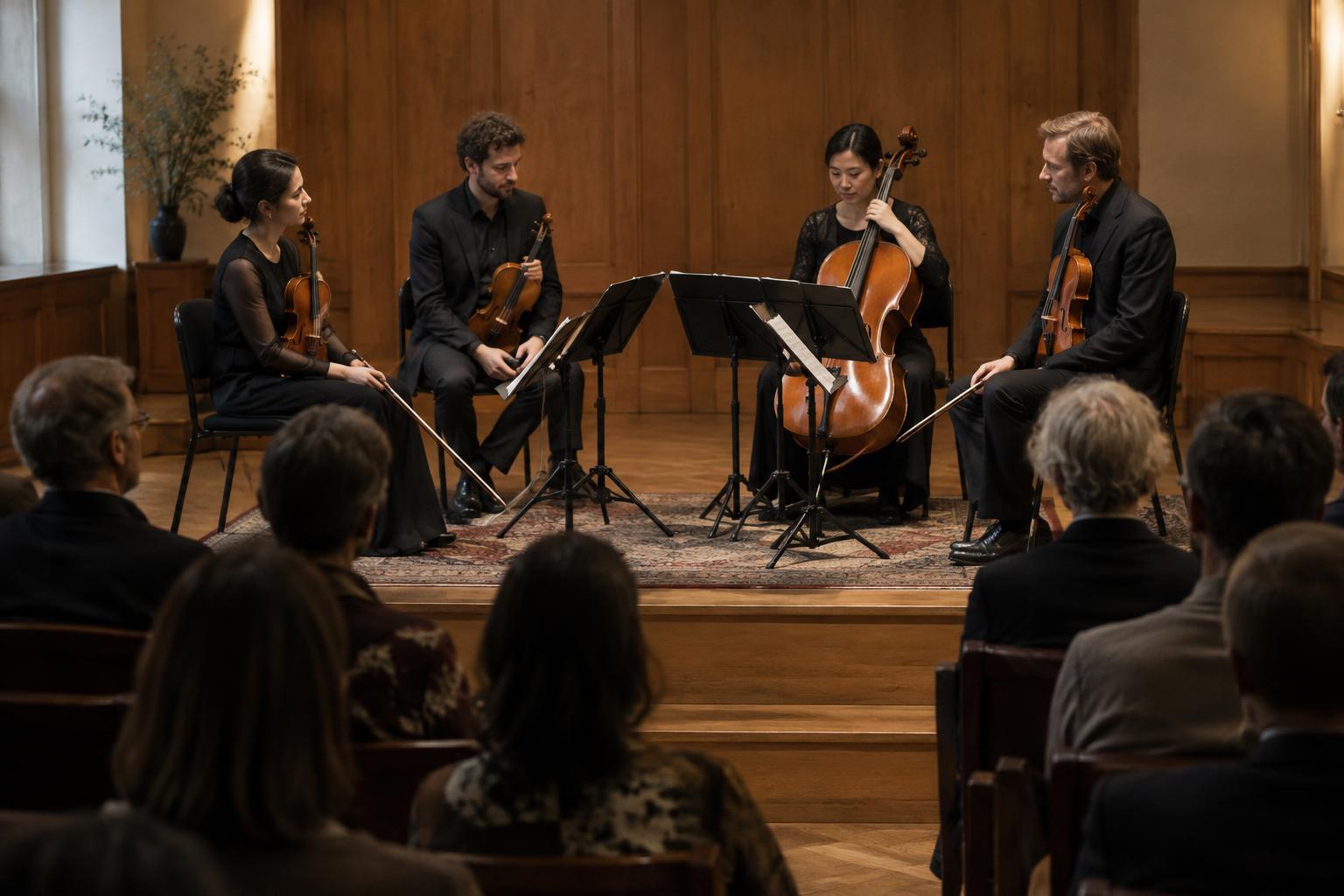
When you cannot use the program, watch the ensemble. At the end of a work, players often relax more fully, lower their instruments, release their focus on one another, or acknowledge the audience. A pianist may take their hands away from the keyboard and turn toward the room. By contrast, players preparing the next movement may stay poised, look to one another, or remain in a listening posture. These are helpful clues, though no single gesture is a guaranteed signal.
If you are still unsure, wait for the performers or the rest of the audience. Being among the first to clap is never required. A short delay is natural at a chamber concert, particularly after a gentle ending.
What if applause starts between movements?
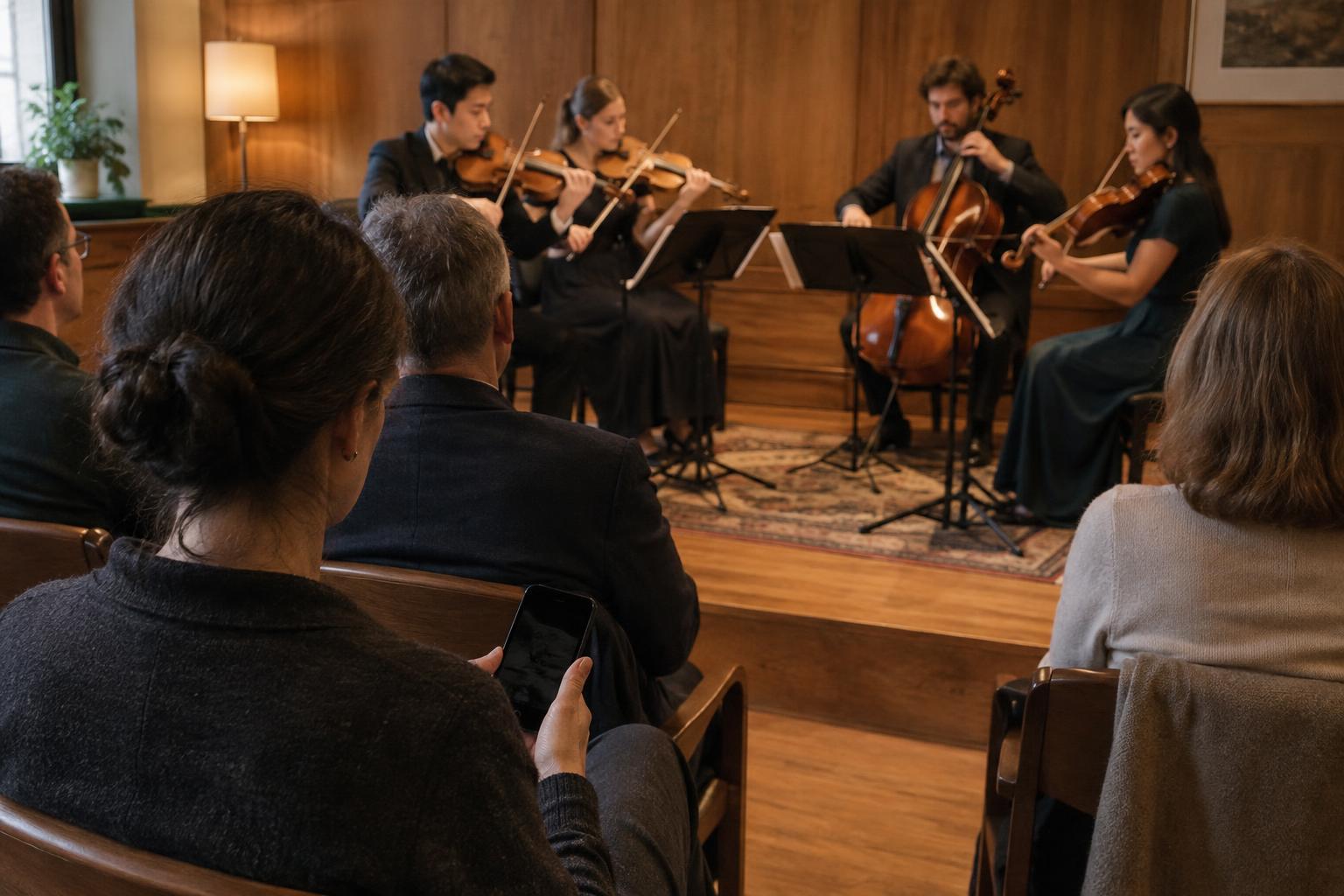
If other people clap between movements, you can join them or remain quiet. You do not need to correct anyone. The performers will generally make clear when they are ready to continue, and the room will settle. At some concerts, spontaneous applause follows a particularly energetic movement; at others, the audience stays silent until the end. Neither response changes what you have heard.
The same kindness applies if you clap and then realize another movement is coming. Stop when the applause fades, refocus, and enjoy the music. Chamber music thrives on close attention between players and listeners, not on perfect knowledge of etiquette.
Let the concert itself be your guide
The setting can affect expectations. A formal recital may have longer, quieter pauses, while an informal or educational concert might invite a more immediate response. Performers may also speak to the audience, explain how a piece is structured, or signal that a group of short works should be heard together. Take those cues as they come rather than relying on a rule for every occasion.
The best habit is straightforward: listen to the last sound, give the silence a moment, and look toward the musicians. When the piece is clearly over, applaud freely. Until then, you can appreciate the performance just as actively by staying present for what comes next.