Start with a small, memorable idea
A motif is a short musical idea that can return in recognizable forms. It might be a rhythm, a sequence of rising and falling notes, or a combination of both. Unlike a long melody, it may be over almost as soon as you notice it. Three notes with a distinctive pause afterward can be enough to give your ear something to follow.
On a first listen, resist the urge to catch every detail. Choose one brief figure near the opening and remember its simplest feature: perhaps two quick notes followed by a longer one, or a leap upward followed by a step down. You do not need to name the notes. If you can hum, tap, or describe the figure, you have a useful listening anchor.
Listen for resemblance, not exact repetition
A motif does not have to return note for note. A composer might keep its rhythm but change its pitches, or preserve its rising shape while making the notes longer. The figure might appear higher or lower, move faster, or become only the start of a new phrase. Ask, “What still sounds familiar?” rather than “Is this exactly the same?”
Imagine a hypothetical motif made of two short notes and one long note, rising each time. Later, the same rhythm could descend, giving the phrase a different sense of direction. Later still, the long note might be left out, so that the two short notes pass rapidly between players. These are not three identical appearances, but each can recall part of the opening idea.
Notice what the instruments change
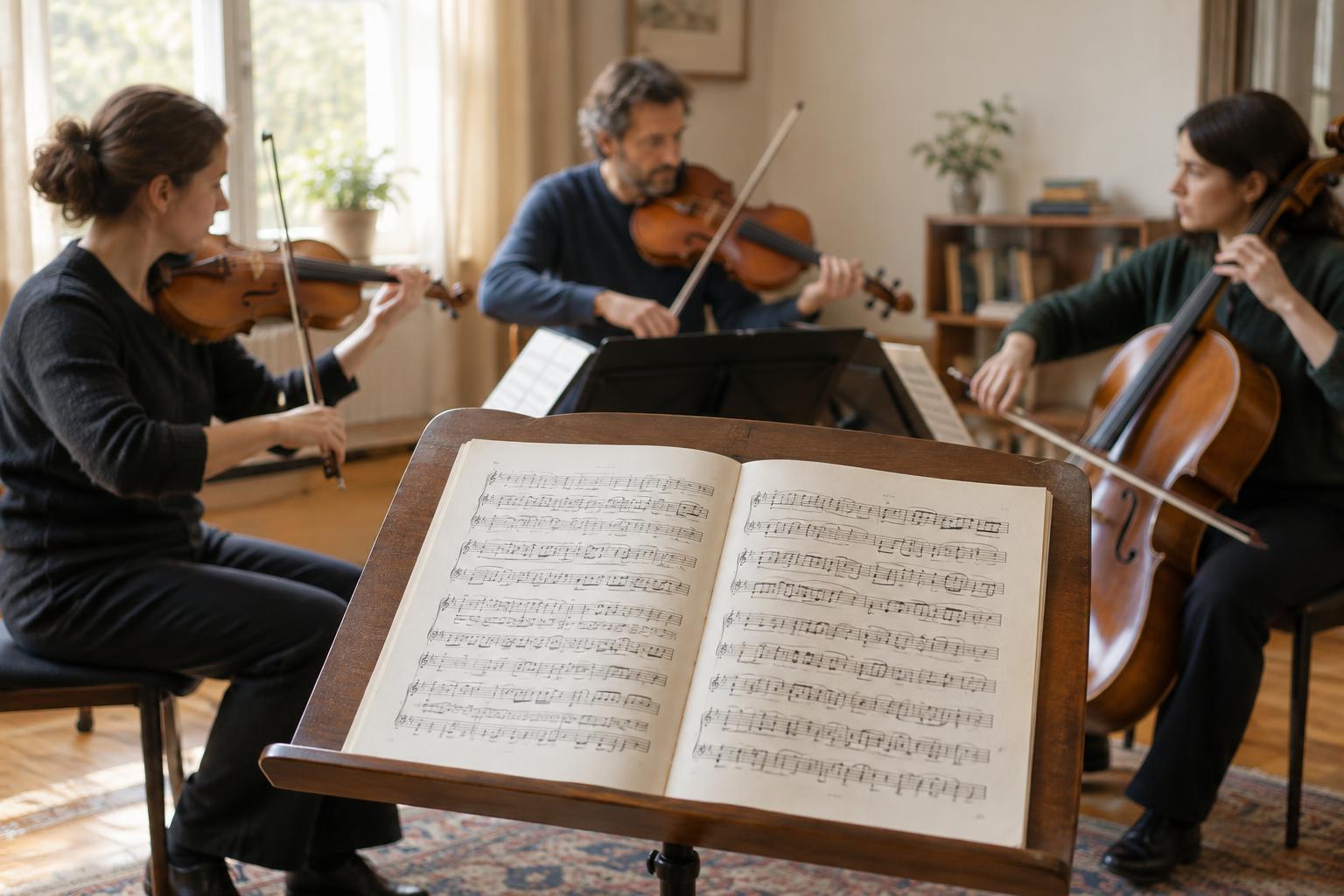
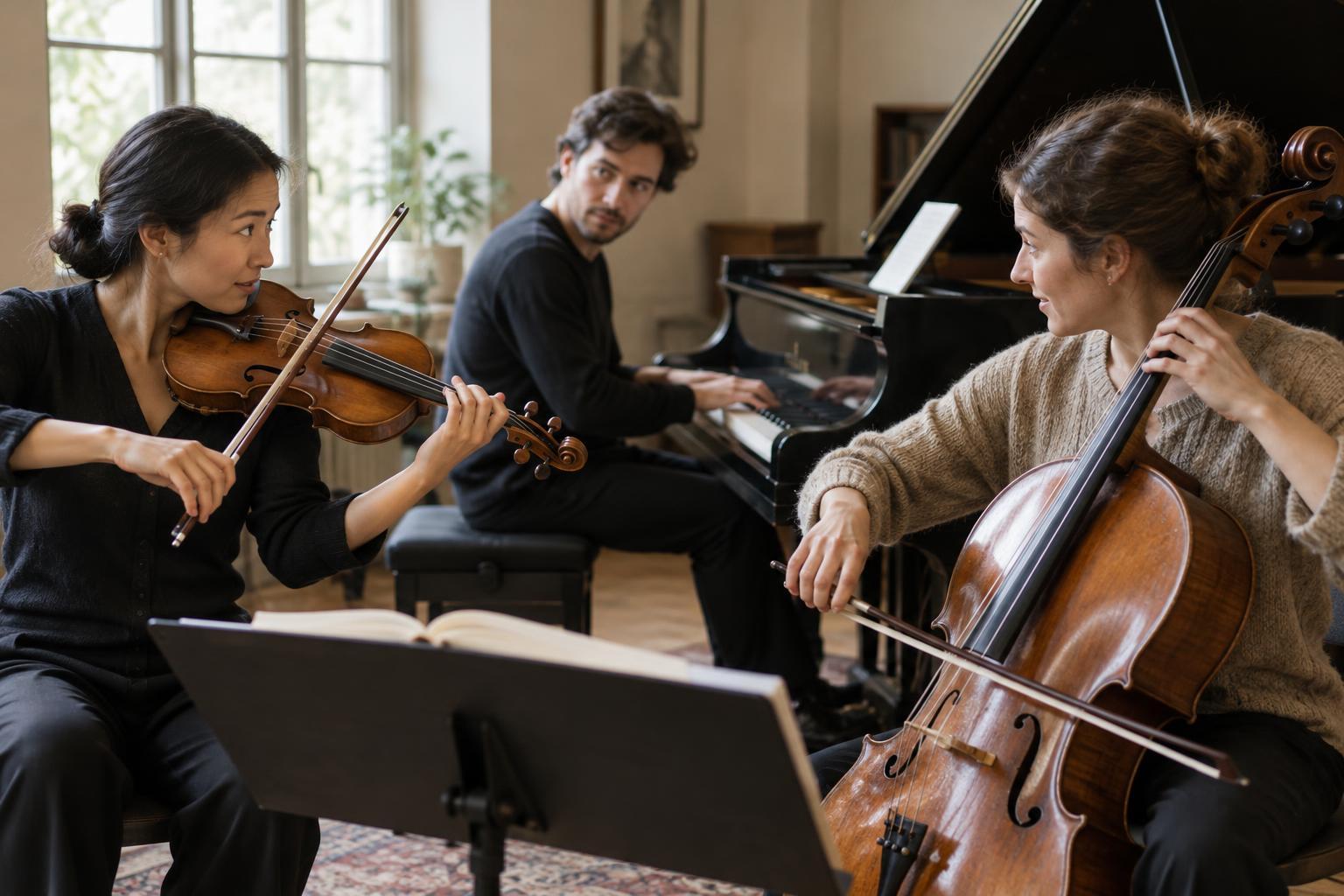
In chamber music, the player carrying a motif matters. A quiet figure in a cello’s low register may feel grounded; passed to a violin high above the other instruments, it may draw more attention. A piano can state the same idea in clear single notes or surround it with chords. These changes in register and texture can make a familiar figure seem newly prominent or almost hidden.
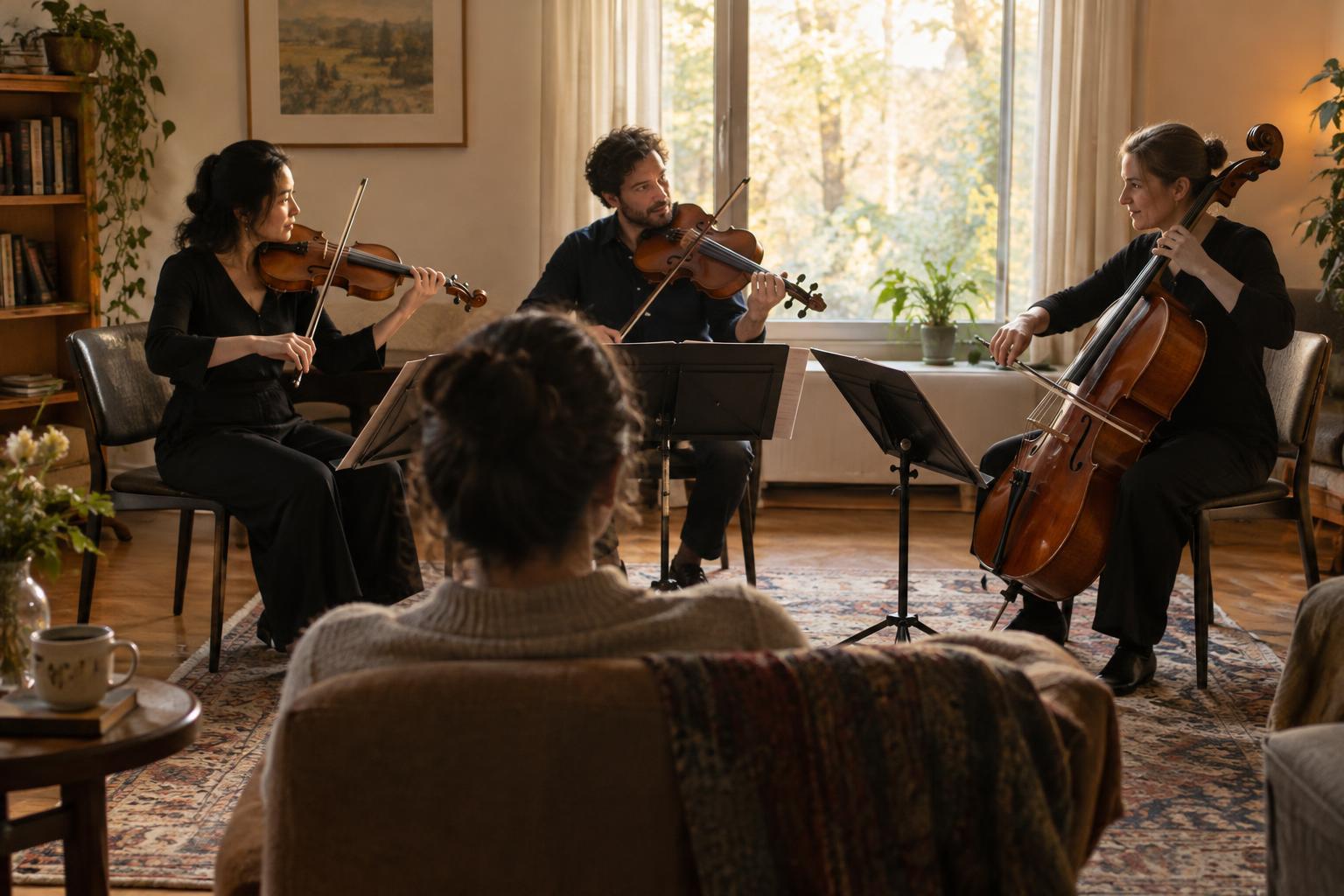
Listen to what the other players do at the same time. They may leave space around the motif, answer it, play it together, or continue with contrasting material. A figure first heard as a solo statement can later become part of a conversation. Following that exchange is often easier than trying to track every instrument continuously.
Hear how the surroundings alter its character
Even when a motif’s notes remain similar, its setting can change how you hear it. A slower pace may make it sound reflective; a quicker one may give it urgency. A gentle accompaniment can support it, while unsettled harmonies or sharp accents can create tension. The motif provides a point of comparison, helping you notice changes in the music around it.
Some transformations are subtle. A composer may stretch a rhythm, compress it, or use only a fragment. The figure may begin on a different beat, so that an emphasis you expected arrives somewhere else. If a passage seems related but you cannot say why, listen again for one feature at a time: rhythm first, then pitch shape, then which instrument plays it.
Use a simple listening map
Try hearing a work twice. On the first pass, jot down a plain description of one motif, such as “short-short-long, rising.” Mark each later moment when something reminds you of it. On the second pass, add a few words about what changed: “slower,” “in the viola,” “only the first two notes,” or “played by everyone.” These notes are prompts for your ears, not a test of musical terminology.
Not every resemblance will be intentional or important, and not every passage needs to trace back to a single idea. A chamber work may introduce several motifs or spend time on material that contrasts with the one you chose. The reward is learning to hear both continuity and change: a small musical thought can remain recognizable while taking on different roles as the players share, reshape, and respond to it.