First, find the beat
A steady pulse gives syncopation something to push against. When you tap along to a passage, your taps represent the beats you expect to feel. A syncopated note draws attention somewhere else: between taps, just before one, or across a beat that seems as though it should receive a fresh note. The result can feel buoyant, unsettled or playful, depending on the music around it.
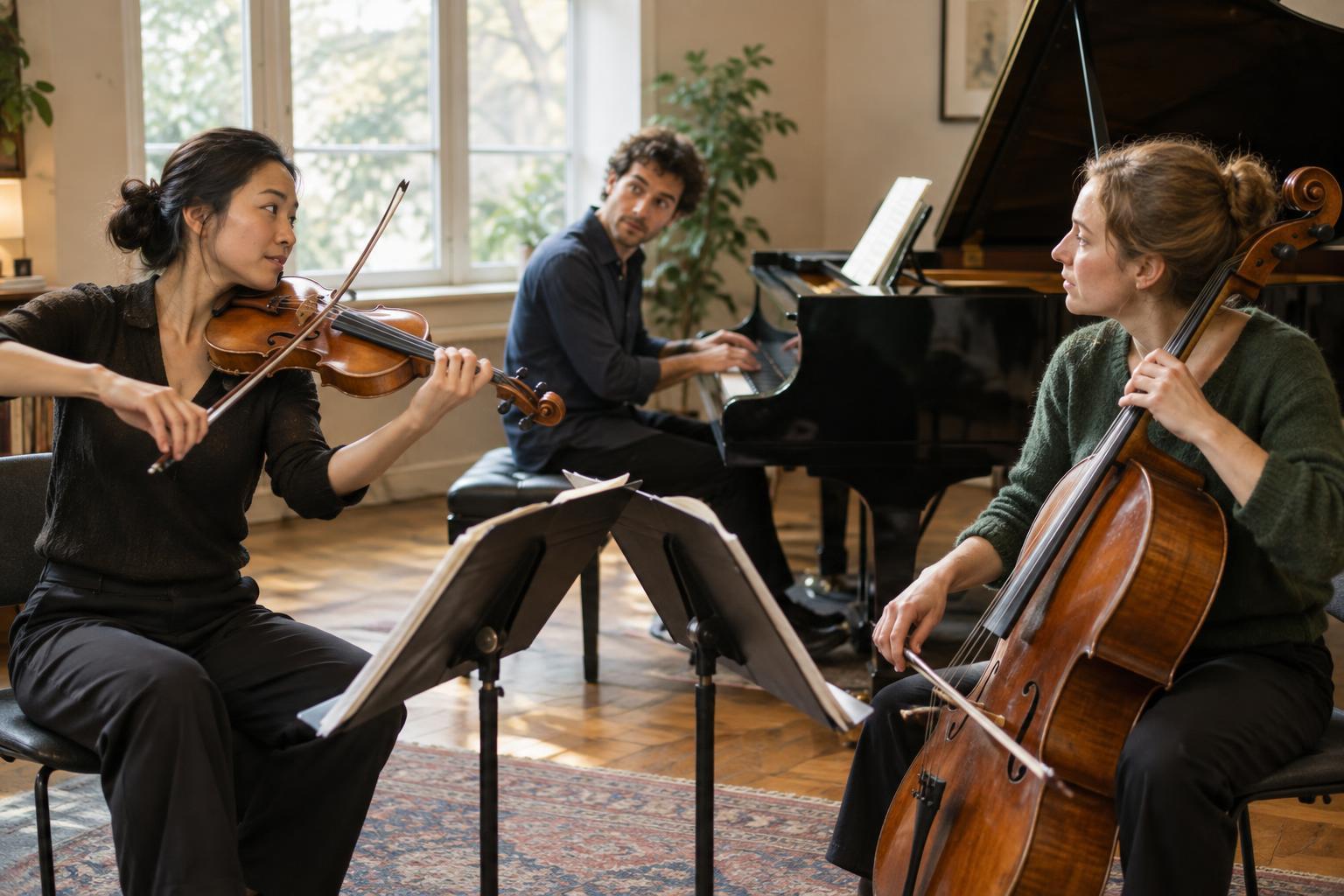
Begin by listening for a part that makes the pulse easy to follow. A cello may play regularly spaced notes while a violin phrase darts around them; a piano’s repeating figure may provide the same foothold. Try tapping quietly with that steady part. You do not need to identify the time signature. The useful question is simply, “Where do I expect the next beat?” Once that expectation is clear, an unexpected accent becomes easier to hear.
What makes an accent feel offbeat?
An accent is not always a louder note. A new note can stand out because it arrives after a rest, changes pitch sharply or has a more pointed attack than the notes around it. If that noticeable event falls between the beats you are tapping, you may hear an offbeat accent. Imagine a steady count of “one and two and.” An emphasized note on “and” can briefly pull your attention away from “one” or “two.”
Another common effect comes from beginning a note before an expected beat and holding it through that beat. Your ear may anticipate a new attack on the beat, but none arrives. The held sound occupies that space instead. Syncopation can therefore be created as much by a missing attack as by a forceful one. Not every long note or surprising sound is syncopated, though: its effect depends on a pulse that the passage has established or implied.
Follow the conversation between instruments
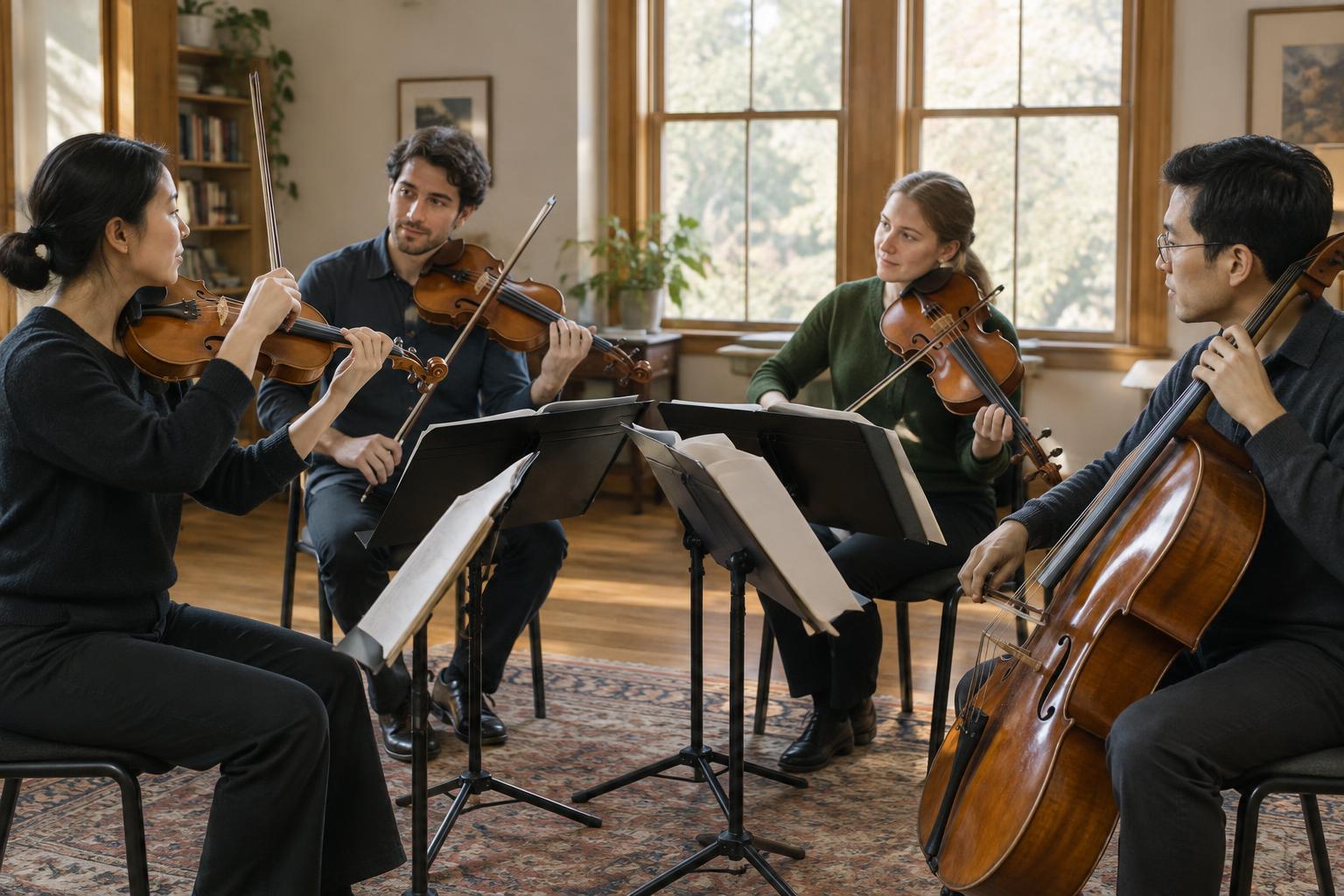
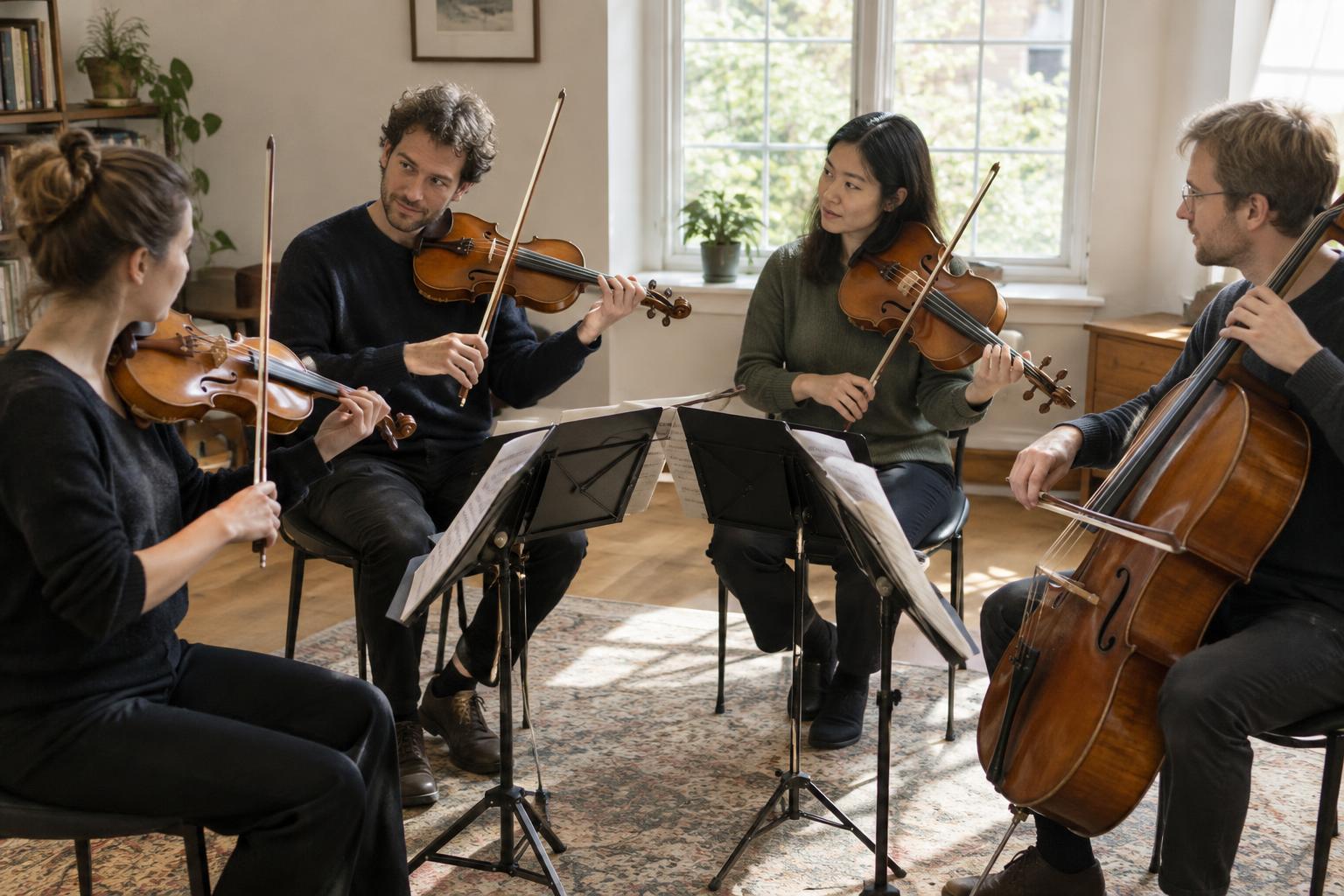
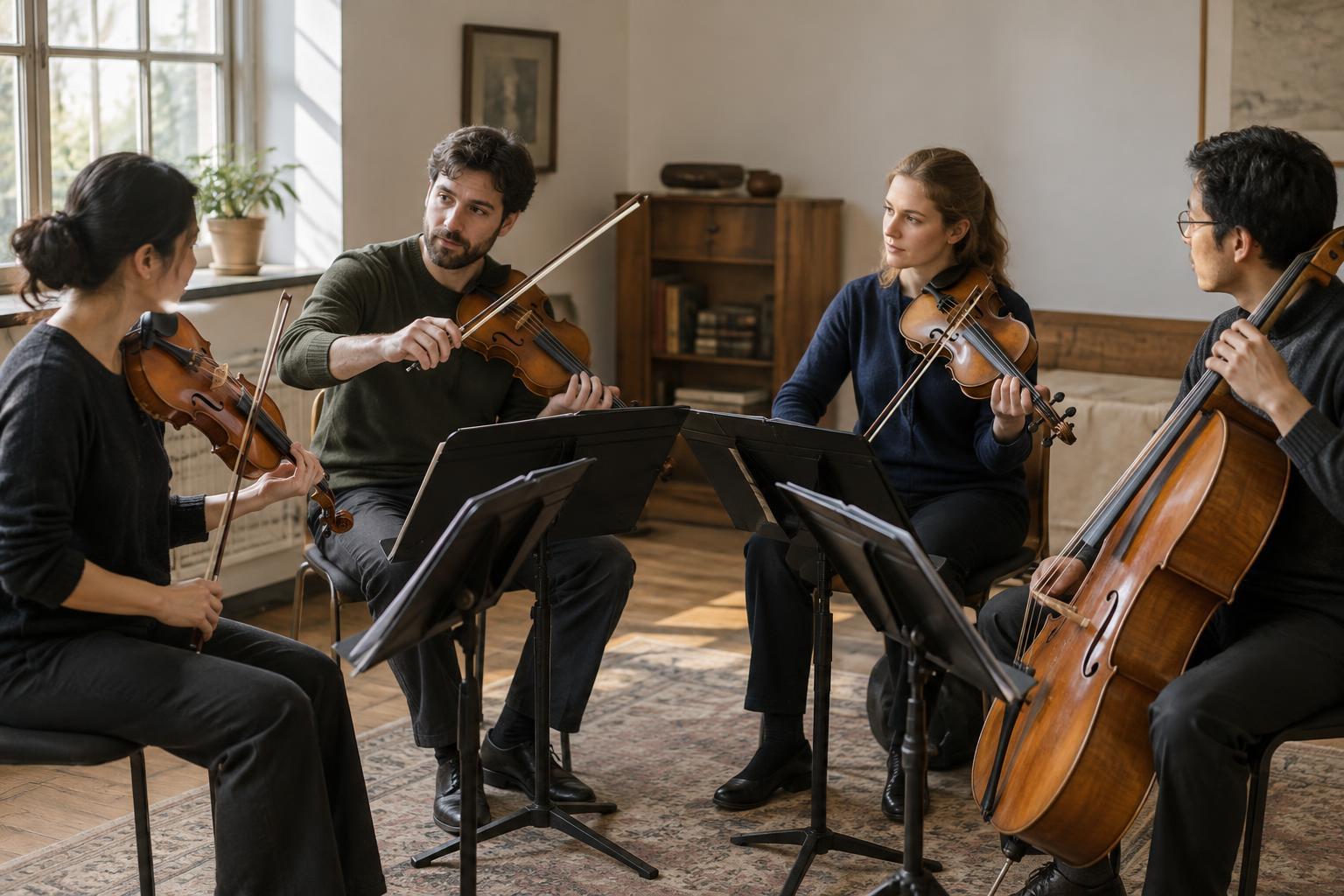
Chamber music makes rhythmic surprises especially interesting because the players can suggest different ways of hearing the same moment. One instrument might mark the beat clearly while another places short notes between its attacks. A melody might enter early, as if interrupting an accompaniment, or a lower instrument might answer a phrase at an unexpected point. You may hear a brief tug between the parts without losing the underlying pulse.
On a second listen, choose one instrument and follow only its entrances. Then listen again for the part that provides the steadiest reference. Do the two parts line up, alternate or seem to overlap? If you can find the beat in one part while another resists it, you are close to the heart of the effect. The offbeat part need not sound disruptive. It may give the music a gentle lift or keep a familiar phrase from feeling too predictable.
Try a short listening exercise
Choose a brief passage with a pulse you can tap comfortably. On the first hearing, tap along and notice any note that makes you want to move your tap. On the second, keep tapping through that moment rather than following the surprising note. This separates the underlying beat from the accent placed against it. If the beat disappears for a moment, listen to the phrase before the surprise and pick up your tap again when the pattern returns.
Next, pay attention to what happens immediately afterward. Does the music settle back onto the beat? Does another player repeat the offbeat idea? Does a rest make the next entrance feel more decisive? These questions are more useful than trying to label every note. A short excerpt heard several times can reveal how a small rhythmic shift shapes a whole musical exchange.
Hear the shape, not just the trick
Syncopation is a way of shaping expectation, not merely a rhythmic puzzle to solve. A displaced accent can make a phrase feel eager to continue; a note held across a beat can make the music seem to pause without stopping. When several players trade such gestures, the rhythm can feel like a conversation in which each response changes the timing of the next.
Once you recognize an offbeat moment, listen beyond it. Notice whether it creates momentum, highlights a change in harmony or brings one instrument briefly to the foreground. You can always return to the steady pulse if the details become hard to follow. The pleasure lies in hearing both at once: the beat that anchors the passage and the accents that make it move.