What is a viola da gamba?
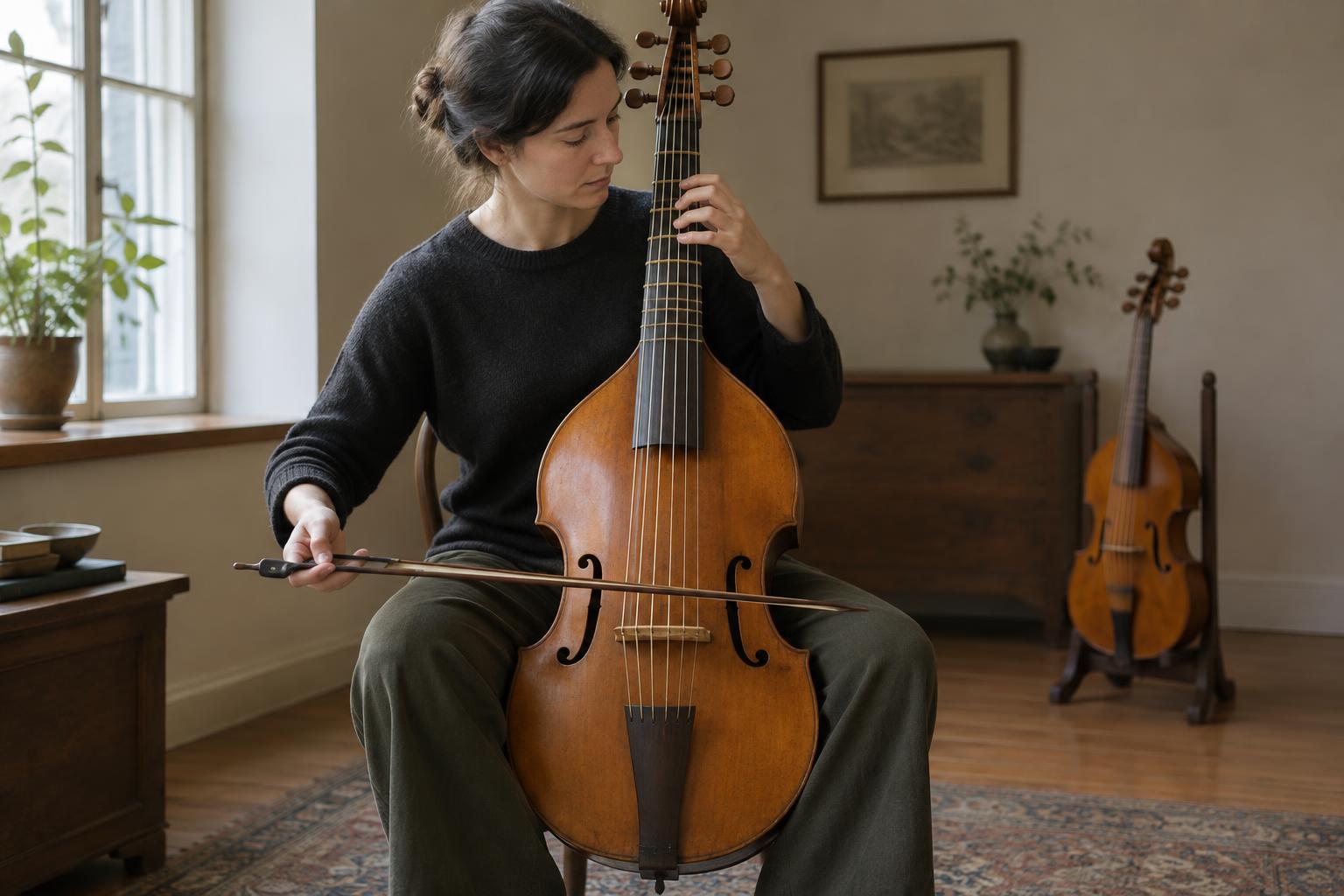
The viola da gamba belongs to the viol family, a group of bowed string instruments that flourished in European music of the Renaissance and Baroque periods. The name means “leg viol,” distinguishing it from instruments held at the shoulder or arm. A bass viol, the member many listeners encounter first, is held between the legs. The family also includes smaller treble and tenor viols, allowing players to form ensembles with contrasting registers.
A viol may look a little like a cello, but it is not simply an early cello. Viols and members of the violin family have different designs and playing traditions, and the two families coexisted. Most viols have frets tied around the neck and more strings than a violin-family instrument; a six-string arrangement is common. Their shape, tuning and bowing technique contribute to a musical character that is distinctly their own.
How it is built and played
Like other bowed string instruments, a viol produces sound when the bow sets its strings vibrating. Its frets mark positions along the fingerboard, helping the player locate pitches. They do not make playing automatic: the musician still shapes each note through bow speed, pressure, articulation and the placement of the fingers.
Many viols are tuned largely in fourths, with a third between one pair of strings. This layout makes certain chord shapes and passages convenient, and it differs from the tuning of a cello. The bow is commonly held with an underhand grip, with the hand below the stick. That hold offers its own way of controlling the bow hair and shaping the beginning and end of a note.
These features are useful clues when identifying a viol, but no single detail tells the whole story. Instruments vary by size, place of origin and the music they were made to play. Bass viols with seven strings also exist, for example. When looking at a concert instrument, notice its fretted neck and the number of strings before relying on its resemblance to a cello.
One family, several roles
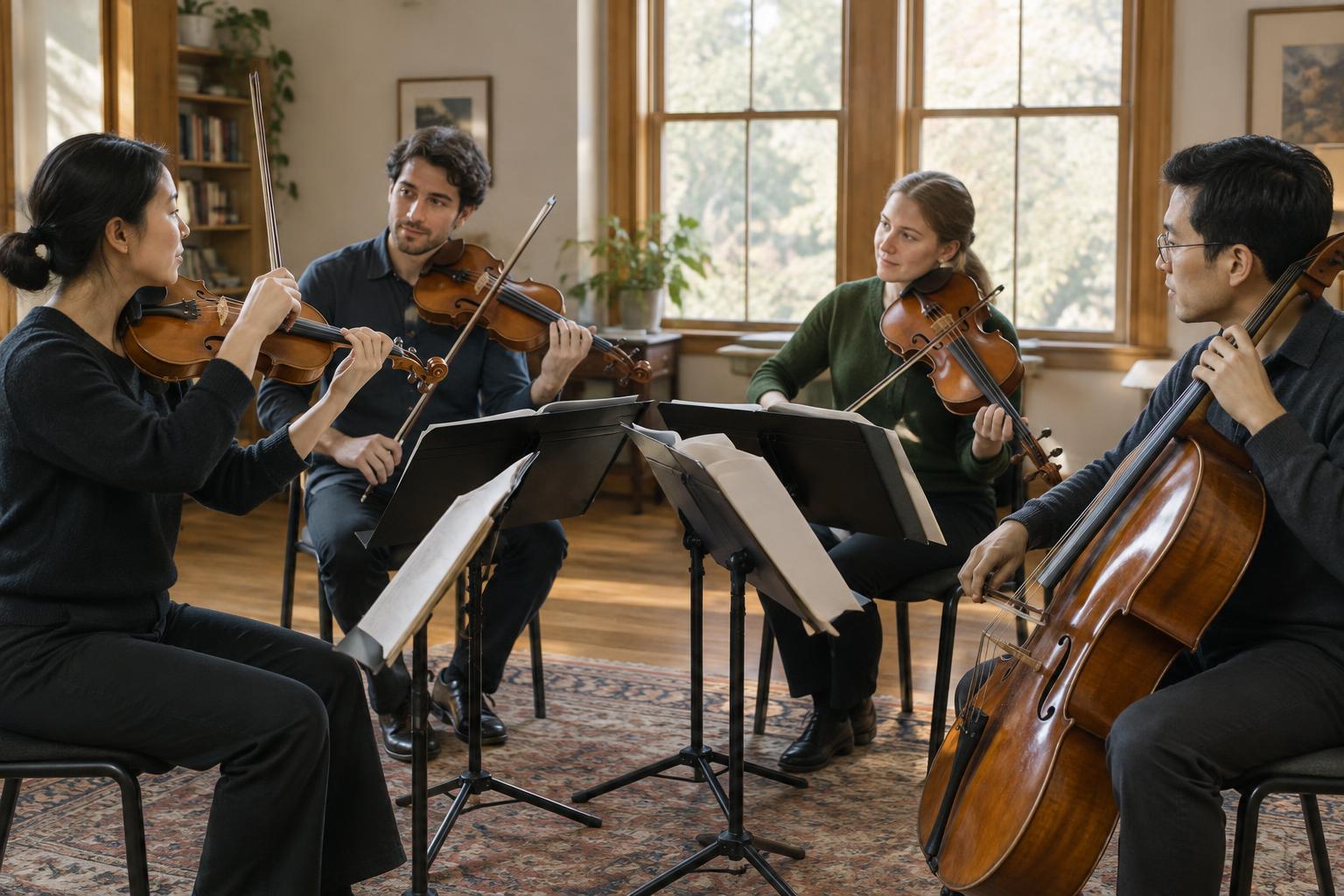
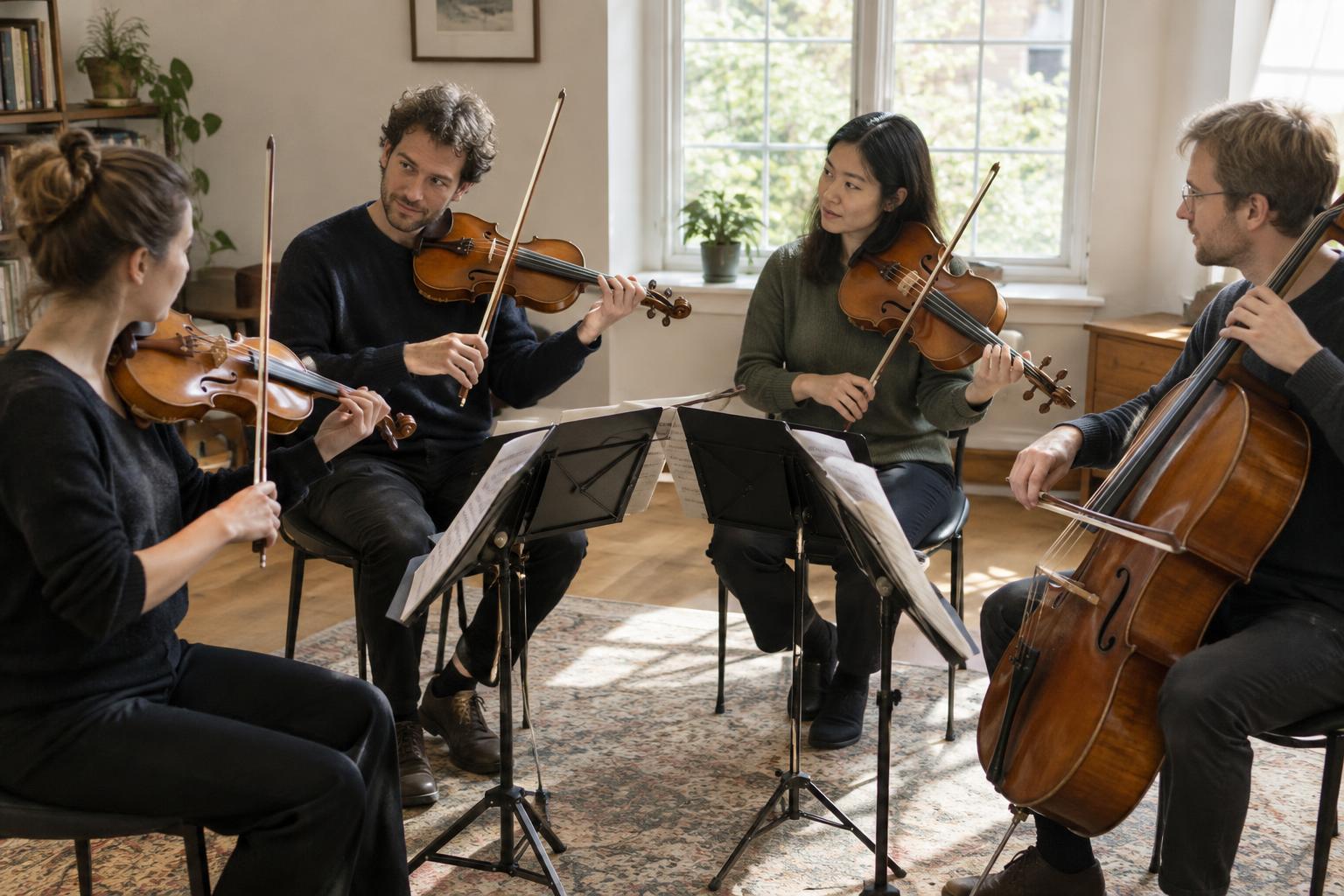
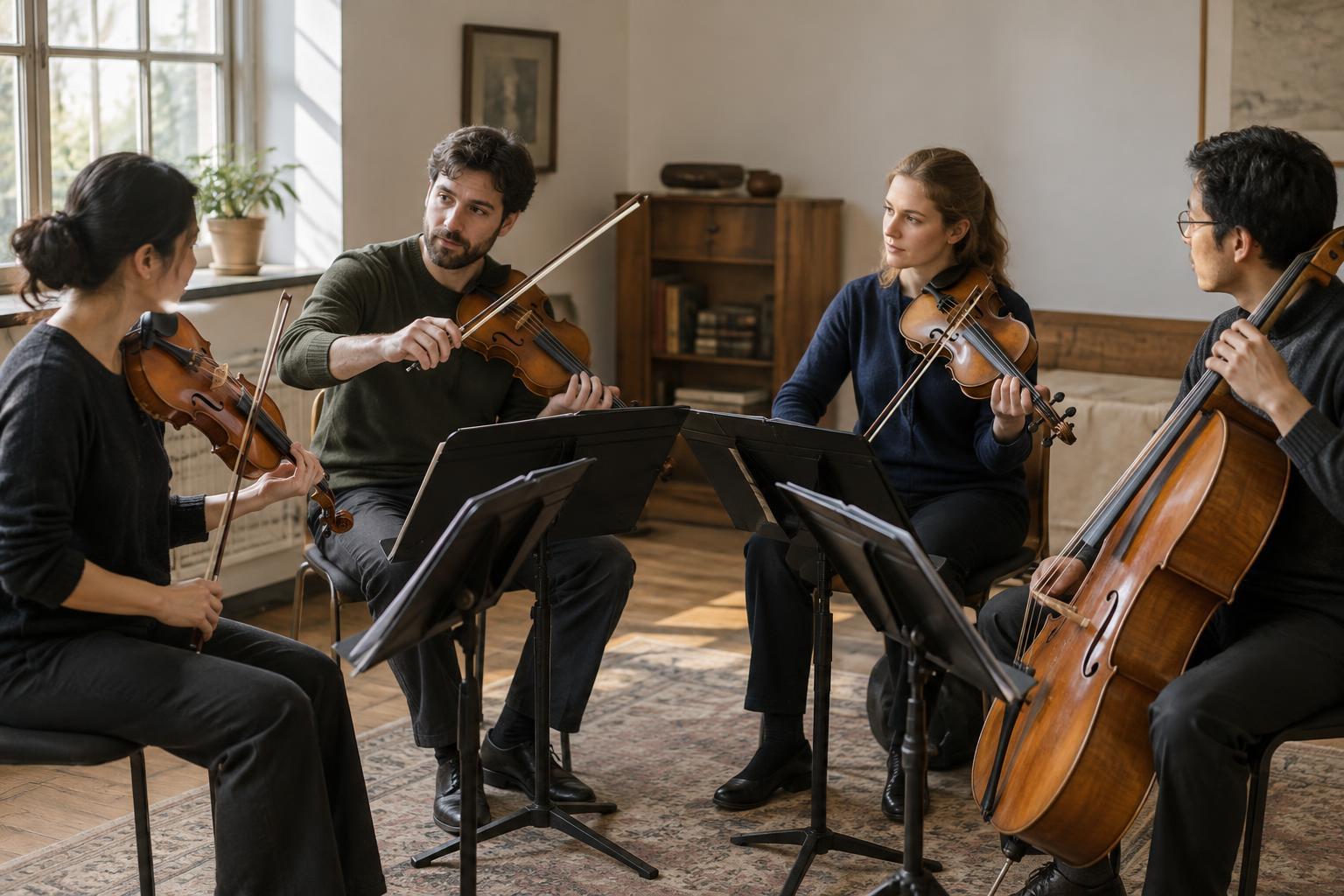
A group of viols playing together is called a consort. Treble, tenor and bass instruments can each carry an independent line, creating a texture in which no single melody has to dominate. For a new listener, a viol consort can feel closer to a conversation among voices than to a tune with accompaniment. Try following one line for a few measures, then shifting your attention to another.
The bass viol also has a substantial life outside the consort. It can play expressive solo music, join another instrument in a small ensemble or support a group through a bass line. Some repertoire asks for agile runs and ornamentation; other pieces leave room for long phrases and subtle changes of color. Because the instrument can play more than one note at once, a solo player may suggest harmony as well as melody.
These roles offer different introductions to the family. A consort reveals how the sizes blend, while a solo bass viol makes details of bowing and resonance easier to hear. Neither setting gives a complete picture, so hearing both is worthwhile.
What to listen for
Begin with the attack of each note: is it gently released, clearly separated or connected to the next? Viol playing can bring these small distinctions into focus. In a quiet passage, listen for the slight change in weight as a player moves from one string to another. In quicker music, notice how articulation gives a line direction without requiring a large change in volume.
Next, listen to the balance between individual lines. In a consort, the interest often lies in entrances, imitations and the way parts briefly meet before moving apart. If the texture seems intricate, choose the lowest or highest line as a guide. On a second hearing, follow a middle part; it may reveal details that were easy to miss.
Recordings and performances can sound quite different depending on the players, instruments and room. Rather than expecting one fixed “viol sound,” listen for how an ensemble uses the instrument’s range of clear, soft and resonant effects. That approach makes unfamiliar repertoire easier to explore on its own terms.
A simple way to explore the repertoire
Start with two contrasting settings: a piece for viol consort and a piece featuring solo bass viol. The first introduces the family as a set of interlocking voices; the second lets you concentrate on one player’s phrasing. English consort music and French music for bass viol are useful broad paths to explore, without needing to know a particular work in advance.
As you listen, keep the cello comparison as a starting point rather than a verdict. Both instruments can sing through a phrase, but they invite different techniques and serve different musical settings. Recognizing the viola da gamba as a family in its own right opens up a rich corner of chamber music.