A remarkable work for eight strings
Felix Mendelssohn completed his String Octet in E-flat major, Op. 20, in 1825, when he was sixteen. That fact is striking, but it need not be the main reason to listen. The piece is compelling because it makes a group of eight players sound at different moments like an intimate conversation, a bustling ensemble and something close to a small string orchestra.
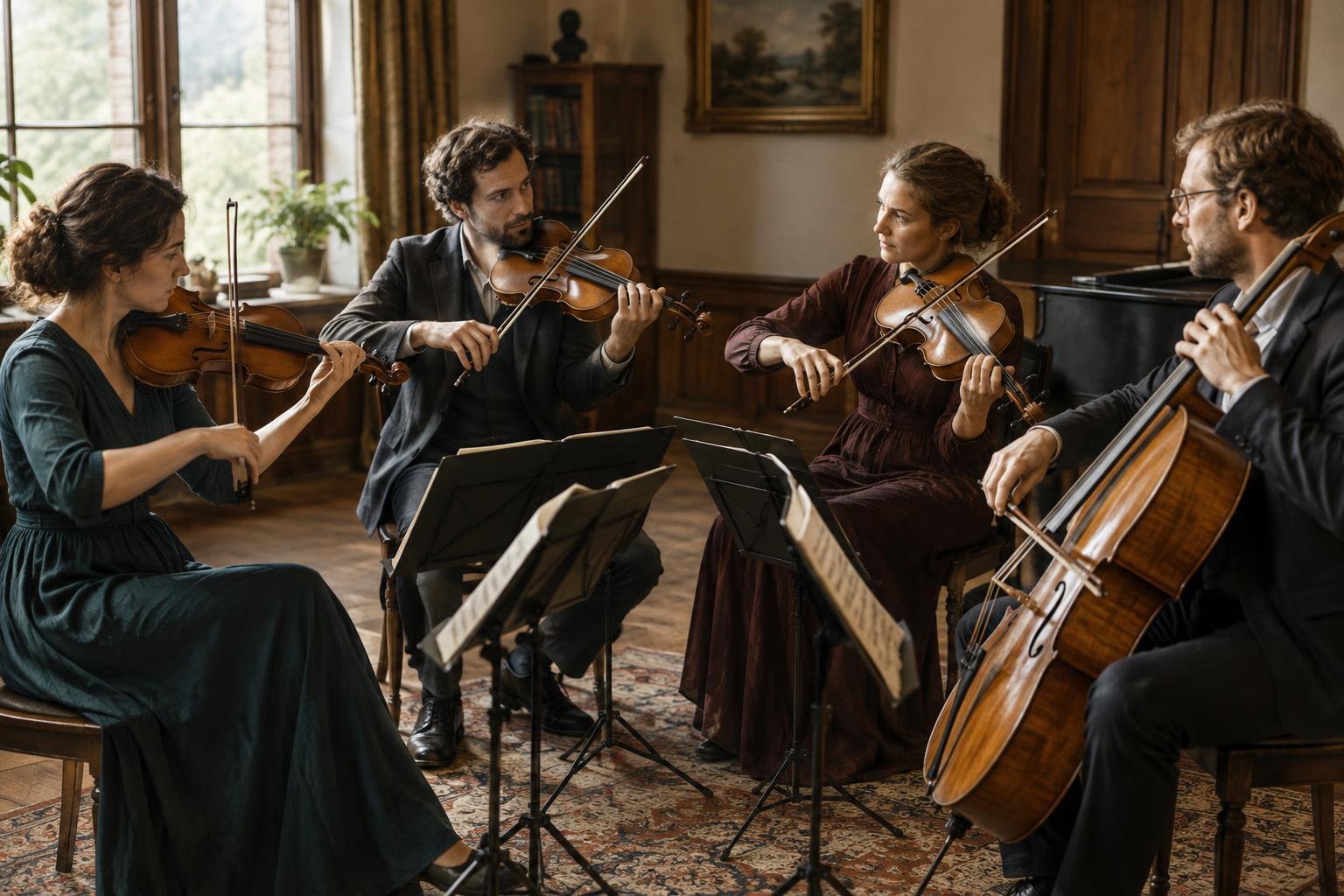
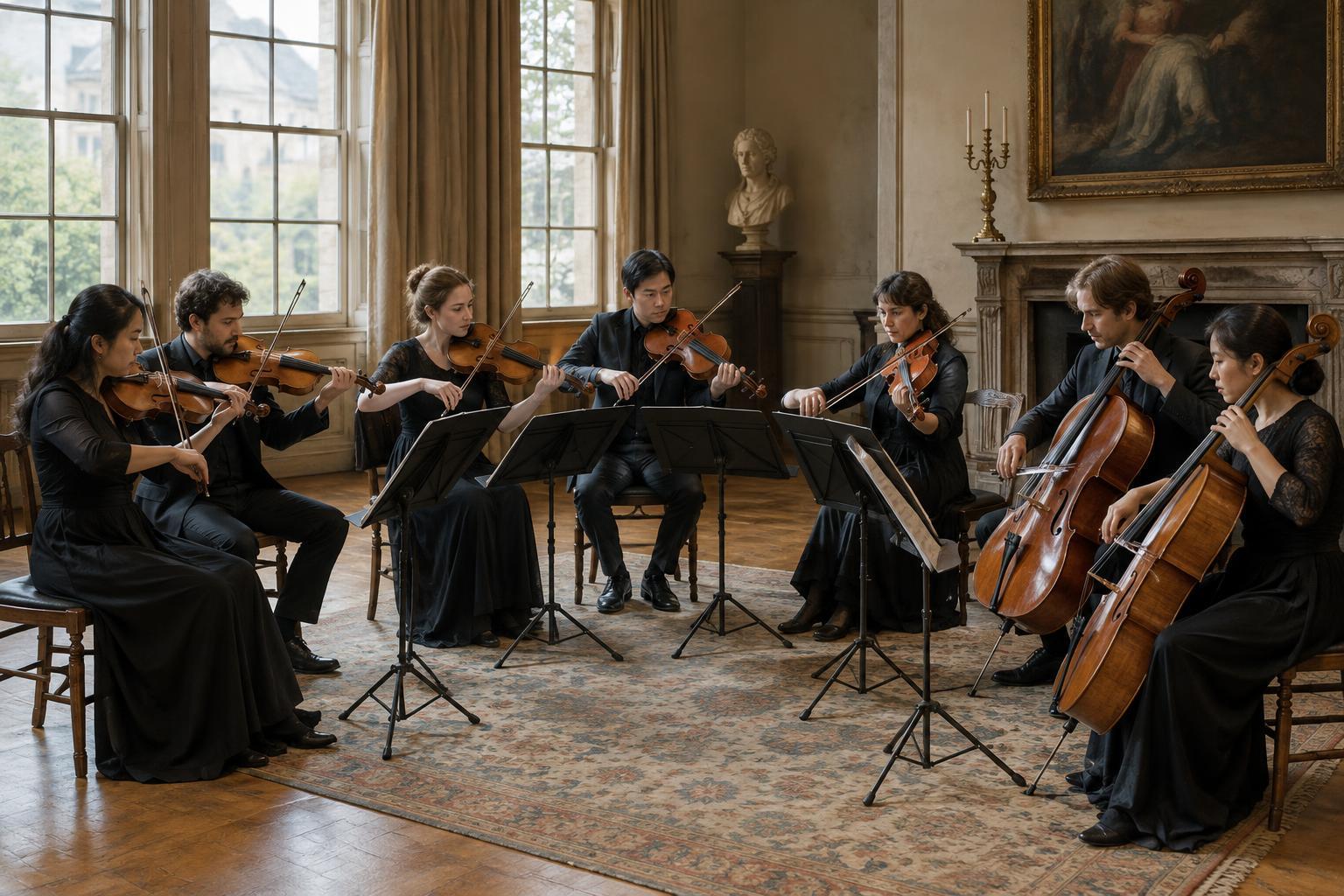
The scoring is straightforward: four violins, two violas and two cellos. It can be pictured as two string quartets playing together, yet the music rarely behaves as a simple contest between one quartet and the other. Melodies pass across the full group; inner voices add motion or color; and all eight players can join to give a phrase unusual weight. The result is both chamber music and a vivid exploration of what a larger string ensemble can do.
How to hear the ensemble
In a quartet, the four parts are often easy to follow as distinct lines. The Octet offers twice as many, so it helps to listen for changes in texture rather than try to track every player. Notice when a single violin rises above a soft accompaniment, when several instruments move together, and when short musical ideas seem to travel around the group. These shifts give the work much of its momentum.
The two cellos are especially worth noticing. One may support the harmony while the other takes an active part in a melody or exchange. Likewise, the violas can serve as a warm middle layer or bring a phrase into focus. Mendelssohn uses the extra instruments for more than volume: they allow him to change the density and character of the sound without changing the basic family of instruments.
A tour of the four movements
The opening Allegro moderato ma con fuoco announces the work’s scale with a long, soaring first-violin melody over restless playing beneath it. Its energy comes not only from speed, but from the way lyrical passages and driving figures alternate. On a first hearing, follow the return of familiar ideas and notice how their surroundings change: a phrase that felt open and confident can take on a different tension when the texture thickens.
The Andante offers a more reflective space. Rather than listening for a single dramatic event, attend to the gentle exchanges and the way a melody can emerge from within the ensemble. The Scherzo then changes the atmosphere again. Light, quick and elusive, it depends on precision: brief gestures and delicate sounds can make eight string players seem almost weightless.
The final Presto releases a rush of contrapuntal activity, with lines entering and answering one another. Amid that movement, material associated with the Scherzo returns. You do not need to identify every theme to enjoy the effect; hearing a familiar sound reappear in a new, more crowded setting helps give the four movements a sense of connection.
Why it matters in the chamber repertoire
The Octet has become a central example of music for eight strings, in part because it shows how much variety the combination can sustain. Its scale is ambitious, but its interest lies in detail as well as grandeur. A performance succeeds through shared timing, clear balances and close attention to how one line hands an idea to another.
It also makes a useful bridge for listeners who know string quartets but are curious about larger chamber groups. The added players broaden the palette without replacing the give-and-take that defines chamber music. Listening to a quartet before or after the Octet can bring that difference into focus: where four musicians must suggest breadth with limited resources, Mendelssohn can spread an idea across a wider range of voices.
A simple plan for your next listen
Start by hearing the whole piece without trying to analyze it. Let the first movement establish its expansive character, the Andante slow your attention, the Scherzo sharpen it, and the finale gather the ensemble into motion. On a second listen, choose just one question: Which instrument seems to carry the melody, and when does that change?
If you hear the Octet in concert, watching the players can make those exchanges easier to recognize. A glance between musicians or a phrase passed from one side of the group to the other may reveal how carefully this energetic music is coordinated. Whether heard live or in a recording, the work rewards returning to it: the broad gestures welcome a first-time listener, while the shifting relationships among eight parts offer more to notice each time.