A quartet with a memorable nickname
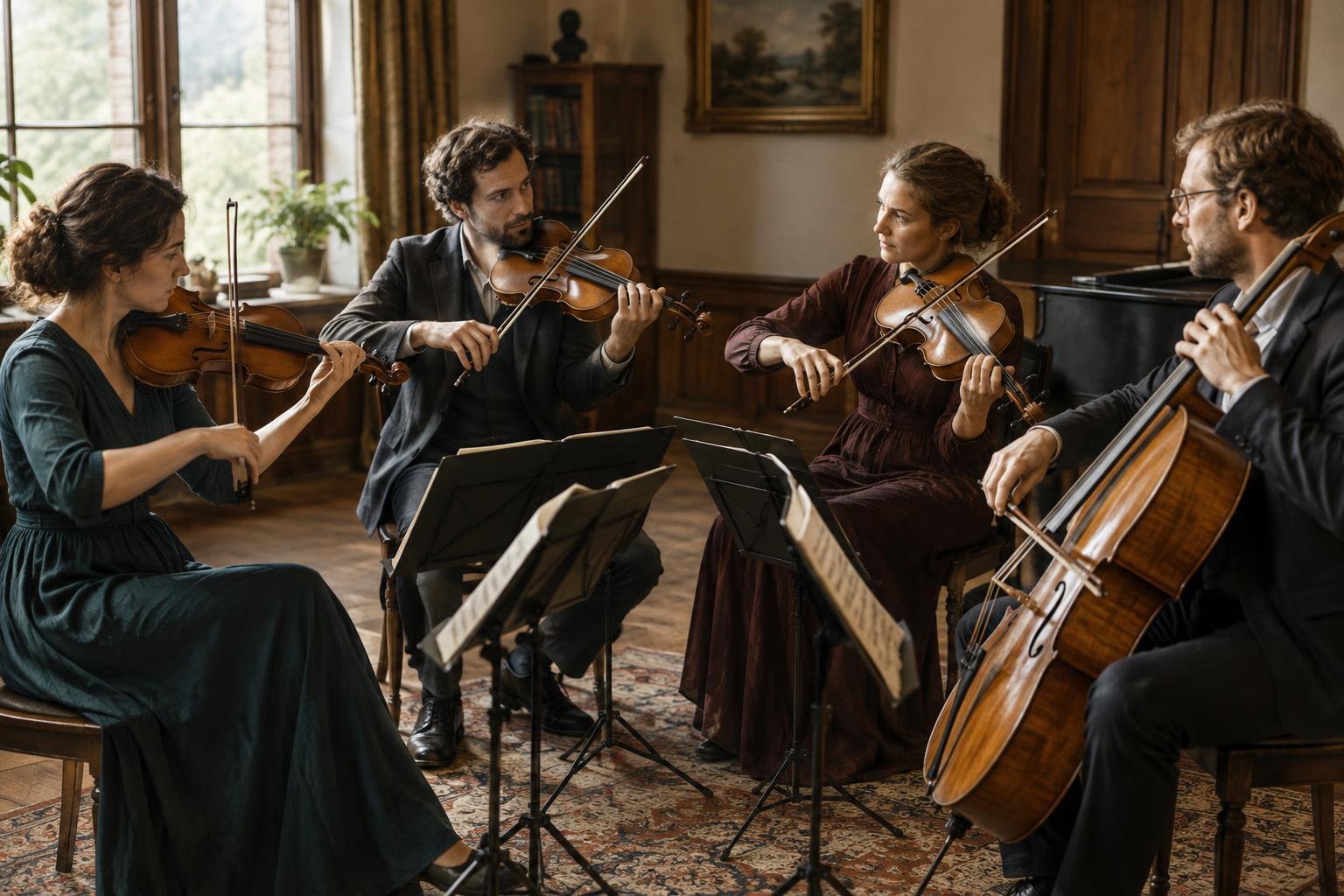
Antonín Dvořák wrote his String Quartet No. 12 in F major, Op. 96, in 1893 while staying in Spillville, Iowa. He was living and working in the United States at the time, and the quartet has become widely known as the “American” Quartet. The nickname is a useful point of entry, but it is not a complete description of the music. This is also a compact, inventive conversation for two violins, viola and cello.
It can be tempting to hear every distinctive rhythm or melody as a direct quotation of an American song. A more careful approach is to notice what the music does without assigning each phrase a specific source. Short motifs, open-sounding melodies and strongly marked rhythms help give the quartet its character. They also leave plenty of room for Dvořák’s familiar craft: a small idea can return in a new register, pass between players or become the basis of a larger passage.
First movement: a theme passed around
The opening movement, Allegro ma non troppo, offers an immediate lesson in how to listen to a string quartet. Rather than focusing only on the highest violin line, notice the viola’s early presentation of the main melody. The other instruments provide a light setting around it. As the movement continues, melodic responsibility shifts, and ideas that first seem simple gain momentum through repetition and change.
Try following one short rhythmic figure instead of attempting to track the whole movement at once. Hear how its shape remains recognizable even when the harmony, texture or instrument changes. The contrast between spacious phrases and busier passages gives the music a sense of travel without requiring a story to explain it. When the opening material returns, it may feel familiar, but the intervening music has changed how you hear it.
Middle movements: stillness and motion
The Lento, the quartet’s slow second movement, gives the players room to sustain long melodic lines. Its expressive weight comes partly from restraint: a phrase can linger, and a change of harmony can matter as much as a dramatic increase in volume. Listen to the way the melody and accompaniment support each other. Even when one instrument is prominent, the others shape the mood through their spacing and tone.
The third movement, Molto vivace, changes the scale of the listener’s attention. Its quick gestures and recurring patterns create an alert, playful energy. A contrasting passage interrupts that activity before the earlier character returns. Hearing those changes is more useful than trying to attach a fixed image to every sound. The movement shows how much variety four string players can produce by changing articulation, register and the balance among their parts.
Finale: energy with a sense of return
The Finale, marked Vivace ma non troppo, brings a bright pulse and repeated figures into focus. Its energy does not come from speed alone. Accents, brief pauses and changes of texture keep the music moving, while contrasting episodes offer moments of relief. Notice when a familiar idea reappears and whether it sounds the same after a quieter or more lyrical stretch.
This movement is a good place to listen for the ensemble as a whole. A quartet has no conductor to supply its pulse in performance: the players coordinate through listening, breathing and small physical cues. On a recording, that shared effort may be easy to take for granted. At a concert, watching who begins a phrase and who responds can make the music’s exchanges easier to hear.
How to listen beyond the label
For a first hearing, let the quartet’s contrasts guide you: the first movement’s expanding ideas, the Lento’s patient lines, the scherzo’s quick turns and the finale’s forward drive. On a second hearing, choose one instrument to follow for a few minutes. The viola and cello often reveal how a melody is grounded or redirected, while the violins may alternate between leading and adding detail.
The “American” nickname points to an important period in Dvořák’s life, but the work does not need to stand for an entire country or musical tradition. It rewards attention as chamber music: four individual parts making a shared argument. The pleasure is in hearing how readily its melodies stay in the mind—and how much more there is to discover beneath them.