A new voice in Brahms’s late chamber music
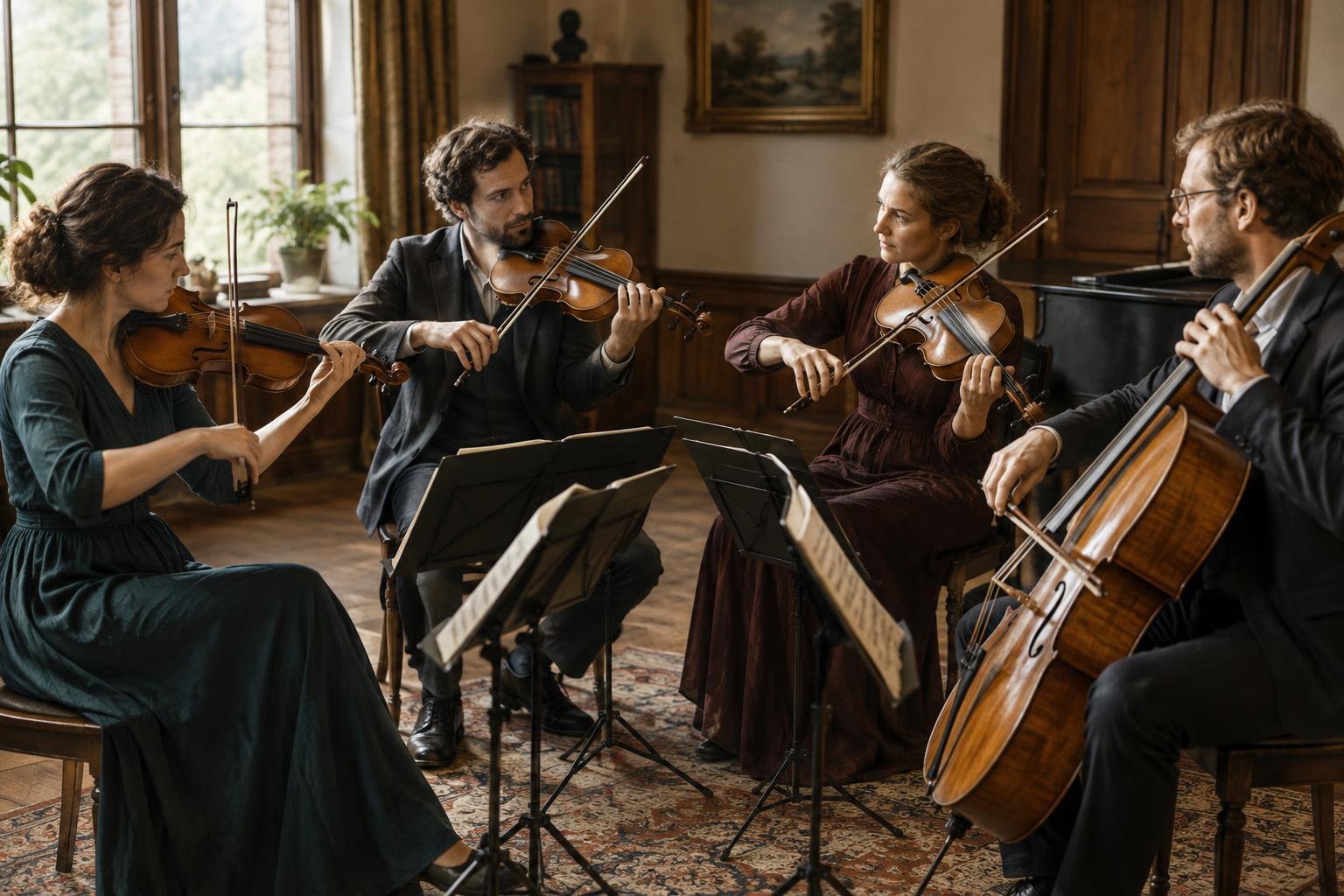
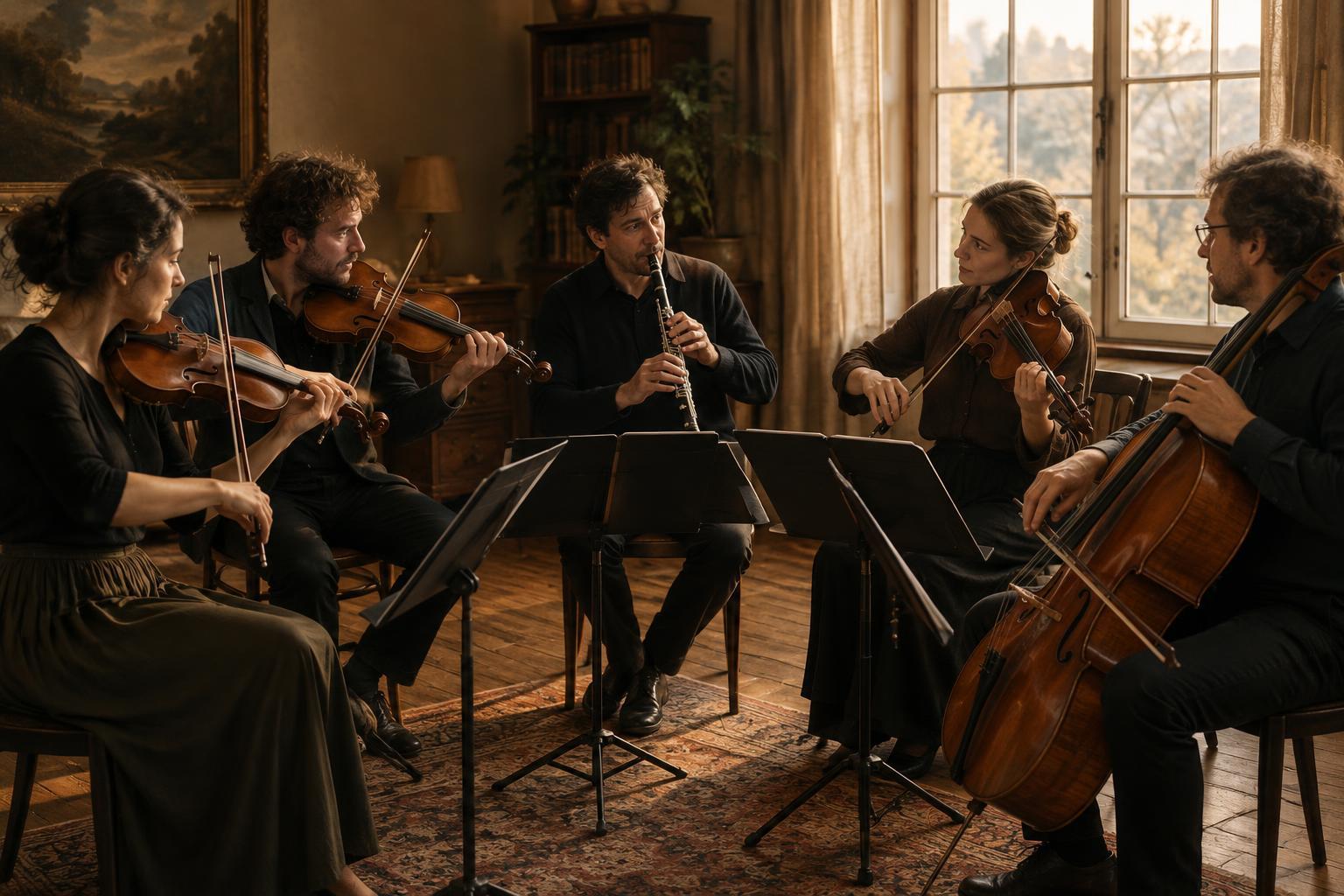
Brahms’s Clarinet Quintet in B minor, Op. 115, brings together a clarinet and a string quartet: two violins, viola and cello. Brahms wrote it in 1891, after hearing the clarinetist Richard Mühlfeld. Their musical connection also led to a clarinet trio and, later, two clarinet sonatas. That background helps explain the quintet’s confident writing for the instrument, but it does not make the piece a solo showcase. From the start, the clarinet is one voice in a conversation among five.
The word “late” is useful here, provided it does not become a shortcut for “sad” or “slow.” The quintet has warmth, momentum and flashes of playfulness alongside its reflective passages. What distinguishes it is the way those qualities coexist. A melody may sound generous while its accompaniment introduces a note of uncertainty; an animated passage may settle almost as soon as it gathers force. Brahms lets contrasts emerge without making every change feel like a dramatic break.
Listen for a blend, not a spotlight
A clarinet can stand out sharply against strings, yet Brahms often makes the five instruments sound remarkably close. The clarinet’s dark lower register can merge with the viola and cello, while its upper notes can carry a line over the violins. Just as important, the strings are not confined to accompaniment. They introduce ideas, interrupt them, complete them and reshape them after the clarinet has passed them on.
In the first movement, listen to the gently unfolding opening in the strings and to the clarinet’s entrance into that texture. Rather than announcing a separate character, the clarinet seems to join a thought already in progress. As the movement develops, notice how a phrase can change its effect when it moves between instruments. Following those exchanges is often more rewarding than trying to identify a single “main” melody. The music gains much of its depth from small changes in colour, rhythm and emphasis.
Four movements, several kinds of intimacy
The slow second movement, marked Adagio, begins with a calm, singing quality. Its more impassioned central passage gives the clarinet room for freer-sounding gestures against the strings. The contrast can feel striking, but it belongs to the same expressive world: the quieter music sounds different after that surge of energy. On a first listen, try following the change in the clarinet’s manner rather than worrying about the movement’s formal plan.
The third movement begins with an Andantino that feels measured and sociable, then shifts into a quicker Presto non assai. Its lighter motion offers relief without erasing the work’s underlying pensiveness. Brahms is particularly good at making a change of pace feel like a change in perspective. Music that might be passed over as a brief interlude becomes an important part of the quintet’s emotional range.
An ending that looks back
The finale is built as a set of variations. Instead of expecting one tune to return unchanged, listen for its outline as Brahms alters the texture and the distribution of parts. At times the clarinet leads; elsewhere the strings carry the argument and the clarinet adds colour or answers from within the ensemble. Variation gives the movement forward motion, but it also allows Brahms to revisit a familiar idea from different angles.
Near the end, the music recalls the opening of the first movement. The return matters because it makes the quintet feel connected across its four movements, not because it supplies a neat, triumphant conclusion. If you are new to the piece, listen once for the overall change of mood, then again for these links: how the clarinet enters the string sound, how phrases pass between players and how the ending brings an earlier thought back into view. The quintet stands apart not through one grand gesture, but through the care with which it makes every voice—and every return—count.