One family, several voices
A clarinet can sound mellow in one phrase and startlingly bright in the next. That flexibility makes it a rewarding chamber-music partner: it can join a soft string line, answer a piano melody or stand apart with a clear solo voice. The B-flat and A clarinets are close relatives of similar size. The bass clarinet is larger, reaches much lower and adds another dimension to the family.
All three use a single reed attached to a mouthpiece. Air sets the reed vibrating, while the player’s fingers open and close holes along the instrument’s body. What listeners hear is shaped not only by the instrument but also by register, dynamics, articulation and the room. Rather than expecting one fixed tone from each clarinet, listen for how a player changes color to suit the other musicians.
B-flat clarinet: a flexible chamber partner
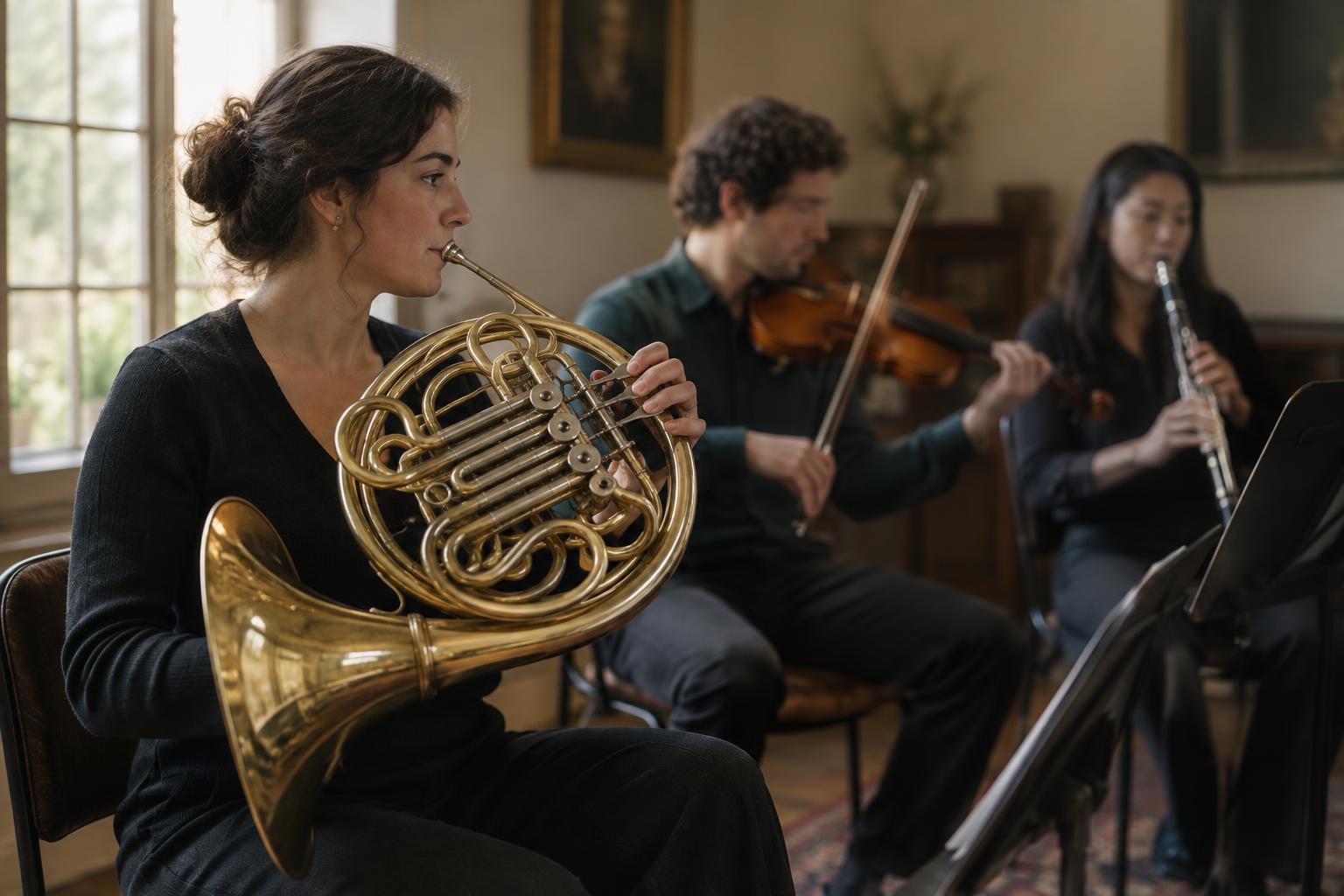
The B-flat clarinet is a common starting point for recognizing the family. It appears in many combinations, from wind groups to mixed ensembles with strings and piano. Its broad range lets it take a high, agile melody, weave around a violin or settle into a quieter supporting line. Lower notes can feel rounded and dark; higher ones often carry more brilliance.
The name B-flat refers to transposition: when a player reads and plays a written C, the note heard is B-flat. Performers and composers account for this in the music, so listeners need not calculate notes to enjoy a piece. It is more useful to notice where the clarinet sits in the texture. Is it leading the conversation, doubling another instrument or supplying a contrasting color?
A clarinet: a close relative with a different key
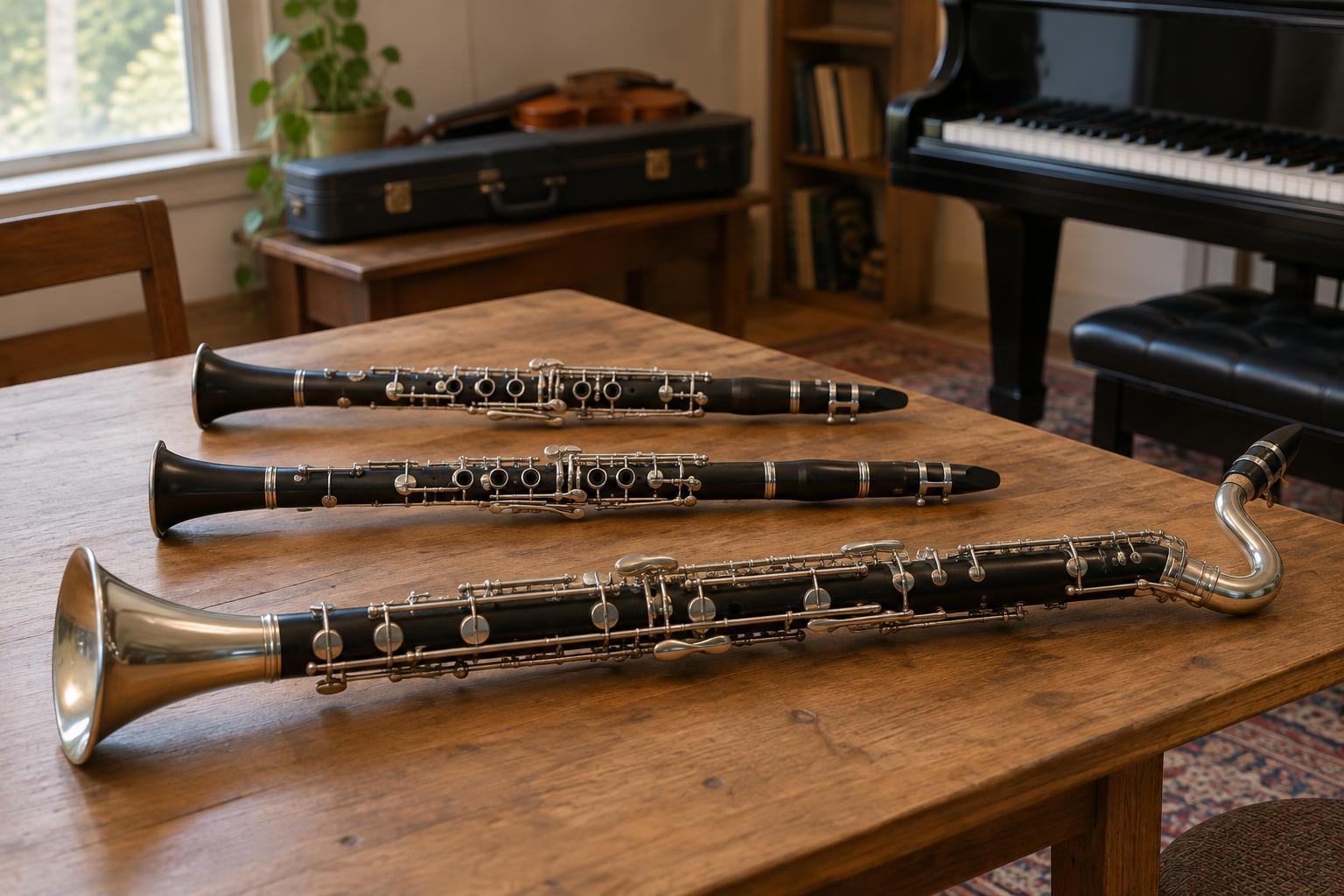
The A clarinet looks and feels much like the B-flat clarinet, but it is slightly longer and sounds a semitone lower for the same written note. It also transposes: a written C sounds as A. Players may switch between the two instruments during a program because a work calls for one or the other. The choice can make particular passages more comfortable to finger and affects how the part fits with the ensemble.
Listeners sometimes describe the A clarinet as a little darker than the B-flat clarinet, though the difference can be subtle. The player, musical passage and acoustic space may have a greater effect on what you notice. If you see a clarinetist change instruments, treat it as an invitation to compare—not as a test you have to pass. Follow the melody and ask whether its sound seems to lean into the strings, emerge from them or hover above them.
Bass clarinet: depth without losing agility
With its curved neck and upturned bell, the bass clarinet is easy to spot. Its low notes can anchor an ensemble, but it is not limited to slow bass lines. A bass clarinet can move quickly, play a lyrical melody or create a striking contrast with a flute, violin or piano. In a group with several winds, it may connect the low register to higher voices without simply imitating a cello or bassoon.
The bass clarinet is usually a B-flat transposing instrument and sounds much lower than its written notes. The exact lowest note available depends on the instrument. For a listener, the more important distinction is its role: sometimes it provides a foundation you feel beneath the harmony; at other times its focused, reedy sound comes forward as a solo voice.
How to hear the family in an ensemble
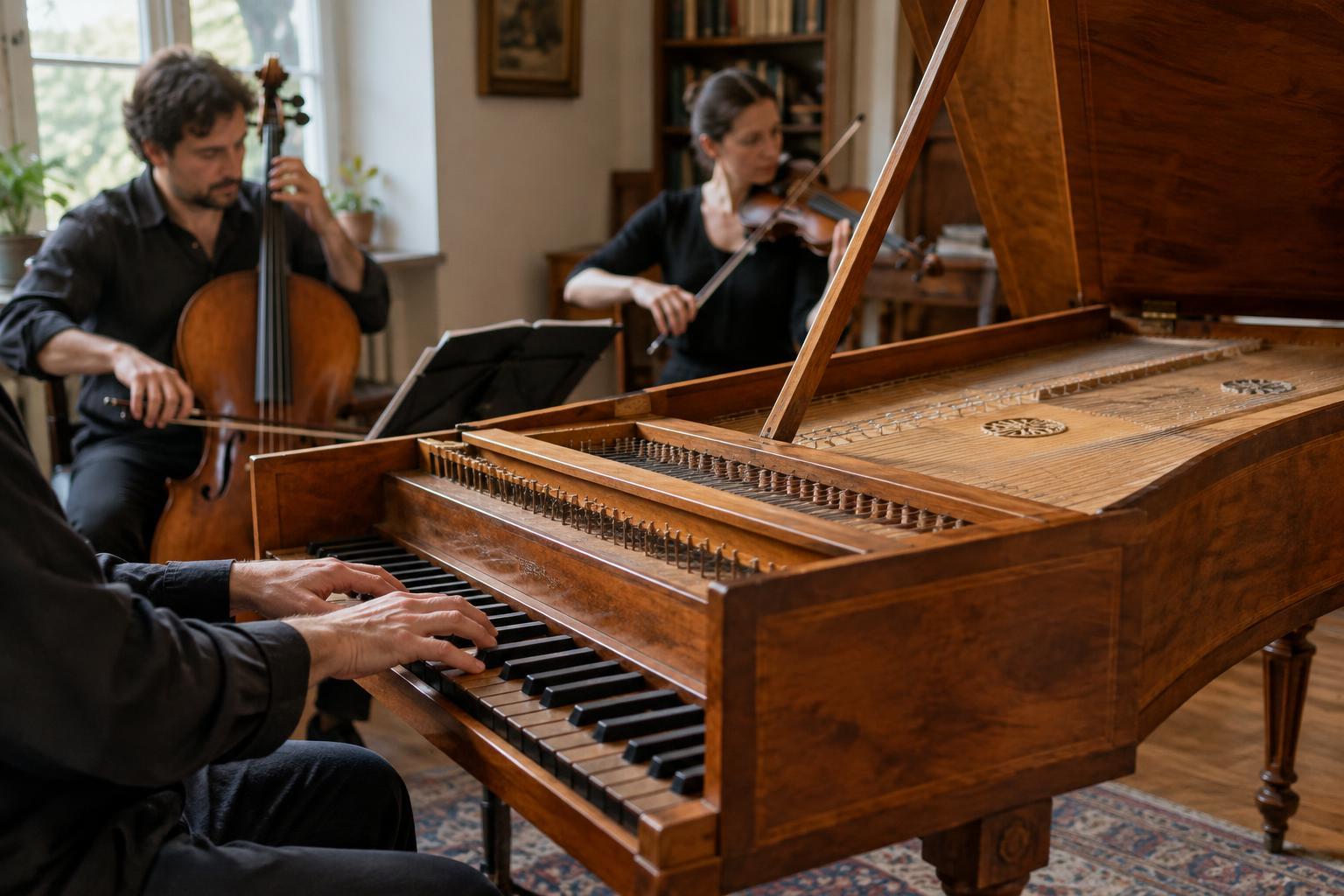
Start by listening for handoffs. A clarinet may finish a phrase begun by a violin, while a piano picks up its rhythm. Notice whether their sounds merge smoothly or remain distinct. The clarinet’s ability to sustain a note without a bow stroke or piano decay gives composers room to shape long lines against very different kinds of sound.
Then listen across registers. In a low passage, does the clarinet warm the harmony or create tension? In a high passage, does it blend with another voice or cut through the group? A bass clarinet can make these shifts especially dramatic, while the B-flat and A clarinets can move through them within a single phrase.
No single description captures every performance. Instrument choice matters, but chamber music is also a conversation among players: they adjust timing, volume and tone in response to one another. Hearing those adjustments can be more revealing than trying to identify every note or instrument by ear.