A brass instrument with a visible way of changing pitch
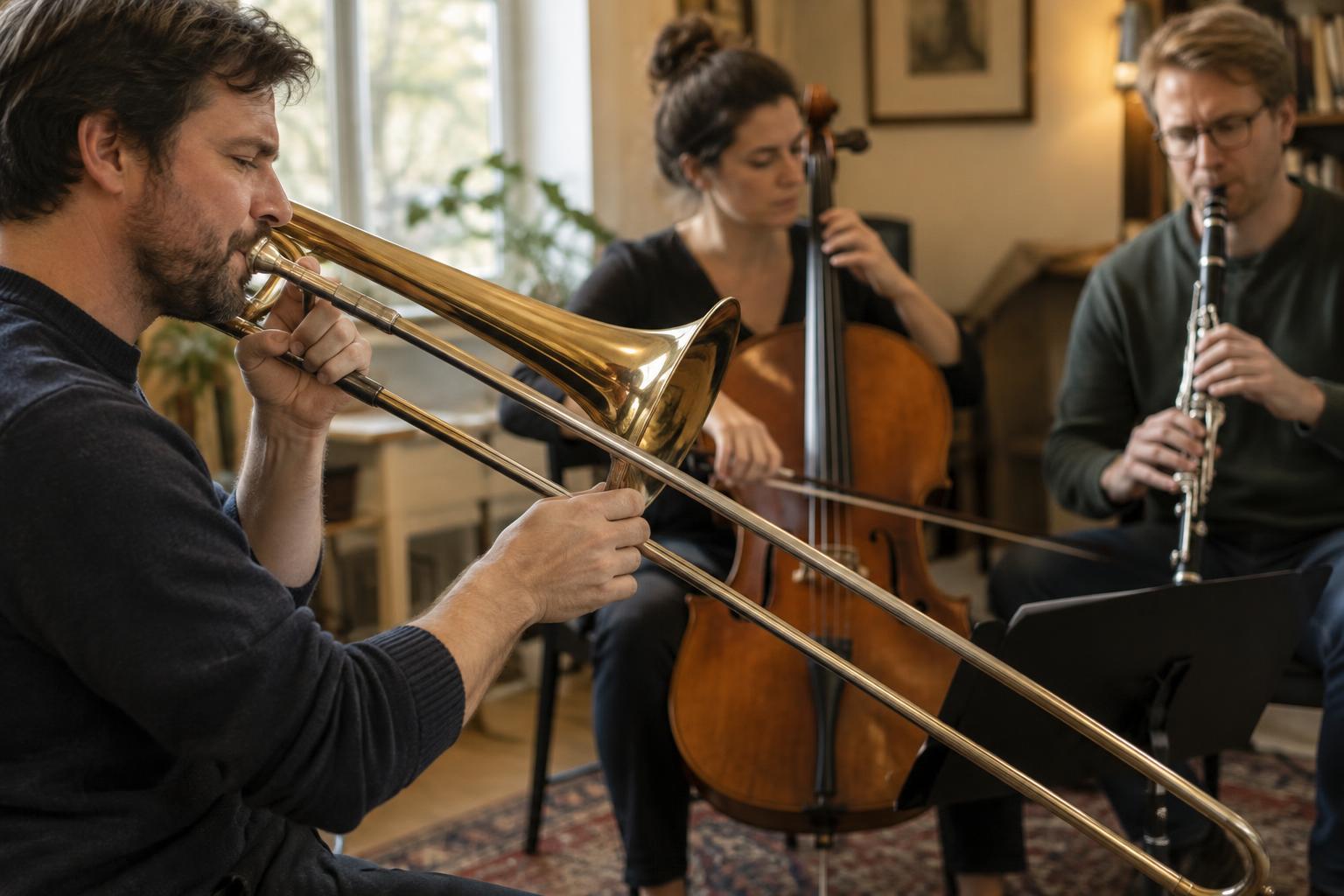
A trombonist makes sound by buzzing their lips into a mouthpiece. That vibration sets the air inside the instrument in motion, while the bell sends the sound outward. Most trombones change the length of their tubing with a slide rather than the valves found on many other brass instruments. Moving the slide outward lengthens the air path and helps produce lower pitches; drawing it inward shortens the path.
The slide is only part of the story. For any given slide position, the player can produce different notes by changing the vibration of the lips and the speed of the air. Listen to a trombone phrase that leaps upward: the player may change notes without an obvious trip across the slide. In a smooth passage, by contrast, you might hear how carefully the player connects notes that require substantial slide movement.
A slide does not automatically make every passage a swoop. Trombonists usually aim for clearly defined pitches, shaping each note with the tongue, breath and slide together. A deliberate glide between notes, often called a glissando, is one expressive possibility rather than the instrument’s default sound.
More than a loud bass instrument
The trombone is often easy to recognize when it plays a strong low line, but its chamber-music role is broader. It can reinforce a bass pattern, fill in the middle of a chord or bring a melody to the front. Its tone can sound rounded and restrained in a quiet passage, then bright and forceful when the musical texture calls for it. Which character you hear depends partly on register, dynamics, articulation and the players around it.
In a brass quintet, a common combination is two trumpets, horn, trombone and tuba. The trombone sits between the upper voices and the lowest brass instrument, making it a useful bridge in both pitch and color. When the tuba lays the foundation, notice whether the trombone doubles that line, moves independently above it or joins the horn to complete a chord. These changes can alter the character of the ensemble without any change in personnel.
Trombone-only groups reveal another side of the instrument. Players in different registers can divide the work of melody, harmony and bass among themselves. Try following one musical idea as it passes from a high voice to a lower one. The handoff can make the melody sound as though it has gained weight, even when its basic shape stays the same.
What to hear in attacks and sustained notes
The beginning of a note tells you much about the trombone’s role. A crisp, short attack can give a rhythmic passage definition. A gentler entrance can help the instrument blend into a chord that is already sounding. In a small ensemble, these details are exposed: one player’s change in articulation can shift the feel of the whole phrase.
Sustained notes offer a different listening opportunity. A trombonist must keep the air moving while coordinating the slide and lip position to settle on the intended pitch. In close harmony, small pitch adjustments help a chord feel unified. You do not need to identify the notes to hear the effect. Listen for the moment when separate brass tones seem to lock together into one stable sound.
Silence matters, too. A trombone line may leave space for another instrument to answer, then return with a new color or dynamic. Rather than listening only for the loudest entrance, notice how a player ends a note. A clean release can make a shared pause feel precise; a lingering sound can soften the transition into the next phrase.
A simple listening approach
On a first listen to a chamber piece with trombone, identify the instrument’s broad job: is it supporting the lowest voice, completing the harmony or leading? On a second listen, pay attention to how that job changes. The most revealing moment may be a quiet shift from accompaniment to melody, not a dramatic solo.
Then focus on contrast. Compare a passage of separated, rhythmic notes with one of longer tones. Listen for changes in brightness as the trombone moves between registers, and for the way its sound blends with or stands apart from neighboring instruments. If the ensemble includes several brass players, try following the trombone by the shape of its line rather than by volume alone.
The slide may be the trombone’s most recognizable feature, but chamber music makes its finer qualities easier to hear. Close attention to entrances, endings, blend and changing roles reveals an instrument capable of both firm structural support and remarkably flexible expression.