The moment after the final note
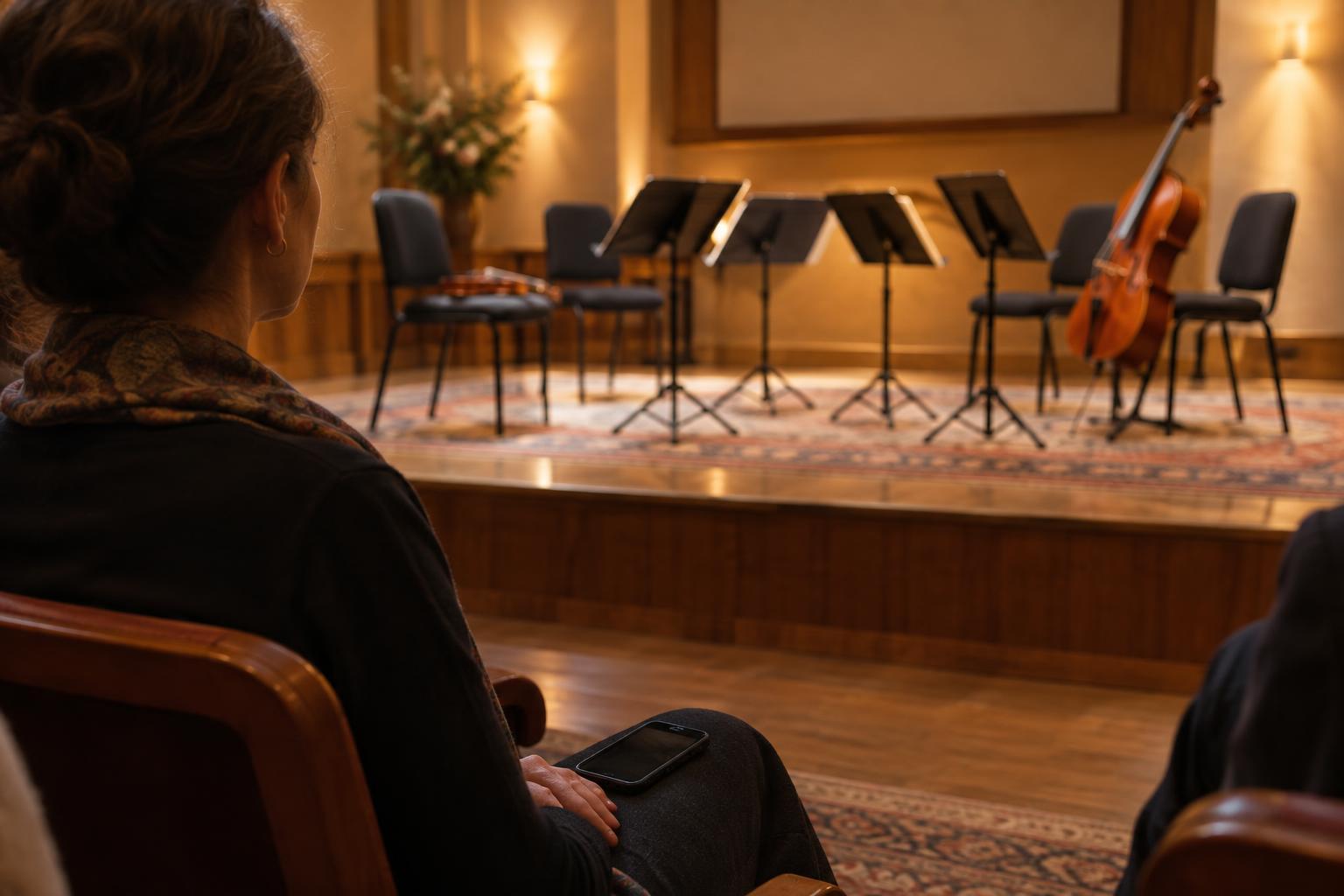
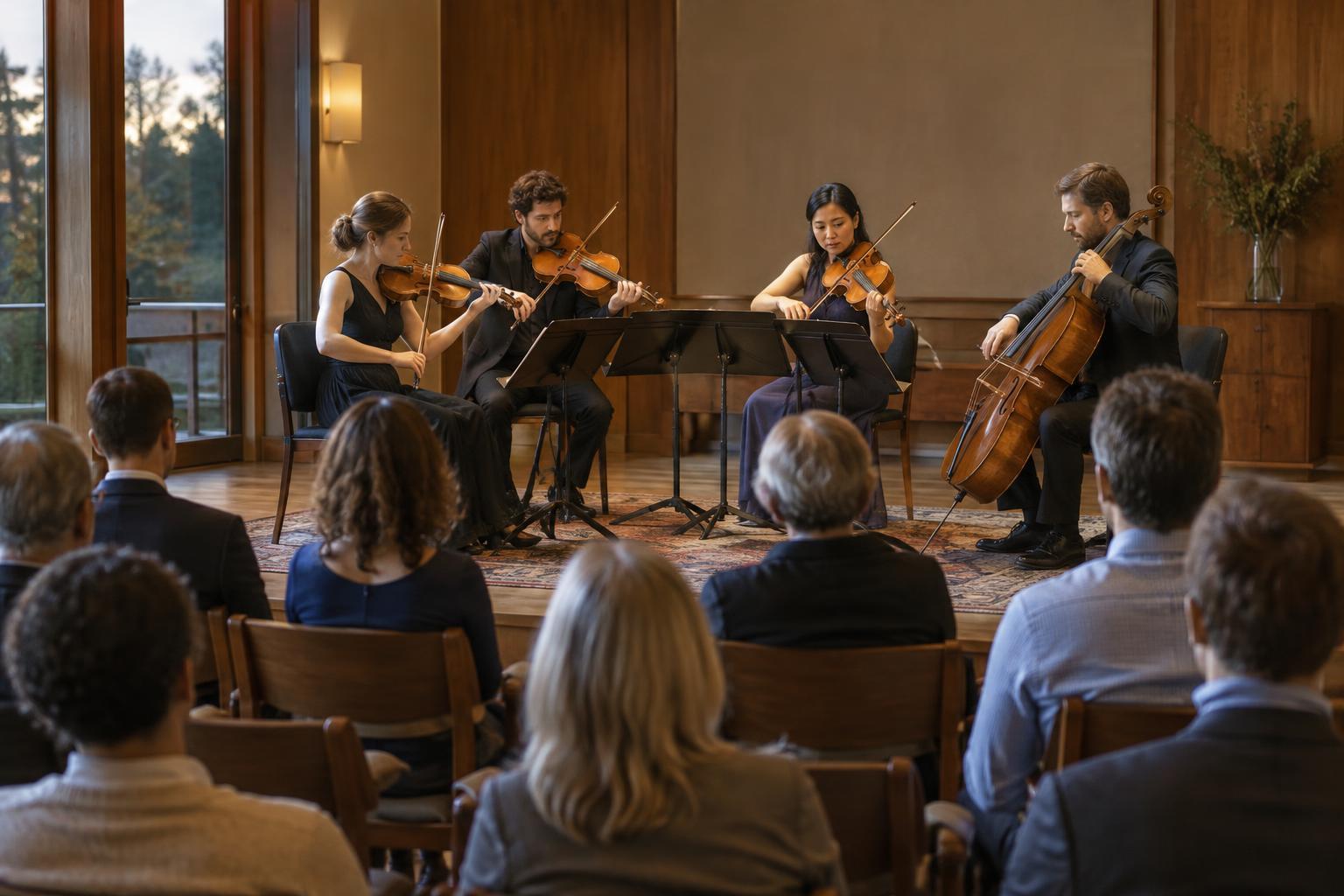
The end of a chamber work does not always feel like a sharp stop. A quiet final chord may fade slowly; a lively ending may invite an immediate burst of applause. Performers often hold still for a moment after the sound disappears. That pause lets the music settle and helps everyone recognize that the piece is complete.
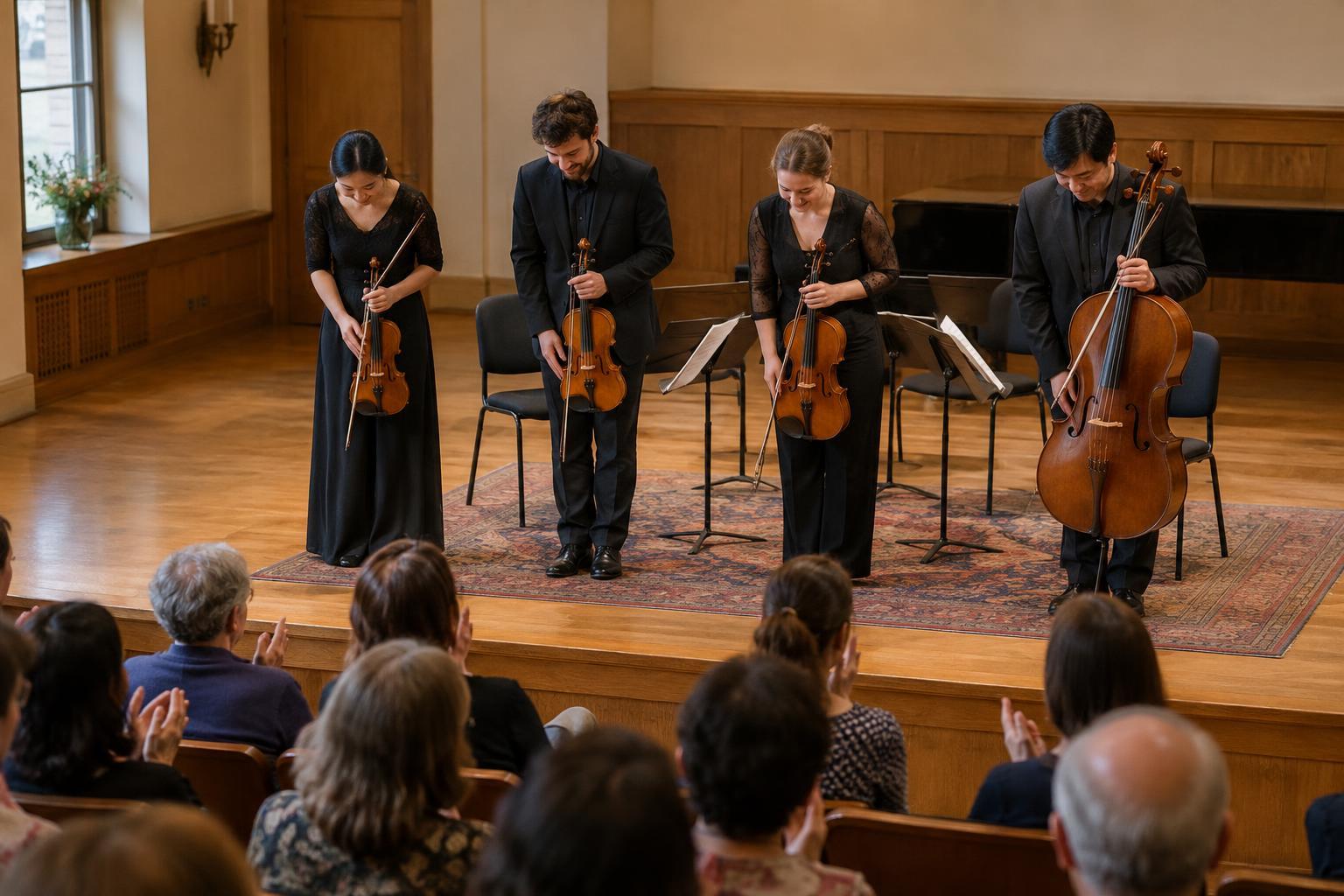
If you are unsure whether to clap, watch the musicians. When they lower their instruments, relax their posture or stand to acknowledge the room, applause is welcome. Some works have several movements separated by brief silences. Audiences often wait until the whole work is over, but an accidental clap between movements is not a disaster. Listening attentively matters more than mastering every convention.
What a bow communicates
A bow is a simple exchange between performers and listeners. The audience applauds to thank the musicians; the musicians bow to acknowledge that response. In a small ensemble, the players may bow together, sometimes after first turning toward one another. That glance can recognize the shared effort behind a performance in which no one person supplied the whole result.
Bows can also acknowledge particular contributions. A singer or guest player might step forward, or an ensemble might gesture toward a colleague. In a concert with a pianist, the players may make room for everyone to be seen. These gestures are usually expressions of courtesy, not a ranking you need to decode. Applaud the group as a whole, and let the performers guide the moment.
Why the musicians might come back
After leaving the stage, performers may return for another bow if the applause continues. This is a curtain call, even if the room has no curtain. It does not necessarily mean more music is coming. Musicians may return once, several times or not at all, depending on the venue, the program and the natural length of the audience’s response.
An encore is different: it is an additional piece performed after the announced program. At a chamber concert, it may be a short work, a single movement or a brief arrangement suited to the players onstage. Performers might introduce it aloud, but they need not. If you miss the title, you can still enjoy it as music rather than as a test of recognition.
An encore is a possibility, not a promise. A demanding program may already feel complete, the players may have no extra piece prepared, or practical limits may call for a prompt finish. Prolonged applause can express appreciation, but it does not oblige musicians to play again.
How to join in without guessing the rules
Clap in the way that feels natural once the work has ended. You do not need to match the loudest person in the room or keep applauding until an encore appears. If the musicians are bowing, applause is an easy way to acknowledge them. If they leave and the room settles, it is fine to stop.
Some audience members stand at the end of a concert. A standing ovation can signal strong appreciation, but staying seated while applauding is also respectful. Likewise, calling out a brief “bravo” may fit the mood of some rooms, while a quieter response may suit others. Chamber venues vary, so take your cue from the atmosphere rather than treating one habit as a universal requirement.
If you need to leave promptly, wait for a natural break if possible. Moving toward the exit while musicians are still playing an encore can distract both performers and listeners. Once the music has stopped and applause is underway, departing quietly is reasonable.
A small ritual with a useful purpose
Bows and curtain calls give a concert a gentle landing. They allow listeners to respond after a period of concentrated silence and give performers a chance to receive that response. An encore, when offered, adds a final musical thought; it need not be the evening’s grandest or most difficult piece.
There is no need to predict exactly what will happen after the last note. Listen for the ending, acknowledge the musicians and stay open to what follows. The ritual works best as a conversation between stage and audience, not as an etiquette exam.