Why it is worth checking before you go
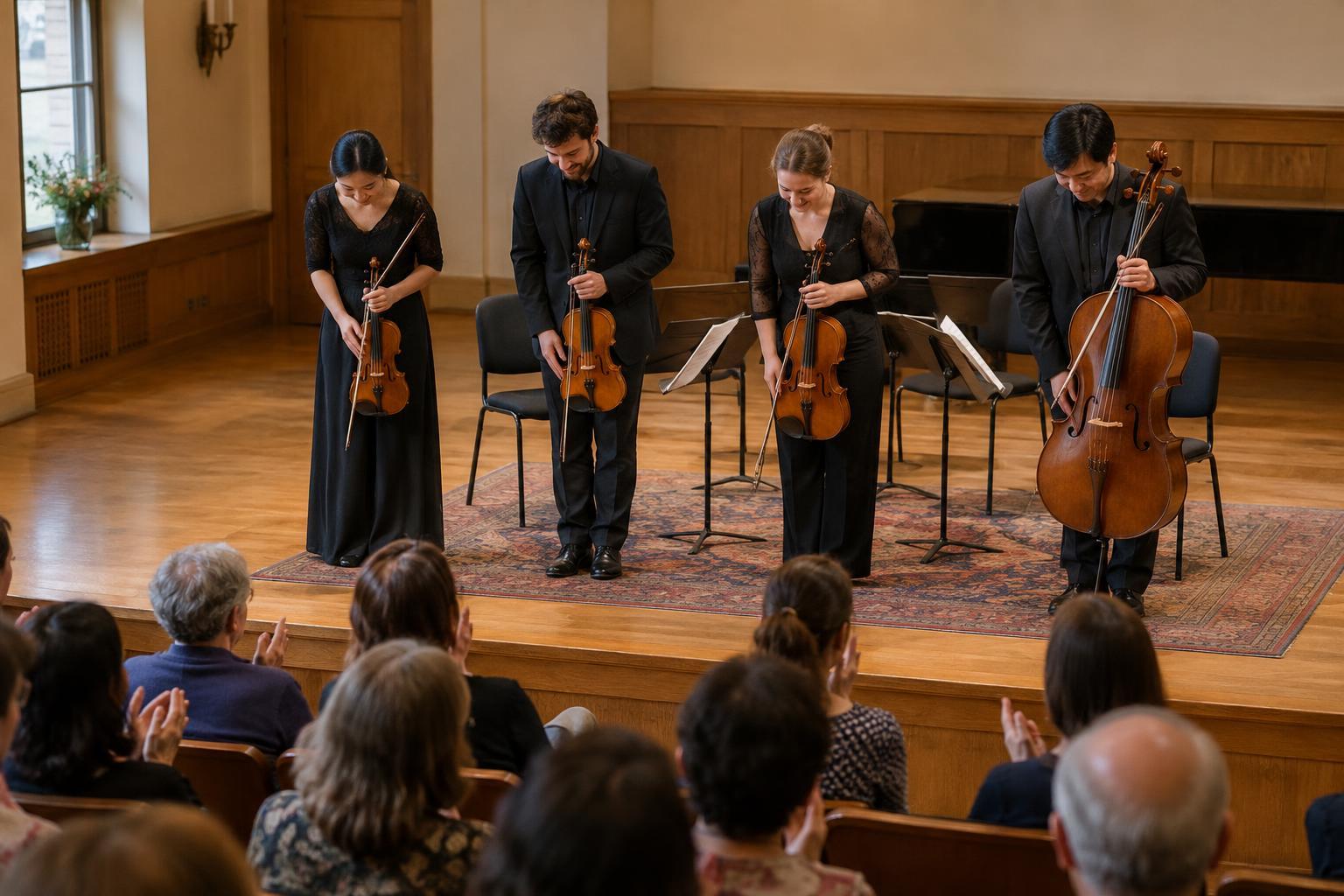
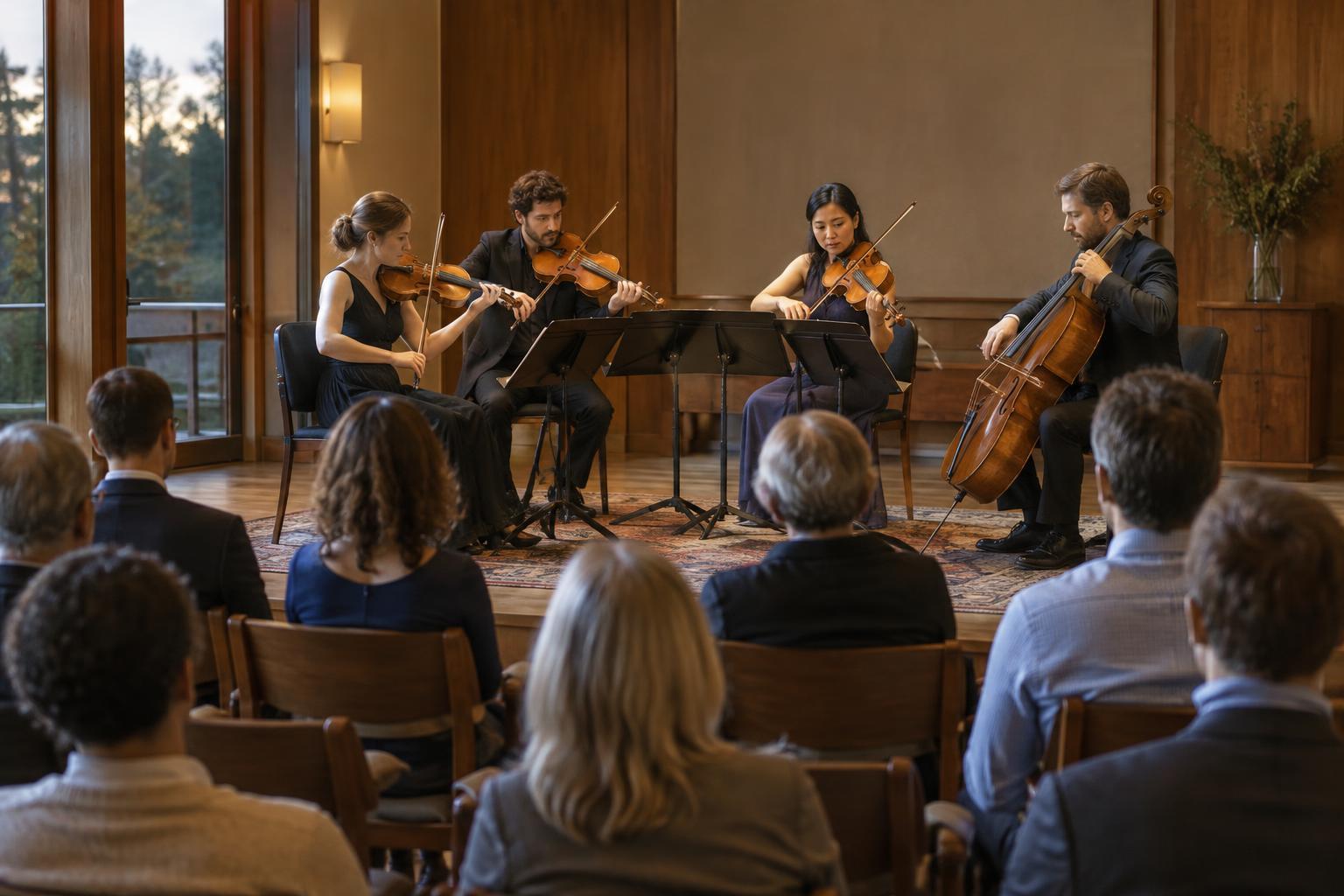
A chamber concert can feel informal: the players may be only a few steps away, and the room may be small enough to see every gesture. That closeness does not necessarily mean photography or recording is allowed. A venue, presenter, ensemble, or visiting artist may set conditions for a particular performance. The rules for the reception or lobby may also differ from those for the music itself.
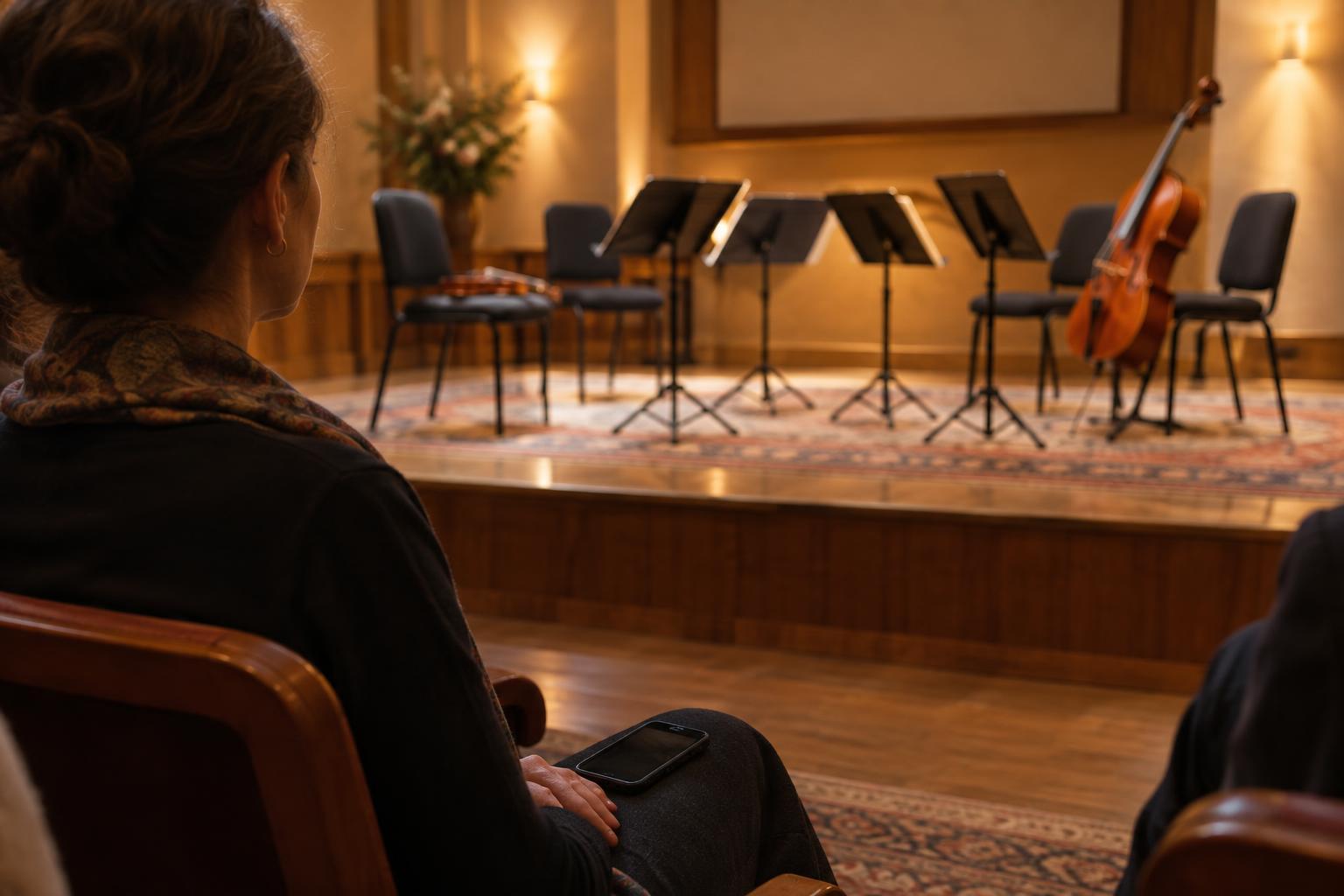
Checking in advance saves you from having to make a decision with your phone in hand as the players walk onstage. It also helps you distinguish between taking a still photograph, making a short video, and recording audio. A policy that allows one does not automatically allow the others. Even a silent phone can distract nearby listeners when its screen lights up, while a camera shutter or notification may be especially noticeable in a quiet passage.
Look for event-specific guidance first
Start with the information for the concert you plan to attend, rather than a general assumption about classical performances. Read the event listing, booking confirmation, ticket, and any pre-concert message for terms such as photography, video, audio recording, phones, or devices. Then check the venue’s visitor guidance. If the event listing and general venue policy seem to differ, do not assume the more permissive wording applies; an event-specific condition may take precedence.
It can help to note exactly where a policy draws its boundaries. Does it permit photos before the performance, during applause, or only after the artists have left the stage? Does it prohibit flash, or all photography? Is the restriction limited to the auditorium, or does it cover rehearsals and other spaces too? Reading the wording carefully is more reliable than inferring permission from pictures you have seen other audience members post.
Ask a precise question when the answer is unclear
If you cannot find a clear policy, contact the box office or presenter before the concert when possible. A useful question names the event and the activity you have in mind: “May audience members take non-flash still photos during the final applause?” That is easier to answer than “Are phones allowed?” If you hope to make an audio or video recording, ask about that separately. Permission to photograph a bow is not permission to record a movement of music.
At the venue, posted signs and announcements may provide the most immediate guidance. An usher can often clarify a practical question or direct you to someone who can. Ask before the performance begins, rather than during a quiet moment. If different sources appear to conflict, follow the instruction given for that performance and put the device away until you can clarify it. The absence of a prohibition is not a dependable substitute for permission.
If photography is allowed, keep the concert first
Permission is a starting point, not a reason to document the whole evening. Choose a moment the policy allows, prepare your phone beforehand, and keep the interaction brief. Turn off flash, sounds, and notifications; check that the screen will not shine toward other listeners or the performers. Hold the device low enough that it does not block someone’s view, and avoid repeated attempts to get a perfect shot.
Consider the room as well as the stage. In a close-seated chamber concert, pointing a camera across an audience member’s shoulder may intrude on their experience even when photography is permitted. If you want a keepsake, a photo of the programme or the empty stage may be a simpler option, provided the venue allows it. You can also leave the phone in your bag and give your full attention to the performance.
Treat recording as a separate request
An audio or video recording captures more than a single image: it may include substantial parts of a performance and the work of musicians and others involved in presenting it. For that reason, do not treat a brief clip as automatically acceptable because still photos are allowed. Check the stated rule, and seek explicit permission if you have a particular reason to record. A recording intended only for yourself can still be subject to a concert’s restrictions.
The same care applies to sharing afterward. Before posting a permitted photo or clip, consider whether your permission covered sharing it publicly and whether other audience members are prominently visible. If you are unsure, ask or choose not to post. Concert rules are easiest to follow when you check them early, listen to any instructions on the night, and let the live music remain the main event.